Tracing the Origin of Natural Law & Equal Rights in Western Thought

The law of loving your neighbor as yourself written on the tablet of the heart by God

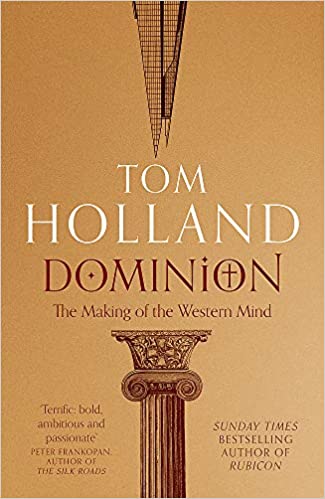
In Chapter 9 of Tom Holland’s book, Dominion: the Making of the Western Mind, he traces the idea of natural law back to 1150 AD when a lawyer named Gratian compiled the first canon of law in the west. His work (the Decretum Gratiani, as it came to be called) was derived from Scripture and the writings of the early church fathers. It was an attempt at harmonize those two sources into a comprehensive whole.

The original notion of natural law came from the Stoics: “The Stoics believed that the fundamental moral principles that underlie all the legal systems of different nations were reducible to the dictates of natural law.” Gratian syncretized the Stoic notion of natural law (the law of nature) by attributing it to divine origins. This law, which God desires to write on men’s hearts, can be summarized as the law of loving your neighbor as yourself.

Holland observed that for a millennia Christianity existed without “what Muslim lawyers had long taken for granted – a comprehensive body of written rulings supposedly deriving from God Himself”. Holland is struck by the contrast of the Christian notion that God “wrote His rulings on the human heart”.

Holland first picks up that theme in his book with Saint Augustine of Hippo in Chapter 5. Hollands description of Augustine’s words – that “God writes His laws on the heart,” and, therefore, “Love, and do what you like” – is a theme Holland traces as he finds it in the history of western thought.

Thus, Holland observes that Gratian opened his Decretum Gratiani with the statement that all law can be summed up in a single command: love your neighbor as yourself. Gratian called this idea “natural law”, summarized by the statement, “all souls are equal in the sight of God”. Gratian further identified this principal as the foundation stone of true justice.

Holland mistakenly attributes these ideas to Paul (“Paul’s authority on this score was definitive…. [e]choing the Stoics”). but the important point is that Gratian’s syncretism of the law was a decisive departure from earlier ages:

“Much flowed from this compilation that earlier ages would have struggled to comprehend. Age old presumptions were being decisively overturned – that custom was the ultimate authority, that the great were owed a different justice from the humble, that inequality was something natural and to be taken for granted.”

This is the central theme of Holland’s book – “How the Christian Revolution Remade the World” (its alternate title). His book is an attempt to trace back the roots of modern notions, such as the idea that people have “equal rights” stemming from natural law (“inalienable rights”) that fundamentally inform modern, western thought.  

Holland notes that these ideas do not flow out of Greek or Roman philosophy or law. They were are much foreign to the world of classic Greco-Roman thought. They are definitively Christian – Judeo-Christian – in their origins.

Holland, of course, is an atheist. He comes to these conclusions through his study of western civilization. He is an “outsider” to Christianity, which perspective makes his observations so interesting – the that he picks up on the novelty of these ideas as being a distinctively Christian departure from classical Greco-Roman thought.

He also wrote Dominion coming off the heels of writing a similar work on the history of Islam. The contrast was striking for him. Whereas Islamic scholars attempted to proscribe laws for every detail of human life, including things like how to brush your teeth and dog ownership, Christians distilled law down to a single phrase – love your neighbor as yourself – and rested in the confidence that God writes His laws on people’s hearts (“not in ink” as Augustine said). The influence of Holland’s awareness of that contrast is striking.

It shouldn’t be surprising, coming from his perspective, that Holland doesn’t get things exactly right. When Augustine focused on love, he wasn’t championing anything new, and Paul was not the source of the notion that the law can be summed up in the phrase, love your neighbor as yourself or the belief that God writes His laws on human hearts. While he might attribute these things to Paul and Augustine, the history is much older and deeper than that.

Continue reading “Tracing the Origin of Natural Law & Equal Rights in Western Thought”

Who Are the Righteous and the Wicked? Part III

Abraham’s faith was more than naked belief; it was belief that prompted him to act in trust in God.

“All Scripture is breathed out (inspired) by God and profitable for teaching, for reproof, for correction, and for training in righteousness….” (2 Tim. 3:16)

I was prompted in reading Psalm 1 to focus on the distinction between “the righteous” and “the wicked” in Who are the Righteous and the Wicked? Part I. As I began to dig into it, I observed that only God is righteous, and our righteousness depends wholly on our relationship to God. If we believe (trust) Him, he credits His righteousness to us. (See Part II) Abraham is our example: when he believed God, His faith in God was credited to him as righteousness. (Gen. 15:6 & rom. 4:3)

This is all very fundamental to Christianity. It might prompt us to make the assumption that people who merely believe God, believe the Bible (and go to church) are righteous. There is a fly in that ointment, however; and James identifies it in his letter.

James acknowledges that Abraham believed God, and his belief was counted to him as righteousness (James 2:23), but James digs a little deeper into what “the righteousness that comes by faith” (Rom. 3:22) really looks like. After all, even demons believe in God (James 2:19), but they aren’t righteous! The difference between the righteous and the wicked, therefore, involves something more than merely believing in God

We explored the idea that righteousness is something that flows from God, out of His very Being. It is not something God decreed, but something that God is in His very nature. Righteousness is not an abstract ideal that God lives up to; God is righteous. We don’t describe God in respect to righteousness; we know righteousness by knowing God.

It helps, perhaps, to take morality out of the equation and to look at it through a more scientific lens. Just as gravity is what it is and operates the way it operates (because that is how God created the universe), righteousness is simply what it is. Righteousness, however, isn’t something God created, like gravity; righteousness flows from the very nature and character of God.

To put it very simply: God defines righteousness by who He is, and righteousness is defined in relation to God.

Thus, we can only know righteousness in relation to God. We can’t be righteous, because only God is righteous. God credits His righteousness to us who believe (trust) in Him, but that is only the beginning.

Christians might call this being born again. We believe God; God counts us righteous; and, thus, He welcomes us into relationship with Him. A birth, however, is only the beginning.

When we dig deeper, as James did, we see a specific characteristic to the belief that Abraham by which God credited it to him as righteousness. That characteristic is something more than bare belief. Demons, who also believe, don’t have that characteristic (otherwise their belief would be credited to them as righteousness too). This characteristic is what James is getting at when he says that “faith apart from works is dead”. (James 2:26)

Abraham’s faith prompted him to action. James says that Abraham’s “faith was active along with his works”, and his “faith was completed by his works”. (James 2:22) Thus, Abraham’s faith was more than naked belief; it was belief that prompted him to act in trust in God.

Having some understanding of what makes a righteous person righteous, and what doesn’t, is essential to our relationship with God.

Faith that doesn’t prompt a person to action is not the kind of faith Abraham had; it is not the kind of faith that is credited to a person as righteousness. Faith that only prompts feelings is not the kind of faith that leads to righteousness. (James 1:19) The faith that leads to righteousness is faith that prompts a person to be a doer of God’s word. (James 1:22-25) It is faith that prompts love for God and love for neighbor, and that love is active! (James 1:26-27)

Faith that doesn’t result in a change from the core of a person’s being that emanates out into a change of heart and change in action is not the kind of faith that can be described as being born again. It is not saving faith, and it is not the kind of faith that God attributes as righteousness to people. 

Holding onto Truth with Humility

Today I read A Slice of Humble Pie, in the newsletter, Science for the Church, by Drew Rick-Miller. This piece is noteworthy for at least two reasons. First, it models a high regard for truth (and joy in discovering it), and second, it models the integrity that is required for humility.

Truth matters, because our Father is the progenitor of all truth, and through his Word all things seen and unseen were made. (John 1:1-3) His Word, of course, “became flesh and made his dwelling among us” (John 1:14) – Jesus. Thus, Jesus was able to say accurately, “I am the way, and the truth, and the life.” (John 14:6)

The statement that all things were made through the Word/Jesus, particularly speaks to the truth of science, which is the truth that we can discover in the creation. Rather than fear scientific truth, we should embrace it, as God is the creator of all things.

I like the approach of Hugh Ross to the seemingly contradictory “truths” of the Bible and science. He says that we have the book of revelation (Scripture) and the book of nature (which science reveals); if we see contradictions between them, then our understanding of one, or the other, or both must be inaccurate.

We should not hold so tightly to our assumptions and understandings that we fail to recognize and acknowledge truth. We should not fear the need to adjust our understanding because God is not the author of confusion, but the author of truth.

We are finite beings. That means that we sometimes need to hold truths in tension with each other when we don’t know how to synthesize the truth as we understand it. We do this in the hope and expectation that we will grow in our knowledge of God and the truth. If we can’t harmonize those tensions that we see today, we hope to understand them better tomorrow.

We don’t only find tensions between science and faith. We find tensions within Scripture, itself. Free will is implied in Proverbs (“In their hearts humans plan their course….” (16:9) and in the words of Jesus (“Anyone who chooses to do the will of God will find out whether my teaching comes from God….” (John 7:17)) Predestination is implied by Paul (“He predestined us for adoption as son…” (Eph. 1:5) and in the words of Jesus (“You did not choose me, but I chose you….” (John 15:16)

As finite beings, we have to recognize that our efforts to harmonize everything will likely never reach the point of comprehensive understanding and synthesis of all truth with certainty and without gaps in our understanding. If we were able to achieve such a synthesis, we would be like God… and we aren’t.

(And that was the original temptation, wasn’t it!)

Even if we highly value truth, we are going to get it wrong sometimes, and we need to be ever open and willing to acknowledge when we are wrong. This humility is also a recognition of the truth – the truth that we are finite creatures

There is freedom in valuing truth and in being humble. We don’t need to hold on stubbornly to assumptions and dogmas when we value truth and humility.

This is not to say that we should allow ourselves to be tossed about by every wind that blows. God is a rock whose foundation is secure and does not change. We can rest in that.

Sometimes, though, we build onto that foundation structures that we mistake for the very foundation, itself. We invest much of ourselves in those structures and are, therefore, tempted to cling to them when we should be letting go and embracing with humility truth as it becomes known to us that might suggest some remodeling is needed in those structures we have built.

We will never need to restructure the foundations, which are of God, but we may need wisdom to know what is foundational and what is structural. Fortunately, if anyone lacks wisdom, we simply need to ask God, who provides wisdom generously to all who ask. (James 1:5)

It’s interesting to me that, when James talks about asking God for wisdom, affirming that God will give wisdom to all who ask, he goes on to talk about humility. (James 1:9-10) We need humility (and faith) to receive anything God offers to us. James affirms this later in his letter, quoting Proverbs 3:4:

“God opposes the proud but gives grace to the humble.”

James 4:6

To What Source Do We Owe the Debt for Western Values?

Holland traces the assumptions of the modern western world forward through the evolution of religious expression.

Tom Holland, in his book, Dominion: The Making of the Western Mind, published in 2019, traces western civilization from Darius, the Persian king, through the present time. Holland links the development of modern thinking to its various sources as expressed through the thread of religious views form age to age.

The mode of his analysis is, perhaps, a unique one for an atheist. It also exposes the wellspring of one predominant source for most of the fundamental assumptions of the modern western world. Holland was surprised, himself, to find how prominently one source showed through.

To his chagrin, Holland found that source flowing from the influence of an itinerant, first century carpenter of humble background. Holland’s work reveals that the source of modern western thought is decisively Judeo-Christian, and particularly Christian.

The river in which the Christian spring wells up is, first, Mesopotamian (the Persian version), then Greek, then Roman, but the source of the thinking that invigorates all our basic, western assumptions is not reducible to Persian, Greek or Roman principals – or any combination of all three. Holland’s work demonstrates how the spring of Christianity overwhelmed the river leading to modern western thought and irrevocably changed and defined its course.

Holland traces the assumptions of the modern western world forward through the evolution of religious expression. From Persian Zoroastrianism that was, perhaps[1], the beginning of monotheistic thought, through Judaism converging into the Roman world that combined Greek gods and philosophy, Holland finds from the currents of religious expression the sources of those assumptions that inform the modern western mind and sensibilities.

Holland’s history reveals that the values we take for granted, like the water that comes from a tap, find their source predominantly in Christian origins. Like a spring that swelled the river and came to define it over time, despite its headwaters and tributaries, Christianity overtook the river and ineffably changed and defined its course.

For Holland, the discovery that the values that inform his modern, humanist worldview are Christian came as a paradigm shift from the Enlightenment, modern and post-modern position. His book shows how a modernist can no more escape the spring of Christian influence than drain the water from the river.

The ways in which the theme reveals itself are myriad. Following is one example revealed through the life of Flavius Claudius Julianus. Julian, who would be known as Julian the Apostate, was the nephew of Emperor Constantine. Constantine, of course, set the course of history in his conversion to Christianity and decree to lift the prohibition against its practice. Up to that point, Christianity flourished only despite the efforts to curtail it.

Julian was also raised Christian, but he renounced Christianity to embrace the paganism of his ancestors. Tom Holland describes how Julian sought to reclaim the empire from people who had “’abandoned the ever-living gods for the corpse of the Jew’”. 

Julian believed the god, Cybele, had rescued him from the darkness of Christianity. In his effort to promote the worship of Cybele, Julian wrote a letter to the priests in Galatia, blaming them for what he called a lack of faith in Cybele, the god whose temple they kept. His accusation against them? That they were getting drunk in taverns instead of devoting themselves to the poor. Julian committed the funds himself to a program of providing food and drink to the poor, travelers and beggars.

What’s the big deal?

Holland, was a noted historian of the Greco-Roman world before writing Dominion. He knowing well the values of that world. They were incongruous with Julian’s plea. He addresses the incongruity of Julian’s appeal as follows:

“The heroes of the Iliad, favourites of the gods, golden and predatory, had scorned the weak and downtrodden. So, too for all the honour that Julian paid them, had philosophers. The starving deserved no sympathy. Beggars were best rounded up and deported. Pity risked undermining a wise man’s self-control. Only fellow citizens of good character, who through no fault of their own had fallen on evil days, might conceivably merit assistance. Certainly, there was little in the character of the gods whom Julian so adored, nor in the teachings of the philosophers whom he so admired, to justify any assumption that the poor, just by virtue of their poverty, had a right to aid. The young emperor, sincere though he was in his hatred of ‘Galilean’ teachings, and in regretting their impact upon all that he held so dear, was blind to the irony of his plan for combatting them: that it was itself irredeemably Christian.”

“’How apparent to everyone it is, and how shameful, that our own people lack support from us, when no Jew has ever to beg, and the impious Galileans support not only their own poor, but ours as well.’ Julian could not but be painfully aware of this. The roots of Christianity ran deep. The apostles, obedient to Jewish tradition as well as to the teachings of their master, had laid it as a solemn charge upon new churches always ‘to remember the poor’. Generation after generation, Christians had held true to this injunction. Every week, in churches across the Roman world, collections for orphans and widows and the imprisoned, and the shipwrecked, and the sick had been raised. Over time, as congregations swelled, and ever more of the wealthy were brought to baptism, the funds available for poor relief had grown as well. Entire systems of social security had begun to emerge.”

Holland was keenly aware of the pagan world to which Julian wanted to return. It was his focus as an historian. In an interview and discussion with Justin Brierley and AC Grayling, Holland describes how he was fascinated by the extravagant decadence and pomp of the classic Greco-Roman world, but he found nowhere in it any hint of the ethic that is ingrained in modern humanism to care for the poor, save for one source alone: Christianos, the derogatory term given to the followers of Jesus by the Romans.

Throughout the book, Holland identifies the various roots of modern ethics and principals that are no longer seen as distinctly Christian, because they are simply taken for granted – like Julian’s assumption that caring for the poor was a moral obligation, though no such obligation can be traced to the gods and philosophers he embraced in rejecting Christianity.


The idea that correct thinking (belief) is more important than ritual practices, inalienable (human) rights and equality, the importance of education (not just for the elites), the separation of church and state, and many other things find their origins in spring of uniquely Christian thought. The book is well-written and provides much food for thought.


[1] The accepted historical premise is that Zoroastrianism predated Judaism, but I have my doubts, which I attempt to convey in The Roots of Modern Ethics in the Ancient Near East.

On Working to Establish a Biblical Orientation on Issues of Race

Christianity transcends all the natural barriers to human relationships.

Although the dust has settled (somewhat) on racial tensions since the maelstrom that was kicked up in the wake of the George Floyd killing in Minnesota, no one should think that the issue has been settled or will go away without some resolution. The country, including the church community, is divided on the facts, and issues, and measures that should be employed to resolve the racial tension. Even people of good will are uncertain on how to move forward.

A predominant worldview has emerged in academia that is filtering down into local communities that frames the issue and potential resolution in terms of oppression. This worldview divides the world into the oppressed and their oppressors. The people who hold to that narrative are aggressively pushing for change.

They push the people they are define as the oppressors in the racial tension. The people defined as the oppressors are white and predominantly “Christian” in name (at least). As with the laws of nature, so with the laws of natural human tendencies: when someone pushes, people being pushed naturally push back.

So it is today that the predominantly white, Evangelical Church in the United States is feeling the pressure of the desire and demand for change to address the racial disparities and tensions in our world, and we are tempted to reflexively push back against that pressure.

But how should we respond?

I have written on the differences between Critical Race Theory and biblical justice. We should recognize that the worldview based on the CRT framework is not biblical, though many of our brethren of color and more progressive white Christians have embraced it.

I submit, though, that CRT has come to prominence in the African American churches and among progressive white churches because the Church, generally, has left a vacuum, and “nature abhors a vacuum”. We have failed to recognize and address in a biblical way the deep and lasting pain of racism that continues to exist in a society that only recognized equal rights for African Americans in my lifetime.

The failure of the Church to address racial issues left room for a completely secular and unbiblical approach to sweep in. So, other than acknowledge our failure, what do we do now?

Continue reading “On Working to Establish a Biblical Orientation on Issues of Race”