St. Augustine on the Literal Meaning of Genesis

How Augustine read Scripture in light of experience and reason.


People cite the great church father, Augustine, in defense of the view that the earth is only thousands (rather than billions) of years old. Indeed, I believe this was (more or less) Augustine’s view, based on the science and knowledge that was available to him in the 5th Century when he lived. Augustine believed the earth was young.

That isn’t the end of our understanding of Augustine, though. To understand Augustine, we might be aided by a basic review of the mythological, philosophical and scientific views that were prevalent in his world at the time.

According to my inquiry on Bing Co-Pilot, the mythology of the time didn’t attempt to date the age of the earth. Science (such as it was) also had not established a position. Philosophy, however, provided two opposing views.

The philosophical camps were led by Aristotle and Lucretius. Aristotle argued that the earth was eternal, and Lucretius argued that the earth formed relatively recently (based on a lack of records prior to the Trojan War). (The Trojan War dates to the 11th or 12th Century BCE.) Thus, the two competing views in Augustine’s day were 1) eternal earth or 2) young earth. There was no inkling in Augustine’s time that the earth might be very old, but not eternal.

Interestingly, Aristotle’s view of an eternal earth shifted to an eternal universe, and that view became the accepted scientific view that lasted well into the 20th Century. This was Einstein’s view when he developed the Theory of Relativity.

The past eternal view of the universe was only debunked and rejected by the scientific consensus in the second half of the 20th Century, and then only very reluctantly. (Even now, some scientists demonstrate a desire to find support for a past eternal universe, but support for that view seems to get thinner and thinner as time goes on.)

In the uncertain stew of mythology, philosophy, and science in the 5th Century, Augustine acknowledged that a literal, 6-day reading of the creation story in Genesis is not an irrational interpretation. That is basically how he put it.

He didn’t endorse that view, however. He thought the better view was that the “days” in Genesis 1 do not correspond to earthly (24 hour) days. Even in his exploration of a “literal” reading of Genesis, Augustine incorporated allegorical nuance.

Augustine did not believe that “literal” and “allegorical” meanings were mutually exclusive, and neither did most of the early church fathers. What Augustine and the early church fathers meant by the “literal” meaning of Scripture was what the people who wrote the original words literally meant and how the audience to whom they communicated understood them.

In this effort to understand what the writers meant, the early church fathers assumed that the original meanings included metaphor, symbolism, and literary devices. None of the early church fathers (that I am aware of) argued for the modern sense of strict literalism in the interpretation of Scripture.

Though most early Christians believed literally in the historicity of the biblical accounts (to use a modern term), they also accepted the richness of allegorical meaning in Scripture at the same time. In fact, the metaphorical meaning of Scripture was assumed to be the deeper, more significant meaning of Scripture.

Augustine (along with Clement of Alexandria and Origen) ultimately rejected the calendar-day view of the Genesis creation story in favor of instantaneous creation with a kind of day/age view of the creation passage in Genesis. The great Jewish theologians, Philo and Hilary of Poitiers also took this view that God created the earth instantaneously.

We should recognize that the day-age view that Augustine and others preferred was probably not the consensus, but it also wasn’t considered heresy. The theology and the philosophy were unsettled, and science had not yet developed as we know it. The Church allowed for robust disagreement on age of the earth, because it was not considered essential doctrine.

I should stop here, at the risk of pointing out something you already know, and look at the meaning of the Hebrew word, יוֹם (yom). This word is translated into the English word, day, in Genesis 1. As with most Hebrew words, yom has many nuanced meanings and applications, both literal and figurative. The various meanings include:

  • Day, as opposed to night
  • Day as a division of time
  • Day as defined by evening and morning
  • Day as in a time (like harvest)
  • Day as in an age or epoch of time

In addition to the definitions, most Hebrew words have both literal and figurative meanings and applications. Thus, Augustine’s position that the days in Genesis can be read to mean an “earthly” or “ordinary” day did not exclude the idea of applying them more figuratively. That duality is consistent with the way Hebrew words and Hebrew language works. This built-in literal/figurative duality of Hebrew words informed the thinking of the early church fathers.

Augustine is famous for preferring allegorical readings and applications of Scripture. In his early two-volume work on Genesis in which he took issue with the Manicheans, Augustine explored the position that the days in Genesis are seven epochs of redemptive history corresponding with seven stages of the Christian life. (See Did Augustine Read Genesis 1 Literally? by Gavin Ortlund citing De Genesis contra Manichaeos 1.23.35-1.25.43, in Augustine, On Genesis, 62-68.)

When Augustine set out to write a “literal” interpretation of Genesis, he didn’t mean what people today might think he meant. Even his “literal” reading of Scripture was not strictly literalist. It was an attempt to understand what the original writers and audiences (literally) meant and what they understood it to mean.


Science in St. Augustine’s day was not advanced enough to weigh in on the age of the earth, but Augustine was a strong proponent of understanding science. The science of his day, for instance, had settled the spherical shape and circumference of the earth. That the earth was round and even the size of the perimeter of the earth was well established and understood among academics since before the time of Christ. (It is purely a myth, for instance, that Columbus had to convince people the earth was not flat.) Augustine’s view of scientific knowledge and its relationship to Scripture is what I want to highlight here.

Continue reading “St. Augustine on the Literal Meaning of Genesis”
C.S. Lewis, Longevity and Perspective

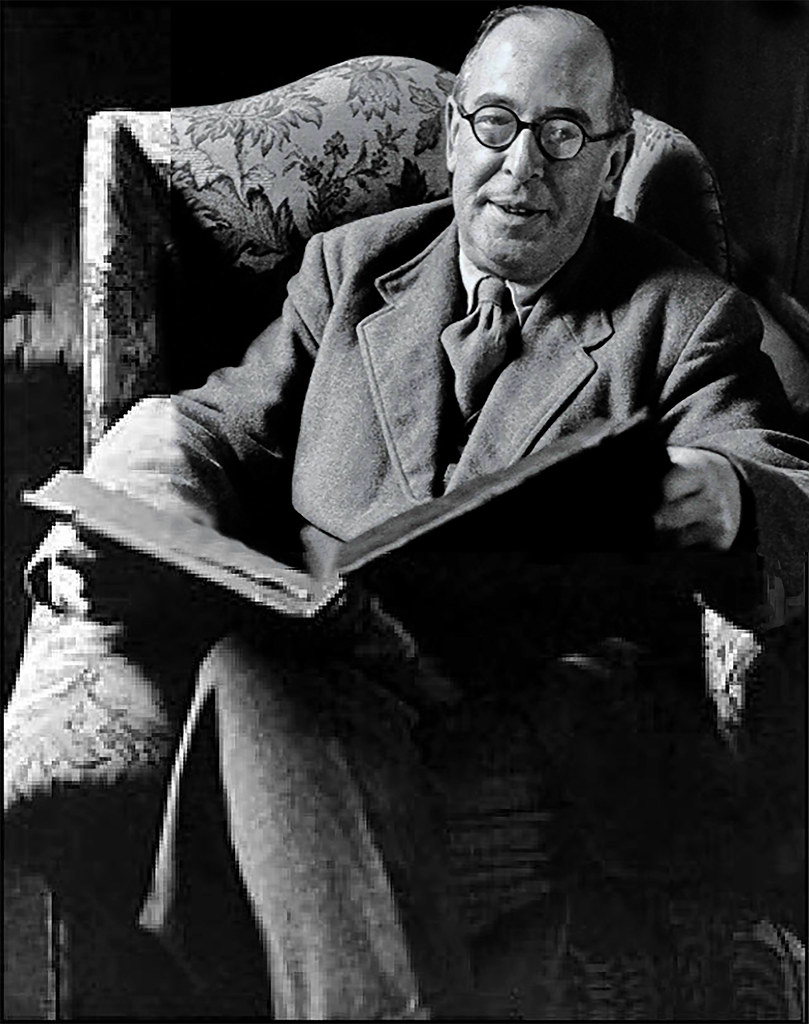
I read the article I am reblogging here with some mixed feelings, as I have now outlived the incomparable C.S. Lewis. That he accomplished so much with such great lasting value gives me pause as I near the age of 65 and slowly begin to realize that I am on the downside slope of my life. I don’t know how many years, months, and days I have left, but I know that they are numbered.

The article highlights the way CS Lewis discounted longevity. He couldn’t have known, of course, that he would not see his 64th birthday.

The value in our lives is not in how long we live, but in how well we live.

Diving for Pearls in the stories of Dustin Kensrue and Mark Driscoll

Dustin Kensrue’s music is as good as ever, but it comes with the melancholy of what used to be.


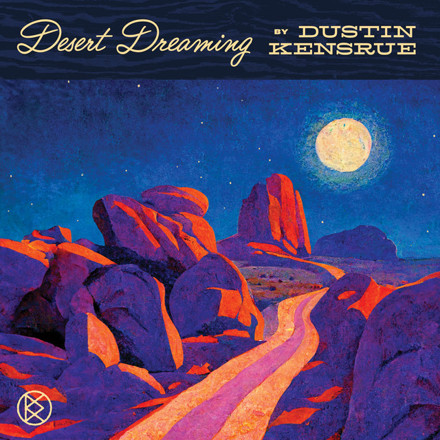
I recently spent some time listening to Dustin Kensrue’s new album, Desert Dreaming. I like his music, and the new album is good. The first song I heard, though, reminded me of the rumors that he has walked away from orthodox Christianity:

When I left town, I was swept up
With the visions of a man from Galilee
Along the way, I lost my bearings
I got swallowed up by sins of certainty

The heart of sedona

The words to this song triggered a desire to research the truth. Kensure was an impactful Christian musician who wrote the worship album of the year not to many years ago. I wondered, therefore, why he walked away (if indeed he did).


I learned that Kensrue was a former worship leader for Mars Hill, the failed church that rose to the heights of evangelical influence with many campuses, only to collapse with the failings of its erstwhile leader, Mark Driscoll.

Listening to the song, Heart of Sedona, off Kensrue’s new album, Desert Dreaming, gave me pause. The words seem to confirm the rumor, and the story seems all too familiar lately.

His music is as good as ever, but it comes with the melancholy of what used to be. Or maybe it never was. It’s hard to know how to process the deconstruction of someone else’s faith.

Given the back story (involvement in a failed church movement), I suspected his “deconstruction” (and many other artists who seem to have followed a similar path) may be symptomatic of some malady that has infected Evangelical Christianity.

My entre into Kensrue’s story begin with the article, It’s Not Enough: Dustin Kensrue’s Turning Away, which is where I learned that Kensrue was intimately involved in the toxic environment of the Mars Hill church movement led by Driscoll, a controversial and polarizing personality.

I had heard of the rise and fall of Mark Driscoll and the Mars Hill Church, but I did not jump on the curiosity bandwagon when people associated with Christianity Today produced the podcast, The Rise and Fall of Mars Hill. I only heard about it, and I had listened to a discussion of the podcast on another podcast. Therefore, I finally felt a need to hear it firsthand to gain some perspective.

The podcast describes the talent and bravado of Mark Driscoll, who was also polarizing and toxic and seemingly proud of it. Driscoll was staunchly reformed in his theology with a cultish personality and a flair for the dramatic. He attracted people on the edges of faith in the notoriously countercultural Seattle area. I summarized some of my thoughts on what I learned in Keeping It Real for the Church: Talent in Tension with Character)

I have also gone back, now, through the tweets highlighted in the article I noted above, and I have poured over Dustin Kensrue’s Twitter (X) feed to gain further insight. These things give me additional food for thought in considering the “deconstruction” of Dustin Kensrue as it relates to the American Evangelical Church.

Though I have spent considerable time researching these things, my thoughts remain preliminary and exploratory. I am not certain that I have gained sufficient perspective to be clear or certain of any conclusions, but all this seems to confirm my sense that the story is symptomatic of a problem with the American Evangelical Church.

In fact, the original article I found, itself, seems to be symptomatic of issues in the American Evangelical Church. These issues may also be reflected in current American culture, affected as it is by social media. I apologize for the length of this article, but I am afraid I do not do much more than scratch the surface here.

Continue reading “Diving for Pearls in the stories of Dustin Kensrue and Mark Driscoll”

The Way of Righteousness and the Holy Command: an Introduction

We escape the corruption of the world by the way of righteousness and the sacred command. But, what if we lose the way and don’t know the sacred commandment?


Have you ever read a passage in the Bible that weighed heavily on you? A verse that caught you up short?  A verse that gave you great concern? A verse that made you question your own salvation?

I assume we all (who take the Bible seriously) have experienced that. I believe the Holy Spirit interacts with us as we read the Bible (which the writer of Hebrews says is “living and active”). Sometimes we are encouraged, and sometimes the light of scripture shines into the recesses of our hearts and exposes things that bother us. (And so they should!)

Indeed, I believe that this is one of the great benefits of reading Scripture on a regular basis. God talks to us through His revealed Word. He interacts with us in ways that get to the core of our being … if we let Him … to teach us, to convict us, to correct us, and to instruct us in righteousness. (2 Timothy 3:16)

I recently read the following verses in my daily Bible reading:

If they have escaped the corruption of the world by knowing our Lord and Savior Jesus Christ and are again entangled in it and are overcome, they are worse off at the end than they were at the beginning. It would have been better for them not to have known the way of righteousness, than to have known it and then to turn their backs on the sacred command that was passed on to them.

2 Peter 2:20-21

Peter goes on to quote two “proverbs” about: 1) a dog that returns to its vomit (quoting Proverbs 26:11); and 2) a sow that is washed that returns to wallowing in the mud.

These examples seem to be clear illustrations of people who, having been cleansed from sin, return to their sin. If you have ever returned to the sin you have walked away from, you know the angst that reading this verse can bring.

Peter says it is better that we never know Jesus than to have known him and walked away! People are worse off not to have known the “way of righteousness” than to have known it and turned their backs on the “sacred command” (or holy commandment).

I am convicted when I read these things. I sometimes despair of the sin I tend to repeat. I have often felt like a slave to certain sin, and I been anxious for my own salvation when I read a verse like this.

I think we should feel the full weight of verses like this. God is clearly interested in the fruit of our lives. A bad tree cannot produce good fruit. If we are tapping into the wrong tree, nothing we do can produce good fruit. The problem isn’t in the fruit; the problem is the source.

Continue reading “The Way of Righteousness and the Holy Command: an Introduction”

The Way of Righteousness and the Holy Command: The Way

We escape the corruption of the world by the way of righteousness and the sacred command. But, what if we lose the way and don’t know the sacred commandment?


I started this short series focusing on the second epistle of Peter where Peter warns his readers about false prophets with “eyes full of adultery”, greed, and depravity who are slaves to their own sin. These people seduce the unstable and entice others by appealing to the lustful desires of the flesh. Peter says,

It would have been better for them not to have known the way of righteousness, than to have known it and then to turn their backs on the sacred command that was passed on to them.

These are fearful words of warning. Anyone who might feel enslaved to sin has likely felt angst when reading this words.

In the previous article, I note that the actions Peter describes are the fruit of people who have “known the way of righteousness” and the “sacred [holy] command” and have turned their backs and walked away. The fruits are the symptoms, not the cause.

The important thing for us, therefore, is to know the way of righteousness and the holy commandment, and not to turn our backs on them! In this follow up to that introductory article, I will focus on the way of righteousness.

Continue reading “The Way of Righteousness and the Holy Command: The Way”