
Who Is God? How Can We Approach Him? What Do the Answers Mean for Us Today?

Many things to which we devote our energies are good, but they become idols when they become our “ultimate things”.

Who will approach God? Who is the King of Glory? These are questions David poses in Psalm 24, one of the Messianic Psalms.

He begins with recognizing who God is. God is the creator of everything there is, and He possesses and has authority over all that He created.

The earth is the Lord’s, and everything in it,
    the world, and all who live in it;
for he founded it on the seas
    and established it on the waters.

Psalm 24:1-2

Though the nations all around David had their own gods in various images and likenesses, David recognizes that there is only one, creator God. One God made the heavens and the earth, and there is no god like Him. In that context he asks the question:

Who may ascend the mountain of the Lord?
    Who may stand in his holy place?

Psalm 24:3

How does one approach a God like that? How do created beings, such as ourselves, approach the God who created us? David understands that we can only approach such a God on His own terms:

The one who has clean hands and a pure heart,
    who does not trust in an idol
    or swear by a false god.

Psalm 24:4

Only a person with clean hands and a pure heart can approach a God like that. Only a person who trusts in such a God, alone, can approach Him. Only a person who understands truth and is free of deceit.

Can any of us say that we meet these conditions?

If we think honestly on these things, we have to realize that we don’t. The truth is that no one is righteous, not even one person. (Psalm 14:3; Psalm 53:3; and Romans 3:10)

Think of David, the very person who wrote this Psalm. He didn’t meet those conditions, and he certainly knew it. He is one of the most flawed people of all the people of faith in the Bible. He knew where he stood with God.
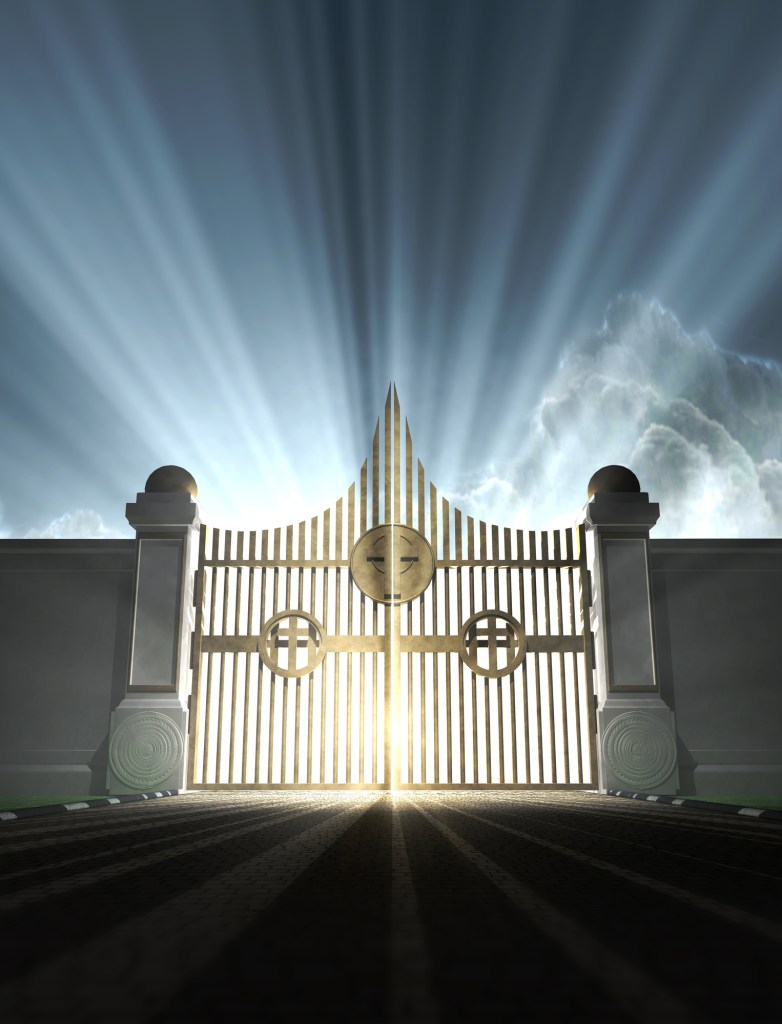
The problem: we want clean hands and a pure hear; we want to trust in God alone, and we want to hold to nothing but the truth. The truth is, though, that no one meets these conditions. No one can approach a holy God!


Yet, this Psalm exalts in the anticipation of connecting with such a God – a God who made and possesses the universe, a God who can only be approached with cleans hands, a pure heart, with singleness of devotion and in the fullness of truth. This is because David anticipates something. And this is where the Psalm shifts:

They will receive blessing from the Lord
    and vindication from God their Savior.
Such is the generation of those who seek him,
    who seek your face, God of Jacob.

Psalm 24:5-6

The resolution to the problem is that we do not approach God: He approaches us. We must receive from God his blessing and vindication. It is nothing we can ascend to, nothing we can achieve.

God knows this well, and He provided a way. As with Abraham for whom God provided a ram caught in the thicket to sacrifice in place of his son, Isaac, God has provided for us what is necessary to clear the way for us to receive Him. Through Christ, we are made holy, clean and new.[i]

The Psalm is considered “Messianic” because David anticipates our need for God to come to us, to provide for us. He says:

Lift up your heads, you gates;
    be lifted up, you ancient doors,
    that the King of glory may come in.

Psalm 24:7

Thus, David exalts not in the prospect that someone might ascend to heaven, but in the anticipation that God will descend to us. God meets us where we are. But there is more to this than God simply meeting us where we are: we need to be ready to receive Him.

Before the church service that inspires this article this morning, I read an article in my newsfeed: How the Capitol attacks helped spread Christian nationalism in the extreme right, from the Religious News Service. It may seem like a strange tie in to Psalm 24, but I hope you will stick with me to see the connection.

Continue reading “Who Is God? How Can We Approach Him? What Do the Answers Mean for Us Today?”

How Does the Tower of Babel Fit into God’s Plan for People to Love Him and Love Our Neighbors?

Our frustration, toil and separation from other people are not contrary to the purposes of God, but part of the plan.

The story of the Tower of Babel is included in Scripture for a reason, right? So, Why is it there? How does the tower of Babel fit into God’s redemptive plans and purposes?

These are questions we should think to ask. In fact, Scripture is designed, according to Hebrew thinking, to invite us to ask questions.

Western thinking might assume that we just take things on faith and don’t ask questions. Or the opposite: take it at face value and dismiss it when we find problems (“contradictions”) in the text. The biblical texts, however, are inherently Hebrew (“eastern”) in their assumptions, and we lose something if we do not understand that.

God wants us to seek Him, and that includes asking questions of Scripture, wrestling with it, and finding answers to our questions. We don’t exhibit a lack of faith when we find “problems” in Scripture and ask questions. Our faith propels us forward to wrestle with the text and seek answers through study, prayer, and the guidance of the Holy Spirit.

We can hold to a high view of Scripture and admit there are “problems” in the text. Those problems can lead us to some real gems in the answers they reveal.

God desires us to seek him and find him, as Paul says to the philosophers in Athens. (Acts17:27) Jesus, of course, promised that those who ask, seek, and knock will be answered, will find, and the door will be open to them. (Matthew 7:7) Faith is evident when we use the problems we see as the springboard to seek answers.

I recently wrote an article on the Tower of Babel story exploring some of the questions it invites us to ask, and trying on answers that are suggested by a more eastern (Hebrew) mindset than most westerners might be adopt.

One question we might ask is: why is the story there to begin with?

We might assume the story is simply an explanation for how people became scattered all over the world in different language groups. If that is all we get out of the story, though, we miss the most important meaning. If we stop there, and assume there is no more to the story, we may be missing the most important part of the story!

A Hebrew (or eastern) mind always asks, “Why?”

I resonate with this basic practice incorporated into the BEMA Podcast because of a Jewish professor I had in college. He explained one day the difference between the western and eastern approaches to Scripture. He illustrated it with the following example.

If the universe consisted of a chair in a room, people with western minds and eastern minds would approach the room differently. The westerner would measure the height, width, depth and mass of the chair. He would weigh it and measure the distance of the chair from the walls and the ceiling. The easterner (the Hebrew) would start by asking, “Why is the chair here?”

In my previous article, I discussed how the story is a chiasm (a type of poetry). A chiasm puts emphasis on the middle verse. In this story, the emphasis falls on the people’s desire to “make a name for ourselves” because “otherwise we will be scattered over the face of the earth”. (Gen. 11:4)

Why were they concerned about being scattered? Why does God care? What is God doing in confusing their languages and scattering them?

For starters, God does not break into the story, yet, when they are making bricks. We might assume, therefore, that God isn’t threatened or concerned about their development of new technology. He doesn’t break into the story until they say they are going to build a tower to make a name for themselves.

We also need to be mindful, always, of context. The context here is that people are moving away from God, away from his plans. (Moving east.) God wanted them to multiply and fill the earth, but they wanted to put down roots in the plains of Shinar (Babylon), lest they be scattered, and build a tower to exalt themselves.

God’s plan was to have them “multiply and fill the earth”. This was the instruction from God to Adam and Eve. The people who built the Tower of Babel didn’t want to do that. They didn’t want to be “scattered”. They resisted, and they put down roots when they should have been filling the earth.

Building a tower to make a name for themselves, in this context, means wanting to pursue their own plans to achieve their own ends. The concern about being scattered suggests they knew they were doing their own thing contrary to God’s plans for them. They might have feared being scattered because it would disrupt their plans to exalt themselves.

Maybe they thought God couldn’t scatter them if they built a fortified tower. Maybe they were trying to make God deal with them on their own terms, in a location they established, by a structure by which they thought they could ascend to God and control where God met with them.

Of course, God did exactly what they feared, and scattered them a against their wishes by confusing their languages.

But why? Was God threatened by them?

Um…., no. God is sovereign. He created the heavens and earth, and He created these people. They were no threat to Him. So why did God scatter them?

I believe the answer lies partly in the fact that they were pursuing their own plans in exultation of themselves. God had other plans, and God frustrated their plans that were not in keeping with His plans.

That might all seem arbitrary unless we keep asking questions and seeking answers. Why were the peoples’ plans something God couldn’t abide? How did the peoples’ plans interfere with God’s plans?

What were God’s plans?

Continue reading “How Does the Tower of Babel Fit into God’s Plan for People to Love Him and Love Our Neighbors?”

Who Has the Burden of Proof on the God Proposition?

Who has the burden of proof may depend on our end goal.

Michael Egnor published a provocative article posted on Evolution News & Science Today: Theists vs. Atheists: Who Has the Burden of Proof? Egnor’s comments follow a debate he had with Matt Dillahunty, who is, perhaps, the most popular atheist voice speaking out against religion today.

Egnor claims Dillahunty “didn’t fare well” and demonstrated “no real understanding of any of the ten classical proofs of God’s existence”. It seems that Dillahunty’s big position in the debate was that theists have the burden of proof, so there is no real need for him to assert a position; he can sit back and take pot shots at theist’s arguments and call it a win.

I didn’t watch the debate, so I am just parroting Egnor’s characterization on my way to making a different point. Dillahunty did recently attempt to undress William Lane Craig’s favorite argument, the Kalam Cosmological Argument, so perhaps he isn’t quite as derelict in his opposition as Egnor makes him out to be. (Though, again, it’s just taking pot shots at positive arguments.)

It is true that Dillahunty relies heavily on the position that he has no burden to prove the negative: that God doesn’t exist. Egnor claims this is because positive atheist arguments are “few and weak” (before putting up a strawman argument in caricature of Dillahunty’s favorite argument based on “Divine Hiddeness”, which I don’t intend to address either).

Egnor may be right, basically, in his assessment of Dillahunty’s position, though not very winsome in stating it. Of course, I wouldn’t characterize Dillahunty as winsome either. Much less so.

What caught my attention about the article wasn’t in the article at all. It was a comment about the article to the effect that anyone who is interested in truth has the burden of proof. That comment, I believe, deserves some attention.

Continue reading “Who Has the Burden of Proof on the God Proposition?”

East and West Meet at the Tower of Babel

I have been listening to the BEMA podcast. I highly recommend it. As defined on the website, “‘BEMA’ (or bimah) is a Hebrew word that refers to the elevated platform in the center of first-century synagogues where the people of God read the Text.”

The early Christians knew their Scripture. They built their lives around it. They devoted themselves to it, and to prayer, and the apostles reaching, and to fellowship and shared meals. (Acts 2:42) The bema in was where early Christians gathered in first century synagogues before they were persecuted and scattered.

The BEMA podcast attempts to approach Scripture the way easterners would have approached Scripture – the way the early Christians in the Middle East would have approached Scripture. The idea that Hebrew people were more “eastern” in their thinking was first pointed out to m by my Jewish professor in college over 40 years ago, so following up with that concept intrigues me.

Christianity quickly became westernized, but the origins of Christianity are eastern, growing out of the Hebrew culture and scriptures. For that reason, we would do well to gain some new perspective from a more eastern way of thinking. I encourage you to listen to the first couple of episodes of the podcast linked in the opening paragraph if you want an introduction to an “eastern” perspective of the Bible.

Reading the first 11 chapters of Genesis from an eastern, Hebraic perspective, opens up new insights. Not the least of which is the genre of literature these chapters represent. They are poetry. They are written in chiasms with intricate organization and emphasis that is found in the structure of the chiasms.

The Tower of Babel story is one of those chiastic passages in Genesis. The story actually begins in the Hebrew with the last verse of Chapter 10 (as it is organized in English Bibles), and it goes like this (ESV):

These are the clans of Noah’s sons, according to their lines of descent, within their nations. From these the nations spread out over the earth after the flood.

Now the whole world had one language and a common speech. As people moved eastward, they found a plain in Shinar and settled there.

They said to each other, ‘Come, let’s make bricks and bake them thoroughly.’ They used brick instead of stone, and tar for mortar. Then they said, “Come, let us build ourselves a city, with a tower that reaches to the heavens, so that we may make a name for ourselves; otherwise we will be scattered over the face of the whole earth.

But the Lord came down to see the city and the tower the people were building. The Lord said, ‘If as one people speaking the same language they have begun to do this, then nothing they plan to do will be impossible for them. Come, let us go down and confuse their language so they will not understand each other.’

So the Lord scattered them from there over all the earth, and they stopped building the city. That is why it was called Babel—because there the Lord confused the language of the whole world. From there the Lord scattered them over the face of the whole earth.

Hebrew has no vowels, only consonants. Rather, vowel signs are placed over the consonants to denote where breaths should be taken for anyone reading Hebrew out loud. 

The consonants in this chiasm are repetitive: N, B, L, H; then H, L, B, N in reverse. There is a front half and a back half to the structure. The middle of the chiasm is verse 11:4, which I have emphasized by bolding it.

The verse in the middle of the chiasm is where the emphasis lies: the peoples’ concern about being scattered over the face of the earth. They didn’t want to be scattered.

Why not? That’s the question we should be prompted to ask according to the emphasis we find built into the structure of that story.

I am not sure I can do any justice to the layers of meaning and the questions that arise in these verses in a short blog post. I can only scratch the surface, but here goes….

Continue reading “East and West Meet at the Tower of Babel”

When It Gets Hard, to Whom Shall We Go?

I had gone back to medicating myself and chasing weekends. I was lost in a spiritual wilderness.

The passage from the Gospel of John reproduced below was the subject of a sermon recently where I attend church. It is also the catalyst for one of the most important turning points in my life.

Jesus had just finished telling the crowd, “I am the bread of life….” (John 6:48); “And the bread that I will give for the life of the world is my flesh” (John 6:51); and, “Whoever feeds on my flesh and drinks my blood has eternal life.” (John 6: 54)

The Romans called the early Christians cannibals because of words like these and “the Lord’s Supper” that Christians observed ritually when they met. The crowd didn’t understand what he was saying either. The apostles also didn’t understand, as is evident by the following interchange in John 6:

60 On hearing it, many of his disciples said, “This is a hard teaching. Who can accept it?”

61 Aware that his disciples were grumbling about this, Jesus said to them, “Does this offend you? 62 Then what if you see the Son of Man ascend to where he was before! 63 The Spirit gives life; the flesh counts for nothing. The words I have spoken to you—they are full of the Spirit[e] and life. 64 Yet there are some of you who do not believe.” For Jesus had known from the beginning which of them did not believe and who would betray him. 65 He went on to say, “This is why I told you that no one can come to me unless the Father has enabled them.”

66 From this time many of his disciples turned back and no longer followed him.

67 “You do not want to leave too, do you?” Jesus asked the Twelve.

68 Simon Peter answered him, Lord, to whom shall we go? You have the words of eternal life. 69 We have come to believe and to know that you are the Holy One of God.” (Emphasis added)

These words Jesus spoke were allegorical of course. In the sermon on this passage the pastor developed the principal that we feed on what we follow.

Paul says, “Bad company corrupts good character.” (1 Corinthians 15:33) “Garbage in, garbage out”, as “they” say. It’s biblical, and it’s common wisdom, but this passage is about much more than an adage for life.

Continue reading “When It Gets Hard, to Whom Shall We Go?”