Emptied of Glory and Obedient to Death

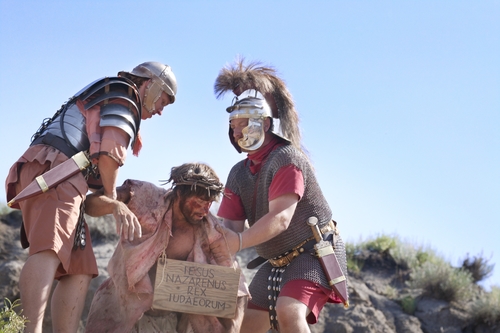
Depositphotos: 31617591 Copyright: DesignPicsInc

On Good Friday we remember the ultimate sacrifice God made for us. Not only did He empty Himself of His glory to become like us, taking on human flesh, but He was obedient to the law that He established for us – obedient to death – even death on the cross. We shudder at the thought of hanging on a cross, but it’s hard for us to imagine how utterly shameful crucifixion was in the 1st Century.[1]

This was not just a person, though, this was God who had already shed his glory to become like us and walked in humble obedience to all that He required of us – something that we do not even do ourselves. This man who hung tortuously and shamefully on the cross was also fully God who certainly suffered all the pain and shame that a man and God could possibly feel at the hands of His own creation.

In the article linked at the end of this blog piece, Trevin Wax makes three observations that have stuck with me since I read them: Continue reading “Emptied of Glory and Obedient to Death”

Remembering Jesus on Good Friday

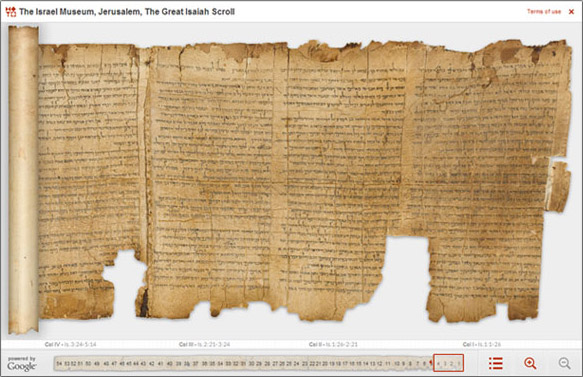
The Great Isaiah Scroll (1QIsaa) • Qumran Cave 1 • 1st century BCE • Parchment • H: 22-25, L: 734 cm • Government of Israel • Accession number: HU 95.57/27

These words where written by a man named Isaiah[1], considered a prophet, about 700 BC, before Christ Continue reading “Remembering Jesus on Good Friday”

What Is Man That God Should Take Notice?

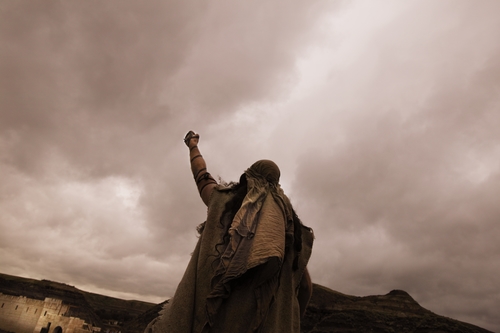
Depositphotos Image ID: 31610845 Copyright: DesignPicsInc

We all know the story of Job. Job was considered a righteous man, as far as men go. He was a God-fearing man, and He was also blessed with wealth, a good family and many friends.

Then, according to the story, God allows Satan to destroy Job’s wealth, family, and health. He lost everything, and he can’t understand why God would allow such a righteous man as himself to fall on such hard times.

Job became the poster child of bad things happening to good people!

Job put on sackcloth and sat in ashes demanding to know of God why he was suffering such injustice. He counted all the ways he had been righteous and just and challenged God to explain why he was suffering while men not as righteous or just as he were living in relative comfort and abundance.

Job’s friends tried to counsel him, but they didn’t believe that he was as just and good as he claimed to be. They, like Job, believed that God wouldn’t allow a righteous man to suffer as Job was suffering. Thus, they concluded that Job wasn’t as good as he claimed.

This is a common paradigm. Job’s dilemma is our dilemma as well. We think that good people should have good lives and bad people should pay the price of their badness.

Only, it doesn’t seem to work out that way. It obviously isn’t that simple. We have a keen sense of justice (especially when we feel the sting of injustice close to home). We can see that injustice exists in the world, and we it bothers us.

The Bible doesn’t shy away from the issue, as some suppose. It doesn’t soft peddle the problem. It tackles “the problem of pain” head on.

Continue reading “What Is Man That God Should Take Notice?”

The Resurrection: 2nd Century Legend? or 1st Century Factual Claim?


Easter is just around the corner so thinking about the Christian claim that a man from Nazareth in 1st Century Palestine died and rose from the dead three days later is a timely consideration. The accounts of this event don’t read like mere story or legend. They have all the characteristics of Greek biographies capturing historical accounts.

Many modern scholars accept the Gospels as part of the Greco-Roman biography genre (focusing on the similarities), while others find them uniquely Jewish (focusing on the differences). Central to this ongoing debate is the apparent intention of the authors to assert a factual, historical narrative.[1]

The difficulty modern scholars have with the text, which reads like biographical and historical accounts, is the inclusion of fantastical claims of miracles, the resurrection of Jesus and theological statements, many of which are penned as statements made by Jesus.

From the early to mid-19th Century, much of the biblical scholarship has leaned in a skeptical direction, and that inertia continued robustly into the 20th Century. That scholarly trend produced a skeptical consensus weighted toward a view for instance, that the Gospels, were written long after the events they describe, probably in the 2nd Century, making the resurrection and appearance of Jesus to his followers something akin to legend.

This thread of scholarship suggested that early formulations of the message of Jesus did not include his resurrection or appearances. These things were believed to have been added many decades and two or more generations after the events took place.

The 20th Century view began with skepticism and ended with a skeptical conclusion explaining the resurrection claim by the kind of embellishment that comes with the passage of time. This was the consensus view when I studied religion in the late 1970’s.

But one man, wrestling with his own doubts, took the facts the skeptics would give him and pieced together an analysis that does not square with the view that the resurrection claim is a later embellishment of what the first followers of Jesus believed. These “minimal facts” have changed the views of most 21st Century Scholars, even skeptical ones.

The Scholarly consensus has now changed on when the Gospels were written and on what the early message of the first followers of Jesus was. For instance, the scholarly consensus now agrees that all the Gospels were written in the First Century. Even skeptical scholars date the Gospels between 70 AD and about 95 AD. The scholarly consensus also agrees that the message included the death and resurrection of Jesus from very early on.

Continue reading “The Resurrection: 2nd Century Legend? or 1st Century Factual Claim?”

Questions on Morality and the Materialist

if God is not the supreme moral law giver, on what basis do we have morality, and how do we judge something like genocide?

Depositphotos Image ID: 129286826 Copyright: Olivier26

In a naturalistic world in which there is nothing supernatural, nothing other than the material world, and everything there is can be summed up by what we can touch, see, hear, feel and measure, survival of the fittest reigns. In a world like that, what is wrong with genocide?

Genocide is like the ultimate survival of the fittest. The superior people group dominates, overcomes and wipes out the inferior people group. What could be more Darwinian? What could be more natural in a naturalistic world?

This, in fact, is largely the history of the world. Why, then, is this expression of survival of the fittest wrong?

Thankfully most people today recoil from such a notion, but on what basis?

Continue reading “Questions on Morality and the Materialist”