
How Do We Know When a Person Is a False Messiah or False Prophet?

Jesus told us what to look for

“[I]f anyone says to you, ‘Look, here is the Christ!’ or ‘There He is!’ do not believe it. For false messiahs and false prophets will appear and perform great signs and wonders to deceive, if possible, even the elect.”

Matthew 24:23-24

This is a significant warning from Jesus about future times – our times. It’s easy to call out false messiahs and false prophets, and many have done that, but we should be cautious and careful in our understanding of what a false messiah or false prophet and, more importantly, how to spot one.

The Greek word translated a “false” in this passage is ψευδή (pseudés) meaning “false, untrue”, and “(by extension) erroneous, deceitful, wicked.” The word comes from the root verb ψεύδομα (pseudomai) meaning “to utter a lie or attempt to deceive by falsehood.”

The Greek word Χριστός (Christos), of course, means Christ – the Christ – as in Jesus Christ, but, it could mean more than that. Christos derives from the verb chrio (χρίω), which literally means “to smear or rub with oil.” It also means “to anoint” (especially for a divine purpose” and “(by implication) to consecrate to an office or religious service.”

Jesus used chrio when he said, “The Spirit of the Lord is upon me, because he has anointed me to proclaim good news to the poor.” (Luke 4:18) In more modern terminology, we might say that Jesus was appointed to proclaim good news to the poor. The “anointing” (the pouring of oil on a person) was symbolic of a person’s appointment to a position. In religious circles, we might use the word, “calling,” today.

The idea of anointing a person appointed by God for a particular office was practiced in the Old Testament as well. Samuel “took a flask of olive oil and poured it on Saul’s head”, and he said, “Has not the LORD anointed you ruler over his inheritance?” (1 Samuel 10:1)

Christos has a counterpart in the Hebrew word, מָשַׁח (mashach), meaning “to rub with oil, i.e. to anoint,” and “(by implication) to consecrate.” Hebrew kings, priests, and prophets were anointed in this manner as a way of recognizing their position (appointment). Thus, מָשִׁיחַ (Messiah), literally “Anointed One,” emerged from this practice.

The Greek word, Christos, is the equivalent of the Hebrew word, Messiah, of course. We tend to think only of Jesus Christ, “the” Messiah, when we use those terms, but anointing men for their offices was common practice in the Old Testament and New Testament times by Hebrews and by Greeks. Anyone who was anointed (appointed) for an office was an “anointed one.”


A false Messiah is one who falsely claims or acts as if he is anointed (appointed) for a particular role. The Hebrew word for Prophet (προφήτης (prophétés)) means speaking forth by the inspiration of God, so a false prophet would be one who falsely speaks as if by the inspiration of God.
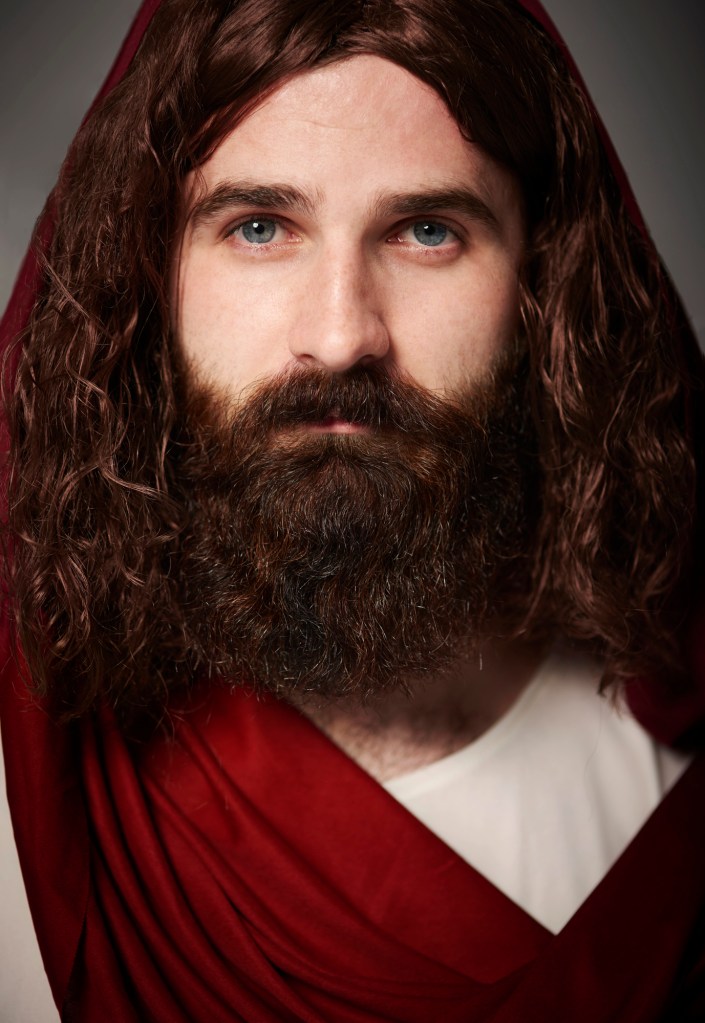

Jesus uses the terms, false messiahs and false prophets (plural), to signify that many people would come claiming (or claimed) to be messiahs or prophets. He says, they will deceive many people and even the elect, if possible. Elsewhere, Jesus says they “will come to you in sheep’s clothing” and warns us to “Watch out!” (Matt. 7:15)

Is it possible for God’s children to be deceived? I would like to think not, but then why does Jesus warn us to “Watch out!”? Why does Jesus say false messiahs and false prophets might even deceive “the very elect”?

I don’t know if God’s children – the sheep who hear His voice – can ultimately be deceived by false messiahs and false prophets, but that doesn’t mean we could not be deceived at some point or for a time. It’s safe to say, I think, that Jesus would not have warned us at all if it wasn’t at all possible to be deceived to some extent.

At a minimum, Matthew 24:24 highlights the extreme danger and the potential for even believers to be swayed or confused by the powerful deceptions of false messiahs and false prophets. Peter warns us soberly that “there will be false teachers among you” (1 Peter 2:1), so we need to beware. But, how?

So far, we can say from the descriptor of false messiahs and false prophets that they are deceivers; they are not truly anointed for the purposes they or others claim; and they do not truly speak under inspiration from God. They deceive and lie, and that is what makes them dangerous. But, again, how will we know?

When God became man and came to His own people, they didn’t even recognize Him or receive Him. (John 1: 9-11) If God came in the flesh to people with whom God had a covenant for many hundreds of years, and they didn’t recognize Him, we should have the humility to admit that we might not recognize God always when He is active in our world, and for the same reason we might be fooled by false messiahs and false prophets.


What, then, are the clues that a messiah (one who seems to be anointed for a purpose, calling, position) or a prophet (one who purports or who is purported to speak by the inspiration of God) is false? Fortunately, the Bible gives us more information to go on.


Continue reading “How Do We Know When a Person Is a False Messiah or False Prophet?”

Who Were the Wolves Jesus Warned the Disciples About?

When Jesus said, “Be wise as serpents and innocent as doves”, who was he speaking about?


I am reading in Mathew right now in my year long reading plan, focusing this year on the New Testament. I have read the whole sweep of the Bible, from the Old Testament through the New Testament, each year for a number of years. I am not sure how many, because I have not kept track.

The words, “be wise as serpents and innocent as doves”, came up in conversation with my son a few days ago, so these words caught my attention in my daily reading this morning. I had not paid much attention to the context in which Jesus spoke these words before:

“I am sending you out like sheep surrounded by wolves, so be wise as serpents and innocent as doves. Beware of people, because they will hand you over to councils and flog you in their synagogues.” ‬

Matthew‬ ‭10:16‭-‬17‬ ‭NET

These are the instructions Jesus gave the disciples when he sent them to “the lost sheep of the house of Israel”. Jesus was very specific in his instructions, telling them what to do and what not to do, what to wear, how to conduct themselves, and Jesus pointedly included the following instructions:

“Do not go among the Gentiles or enter any town of the Samaritans. Go rather to the lost sheep of Israel.”

Matthew 10:5-6

I realized this morning for the first time the significance of the warning that Jesus was giving to his disciples when he sent them “out like sheep surrounded by wolves”. (Matt. 10:16) That instruction takes on a different color for me, now, considering that the “wolves” surrounding the disciples would be the religious people in their world – their fellow Jews.

Jesus was not sending the disciples among the Romans, or the Greeks, or even the Samaritans. Jesus was sending his disciples to the lost sheep of the house of Israel.

Jesus told the disciples to go only to the lost sheep of the house of Israel, and Jesus warned them they would be surrounded by wolves. This means Jesus was sending the disciples to the sheep in the house of Israel, and the disciples would be surrounded by wolves in the house of Israel.

The conclusion seems clear that the sheep in the house of Israel to whom Jesus was sending his disciples were going to be among wolves, who were also in the house of Israel.

These words of Jesus provide us the time worn adages about wolves among the sheep and wolves in sheep’s clothing. Jesus repeats this theme of the lostness of religious people and the wolfishness of religious leaders over and over again throughout the Gospels. So much, that this theme has stuck out like a sore thumb to me in recent years. (I have written about it in articles like, Why Did Jesus Pick on the Pharisees so Much?)

I have been recently pondering about the many criticisms Jesus leveled against the religious leaders of his day. Do these criticisms have any warrant today? How should we view what Jesus said to the religious leaders of his day? Is the significance historical, only? Or does it have application today in our Christian world?

Continue reading “Who Were the Wolves Jesus Warned the Disciples About?”

Of Kings, the Gospel and Political Expediency

What is the fruit of the Holy Spirit? What does loving your neighbor look like? These are not idle questions. These are questions that will separate sheep from goats.

Depositphotos Image ID: 55708003 Copyright: prometeus

Over the weekend, I posted a simple message on Facebook: presidents don’t say things like that. I am referring to the “sh*thole nations” statement of course. That simple post spawned hundreds of comments, and many of the comments were from Christians defending Trump, or at least not denouncing what Trump might have said.

Durbin might have mistaken what Trump actually said. It’s possible. It’s highly likely that Durbin was motivated by his dislike of Trump and by political objectives when he reported what he claimed Trump said. While it’s possible that Trump didn’t say those words, at least not exactly as they were reported, it also doesn’t really matter.

It’s one thing to question the veracity of Durbin’s report, but it’s another thing to defend or overlook what was claimed to have been said. If he said what he is accused of saying, we shouldn’t be defending it.

I find the continued, unquestioned support for the president, no matter what he says or does, by the Christian community to be disturbing. Are we following Christ? Or are we following a political party? I can’t tell.

Some of the things that have been said include the following: 1) yeah but look at the good that he is doing; or 2) he’s not perfect, he’s a flawed human being;  or 3) other presidents have said much worse, and 4) all presidents have said things in private meetings that they would not say in public (to repeat some of statements I have seen).

Those statements may be accurate (or not), but regardless of that, let’s look at these things from a Gospel perspective.

Continue reading “Of Kings, the Gospel and Political Expediency”

Donald Trump, Fruit and Wolves in Sheep’s Clothing

We have no business judging those outside the church but are instructed to judge those within the church.


Paul wrote to the believers in Phillipi:

“Let your manner of life be worthy of the gospel of Christ… standing firm in the spirit, with one mind striving side by side for the faith.” (Philippians 1:27)

Paul’s earnest instruction to the Philippians was that their “manner of life” (conduct) be worthy of the Gospel of Jesus. The Greek word translated “manner” means, among other things, “recognized as fitting”.[1]

Paul is talking about what we see in people, the outside appearances. In essence, Paul is saying let your conduct and the way people perceive you match the fruit of the Spirit that is working within you.

The fruit of the Spirit is “love, joy, peace, patience, kindness, goodness, faithfulness, gentleness, self-control….”[2]

Jesus warned about false prophets, adding that we would know them by their fruits.[3] In contrast, Jesus said the world would know us by our love[4], which is the greatest of the fruits of the Spirit.[5]

In this context, how do we, as Christians, respond to the things that Donald Trump says and does? Why do we defend him? Why have we tied our destiny to him? What does the fruit look like that hangs from his tree?

Continue reading “Donald Trump, Fruit and Wolves in Sheep’s Clothing”