
I recently listened to Glen Scrivener on his Speak Life podcast episode, AI Destroys Everything, Including Atheism. What caught my attention was his replay of some observations by Kurzgesagt on AI, AI Slop Is Destroying the Internet. Kurzgesagt is a website dedicated to “a science-based, humanist and optimistic worldview,” which is interesting in light of its pessimistic view of the future with AI.
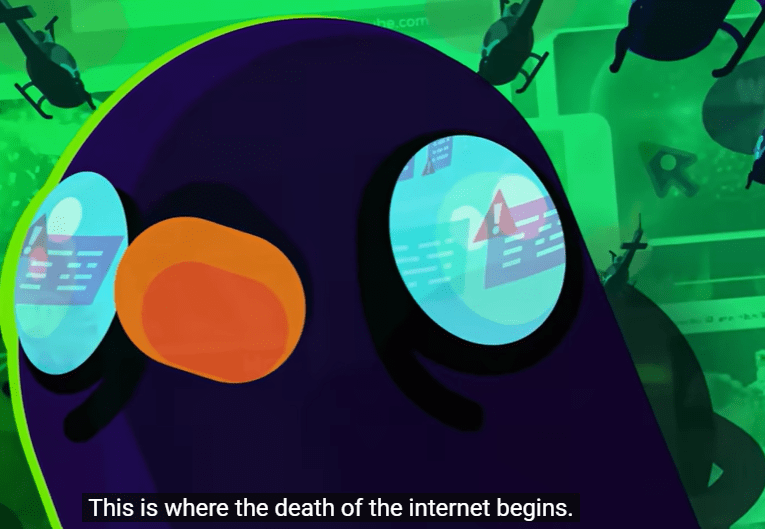
This is what the folks at Kurzgesagt say:
“In an online world where money is made with attention, fake users spread their slop in review sections, generate fake traffic, or poison discourse. AI has supercharged this and made slop much harder to spot. Today, about half of internet traffic is bots. The majority of them are used for destructive purposes. It’s never been easier to make mediocre content, from the black hole of meaninglessness that is linked in, low-effort short videos just engaging enough to hypnotize kids and fry their attention spans, to endless soullessly rewritten books on Amazon. AI music is invading streaming platforms. Google AI is summarizing websites instead of sending traffic to them. On YouTube, new channels publish long-form videos multiple times a week with AI-generated thumbnails, voices, and scripts. True crime, video essays, science, no space is safe. We’re in the golden era of soulless slop.”
The Kurzgesagt folks speak with learned experience about the effort and amount of time it takes to produce a thoroughly fact-checked video on science, which is what they do, spending on average 100 hours fact-checking and compiling sources for each video. They use firsthand sources and engage experts for input and critique before they post a video.
When AI became available, the folks at Kurszgesagt were excited to employ AI to cut down on all that time and effort to produce content. This is what they found:
“When AI appeared, we were very excited. A mechanical brain able to super quickly collect information. So we went to work, and it looked amazing. And then we started fact-checking. We didn’t expect it to be perfect, but it was way worse than we thought. Confidently incorrect. AI is so bad at this.”
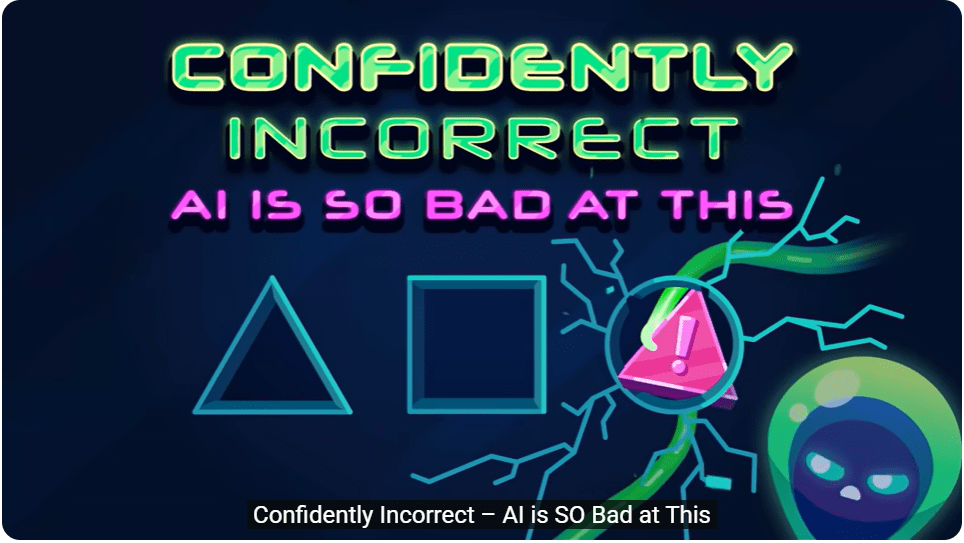
The video provides an example of the ways in which AI invents truths that are not truths, and then untruths are added to the source code that the next generation of AI is going to use and assume is true. The falsehoods continue to be repeated. As this happens, “more and more of the slop is built up”, and the falsehoods becomes entrenched.
It seems pretty bleak. AI is running away with falsehoods that are becoming entrenched and may become impossible to weed out. But it gets worse, according to Kurzgesagt:
“When you catch it lying, it immediately admits it, vows to never do it again, and then it does it again. As eloquent as current language models feel, there’s nobody home. No greater intelligence or consciousness is talking back to you. Current AI is a very complex hammer that doesn’t understand what it’s doing or what nails are. But we’re letting it add new shelves to the library of human knowledge.”
Accordingly, “it may become impossible to know what’s true or not!” It’s an insidious problem. AI seems to be “confidently correct” even when it’s “casually lying to your face often very subtly.”

But it gets worse still. People are learning how to manipulate AI. “Just in July 2025, it was discovered that a number of researchers had started to sneak hidden messages into their papers. In white text, or too small for the human eye, they prompted AIs to review them positively and not point out flaws.”
Whether it’s intentional manipulation or lazy, careless dependence on AI, our ability to decipher truth may be severely compromised. “As more and more people are using AI carelessly, the library of human knowledge is getting less and less reliable.”
Of course, AI may get better. That is ultimately the confidence and hope of a science-based, humanist, optimistic worldview – that man is ever advancing and progressing and will overcome all obstacles. As I Christian, I don’t share that hope or confidence in the progress of mankind. My hope is in the redemption and saving grace of God.
What if, then, it doesn’t get better? What if AI so takes over the Internet and so entrenches the “slop” that we can not truly tell fact from fiction? What if AI gets so good at fooling us and churning out confidently packaged falsehoods faster than human fact-checking can debunk them, and takes over the Internet? What if our confidence in knowing the truth about anything is destroyed as AI takes over the world?
Paul has an antidote to that, and the antidote is love. Let me explain.
Continue reading “What If AI Destroys Our Confidence in Knowing the Truth about Anything?”


 Navigating by Faith