Inspiration or Artifice? Faith and Reason

From a presentation by Francis Collins at the Veritas Forum at the California Institute of Technology

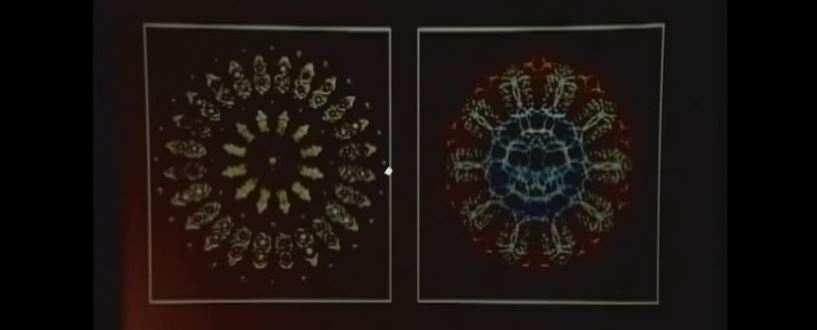
Take a close look at the two images. What do they represent? We might say that one image represents science and the other represents religion (or faith). But which is which?

The images are similar, but one of them is manmade, and the other is something we find in nature. Do you know which is which? Is the manmade image the scientific one or the spiritual one?

I will answer these questions; at least I will answer them as they were described in a presentation given by Francis Collins, the manager of the Human Genome Project, at a Veritas Forum at Caltech University in 2009. In the process, we will explore the chief question examined by this eminent scientist: whether science and faith are compatible.

Continue reading “Inspiration or Artifice? Faith and Reason”

What of Rupert Sheldrake?

Brooke Elkstrom Lake Sunset 2


This piece is a bit afield for me. I am embedding a “banned TED Talk” given by Rupert Sheldrake, a Cambridge, Harvard educated, scientist and bane of the scientific community. What of Rupert Sheldrake?

He is not a Christian, though he reportedly says the Our Father every day. Dr. Sheldrake “evolved” from a biochemist and cell biologist to a plant physiologist and eventually to a researcher in the field of parapsychology.[5] He is known for his “morphic resonance” concept.[6] He is the darling of New Age adherents, not Christians. He is also labeled a “heretic” by his scientific fellows.

So why would I include a piece on Rupert Sheldrake in a Christian-orientated blog site? Continue reading “What of Rupert Sheldrake?”

Theology, Science, Dreaming and Waking

Pitting the scientific myth against the theological Christian myth

76900149_2ab4dc13e3_o


I am a great fan of C.S. Lewis. Not that I agree with everything he has written, I love his genius and insight that is marked by a truly Renaissance journey through all of the great classical literature, philosophy and rational, scientific discourse. He approaches Christianity from the opposite shore and provides a view that most churchgoers would never otherwise get.

I recently read his short essay (Is Theology Poetry?) that is published with the Weight of Glory and other addresses by Harper One. In classic Lewis style, he starts off with a very obscure, nuanced question (that few, if anyone, would even think to explore) and, from the seeming pedantry and narrow beginning, he opens up the discourse about half way through into a sweeping view of an eternal truth that is absolutely breathtaking. Continue reading “Theology, Science, Dreaming and Waking”

Not So Random Thoughts on Evolution

Evolution does not satisfactorily explain the big picture, and it seems to me that the forest gets lost in the trees.
sad chimpanzee


I am fascinated by evolution. I have learned more about evolution in the last ten years of my life than I did in the first 50. I have come to respect the science, though I do not come to it from within the scientific community. As an outsider to this community, I am curious to see the religious fervor with which evolution, as theory for the origin of life, provides for its adherents. It prompts me to ask: why are so many people so religiously attached to evolution?

I am no scientist. I will admit that; at the same time, I can spot dogmatism when I see it. Questioning the theory of evolution as an explanation for the origin of life is sacrilege in these modern times – so much so that we have laws in the United States that forbid competing theories (like intelligent design or creationism, which are very different models) from even being mentioned in a public school.

As I focus on evolution in this blog piece, I am not talking about the adaptation of species. I see more than sufficient proof of evolution in that sense. I am not even talking about the origin of species, though I believe we need more sufficient evidence to prove that evolution is the sole explanation for the origin of species.

I am talking about the origin of life, itself – the big picture, the forest, not the trees. When talking about the evolutionary paradigm as an explanation of the origin of life, I do not see a satisfactory explanation of the big picture, not even close, and it seems to me that the forest gets lost in the trees. Continue reading “Not So Random Thoughts on Evolution”

Words have Power

Both faith and science instruct us that words have power

The phrase Words Have Power on a Blackboard


I find reminders of God in science. This article, Scientific Evidence Thoughts & Intentions can Alter the Physical World Around Us, provides another link between science and religion, demonstrating the creative and destructive force of words/thoughts. Christians talk about the power of prayer, and science backs it up.

I do not believe that these scientists have any religious inclinations; at least none that I am aware. The experiments do not necessarily mean that God is behind the phenomena. The experiments do show, however, a positive correlation between positive words and positive thinking; and they show a correlation between negative words and negative thinking and decay and degeneration. Continue reading “Words have Power”