Unveiling the Mystery of the Hiddenness of God

Why would God be hidden to us?


I have been meditating on the hiddenness of God lately and leaning into the mystery of God’s hiddenness. I am intrigued by it. The Bible is forthright about the hiddenness of God.

As I think about the hiddenness of God, the mind of the skeptic plays in my ear: “How do you know God exists? Why does God seem hidden? Maybe it’s because He doesn’t exist!” Believing in a “hidden” God is belief without evidence; it’s belief in the teeth of the evidence (as Dawkins says).

My response is that we all have faith in our basic assumptions about reality. The scientist assumes only matter and motion. He sees evidence for things like gravity and neutrinos, and dark matter and dark energy that cannot be seen. The scientist reasons to the best explanation for the things that cannot be seen in order to make sense of the reality in the world, and he does so within the “limitations” of materiality.

Science, after all, is the study of the material world. That is is the scope of science as it is defined in the modern world. Science is based on what is quantifiable, measurable, observable, and reproducible.

When I do theology or philosophy, I also start with assumptions. I start with an assumption, or a theory if you like, that God exists. The proof of God, however, is necessarily different than scientific proof.

God is not a substance in the universe to be quantified, measured, observed, or reproduced in the way we can study the natural world. He is not a component of the universe. He is not comprised of matter and motion like the universe. God is not a principle of physics that can be observed in its regularity and tested by its regularity.


If God exists and created the universe, He is separate and apart from the universe. That does not mean that God is not present in some way; it means that He is not present in the same way that you and I are present. Rather, God is transcendent. He is imminent (near in some way), but not contained within the creation.


God also must have agency to have determined to create. We understand the necessity for agency by our own agency. This makes sense of the question: why is there a universe; why is there something, rather than nothing.

For the life of me, I can make no sense of the assertion that a universe can create itself. What kind of voodoo magic is that? That conclusion is based on an assumption that matter and motion is all that exists, but we cannot prove that assumption.

To say that God must have agency is not to be anthropomorphic about it but to reason to the best explanation based upon what we know, which is our own agency and the way we conduct ourselves in the world. Where does a universe come from? The simple answer is that it comes from a creator who has agency, who has intentionality, and the ability to will and to act according to His purpose and design.

Where does intricate, fine-tuned complexity that is complex to the nth degree come from? It comes from a mind, from a creator who conceives a plan and then implements it. We know that from the way human beings create things. Where did we get that capacity? Like things produce or reproduce like things.

We know that the universe is “winding down”. That is what the law of thermodynamics tell us. Entropy is the rule. This means the universe is not getting more complex; it is breaking down, evening out, cooling, and becoming less complex over time.

Over course, this is occurring over a very, very long period of eons, so (perhaps) there is enough energy in the universe for complexity to form in areas of the universe even while entropy is working its very long way toward the inevitable heat death of the universe as a whole.


Maybe, but where did the energy come from to cause the so-called Big Bang? What triggered the universe to begin to begin with?

No one can explain that who doesn’t believe in a “Big Banger”, a Creator. It is the best explanation that we have. It makes the most sense of the reality that the Universe had a beginning.
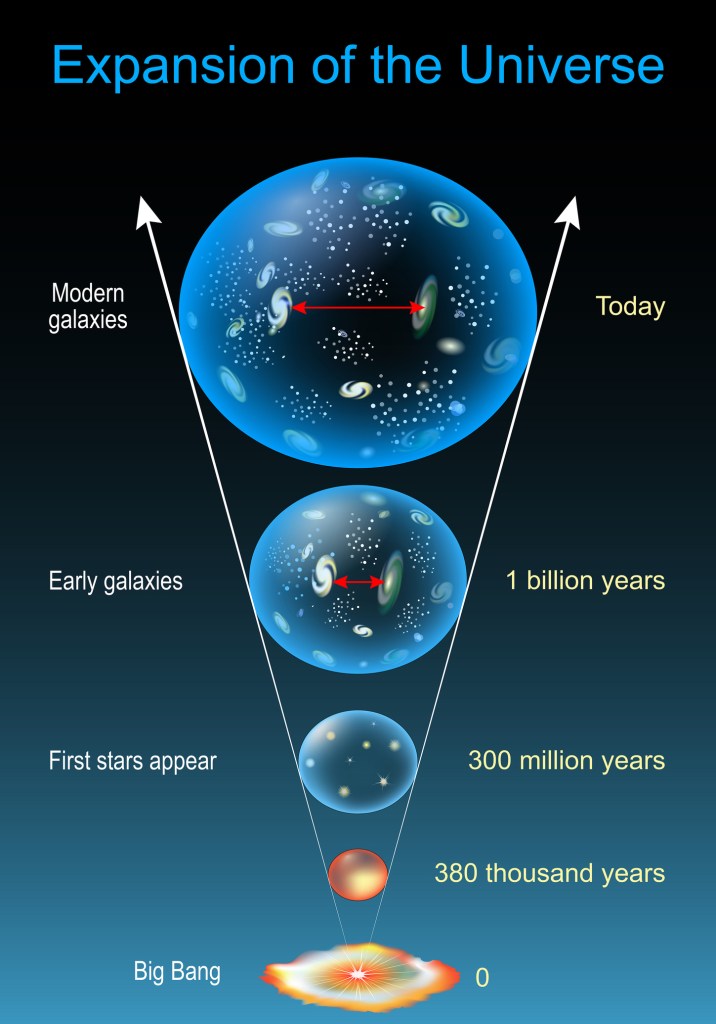

The multiverse doesn’t solve the “problem” of a beginning. It just kicks the can back down the road further. What triggered the multiverse into being? It’s an endless regression.

The Christian (Jewish and Muslim) conception of God is that God is the timeless, eternal being who always existed and was never created who chose to trigger the universe (or multiverse) into existence.

This, frankly, makes much more sense than a past eternal, non-sentient universe that just poofed life into existence. How do you get life from nonliving matter? What animates that matter?

But the questions don’t stop there. What triggers consciousness from inert, non-conscious matter? How do the fundamental “building blocks” of matter develop consciousness? It’s a complete mystery, and there is no mechanism known to modern science to explain it – other than the brute fact that human beings and (to some lesser degree) animals (and maybe plants) are conscious beings.

Consciousness is proven by the sheer fact that we are conscious of ourselves. It seems to “reside” in or be attached to the brain, but the brain by itself is not consciousness. The brain is a perfect, intricate receptacle for consciousness, but the brain and consciousness are not perfectly coexistent. They are not the same things, and science has no adequate explanation for that.

Because these things suggest looking outside the limitations of the material world for our answers, we have theology and philosophy, which can be “scientific” loosely in method and approach, but defies the limitations of scientific inquiry.

That doesn’t mean that theology and philosophy should be divorced from science (or that science should be divorced from theology and philosophy). All reality must ultimately cohere harmoniously, or we cannot call it reality.

But, I have digressed (only slightly) from the point, which is the mystery of the hiddenness of God.

Continue reading “Unveiling the Mystery of the Hiddenness of God”

Understanding Pascal’s Wager

“The heart has its reasons of which reason knows nothing.”

Glen Scrivener argues that atheists misunderstand Pascal’s Wager in Episode number 595 of his Speak Life Podcast (Atheists Misunderstand Pascal’s Wager (and so do Christians) I think he is right, and it seems that Christians don’t really understand it, either. Me included … until now. Before we dive in, though, let’s review Pascal’s Wager.

Blaise Pascal starts with the premise that human beings can neither prove the existence of God, nor prove that God does not exist. This is a concession, perhaps, to the atheist, but the atheist stands in no better position in relation to proving that God does not exist.

If that is the reality, then whether to believe in God or not is crap shoot. If we can’t prove it one way or the other, are we any better off than a roll of the dice? Pascal says we are, and the truly rational person would choose belief in God based on what is known as Pascal’s Wager.

Believing in God potentially gains a person everything (eternal life, joy, meaning, etc.). If God exists, the believer hits the jackpot. Believing in God also has very little downside. Pascal supposes that a person might forego some pleasures that were not pursued or time and energy spent living out faith (more on that below), but a person is little worse off for believing in God if God does not exist.

On the other hand, a person who doesn’t believe in God loses everything if God does exist (eternal separation from God). Therefore, Pascal said, the rational thing is to believe in God, because the potential gain is infinite and the potential loss is minimal. Given that we cannot prove God one way or the other, the truly rational person would “wager” on God, says Pascal.

Christopher Hitchens calls Pascal’s Wager “religious hucksterism of the cheapest, vulgarist, nastiest kind,” and Alex O’Connor calls it “half-hearted ass-kissing just in case.” Richard Dawkins asks, “What is so special about belief?” And, “Why would God not look for something of more substance from us, like being good?”

The often deriding comments beg for some understanding, and Dawkins’s legitimate questions call for a response. Matt Dillahunty says, “Pascal’s wager is an apologetic argument that attempts to demonstrate that belief in God is warranted based on decision theory and probability.” But is it?

All of these comments and questions assume that Pascal’s Wager is an apologetic argument for God, and they find it woefully wanting in that respect. Even Christians assume it is an apologetic argument, also, but everyone who makes that assumption has missed the actual point of Pascal’s Wager.


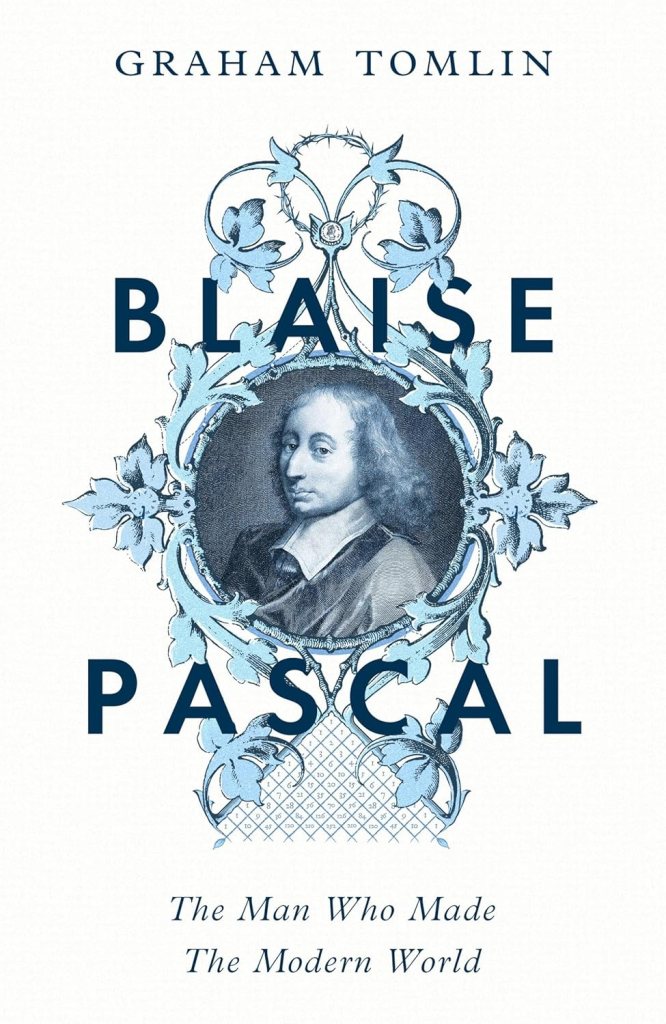
Glen Scrivener’s summary of Pascal’s Wager taken from Graham Tomlin’s book, Pascal, The Man Who Made the Modern World, exposes the error people make in these assumptions. Pascal wasn’t attempting to assert a rational argument, defense, or proof of God. He was making a very different point altogether.


Pascal was a genius by any measure. He was a scientist, mathematician, geometer, physicist, philosopher, polemicist, and theologian. He invented probability theory; he proved the existence of the vacuum, laid the foundations of integral calculus, performed what is called the first proper scientific experiment, established the principle that made possible the hydraulic press, demonstrated that air has weight, and many other things.

Thus, Scrivener says, “If we think that Blaise Pascal was silly, that might not reflect on Blaise Pascal; it might be a sign that we have misunderstood him.” The podcast featuring Graham Tomlin linked above and embedded below does a great job explaining the misunderstanding. It is worth the 25 minutes to watch and listen, but I am going to summarize and add my own thoughts as I continue.


Continue reading “Understanding Pascal’s Wager”

Thoughts on Reason and Faith Inspired by Charles Darwin and Dr. William Lane Craig

The main hall of Natural History Museum. This view includes the Statue of Charles Darwin (by Sir Joseph Boehm.)


In Dr. William Lane Craig’s book, Reasonable Faith, he addresses the role of reason, or the lack thereof, in faith. At one point, he responds to a somewhat common position – that we don’t need reason; we just need to preach the Gospel – this way:

“Now, there is a danger…. Some persons might say, ‘We should never seek to defend the faith. Just preach the Gospel and let the Holy Spirit work.’ But this attitude is unbalanced and unscriptural, as we shall see in a moment. For now, let us just note in passing that as long as reason is a minister of the Christian faith, Christians should employ it.”

While just preaching the Gospel isn’t necessarily wrong, we shouldn’t abdicate the use of philosophy, logic or reason in support of the Gospel. Of course, there is another, danger: an unwarranted and non-critical confidence in human reason.

An atheist, scientist recently took issue with Dr. Craig and the statement quoted above. He astutely noted that Craig’s suggestion that reason should be employed only if reason “ministers” to (supports) Christian faith implies that Dr. Craig believes reason should not be used if it doesn’t support the Christian faith. In a recent podcast, Dr. Craig confirmed that is exactly what he meant.

For the atheist, scientist, the suggestion that reason should take a backseat to faith is anathema. Reason is the highest standard, the “magisterial” standard, of arbitrating truth for the materialist who doesn’t ascribe to the Person of God, the supernatural or metaphysical reality. No surprise there of course.

For the atheist/materialist, there is no higher standard of proof for determining reality than human thought.

As important as I think sound human reasoning is, I agree with Dr. Craig. I have long held that the human capacity to reason should not be given such a magisterial place in a material world. By that, I mean that a materialist’s confidence in his own capacity to reason is utterly misplaced if he is right about materialism.

It’s an interesting conundrum. A materialist has no choice but to rely on his own capacity to reason on a materialist worldview. He has no other tools in the toolbox, but this tool is not adequate for the job required of it. Let me explain.

Continue reading “Thoughts on Reason and Faith Inspired by Charles Darwin and Dr. William Lane Craig”

Faith, Reason, Leaping & Falling

Parallel Sidewalks in Pest along the Danube river

I came to the conclusion in college that a person cannot reason his way to knowledge of God. I don’t remember all of the details that led me to this conclusion, but the conclusion was solidified for me in a lecture given by a professor on Western Civilization featuring Thomas Aquinas.

This lecture was given every year by this professor and eagerly anticipated by students at my college, which is why I attended it. As I remember the premise of the lecture, my memory of it being simplified now so many years later, science and reason can and does lead one to God. I determined then, and I believe now, that this is not true.

Not that science, reason and faith are incompatible. It’s just that science and human reason are not adequate for the task. Just as God must, necessarily, be Other than the material universe, we who are limited to the senses that are part and parcel of the material universe are limited in our ability to “see” and know anything beyond it.

The material universe consists of and is limited to the space/time continuum. By definition, God (if He exists) is Other than the space/time continuum. He is “outside” of space time. He is timeless and immaterial. Our science and our minds exist in space time and are limited to it and by it as a first principal.

In my way of thinking, a God who exists outside of this material world (our immediate environment) would have to reveal Himself to creatures such as ourselves. We could not “ascend” to Him.

Yet this is not to say that we can’t know anything of God. If such a God were to reveal Himself to us, we could know Him, but would we recognize the significance of that revelation? Jesus claimed to be a direct revelation from God. John, the apostle, said, “He came into the very world he created, but the world didn’t recognize him.” (John 1:10)

Is Jesus who he claimed to be?

I was influenced in reaching the conclusion I came to in college about the value of science and reason in this endeavor, no doubt, by Immanuel Kant and Soren Kierkegaard. They came to the opposite position of Aquinas. They essentially say it is impossible for a finite being such as ourselves to reason or discover our way to God. There will always be a gap in our knowledge that we will never be able to close by the reason and evidence that is available to us.

This made more sense to me. There will always be a gap between a finite being and an infinite being.

Continue reading “Faith, Reason, Leaping & Falling”

The Ends of Science and Beginning of Faith

“A great scientist, even like Stephen Hawking, if he had to admit a creator, it would be unavoidable, he would have to seek him because he is a great scientist.”

Photo by Ted Wright near Grandfather, NC

I recently listened to a conversation between Ravi Zaccharias and Professor David Block. Professor Block is currently the director of the Cosmic Dust Laboratory at the University of the Witwatersrand in Johannesburg and a Professor in the School of Computational and Applied Mathematics. His accomplishments speak for themselves.

David Block was elected as a Fellow of the Royal Astronomical Society of London when he was 19. Block had a paper (on relativistic astrophysics) published by the Royal Astronomical Society in London when he was 20. Block has a Master of Science degree in relativistic astrophysics and a PhD that focused on the morphology of spiral galaxies. He has participated as a visiting research scientist at Australian National University, the European Southern Observatory in Germany, Harvard University, the California Institute of Technology and the Institute for Astronomy at the University of Hawaii and other places.

And there is more. Professor Block has been featured on the cover of the prestigious scientific journal, Nature, twice. He won the NSTF-BHP Billiton award in 2013 for “outstanding contribution to SETI through Communication for Outreach and creating Awareness over the last 5 years – sponsored by the South African Agency for Science and Technology Advancement (SAASTA)”. He wrote a book for which two Nobel Laureates wrote the preface.

US astronomer, John Kormend, says, “David Block is to South Africa what Carl Sagan was to American astronomy – his pioneering discoveries are reshaping astronomical paradigms….” David Block was the person to accompany Stephen Hawking and introduce him when he met Nelson Mandela.[1]

These things are relevant when considering the conversation he had recently with Ravi Zaccharias. He isn’t just some self-important Internet pundit. He is highly respected for his science, and he is a Christian.

In that context, Block says, “A great scientist, even like Stephen Hawking, if he had to admit a creator, it would be unavoidable, he would have to seek him because he is a great scientist.”

Continue reading “The Ends of Science and Beginning of Faith”