Unveiling the Mystery of the Hiddenness of God

Why would God be hidden to us?


I have been meditating on the hiddenness of God lately and leaning into the mystery of God’s hiddenness. I am intrigued by it. The Bible is forthright about the hiddenness of God.

As I think about the hiddenness of God, the mind of the skeptic plays in my ear: “How do you know God exists? Why does God seem hidden? Maybe it’s because He doesn’t exist!” Believing in a “hidden” God is belief without evidence; it’s belief in the teeth of the evidence (as Dawkins says).

My response is that we all have faith in our basic assumptions about reality. The scientist assumes only matter and motion. He sees evidence for things like gravity and neutrinos, and dark matter and dark energy that cannot be seen. The scientist reasons to the best explanation for the things that cannot be seen in order to make sense of the reality in the world, and he does so within the “limitations” of materiality.

Science, after all, is the study of the material world. That is is the scope of science as it is defined in the modern world. Science is based on what is quantifiable, measurable, observable, and reproducible.

When I do theology or philosophy, I also start with assumptions. I start with an assumption, or a theory if you like, that God exists. The proof of God, however, is necessarily different than scientific proof.

God is not a substance in the universe to be quantified, measured, observed, or reproduced in the way we can study the natural world. He is not a component of the universe. He is not comprised of matter and motion like the universe. God is not a principle of physics that can be observed in its regularity and tested by its regularity.


If God exists and created the universe, He is separate and apart from the universe. That does not mean that God is not present in some way; it means that He is not present in the same way that you and I are present. Rather, God is transcendent. He is imminent (near in some way), but not contained within the creation.


God also must have agency to have determined to create. We understand the necessity for agency by our own agency. This makes sense of the question: why is there a universe; why is there something, rather than nothing.

For the life of me, I can make no sense of the assertion that a universe can create itself. What kind of voodoo magic is that? That conclusion is based on an assumption that matter and motion is all that exists, but we cannot prove that assumption.

To say that God must have agency is not to be anthropomorphic about it but to reason to the best explanation based upon what we know, which is our own agency and the way we conduct ourselves in the world. Where does a universe come from? The simple answer is that it comes from a creator who has agency, who has intentionality, and the ability to will and to act according to His purpose and design.

Where does intricate, fine-tuned complexity that is complex to the nth degree come from? It comes from a mind, from a creator who conceives a plan and then implements it. We know that from the way human beings create things. Where did we get that capacity? Like things produce or reproduce like things.

We know that the universe is “winding down”. That is what the law of thermodynamics tell us. Entropy is the rule. This means the universe is not getting more complex; it is breaking down, evening out, cooling, and becoming less complex over time.

Over course, this is occurring over a very, very long period of eons, so (perhaps) there is enough energy in the universe for complexity to form in areas of the universe even while entropy is working its very long way toward the inevitable heat death of the universe as a whole.


Maybe, but where did the energy come from to cause the so-called Big Bang? What triggered the universe to begin to begin with?

No one can explain that who doesn’t believe in a “Big Banger”, a Creator. It is the best explanation that we have. It makes the most sense of the reality that the Universe had a beginning.
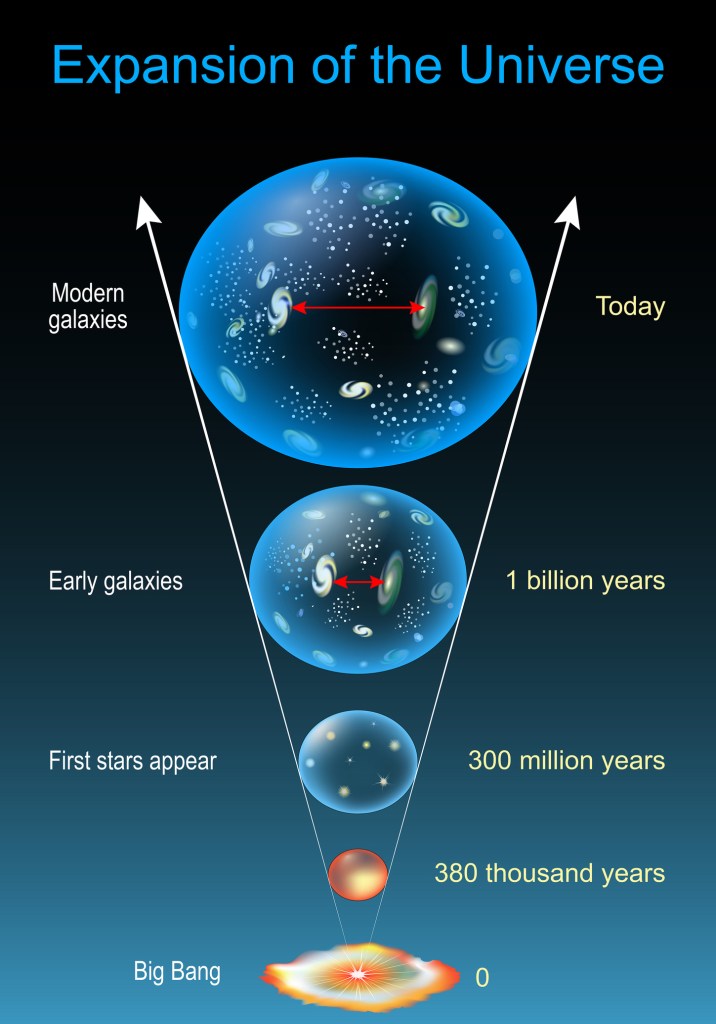

The multiverse doesn’t solve the “problem” of a beginning. It just kicks the can back down the road further. What triggered the multiverse into being? It’s an endless regression.

The Christian (Jewish and Muslim) conception of God is that God is the timeless, eternal being who always existed and was never created who chose to trigger the universe (or multiverse) into existence.

This, frankly, makes much more sense than a past eternal, non-sentient universe that just poofed life into existence. How do you get life from nonliving matter? What animates that matter?

But the questions don’t stop there. What triggers consciousness from inert, non-conscious matter? How do the fundamental “building blocks” of matter develop consciousness? It’s a complete mystery, and there is no mechanism known to modern science to explain it – other than the brute fact that human beings and (to some lesser degree) animals (and maybe plants) are conscious beings.

Consciousness is proven by the sheer fact that we are conscious of ourselves. It seems to “reside” in or be attached to the brain, but the brain by itself is not consciousness. The brain is a perfect, intricate receptacle for consciousness, but the brain and consciousness are not perfectly coexistent. They are not the same things, and science has no adequate explanation for that.

Because these things suggest looking outside the limitations of the material world for our answers, we have theology and philosophy, which can be “scientific” loosely in method and approach, but defies the limitations of scientific inquiry.

That doesn’t mean that theology and philosophy should be divorced from science (or that science should be divorced from theology and philosophy). All reality must ultimately cohere harmoniously, or we cannot call it reality.

But, I have digressed (only slightly) from the point, which is the mystery of the hiddenness of God.

Continue reading “Unveiling the Mystery of the Hiddenness of God”

Understanding Pascal’s Wager

“The heart has its reasons of which reason knows nothing.”

Glen Scrivener argues that atheists misunderstand Pascal’s Wager in Episode number 595 of his Speak Life Podcast (Atheists Misunderstand Pascal’s Wager (and so do Christians) I think he is right, and it seems that Christians don’t really understand it, either. Me included … until now. Before we dive in, though, let’s review Pascal’s Wager.

Blaise Pascal starts with the premise that human beings can neither prove the existence of God, nor prove that God does not exist. This is a concession, perhaps, to the atheist, but the atheist stands in no better position in relation to proving that God does not exist.

If that is the reality, then whether to believe in God or not is crap shoot. If we can’t prove it one way or the other, are we any better off than a roll of the dice? Pascal says we are, and the truly rational person would choose belief in God based on what is known as Pascal’s Wager.

Believing in God potentially gains a person everything (eternal life, joy, meaning, etc.). If God exists, the believer hits the jackpot. Believing in God also has very little downside. Pascal supposes that a person might forego some pleasures that were not pursued or time and energy spent living out faith (more on that below), but a person is little worse off for believing in God if God does not exist.

On the other hand, a person who doesn’t believe in God loses everything if God does exist (eternal separation from God). Therefore, Pascal said, the rational thing is to believe in God, because the potential gain is infinite and the potential loss is minimal. Given that we cannot prove God one way or the other, the truly rational person would “wager” on God, says Pascal.

Christopher Hitchens calls Pascal’s Wager “religious hucksterism of the cheapest, vulgarist, nastiest kind,” and Alex O’Connor calls it “half-hearted ass-kissing just in case.” Richard Dawkins asks, “What is so special about belief?” And, “Why would God not look for something of more substance from us, like being good?”

The often deriding comments beg for some understanding, and Dawkins’s legitimate questions call for a response. Matt Dillahunty says, “Pascal’s wager is an apologetic argument that attempts to demonstrate that belief in God is warranted based on decision theory and probability.” But is it?

All of these comments and questions assume that Pascal’s Wager is an apologetic argument for God, and they find it woefully wanting in that respect. Even Christians assume it is an apologetic argument, also, but everyone who makes that assumption has missed the actual point of Pascal’s Wager.


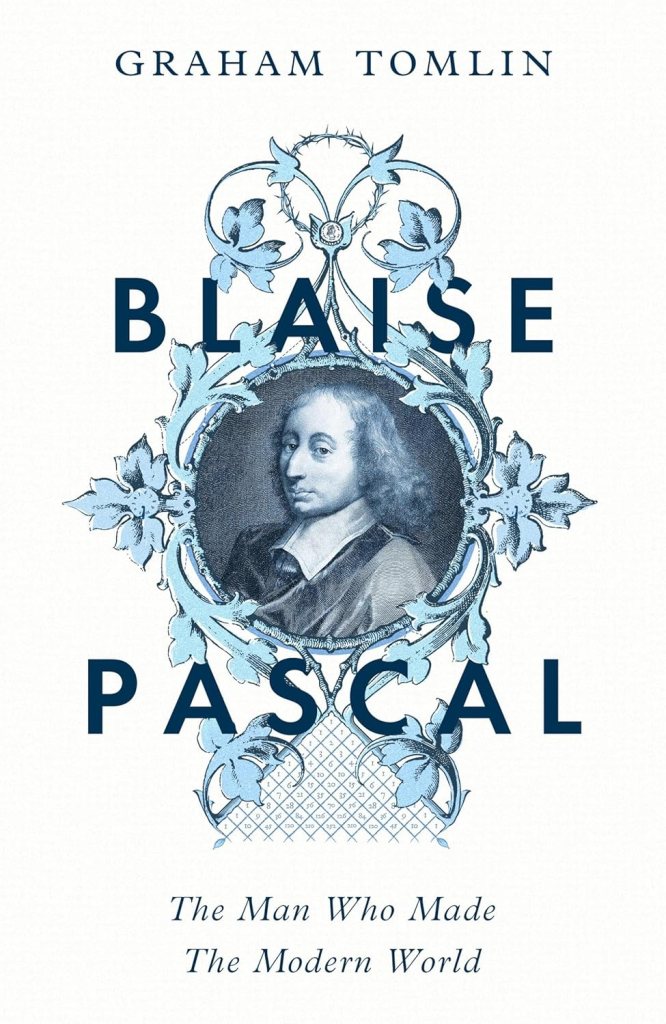
Glen Scrivener’s summary of Pascal’s Wager taken from Graham Tomlin’s book, Pascal, The Man Who Made the Modern World, exposes the error people make in these assumptions. Pascal wasn’t attempting to assert a rational argument, defense, or proof of God. He was making a very different point altogether.


Pascal was a genius by any measure. He was a scientist, mathematician, geometer, physicist, philosopher, polemicist, and theologian. He invented probability theory; he proved the existence of the vacuum, laid the foundations of integral calculus, performed what is called the first proper scientific experiment, established the principle that made possible the hydraulic press, demonstrated that air has weight, and many other things.

Thus, Scrivener says, “If we think that Blaise Pascal was silly, that might not reflect on Blaise Pascal; it might be a sign that we have misunderstood him.” The podcast featuring Graham Tomlin linked above and embedded below does a great job explaining the misunderstanding. It is worth the 25 minutes to watch and listen, but I am going to summarize and add my own thoughts as I continue.


Continue reading “Understanding Pascal’s Wager”

A Rational Explanation for Miracles: God in the Gaps

A contemplation based on human agency and the ability manipulate natural causes to generate beneficial effects.


In Episode 20 of the Christian Atheist Podcast (Ethics (Part 3): the Origin on Ought), John Wise focuses on a primary difference between human beings and animals. Though humans beings are animals, human beings are qualitatively different than other animals in rational capacity, and the rational capacity of humans allows humans to exercise agency over the natural world. This unique human capacity to exercise rationality through agency is the focus of my thoughts today.

Human beings exercise their agency and rational capacity to change and redirect the laws of nature. Other animals can do this in very primitive ways, but the human capacity to manipulate nature through human agency, rationality, and ingenuity is light years beyond what other animals can do.

Of course, humans cannot do things that defy the laws of nature. Rather, human beings use their understanding of those natural laws to manipulate them.

Wise observes that the human ability to manipulate the laws of nature includes the ability to separate cause from effect to acheive a desired result. For instance, human beings have learned to breed various types of plants and animals to achieve results imagined by humans which would never likely have occurred in the natural world left to random, natural processes.

Human beings can exercise their rationality to imagine different effects and to manipulate causes to achieve those desired effects. In this sense, human imagine the effects they desire to achieve, and they manipulate the causes in the natural world to achieve natural effects by design that the natural world would not obtain randomly.

The world seems to act randomly, unless agency acts upon the world. The examples of agency acting on the world to achieve results that would not obtain without such agency are legion. All of human endeavor is replete with examples of agency imagined and initiated by humans to obtain designed effects that we desire.

Human beings are able to produce effects that would never have occurred in the natural world but for human agency manipulating the natural processes. In other words, human input redirects the natural processes to produce results that would not have occurred if the natural processes were left alone.

Our ability to separate cause from effect to achieve desired ends that would not occur in the natural world by manipulating those causes to achieve the effects we desire is an example of supranatural agency in the world. In other words, we are in and of the natural world, and we use our knowledge of the natural world to manipulate natural causes to create natural effects.

We do not suspend the laws of nature or violate the laws of nature to accomplish our desires ends. We use the laws of nature to achieve our desired ends – albeit, ends that would not have occurred but for our intervention.

Ocean liners and skyscrapers are things that do not occur through the laws of nature, but for human agency. Even so, human agency des not suspend or violate the laws of nature to create them. Human agency uses the laws of nature to create them.


These observations are a model for understanding God. The fact that laws of nature act in very rational ways that are predictable and dependable suggests design. The way the laws of nature act suggest an intelligent agency that set them in motion just so. We would call that intelligent agent God.

If God created the laws of nature, He would certainly know how to manipulate natural causes to achieve His desired effects. God would have much greater capacity than us to manipulate natural causes to achieve desired effects. Exponentially so!

Many skeptics, like David Hume, reject the idea of miracles because they assume that miracles violate natural laws. The foundational premise of Hume’s logic, though, is false. The God that created the natural laws would not need to suspend or violate those laws to obtain desired effects. God could manipulate natural causes to achieve His desired effects without the need to “suspend” or “violate” natural laws just as we do.

God’s knowledge of those natural laws and the possible effects that can be achieved through the manipulation of them is certainly greater than ours. Exponentially greater.

Many people have called phenomena they didn’t understand miracles, but subsequent discoveries about the way the natural world works have provided explanations to us of natural laws and how they work that we didn’t previously understand. Once we understand the laws at work on those phenomena, we no longer call them miracles.

A primitive intelligent being might think that human beings are violating natural laws to fly airplanes, for instance. We know this is not true, but a more primitive being may not understand the principles of natural laws being manipulated to achieve the end of flying a heavy chunk of metal through the air.

Just as we manipulate natural causes to create effects that do not occur naturally, God may do the same. Thus, what we call miracles may be nothing more than the manipulation of natural causes by God to achieve effects that would not ordinarily occur in nature without the involvement of an agent.

Just because the primitive being does not know the principles being manipulated does not mean that a violation of natural laws has occurred. In this same way, a human being, who is certainly a more primitive intelligent being than God, may not be able to know or understand the principles of natural laws being manipulated by God to achieve a result that we call a miracle.

We call occurrences miracles that we cannot explain based our understanding of natural laws. But our measure of understanding is constantly changing. For this reason, modern people often say they no longer believe in miracles (and, by extension, God). Experience shows that many things we didn’t previously understand we now understand, and they assume, then, that we will find explanations in the natural laws to explain all the things we do not presently understand.

I note that this belief is not necessarily warranted, nor can we prove it. People who make this assertion do it on the basis of faith in the human ability to know and understand the world.

Further, our mere understanding of the way natural laws work, does not negate the need for intelligent agency to achieve desired ends. It isn’t enough for us to think something up; we must exercise our agency to act on the laws of nature to achieve our desired ends. Our understanding doesn’t create anything.

Imagine Aristotle seeing a pilot entering into a Boeing 737 and taking off into the air. Aristotle did not know enough about the law of gravity or aerodynamic lift to generate a good explanation based on the natural laws that were understood at the time. He may have called it a miracle because it defied explanation to him based on the level of knowledge he had.

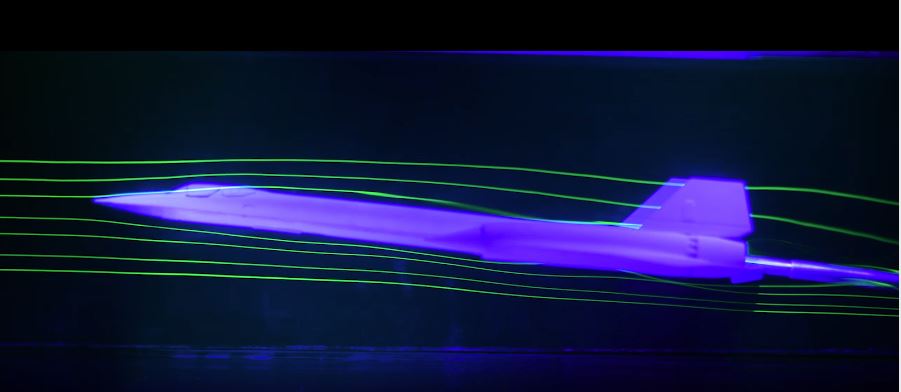
The more often Aristotle might have seen a Boeing 737 takeoff, the less likely he might have considered it a miracle, even if the phenomenon still defied natural explanation to him. In fact, we still don’t really understand aerodynamic lift. (See No One Can Explain Why Planes Stay in the Air, by Ed Regis, Scientific American, February 1, 2020)  

No One can Explain Why Planes Fly in the Air, Scientific American, Feb. 1, 2020

It is such a common phenomenon today, however, that we take it for granted even though we don’t completely understand it. Understanding that such a thing as aerodynamic lift occurs allows us to manipulate it, even if we don’t fully understand it.

Even if we think we fully understand natural laws, we probably don’t. One big example is the Big Bang. We know what happened from the “point” of the Big Bang, but we know virtually nothing before that “point”. We also have no idea how life formed.

Even if we did know exactly how the first living cell or organism developed. Our ability to trace the process and understand it does not tell us how or why it developed in the first place.

More precisely to the point, our understanding doesn’t create anything (without exercising our agency to act on that understanding), and it doesn’t eliminate the need for agency in our world to achieve desirous (beneficial) ends.

In fact, our experience suggests just the opposite. Our experience tells us that fire happens only randomly and often destructively in nature. We have learned to create fire and use it beneficially by exercising our agency in light of our understanding of the causes of fire. Agency is required to manipulate the natural causes for beneficial effects.

Our own experience affirms this. If I leave may backyard to nature, nothing is likely to grow there that is particularly beneficial. I might find a wild strawberry plant or wild raspberry vine with very small fruit on it. If I am lucky. The vast majority of it will be weeds and undesirable plants.

If I plant a garden with seeds cultivated by human ingenuity over many years of gathering seeds from the right kind of plants and developing new, heartier and more fruitful plants, I can turn my backyard into a cornucopia of beneficial plants that will feed my family and my neighbors’ families. This kind of benefit requires my agency.

I have to plant it, water it, weed it, and maintain it with much care and intentionality. If I stop maintaining it, my garden will relatively quickly return to a tangle of undesirable plants that will choke out and eventually replace my desirable plants.

It requires my agency to develop a garden and to maintain it. Nature, left to its own devices, will not do that. This is our common experience.

If you like archaeology, as I do, you become aware that time and nature destroys all the improvements generated by human agency and endeavor over time. Whole cities are reduced to rubble over time, and rubble becomes overgrown with windblown sediments, scrub brush and weeds such that we do not even recognize that a city once existed there, but for some remnants we can find by digging up the site.

We have made much about evolution since Charles Darwin first championed it as a theory. Evolution (the gradual improvement of life forms over time (by whatever means it occurs)) runs counter to our common experience. The formation of life from nonlife (the complex from the simple) (by whatever means it occurred)) runs counter to our common experience.

Does that mean that evolution is not fact or that life did not arise from nonlife? Not necessarily, but our common experience does suggest that this did not happen by natural forces acting according to their laws. Our common experience demonstrates that complex, beneficial effects arising from natural causes occur through agency and intentionality.

Human endeavor obviously did not create evolution or the formation of life from nonlife. Most scientists concede the appearance of design in the mind-bendingly complex interaction of amino acids, DNA, epigenetic materials, mechanical processes and other features of a living cell. If evidence of design appears in the world that was not achieved through human agency, that fact leaves us with the suggestion that some other intelligent agency is at work in the world.

Continue reading “A Rational Explanation for Miracles: God in the Gaps”

Do Our Past Actions Impact Our Present Choices?

‭”[T]he Pharisees and the experts in religious law rejected God’s purpose for themselves, because they had not been baptized by John.”

My thoughts today might seem a little obscure, but let me set the stage first.  Imagine the scene when two followers of John the Baptist were sent to ask Jesus a question. News of what Jesus was doing had traveled far and wide. People even reported that Jesus brought a dead man to life!

This is the backstory. Jesus happened upon a funeral procession. (Luke 7:11-17) The dead man being carried to his final destination was the only child his mother had, and she was a widow. Jesus was filled with compassion, ands he did the unbelievable. Jesus brought that dead man back from death!

This man and his mother were locals. They lived in a nearby town. They were talking, and it wasn’t just them. People saw it, and they were talking about it also. A crowd had witnessed the whole spectacle.

News about Jesus spread throughout Judea and the surrounding country, so that people were coming to Jesus from all around. John the Baptist heard about these things also, and he sent two of his followers to ask, “Are you the one who is to come, or should we expect someone else?”

(Luke 7:20) (As an aside, Luke does not tell us why John did not come himself, but we know from Mathew that John was in prison. (Matthew 14:1-12)

The “one” John the Baptist wondered about is the Messiah who had long been expected. John and his ancestors kin had been reading about the Messiah in the prophets for centuries. The time seemed right. Many had come recently, claiming to be him, but they were killed, and their following faded. Still, expectation was in the air.

John was imprisoned because he was open and blunt with criticism of Herod the Tetrarch, the local governor, who married his brother’s wife. Herod imprisoned John to silence him.

John was equally straightforward and to the point with the question he sent his followers to ask, “Are you the one?”

John the Baptist’s followers arrived on the scene as Jesus was curing people with diseases, sicknesses and evil spirits, healing people and even giving sight to the blind. When they asked him whether he is the one, or whether there is someone yet to come, Jesus said

“Go back and report to John what you have seen and heard: The blind receive sight, the lame walk, those who have leprosy are cleansed, the deaf hear, the dead are raised, and the good news is proclaimed to the poor. Blessed is anyone who does not stumble on account of me.”

Luke 7:22-23

These words were familiar to John. They come from the book of Isaiah, one of those the prophets that foretold the Messiah to come (see Isaiah 35:5 and 61:1). The Messiah was predicted to be the cornerstone of a new order, but the prophets also warned that he would be rejected, and he would be a stumbling block for many. (See here)

The Pharisees and religious leaders also would have known exactly what Jesus alluded to in his response to John’s followers, though they didn’t even ask the question, and they probably were not privy to the answer. For them, Jesus was a stumbling block. The way Luke describes their response is what prompts me to write today.

Continue reading “Do Our Past Actions Impact Our Present Choices?”

Of Miracles & Snake Oil


As I was listening to an interview of panelists and presenters from the last Unbelievable conference in the United States[1], I was struck by something AJ Roberts[2] said in a discussion about miracles. She opined that people do not believe in miracles in the West because of the western emphasis on rationality over experience.

When she said that, I questioned in my mind whether she was right. Not that I haven’t heard that before. I have even thought that before myself. But a thought occurred to me this time as she made this assertion in the context of a broader discussion about miracles by the thoughtful panelists.

We do live in a society in which education is valued and science and rationality is emphasized at the academic level. The United States of America was built on a foundation of free public education. This is why schoolhouses were built all across the frontier, and colleges followed as the frontier expanded.

As an aside, I note that most of colleges in the US that were established before the 20th century were religiously inspired and motivated. From the Ivy League schools and across the country, most colleges and universities in the US have religious roots, but that is a subject for another day.

As I think about that fact, I am reminded of another strain to the legacy of this country, a more popular influence. That is the strain of Americanism that gave rise to the snake oil salesman[3], the huckster, people searching for the legendary fountain of youth, circus sideshows and the market for elixirs that promise happiness, long life and improvement to the digestive system.

Interestingly, our American proclivity toward quackery may have grown out of a combination of pluralism and capitalism. Pluralism brought people from all parts of the world to the shores of the New World with Old World remedies that cowboy capitalist exploited with claims of false cures. Americans have been so taken by such false claims that regulatory industries have been spawned by our gullibility, yet the “snake oil claims” live on.

I think about all the people I have known and the silly, hairbrained things they have put their faith in. There is no end to the pyramid schemes that promise health and riches. We, in the west, have even developed variations of New Age, religious elixirs that promise to deliver all of the benefits of the old snake oils in shiny, metaphysical packages that boasts none of the sticky side effects of traditional Christianity, like the need to deal with personal sin and accountability to a creator God.

It occurs to me that, maybe, the apparent dearth of miracles in the US isn’t that we have an exalted idea of rationality. Maybe God doesn’t grant us many miracles as we will believe almost anything. What’s another miracle claim among many? We might be just a little bit too inclined to believe them and to focus too much on them.

When Jesus sent out 72 of his followers ahead of him to go town to town proclaiming the coming of the kingdom of God and healing the sick, they came back excited that “even the demons are subject to us in your name!” But Jesus admonished them: “[D]o not rejoice in this, that the spirits are subject to you, but rejoice that your names are written in heaven.”[4] Jesus also warned that many people would do miracles in His name that are not His people.[5]

I have often wondered why missionaries report so many miracles that God does in other countries, why the average American seems to have never experienced or seen a miracle. Perhaps, it’s because we are too predisposed to believe anything, not that we are disposed not to believe. We have learned well the willing suspension of disbelief that we employ in our favorite forms of entertainment, and we have turned that practice into driving desire for our lives. (Thank about the Disney themes of love at first sight and living happily ever after.)

At the pedestrian level, outside the halls of academia, we have a history of being taken by extraordinary claims as long as they are smartly and provocatively packaged. Perhaps it isn’t that we are so grounded by rationality, but that we are willing to believe almost anything that comes down the road, as long as it promises something that we want and can access on our own without the bother of accountability to a God who can’t be manipulated.

We even have our own brand of Christianity in the US that caters to our preferences – the word of faith movement. Name it and claim it! Believe it and seize it! Deposit your prayers with holy confidence into the divine slot machine and out will come your healing, cash, whatever you want. All you have to do is believe.

I used to think often that Christians in the west don’t observe or experience miracles because we are more rationally minded, but I am not so sure of that as I write this. Maybe we are too easily fooled.

Continue reading “Of Miracles & Snake Oil”