I saw Haley Heynderickx this evening at Space in Evanston, IL. She was (once) an obscure, modern folk artist. Then, a song of hers went viral on TikTok. (So, my son tells me.) The crowd this evening was young, even for this trendy venue on Chicago’s ever hip north shore.
Existential angst (or dread, depending on your flavor of melancholy) is the thread that runs through her work. She is a siren for the spirit of this age. Her chords strike true with my son, who turned me on to her, and with my daughter, who accompanied us to the show.
I was young once also, and the existential angst of my youth drove me on a quest that led me to the threshold of Jesus, the Lamb of God who was slain for the sins of the world. A different generation, now, leans into a similar ages old myopia.
“Meaningless! Meaningless!” …. “Utterly meaningless! Everything is meaningless.”
Ecclesiastes 1:2
This words may have accompanied a more ancient tune played on a lyre from a more distant youth, but the melody sounds the same.
Existential first visited me one night when I was too young to have a vocabulary for the experience. We watched old home movies from a projector in our living room. Younger ghosts of my parents and grandparents played on the grainy screen in washed out black and white.
I remember it like a dream sequence. The images and feelings of the past are equally washed out in my mind now, but the poignance and clarity of the dread that I felt is clear.
This was, I believe, the first time I became aware of the unforgiving and unrelenting passage of time. This was the first time, perhaps, that I stared the inevitability of death in the face, and the eyes of death stared back, penetrating into my soul.
The next sequence in this dream is now (and always has been) more palpable and imminent than those grainy home movies. Later that night, I found myself detached …. floating in a yawning chasm of outer space …. utterly alone and disconnected.
I don’t know to this day whether I had a dream when I fell asleep that night or whether it came to me in a ghastly vision. It doesn’t matter. If claustrophobia can be felt in an endless void, the experience would be close to what I felt. Angst and dread have nothing on the feelings I had that night.
I say this to frame my thoughts as I recall the song with which Haley Heynderickx closed out the evening: the Untitled God Song.
Perhaps, my favorite speech (sermon) in the Bible is Paul’s address to an elite group of people in Athens. The people in Athens were fond of spending their time “in nothing except telling or hearing something new”. (Acts 17:21) When some Epicurean and Stoic philosophers heard Paul in the marketplace, they brought him to the Areopagus.
Do you know people like that? They like to talk philosophy, but they don’t do it out of a love for the truth. They just like the intellectual challenge or the exercise of the imagination. Those conversations are ultimately unfulfilling unless truth is the object.
When Paul came to Athens, he was struck by all the idols he saw. (Acts 16:17) Athens was filled philosophies and gods of unending variety. In this way, Athens was like the modern Internet: a person might not ever exhaust all the possibilities. A person could spend a lifetime trying without ever synthesizing all the information and fitting the pieces to the puzzle of life together.
Paul cut the chase. Referencing an inscription: “To the unknown god”, Paul opened his speech with the statement, “What therefore you worship as unknown, this I proclaim to you.” (Acts 17:23)
I love that! Paul started where they were. He started with something familiar to them, and he used it as a segue into an introduction of “[t]he God who made the world and everything in it”. There were temples everywhere in Athens, but Paul was not shy in saying that the “Lord of heaven and earth does not live in temples made by men”. (Acts 17:24)
Paul wasn’t interested in small talk, or ideas for nothing but the novelty of them.
I also love that Paul quoted Greek philosophers and poets to them. He quoted Epimenides of Crete for the proposition that “In him [the God who made the heaven and earth] we live and move and have our being”; and he quoted Aratus for that proposition that we are His offspring. (Acts 17:28)
Paul was educated, and he could speak the language of educated people. He could take poetry and use it in a sermon on God. He didn’t play their games, though. He didn’t speak just to hear himself talk. He didn’t pander to their penchant for novel ideas.
He called them to account: “The times of ignorance God overlooked, but now he commands all people everywhere to repent, because he has fixed a day on which he will judge the world in righteousness by a man whom he has appointed; and of this he has given assurance to all by raising him from the dead.” (Acts 17:30)
Paul preached the Gospel, the good news that Jesus died for our sins, redeeming us from destruction and giving us the hope of everlasting life, but Paul lost most of his audience at that point. They weren’t interested in “dogma”. They took offense at the exclusivity of Paul’s message. They liked ideas, but they weren’t interested in truth. Sound familiar?
Truth, of course, is exclusive. That’s the nature of truth. People like the Athenians, and people who embrace post-modern thought today, don’t want to want to hear ideas that are exclusive. They want variety. They want to keep their options open, ironically even to the exclusion of truth.
A few people, though, were moved by Paul’s sermon. They wanted to hear more. Among them was Dionysius, the Areopagite. For Dionysius, Paul provided him the missing piece to the puzzle of his life.
“Now the story of Christ is simply a true myth: a myth working on us in the same way as the others, but with this tremendous difference that it really happened: and one must be content to accept it in the same way, remembering that it is God’s myth where the others are men’s myths: i.e. the Pagan stories are God expressing Himself through the minds of poets, using such images as He found there, while Christianity is God expressing Himself through what we call ‘real things’. Therefore it is true, not in the sense of being a ‘description’ of God (that no finite mind could take in) but in the sense of being the way in which God chooses to (or can) appear to our faculties. The ‘doctrines’ we get out of the true myth are of course less true: they are the translations into our concepts and ideas of that which God has already expressed in a language more adequate, namely the actual incarnation, crucifixion, and resurrection. Does this amount to a belief in Christianity? At any rate I am now certain (a) That this Christian story is to be approached, in a sense, as I approach other myths. (b) That it is the most important and full of meaning. I am also nearly certain that it really happened….”
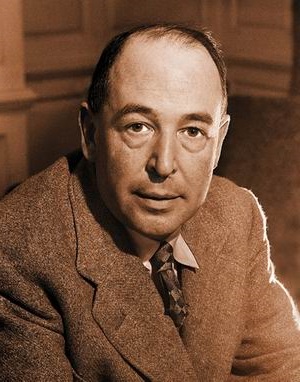
This quotation is from CS Lewis in a letter to Arthur Greeves: from The Kilns (on his conversion to Christianity), 18 October 1931. It captures the thought process of CS Lewis at the point in time when he was becoming convinced of the truth of Christianity.
If you have read much of what I write, you would easily notice that I quote and reference CS Lewis often. He resonated with me in my faith journey that began in college, and he continues to resonate with me.
He is cited by more diverse groups of people than any Christian thinker, perhaps, in the 20th Century. He had a unique way of approaching things from unique points of view, often pulling fresh ideas from the dusty tomes of ancient literature. His concept of myth and True Myth is one such point (though the source is actually JRR Tolkien).
Some might consider his frequent allusions to ancient, pagan myth heretical. Some might even confuse his love of pagan myth with New Age belief, but he flatly rejected the occult. He was orthodox in unorthodox ways, but his creative approaches to orthodoxy were refreshing and thought-provoking.
We don’t have to look any further than the ultra-orthodox, Apostle Paul, to find some common ground with CS Lewis. When Paul was in Athens, some Epicureans and Stoics he met in the marketplace brought him to the Areopagus to address an erudite Greek crowd. In that address, Paul referenced an altar inscribed “To An Unknown God” and quoted pagan writers when he said:
“in him we move and live and have our being”.
Acts 17:26 (quoting a line from Cretiga, by Epimenides of Knossos)
“For we are indeed his offspring ”
Acts 17:28 (quoting a line from Phenomena 5 by Aratus of Soloi)
Paul quoted the Cretan philosopher, Epimenides, also in Titus 1:12. Paul knew enough about pagan philosophy and poetry that he could quote from pagan works multiple times in his writings and addresses.
Paul quoted the pagan philosopher to express a spiritual truth about our lives in Christ, and Paul quoted the pantheistic poet, Aratus, to convey a theistic principle about God. (See Acts 17:22-28 – Quoting the Philosophers?) Paul connected with the people “where they were,” using language and references from the culture they understood to convey something about God.
Paul was well-read in the literature of his culture, and he used pagan philosophy and poetry to introduce people to the Gospel. This is exactly what CS Lewis does in in his own writing. Through his deep knowledge of pagan myth, he recognized strands of truth, and he recognized the difference between “man’s myth” and “God’s myth (the the “True Myth”).
In using the term, myth, Lewis is talking about story and narrative. Many stories and narratives convey a modicum of truth. CS Lewis observes that most myth from around the world contains some elements of truth, and Lewis insisted we shouldn’t be surprised by this – because truth is universal.
The difference between myth and True Myth, according to Lewis (and Tolkien), is that all other myth is a shadow of the True Myth. All myth is an attempt to shine light on truth. True Myth is the ultimate Light shining on the ultimate Truth.
All myth conveys truth through storytelling. True Myth isn’t just another story, though; it is “the” Story. It isn’t “just” myth, but reality, because “it really happened,” as CS Lewis said.
The True Myth is the Gospel. God, the Creator of the universe and everything in it, created man in His own image as His crowning creation. Then, God became a man, injecting Himself into His own creation, in order to communicate His very heart to us and to rescue us from going our own way by revealing the ultimate purpose for which God created us – to have loving relationship with God, our Creator.






 Navigating by Faith