CS Lewis on the “True Myth”

All myth is an attempt to shine light on truth. True Myth is the ultimate Light shining on the ultimate Truth. 

The Areopagus in Athens

“Now the story of Christ is simply a true myth: a myth working on us in the same way as the others, but with this tremendous difference that it really happened: and one must be content to accept it in the same way, remembering that it is God’s myth where the others are men’s myths: i.e. the Pagan stories are God expressing Himself through the minds of poets, using such images as He found there, while Christianity is God expressing Himself through what we call ‘real things’. Therefore it is true, not in the sense of being a ‘description’ of God (that no finite mind could take in) but in the sense of being the way in which God chooses to (or can) appear to our faculties. The ‘doctrines’ we get out of the true myth are of course less true: they are the translations into our concepts and ideas of that which God has already expressed in a language more adequate, namely the actual incarnation, crucifixion, and resurrection. Does this amount to a belief in Christianity? At any rate I am now certain (a) That this Christian story is to be approached, in a sense, as I approach other myths. (b) That it is the most important and full of meaning. I am also nearly certain that it really happened….”

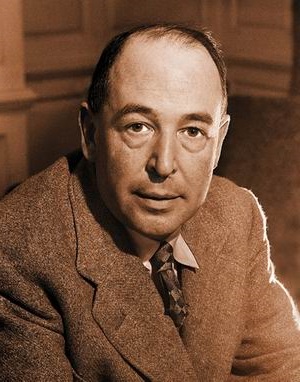
This quotation is from CS Lewis in a letter to Arthur Greeves: from The Kilns (on his conversion to Christianity), 18 October 1931. It captures the thought process of CS Lewis at the point in time when he was becoming convinced of the truth of Christianity.


If you have read much of what I write, you would readily notice that I quote and reference CS Lewis often. He resonated with me in my own faith journey that began in college, and he continues to resonate with me.

He is cited by more diverse groups of people, perhaps, than any person I can think of. He had a unique way of approaching things from unique points of view, often pulling fresh ideas from the dusty tomes of ancient literature. His concept of myth and True Myth is one such point (which actually comes from JRR Tolkien).

Some might consider his frequent allusions to ancient, pagan myth heretical. Some might even confuse his love of pagan myth with New Age belief., but he flatly rejected the occult. He was orthodox in unorthodox ways, but his creative approaches to orthodoxy were refreshing and thought-provoking.

We don’t have to look any further than the ultra-orthodox, Apostle Paul, to find some common ground with CS Lewis. When Paul was in Athens, some Epicureans and Stoics he met in the marketplace brought him to the Areopagus to address an erudite Greek crowd. In that address, Paul referenced an altar inscribed “To An Unknown God” and quoted pagan writers:

“in him we move and live and have our being”.

Acts 17:26 (quoting a line from Cretiga, by Epimenides of Knossos)

“For we are indeed his offspring ”

Acts 17:28 (quoting a line from Phenomena 5 by Aratus of Soloi)

Paul quoted the Cretan philosopher, Epimenides, also in Titus 1 (v. 12). Paul knew enough about pagan philosophy and poetry that he could quote from pagan works multiple times in his writings and addresses.

Paul quoted the pagan philosopher to express a spiritual truth about our lives in Christ, and Paul quoted the pantheistic poet, Aratus, to convey a theistic principle about God. (See Acts 17:22-28 – Quoting the Philosophers?) Paul connected with the people “where they were”, using language and references they understood to convey something about God.

Paul was well-read in the literature of his culture, and he used pagan philosophy and poetry to introduce people to the Gospel. This is exactly what CS Lewis does in in his own writing. Through his deep knowledge of pagan myth, he recognized strands of truth, and he recognized the difference between “man’s myth” and “God’s myth, the the “True Myth”.

In using the term, myth, Lewis is talking about story and narrative. Many stories and narratives convey a modicum of truth. CS Lewis observes that most myth from around the world contains some elements of truth, and Lewis insisted we shouldn’t be surprised by this, because truth is universal.

The difference between myth and True Myth, according to Lewis (and Tolkien), is that all other myth is a shadow of the True Myth. All myth is an attempt to shine light on truth. True Myth is the ultimate Light shining on the ultimate Truth.

All myth conveys truth through storytelling. True Myth isn’t just another story, though; it is “the” Story. It isn’t “just” myth, but reality, because “it really happened,” as CS Lewis said.

The True Myth is the Gospel. God, the Creator of the universe and everything in it, created man in His own image as His crowning creation. Then, God became a man, injecting Himself into His own creation, in order to communicate His very heart to us and to rescue us from going our own way and missing the ultimate purpose for which God created us – to have loving relationship with God, our Creator.

Continue reading “CS Lewis on the “True Myth””

Turning from Idols toward God: the Human Intellect

Many Christians have abdicated the realm of the intellect to modern culture and secular institutions

Depositphotos Image ID: 20592505 copyright: olly18

Human beings can make idols out of anything. We can even make an idol of human intellect/mind. As with all created things, the human intellect is limited and finite. Many people, nevertheless, put their ultimate faith in the human intellect. This is idolatry when we trust in our own intellect instead of trusting in God.

Putting faith in our own intellect is, ultimately, foolish. What do we know that God doesn’t know? What can we understand that God doesn’t understand? Relying on ourselves in this way, to the exclusion of relying of God, is (to put it mildly) short-sighted. It is sin, to put it more bluntly.

Self-reliance is the mistake that Eve made in the garden when the serpent tempted her by saying “you will be like God”![1] We want to be our own gods. We would rather rely on ourselves and our own intellect.

This is the basis of pride, which is the essence of sin. Paul says that our pride and self-reliance is why “God chose the foolish things of the world to shame the wise”.[2] But, “the wisdom of this world is foolishness” to God.”[3] As Isaiah says:

“For My thoughts are not your thoughts,
Nor are your ways My ways,” declares the Lord.
“For as the heavens are higher than the earth,
So are My ways higher than your ways
And My thoughts than your thoughts.”

Isaiah 55:8-9

For these reasons, and others perhaps, Christians today tend to distrust science, worldly thinking, philosophy and even the mind, itself. Some Christians have all but abandoned the world of science, philosophy and the intellect to secular institutions and minds, and this is a terrible mistake!

Christians are skeptical of science. Christians are fearful of philosophy. Christians are even distrustful of their own minds. Many Christians have abdicated the realm of the intellect to modern culture and secular institutions. But here’s the thing: this is sinful too!

Sin[4] means literally (forfeiture or loss from) not hitting the target, to miss the mark. We can sin by directing ourselves in a way that God doesn’t approve, and we can also sin by failing to direct ourselves in a way that God approves. Sin has positive (active) and negative (passive) components.

Continue reading “Turning from Idols toward God: the Human Intellect”

When Scientists Stray From Science

Some people today have made the mistake of using scientific methodology that is limited to the study of the natural world to conclude there is no reality but for the natural world.

Depositphotos Image ID: 151533714 Copyright: avemario

Methodological naturalism is the basic approach of science. Since science is the study of the natural world, the methodology of science is limited to the parameters of the natural world. Methodological naturalism is theologically neutral.

So what does that mean?

On a very fundamental level, it simply means that science is the study of the natural world, and, therefore, science is limited to naturalistic methodology. Science is limited to the observations of matter, energy, space, and time.

Another way of putting it is that science has no preoccupation with anything that is super natural. Science is limited to a focus on the natural world. Science doesn’t bother itself with anything but the natural world (though scientists might stray beyond it).

Science does not and cannot comment on anything but the natural world (though scientists often do), because the natural world is the focus of science. It’s as simple as that.

None of this should be in the least bit earth-shattering. Confusion arises, however, when we begin discussing the supernatural, the metaphysical, the theological, and the philosophical realms in relation to science.

There are those scientists, for instance, who have recently suggested that the advance of science today has done away with the necessity of philosophy. People like Lawrence Krauss and Neil deGrasse Tyson have made statements like that, though they have both backed off of those initial statements more recently. It’s important to understand that those statements, themselves, are philosophical in nature, and not scientific.

To suggest that science has done away with the necessity for philosophy is to ignore the limitations placed on science in its very methodology. Science, itself, is not philosophical, but evidence from science can support premises that are philosophical, and scientists may draw philosophical conclusions from scientific facts.

Science may inform philosophy, but it can never replace philosophy. To think otherwise is to exalt science beyond its natural parameters (pun intended) and to fail to appreciate the difference between science and philosophy.

Continue reading “When Scientists Stray From Science”