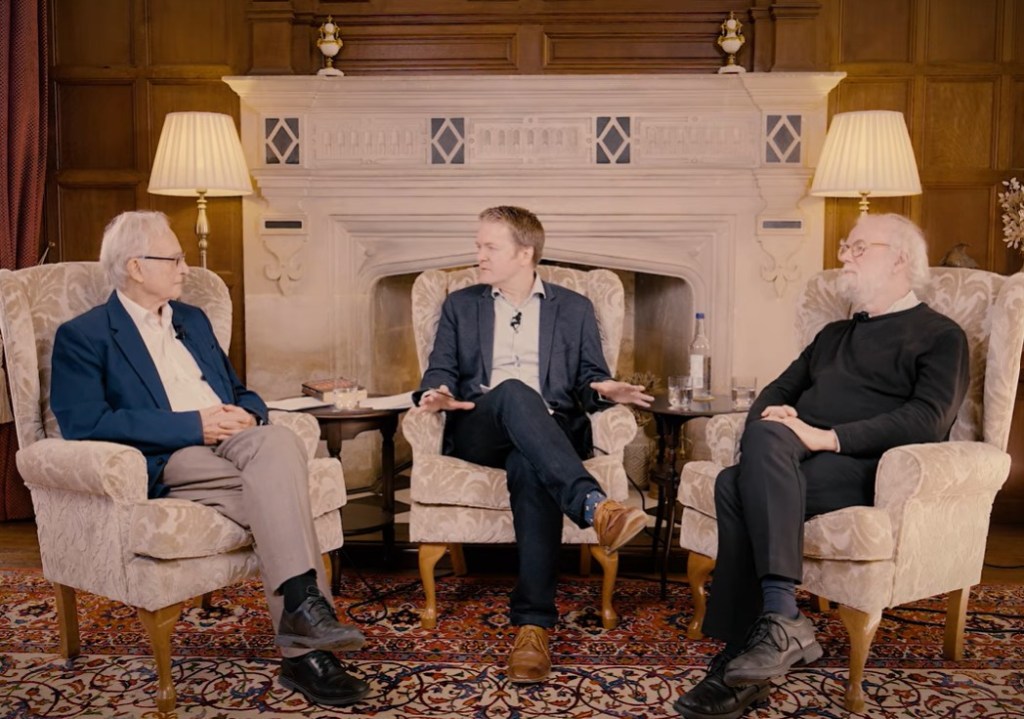
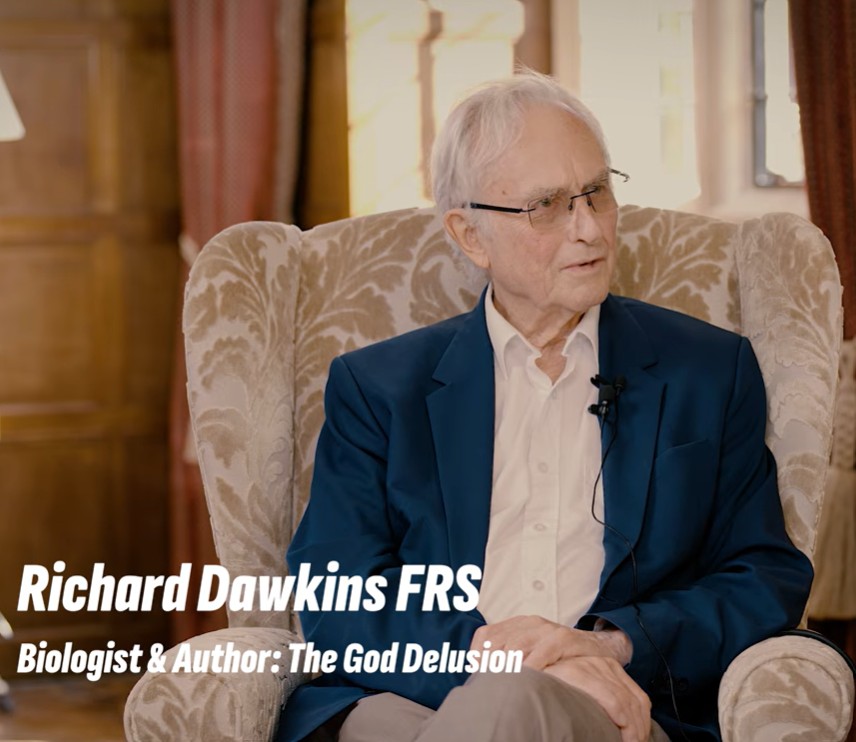
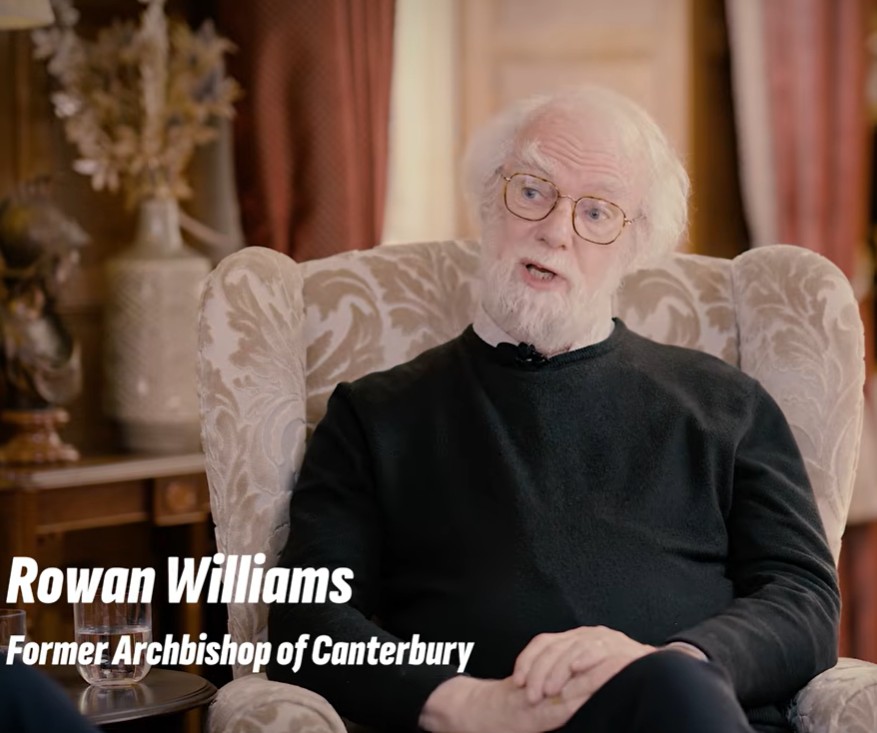
The first episode of the Uncommon Ground podcast with Justin Brierley is titled “What is Behind the Poetry of Reality?” The podcast features a conversation with Richard Dawkins and the former Archbishop of Canterbury, Rowan Williams. Dawkins of New Atheist fame has a purely materialist view of reality – maintaining that reality is comprised only of materials things that operate on their own without the aid of God or any immaterial thing.
The discussion is amicable and informative, if not predictable. Rowan Williams accepts the evolutionary paradigm, but believes in God – an immaterial, personal creator of the universe. They seemed to agree on the science. The only difference is that Williams believes there is a God behind the science and the universe.
When Brierley asked Williams to summarize Richard Dawkins’ view of reality, Dawkins graciously conceded, “Rowan… understands so well that he can summarize what I think better than I can.”
Dawkins should be given credit for reading Williams’ recent book that was the backdrop for the discussion, but Dawkins admitted to being “baffled” by it.
Dawkins was unable to provide a cogent summary of Williams’ view of reality. He succeeded only in criticizing Rowan’s view, and Dawkins conceded, “I think Rowan understands where I’m coming from much better than I understand where he’s coming from.”
This reminds me of C.S. Lewis, who says that the Christian worldview can take in science into account, but a view of the world limited to the constructs of science cannot take into account Christianity. One is robust enough to hold the other, but the other is not sufficiently robust to do the same. (I have provided the whole quotation in its context below.)
I will admit that the robustness of Christianity to be able to make sense of science does not necessarily make it true. Conversely, the limited scope of science that is unable to account for Christianity does not necessarily make it untrue. If reality truly consists of nothing but matter and natural processes, then the limitations of science are the limitations of reality itself.
I think that reality is not sufficiently explained by science, which is limited to natural explanations. I am also fascinated with Dawkins’ attempt to explain his own worldview as follows:
“I see the world as a very complex thing, like a clock or like a car or like a computer, and, and in the case of a clock or a computer or a car, I know how it’s made. It’s made by engineers with drawing boards and they… put together the parts and, and those parts all work together. [T]he equivalent of the engineer in the world of nature is evolution by natural selection.”
I am an English literature major and an attorney. In both disciplines, the ability to draw connections, and distinctions, and juxtapositions between and among word meanings and concepts is essential. Attorneys are professionals in comparing and contrasting facts and circumstances to be to argue (consistent with clients’ interests) that laws either apply in the same way or do not apply in the same way to similar but different sets of facts and circumstances. Perhaps, this why I noticed that Richard Dawkins made a category error. Or did he?
Glen Scrivener argues that atheists misunderstand Pascal’s Wager in Episode number 595 of his Speak Life Podcast (Atheists Misunderstand Pascal’s Wager (and so do Christians) I think he is right, and it seems that Christians don’t really understand it, either. Me included … until now. Before we dive in, though, let’s review Pascal’s Wager.
Blaise Pascal starts with the premise that human beings can neither prove the existence of God, nor prove that God does not exist. This is a concession, perhaps, to the atheist, but the atheist stands in no better position in relation to proving that God does not exist.
If that is the reality, then whether to believe in God or not is crap shoot. If we can’t prove it one way or the other, are we any better off than a roll of the dice? Pascal says we are, and the truly rational person would choose belief in God based on what is known as Pascal’s Wager.
Believing in God potentially gains a person everything (eternal life, joy, meaning, etc.). If God exists, the believer hits the jackpot. Believing in God also has very little downside. Pascal supposes that a person might forego some pleasures that were not pursued or time and energy spent living out faith (more on that below), but a person is little worse off for believing in God if God does not exist.
On the other hand, a person who doesn’t believe in God loses everything if God does exist (eternal separation from God). Therefore, Pascal said, the rational thing is to believe in God, because the potential gain is infinite and the potential loss is minimal. Given that we cannot prove God one way or the other, the truly rational person would “wager” on God, says Pascal.
Christopher Hitchens calls Pascal’s Wager “religious hucksterism of the cheapest, vulgarist, nastiest kind,” and Alex O’Connor calls it “half-hearted ass-kissing just in case.” Richard Dawkins asks, “What is so special about belief?” And, “Why would God not look for something of more substance from us, like being good?”
The often deriding comments beg for some understanding, and Dawkins’s legitimate questions call for a response. Matt Dillahunty says, “Pascal’s wager is an apologetic argument that attempts to demonstrate that belief in God is warranted based on decision theory and probability.” But is it?
All of these comments and questions assume that Pascal’s Wager is an apologetic argument for God, and they find it woefully wanting in that respect. Even Christians assume it is an apologetic argument, also, but everyone who makes that assumption has missed the actual point of Pascal’s Wager.
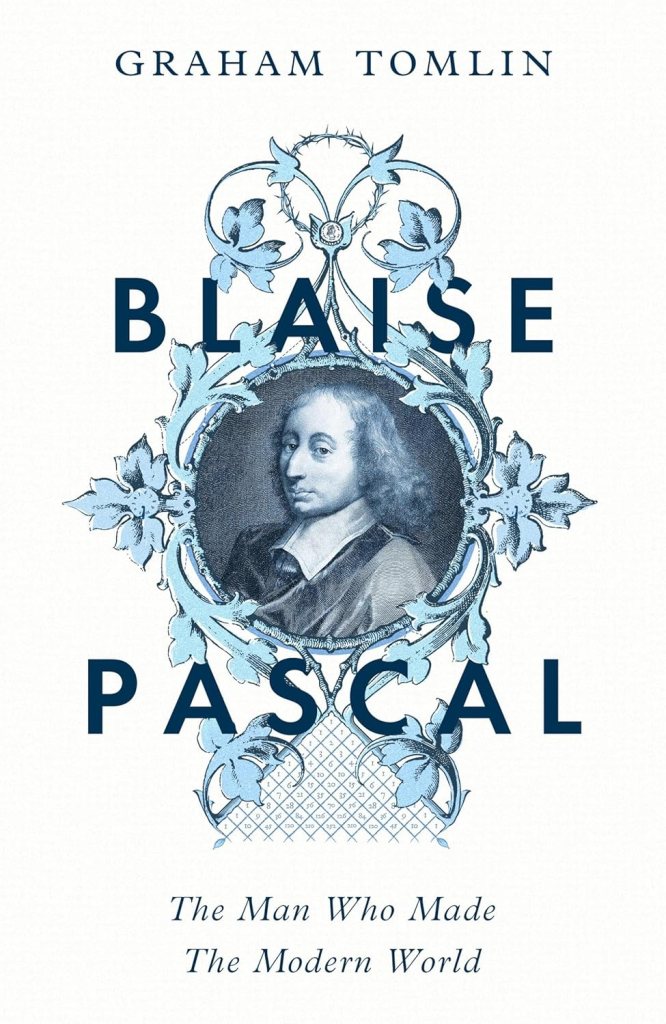
Glen Scrivener’s summary of Pascal’s Wager taken from Graham Tomlin’s book, Pascal, The Man Who Made the Modern World, exposes the error people make in these assumptions. Pascal wasn’t attempting to assert a rational argument, defense, or proof of God. He was making a very different point altogether.
Pascal was a genius by any measure. He was a scientist, mathematician, geometer, physicist, philosopher, polemicist, and theologian. He invented probability theory; he proved the existence of the vacuum, laid the foundations of integral calculus, performed what is called the first proper scientific experiment, established the principle that made possible the hydraulic press, demonstrated that air has weight, and many other things.
Thus, Scrivener says, “If we think that Blaise Pascal was silly, that might not reflect on Blaise Pascal; it might be a sign that we have misunderstood him.” The podcast featuring Graham Tomlin linked above and embedded below does a great job explaining the misunderstanding. It is worth the 25 minutes to watch and listen, but I am going to summarize and add my own thoughts as I continue.
As often happens with me, the things I have been listening to and reading have converged in a meaningful way. Whether we attribute these “convergences” to God’s presence in our lives or dumb luck, pure happenstance, or “coincidence” is a matter of speculation and faith.
Whatever you want to call it, I take special notice of these things. I pay attention. I take them seriously, and they become signposts on my journey through life.
Perhaps, I am just being a good attorney. I am trained to find harmony and contrast in nuanced fact patterns and to apply legal principals to them. Finding harmonies and contrasts and applying spiritual principals to them operates in the same vein. That’s the way my mind works.
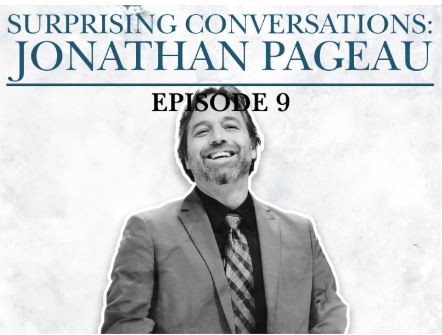
Yesterday, I listened to an interview of Jonathan Pageau by Justin Brierley. Pageau is an interesting character and a critical thinker. His recent conversation with Brierley inspires my writing today.
Raised in Montreal influenced by French Catholicism in a French Baptist Church community, Pageau has moved over to Eastern Orthodoxy by way of 4-year and 3-year stints in the Congo and Kenya. He has an undergraduate degree in postmodern art. He returned from Africa to obtain a degree in Orthodox Theology and Iconology from Sherbrooke University in Quebec. Along the way, Jonathan Pageau has become a cutting edge Christian thinker who is in demand as a speaker.
One line of discussion caught me ear in the interview with Justin Brierley that I want to explore. The subject touches on post-Enlightenment, neo-religious thinking and the proof of God.
“If God is real, then He can be known.” This is the assertion made by Dr. Sharon Dirckx, who has a PhD in brain imaging from the University of Cambridge and has held research positions at the University of Oxford and the Medical College of Wisconsin. Dr. Dirckx does not say this lightly.
Dirckx grew up in a secular household, asking questions like “Why can I think? Why do I exist? Why am I a conscious being?” as a child. She was impressed with the “awareness of my own existence, of my own consciousness.” These questions led her on a lifetime quest.
Dirckx knew she wanted to be a scientist as a teenager. Her biology teacher gave her the book, The Selfish Gene, by Richard Dawkins. That book set the course of her thinking as a child “that we are just gene machines, that there’s just the material and that’s all that it means to be a human being.” She absorbed a materialistic worldview from Dawkins and the people around her.
“I arrived at university to study biochemistry assuming that we were material beings and that science and God were not compatible.”
Dr. Dirckx achieved her dream of becoming a scientist, but her path deviated from the materialism she assumed and absorbed as a teenager. She is now the author of several books and a frequent speaker on the subject of faith in God. You can listen to her story on the eX-skeptic podcast embedded below.
I want to pick up and run with her statement: If God is real, then He can be known. I agree with her, but I believe many people make the mistake of thinking that God can be known on their terms. We make the mistake to think that if God exists, He exists within our own purview and within the limitations we experience as human beings that we can control on our terms.
He doesn’t. When we are talking about the creator God who made the universe, and all that is in it, including human beings and all of material reality, we are talking about a God who is transcendent. He is the uncaused causer and the uncreated creator. He is not found in his creation as if He was a component of it.
Such a God is said to be “outside” of the space/time continuum. The concept of such a God includes a spaceless, timeless, immaterial reality that is not contained within or limited by the material world.
Some quantum and theoretical physicists speak variously of consciousness that collapses the wave function of particles, Platonic or Mathematical Realism that imagines immaterial mathematical forms underpinning material reality, and Philosophical Idealism that imagines consciousness or mind-like properties out of which the material world emanates. These are non-theistic attempts to get at the idea that the material world is contingent, and immaterial reality is the fundamental building block of and force behind the universe and reality.
The most robust of these conceptions is the theistic one pulled out of the text of the 60 some writings by 40 some authors compiled in the work we call the Bible. If God is real, and He created the universe as these writings claim, with all of it’s immensity, and if He created life, including humans, He is completely different (Other) than us: God is transcendent.
Yet, people have always had some sense of this transcendent reality. Religious expression is among the oldest of the traces of human history we can find in the archaeological and written records we are able to find from our ancestors.
While we may tend to assume that all primitive humans believed in a panoply of Gods animating the material world, evidence exists to suggest that primitive people from diverse corners of the world believed in one, Creator God. This monotheistic conception of God may, in fact, by the oldest form of religious belief.
Perhaps, the pagan gods that inhabit the material world seem more accessible. They might make demands on our behavior, but they have no province over the thoughts in our minds, our wills, and our hearts.
That we would have a hard time finding a transcendent God and making sense of him is understandable. Imagine a living being the size of an electron viewing a human being from an electron’s vantage point: How does an electron-sized being make sense of a human being – or anything above the quantum level, for that matter?
The difference between a human being and a transcendent, creator God is much greater then the difference between an electron-sized being and a human being. For one thing, they are both part and parcel of the same material reality. The biblical conception of God understands that God transcends the material world.
To quantify this difference, we might imagine a human being compared to the infinitely vast space of the universe. Now add in the bit about God being completely “Other”: spaceless, timeless, and immaterial.
I maintain that such a God would need to reveal himself to us. How could we know such a God unless He revealed Himself to us?
I have written about this before. God must “stoop” to us to make himself known. We cannot “ascend” to Him.
In Episode 20 of the Christian Atheist Podcast (Ethics (Part 3): the Origin on Ought), John Wise focuses on a primary difference between human beings and animals. Though humans beings are animals, human beings are qualitatively different than other animals in rational capacity, and the rational capacity of humans allows humans to exercise agency over the natural world. This unique human capacity to exercise rationality through agency is the focus of my thoughts today.
Human beings exercise their agency and rational capacity to change and redirect the laws of nature. Other animals can do this in very primitive ways, but the human capacity to manipulate nature through human agency, rationality, and ingenuity is light years beyond what other animals can do.
Of course, humans cannot do things that defy the laws of nature. Rather, human beings use their understanding of those natural laws to manipulate them.
Wise observes that the human ability to manipulate the laws of nature includes the ability to separate cause from effect to acheive a desired result. For instance, human beings have learned to breed various types of plants and animals to achieve results imagined by humans which would never likely have occurred in the natural world left to random, natural processes.
Human beings can exercise their rationality to imagine different effects and to manipulate causes to achieve those desired effects. In this sense, human imagine the effects they desire to achieve, and they manipulate the causes in the natural world to achieve natural effects by design that the natural world would not obtain randomly.
The world seems to act randomly, unless agency acts upon the world. The examples of agency acting on the world to achieve results that would not obtain without such agency are legion. All of human endeavor is replete with examples of agency imagined and initiated by humans to obtain designed effects that we desire.
Human beings are able to produce effects that would never have occurred in the natural world but for human agency manipulating the natural processes. In other words, human input redirects the natural processes to produce results that would not have occurred if the natural processes were left alone.
Our ability to separate cause from effect to achieve desired ends that would not occur in the natural world by manipulating those causes to achieve the effects we desire is an example of supranatural agency in the world. In other words, we are in and of the natural world, and we use our knowledge of the natural world to manipulate natural causes to create natural effects.
We do not suspend the laws of nature or violate the laws of nature to accomplish our desires ends. We use the laws of nature to achieve our desired ends – albeit, ends that would not have occurred but for our intervention.
Ocean liners and skyscrapers are things that do not occur through the laws of nature, but for human agency. Even so, human agency des not suspend or violate the laws of nature to create them. Human agency uses the laws of nature to create them.
These observations are a model for understanding God. The fact that laws of nature act in very rational ways that are predictable and dependable suggests design. The way the laws of nature act suggest an intelligent agency that set them in motion just so. We would call that intelligent agent God.
If God created the laws of nature, He would certainly know how to manipulate natural causes to achieve His desired effects. God would have much greater capacity than us to manipulate natural causes to achieve desired effects. Exponentially so!
Many skeptics, like David Hume, reject the idea of miracles because they assume that miracles violate natural laws. The foundational premise of Hume’s logic, though, is false. The God that created the natural laws would not need to suspend or violate those laws to obtain desired effects. God could manipulate natural causes to achieve His desired effects without the need to “suspend” or “violate” natural laws just as we do.
God’s knowledge of those natural laws and the possible effects that can be achieved through the manipulation of them is certainly greater than ours. Exponentially greater.
Many people have called phenomena they didn’t understand miracles, but subsequent discoveries about the way the natural world works have provided explanations to us of natural laws and how they work that we didn’t previously understand. Once we understand the laws at work on those phenomena, we no longer call them miracles.
A primitive intelligent being might think that human beings are violating natural laws to fly airplanes, for instance. We know this is not true, but a more primitive being may not understand the principles of natural laws being manipulated to achieve the end of flying a heavy chunk of metal through the air.
Just as we manipulate natural causes to create effects that do not occur naturally, God may do the same. Thus, what we call miracles may be nothing more than the manipulation of natural causes by God to achieve effects that would not ordinarily occur in nature without the involvement of an agent.
Just because the primitive being does not know the principles being manipulated does not mean that a violation of natural laws has occurred. In this same way, a human being, who is certainly a more primitive intelligent being than God, may not be able to know or understand the principles of natural laws being manipulated by God to achieve a result that we call a miracle.
We call occurrences miracles that we cannot explain based our understanding of natural laws. But our measure of understanding is constantly changing. For this reason, modern people often say they no longer believe in miracles (and, by extension, God). Experience shows that many things we didn’t previously understand we now understand, and they assume, then, that we will find explanations in the natural laws to explain all the things we do not presently understand.
I note that this belief is not necessarily warranted, nor can we prove it. People who make this assertion do it on the basis of faith in the human ability to know and understand the world.
Further, our mere understanding of the way natural laws work, does not negate the need for intelligent agency to achieve desired ends. It isn’t enough for us to think something up; we must exercise our agency to act on the laws of nature to achieve our desired ends. Our understanding doesn’t create anything.
Imagine Aristotle seeing a pilot entering into a Boeing 737 and taking off into the air. Aristotle did not know enough about the law of gravity or aerodynamic lift to generate a good explanation based on the natural laws that were understood at the time. He may have called it a miracle because it defied explanation to him based on the level of knowledge he had.
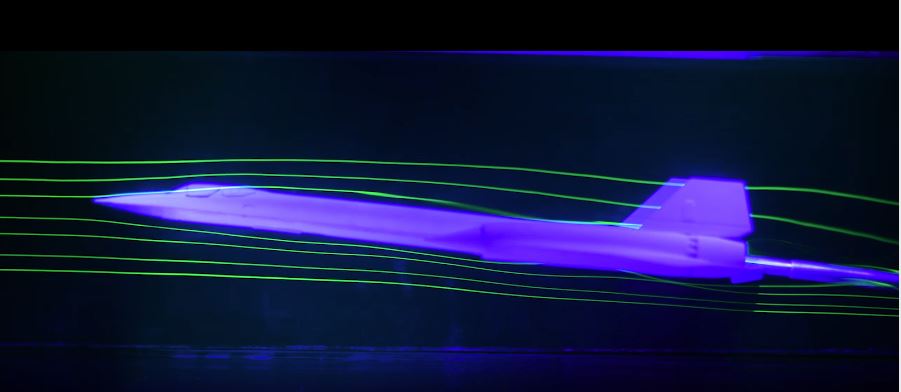
The more often Aristotle might have seen a Boeing 737 takeoff, the less likely he might have considered it a miracle, even if the phenomenon still defied natural explanation to him. In fact, we still don’t really understand aerodynamic lift. (See No One Can Explain Why Planes Stay in the Air, by Ed Regis, Scientific American, February 1, 2020)
It is such a common phenomenon today, however, that we take it for granted even though we don’t completely understand it. Understanding that such a thing as aerodynamic lift occurs allows us to manipulate it, even if we don’t fully understand it.
Even if we think we fully understand natural laws, we probably don’t. One big example is the Big Bang. We know what happened from the “point” of the Big Bang, but we know virtually nothing before that “point”. We also have no idea how life formed.
Even if we did know exactly how the first living cell or organism developed. Our ability to trace the process and understand it does not tell us how or why it developed in the first place.
More precisely to the point, our understanding doesn’t create anything (without exercising our agency to act on that understanding), and it doesn’t eliminate the need for agency in our world to achieve desirous (beneficial) ends.
In fact, our experience suggests just the opposite. Our experience tells us that fire happens only randomly and often destructively in nature. We have learned to create fire and use it beneficially by exercising our agency in light of our understanding of the causes of fire. Agency is required to manipulate the natural causes for beneficial effects.
Our own experience affirms this. If I leave may backyard to nature, nothing is likely to grow there that is particularly beneficial. I might find a wild strawberry plant or wild raspberry vine with very small fruit on it. If I am lucky. The vast majority of it will be weeds and undesirable plants.
If I plant a garden with seeds cultivated by human ingenuity over many years of gathering seeds from the right kind of plants and developing new, heartier and more fruitful plants, I can turn my backyard into a cornucopia of beneficial plants that will feed my family and my neighbors’ families. This kind of benefit requires my agency.
I have to plant it, water it, weed it, and maintain it with much care and intentionality. If I stop maintaining it, my garden will relatively quickly return to a tangle of undesirable plants that will choke out and eventually replace my desirable plants.
It requires my agency to develop a garden and to maintain it. Nature, left to its own devices, will not do that. This is our common experience.
If you like archaeology, as I do, you become aware that time and nature destroys all the improvements generated by human agency and endeavor over time. Whole cities are reduced to rubble over time, and rubble becomes overgrown with windblown sediments, scrub brush and weeds such that we do not even recognize that a city once existed there, but for some remnants we can find by digging up the site.
We have made much about evolution since Charles Darwin first championed it as a theory. Evolution (the gradual improvement of life forms over time (by whatever means it occurs)) runs counter to our common experience. The formation of life from nonlife (the complex from the simple) (by whatever means it occurred)) runs counter to our common experience.
Does that mean that evolution is not fact or that life did not arise from nonlife? Not necessarily, but our common experience does suggest that this did not happen by natural forces acting according to their laws. Our common experience demonstrates that complex, beneficial effects arising from natural causes occur through agency and intentionality.
Human endeavor obviously did not create evolution or the formation of life from nonlife. Most scientists concede the appearance of design in the mind-bendingly complex interaction of amino acids, DNA, epigenetic materials, mechanical processes and other features of a living cell. If evidence of design appears in the world that was not achieved through human agency, that fact leaves us with the suggestion that some other intelligent agency is at work in the world.








 Navigating by Faith