Unveiling the Mystery of the Hiddenness of God

Why would God be hidden to us?


I have been meditating on the hiddenness of God lately and leaning into the mystery of God’s hiddenness. I am intrigued by it. The Bible is forthright about the hiddenness of God.

As I think about the hiddenness of God, the mind of the skeptic plays in my ear: “How do you know God exists? Why does God seem hidden? Maybe it’s because He doesn’t exist!” Believing in a “hidden” God is belief without evidence; it’s belief in the teeth of the evidence (as Dawkins says).

My response is that we all have faith in our basic assumptions about reality. The scientist assumes only matter and motion. He sees evidence for things like gravity and neutrinos, and dark matter and dark energy that cannot be seen. The scientist reasons to the best explanation for the things that cannot be seen in order to make sense of the reality in the world, and he does so within the “limitations” of materiality.

Science, after all, is the study of the material world. That is is the scope of science as it is defined in the modern world. Science is based on what is quantifiable, measurable, observable, and reproducible.

When I do theology or philosophy, I also start with assumptions. I start with an assumption, or a theory if you like, that God exists. The proof of God, however, is necessarily different than scientific proof.

God is not a substance in the universe to be quantified, measured, observed, or reproduced in the way we can study the natural world. He is not a component of the universe. He is not comprised of matter and motion like the universe. God is not a principle of physics that can be observed in its regularity and tested by its regularity.


If God exists and created the universe, He is separate and apart from the universe. That does not mean that God is not present in some way; it means that He is not present in the same way that you and I are present. Rather, God is transcendent. He is imminent (near in some way), but not contained within the creation.


God also must have agency to have determined to create. We understand the necessity for agency by our own agency. This makes sense of the question: why is there a universe; why is there something, rather than nothing.

For the life of me, I can make no sense of the assertion that a universe can create itself. What kind of voodoo magic is that? That conclusion is based on an assumption that matter and motion is all that exists, but we cannot prove that assumption.

To say that God must have agency is not to be anthropomorphic about it but to reason to the best explanation based upon what we know, which is our own agency and the way we conduct ourselves in the world. Where does a universe come from? The simple answer is that it comes from a creator who has agency, who has intentionality, and the ability to will and to act according to His purpose and design.

Where does intricate, fine-tuned complexity that is complex to the nth degree come from? It comes from a mind, from a creator who conceives a plan and then implements it. We know that from the way human beings create things. Where did we get that capacity? Like things produce or reproduce like things.

We know that the universe is “winding down”. That is what the law of thermodynamics tell us. Entropy is the rule. This means the universe is not getting more complex; it is breaking down, evening out, cooling, and becoming less complex over time.

Over course, this is occurring over a very, very long period of eons, so (perhaps) there is enough energy in the universe for complexity to form in areas of the universe even while entropy is working its very long way toward the inevitable heat death of the universe as a whole.


Maybe, but where did the energy come from to cause the so-called Big Bang? What triggered the universe to begin to begin with?

No one can explain that who doesn’t believe in a “Big Banger”, a Creator. It is the best explanation that we have. It makes the most sense of the reality that the Universe had a beginning.
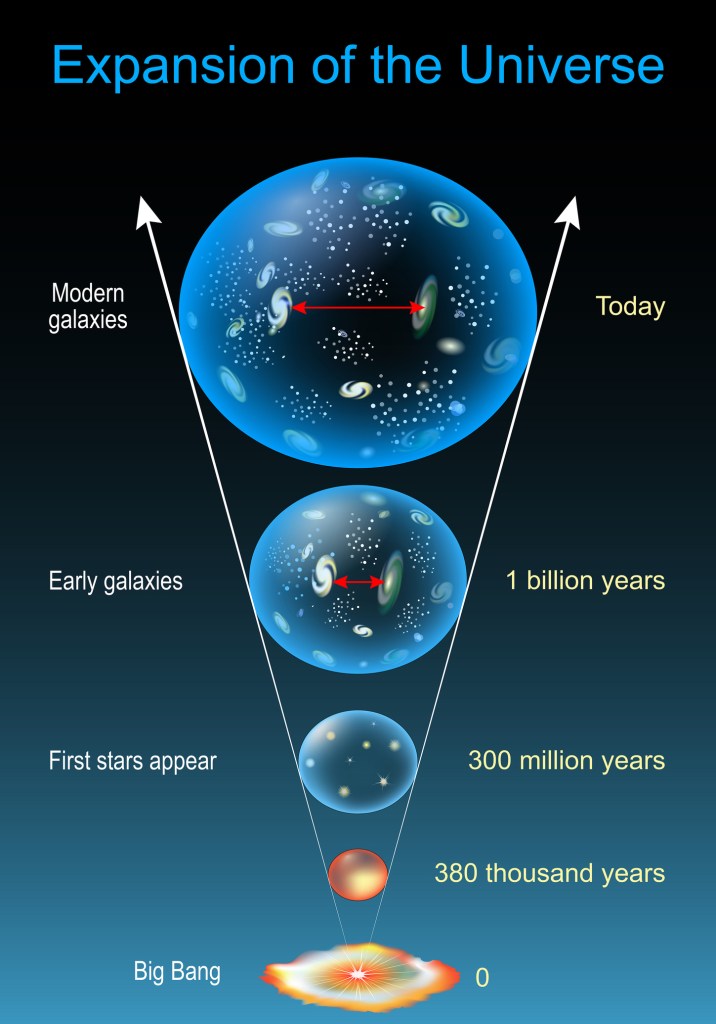

The multiverse doesn’t solve the “problem” of a beginning. It just kicks the can back down the road further. What triggered the multiverse into being? It’s an endless regression.

The Christian (Jewish and Muslim) conception of God is that God is the timeless, eternal being who always existed and was never created who chose to trigger the universe (or multiverse) into existence.

This, frankly, makes much more sense than a past eternal, non-sentient universe that just poofed life into existence. How do you get life from nonliving matter? What animates that matter?

But the questions don’t stop there. What triggers consciousness from inert, non-conscious matter? How do the fundamental “building blocks” of matter develop consciousness? It’s a complete mystery, and there is no mechanism known to modern science to explain it – other than the brute fact that human beings and (to some lesser degree) animals (and maybe plants) are conscious beings.

Consciousness is proven by the sheer fact that we are conscious of ourselves. It seems to “reside” in or be attached to the brain, but the brain by itself is not consciousness. The brain is a perfect, intricate receptacle for consciousness, but the brain and consciousness are not perfectly coexistent. They are not the same things, and science has no adequate explanation for that.

Because these things suggest looking outside the limitations of the material world for our answers, we have theology and philosophy, which can be “scientific” loosely in method and approach, but defies the limitations of scientific inquiry.

That doesn’t mean that theology and philosophy should be divorced from science (or that science should be divorced from theology and philosophy). All reality must ultimately cohere harmoniously, or we cannot call it reality.

But, I have digressed (only slightly) from the point, which is the mystery of the hiddenness of God.

Continue reading “Unveiling the Mystery of the Hiddenness of God”

Perspective, The Universe, and God

Perspective is critically important for finite creatures such as ourselves because we view everything from “where we sit”.


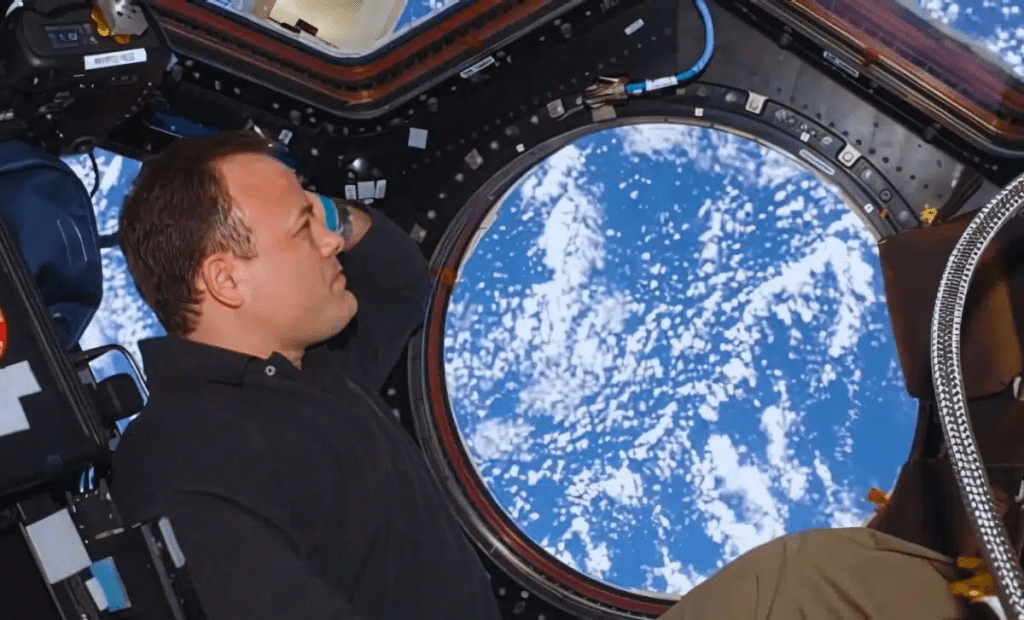
My thoughts are inspired by a Daily Galaxy article today, Astronaut’s ‘Lightbulb Moment’ in Space Reveals Humanity’s Biggest ‘Lie’s. Ignoring the obvious clickbait character of the title, I read the article, which is about the importance of perspective. A less sexy summary of the article might go like this: “Seeing the Earth from the vantage point of space provides a different perspective that should lead to a change in priorities.”

Astronaut’s ‘Lightbulb Moment’ in Space Reveals Humanity’s Biggest ‘Lie’ – © The Daily Galaxy –Great Discoveries Channel

The photo associated with the article illustrates the idea of perspective: that an astronaut viewing the earth from space, seeing the earth from the perspective of distance, hits home in a way that few of us have experienced. This is a perspective few of us have the privilege of attaining. We can imagine what it is like to view the earth from this perspective, but actually viewing the earth from this perspective is more impactful than imagining it.

I can only speculate on this, as I have not experienced it. Even viewing the astronaut’s perspective in a photo, though, hits home in a different way than simply imagining it. This is because our perspective (where we sit in relation to a thing) matters.

Perspective is critically important for finite creatures such as ourselves because we view everything from “where we sit”. We necessarily have a limited perspective. Our perspectives are limited by our location in space/time, geography, and position.

Our perspectives are also limited by our sociology, culture, education, worldview, personal experiences and a host of other physical and metaphysical factors. Many of these factors are external to us (like sociology, culture, and education). Many of these factors are more internal to us, like worldview, experience, and individual psyches (for lack of a better descriptor).

Our perspective can “shift”, as the article states, as we change “location”, experience new things, and view things from a different “angle”. Thus, a change in vantage point provides a potential change in perspective – a change in how we view the world and prioritize things.

“Walking a mile in another’s shoes” speaks to the kind of shift we experience when we gain a different vantage point. Walking a mile in another’s shoes speaks to the impact of experiencing a difference of perspective, and not just considering it abstractly.

Ronald Garan, the astronaut identified in the article, “was struck by the stunning beauty and fragility of Earth’s thin atmosphere” as he viewed the Earth from the distance of space. The reality of the earth’s beauty and fragility is nothing new, but the actual experience of viewing the earth from such a distance hit him in a more visceral way than simply knowing these things intellectually.

Tethered to the small oasis of a space station on the edge of the infinitely vast regions of a dark, cold, and apparently lifeless universe, Garan was struck by the thinness of the Earth’s atmosphere that harbors all the living beings on its surface. Experiencing the small and vulnerable bubble we call Earth from the yawning chasm of space, Garan gained new appreciation of the need for humans to prioritize care and stewardship of this highly privileged planet.

Perspective and its impact on us is not just a matter of physical location. Another person sitting immediately next to Garan with the same view of Earth might have “missed” what Garan “saw” because perspective is more than just physical location.

Continue reading “Perspective, The Universe, and God”

Thoughts on Perspective, Science and Faith

As finite beings, We have no choice put to adopt our fundamental principles on faith. We do not have the requisite perspective to have more certainty than that.

I have two blogs I maintain currently: Perspective and Navigating by Faith. Perspective and faith loosely characterize my journey over many years: trying to find perspective and understanding the value, the necessity, and the integrity of a faith grounded in reality, both observable and unseen.

Many people believe that faith is the opposite of fact and at odds with science and reason. I strongly disagree. I have come to believe that faith is inescapable for finite beings – both religious ones and non-religious ones alike – and faith lies at the core of everything we believe to be true.

I was listening to a podcast discussion recently when one of the participants said something like this: When we approach any evidence, we approach it with a perspective. This is a non-pejorative way of saying that we are all “biased”.

As finite beings we are all necessarily “biased” by our own perspective, our own experiences, our own knowledge, understanding and ability to grasp, synthesize and categorize what we know and understand. Our perspective is influenced and filtered through our location in the world, our place in the culture and society in which we live, the history that we remember, and too many other things to summarize them adequately in a short blog article.

The discussion in the podcast that prompts this writing focused briefly on the fact that we all bring assumptions to the table when we consider anything. Those assumptions, however intentionally or surreptitiously developed, are the bedrock of each of our worldviews. They are the foundations on which we stand. They are the filters through which we see the world.

Those assumptions are developed, to a greater or lesser degree, by some combination of our external influences, our internal leanings and reactions to those external influences, and our consciously or unconsciously chosen compass points we use to guide ourselves in sorting out the information we encounter.

At the most basic level, those assumptions are axiomatic. They are truths we take for granted. We cannot prove them, and we rarely question them without crisis. We are fortunate if they hold us in good stead, if they are well-enough grounded in reality and fact to be of benefit to us in our dealings with the circumstances of our lives.

If those basic assumptions are not well considered and well-grounded, we can be blown about by every wind. If they are not based in fact and an accurate grasp of the nuance of reality, they can prove little consolation or comfort in times of crisis. If they are not well-anchored in timeless truth, they can leave us adrift when we need to count on them most.

The unique perspectives in light of which finite beings approach any evidence is necessarily limited and biased because we are limited and finite beings. At best, we can only hope to orientate ourselves in the direction of truth. We don’t define truth. We don’t establish truth. We don’t’ generate truth.

This is necessarily the case with finite beings who can only approach reality from a particular location at a particular time in the context of a particular cultural, historical, and philosophical point of view.

If I was omniscient and all seeing, I could have ultimate confidence in my perspective. My perspective would be objective and factual. My perspective would be the measure of all reality.

But no human being can validly make that claim (though we may and often do think and act like we can). In all honesty and humility, we must each admit that we come at evidence from a perspective with bias born out of our own experience, cultural context, limited knowledge and limited understanding.

We don’t know what we don’t know.

As a necessary corollary to these things, which I believe with all the certainty that I can possibly ascribe to these things, we are creatures of faith. All of us. We have no choice put to adopt our fundamental principles on faith. We do not have the requisite perspective to have more certainty than that.

My conclusion in this regard is based on fact (that humans are finite beings) and “logic” or philosophy, which reasons from the fact that we are finite to conclude that our perspective is limited thereby. Because our perspective is limited, we must rely on faith in making our conclusions which, themselves, derive from the fundamental assumptions we also take on faith. We can’t escape these limitations because they are inherent in finite creatures such as ourselves.

Some people even in this modern age, however, have boldly claimed that science is the study of all the reality that exists. Further, they say, therefore, we no longer need philosophy or theology. (I have heard Neil deGrasse Tyson say this very thing.) I am going to push back on that idea in this blog post.

Continue reading “Thoughts on Perspective, Science and Faith”

Look Up! Perspective and Purpose

You were created with purpose and that purpose was to worship through work.

(Republished with permission from Bruce Strom, Executive Director of Administer Justice, a faith-based legal aid organization providing the help of a lawyer, the hope of God’s love and the home of the church.)

“Look up on high and thank the God of all.”

Geoffrey Chaucer

There is one God, and you are not Him!

Power of Perspective: There is a story of a man who worked at an aviary in a bird park. He was at an outdoor wedding and kept looking up. A friend finally asked him why. The man simply replied, “Sorry, I’m used to looking up to avoid falling bird poop.” If you want to avoid a lot of life’s poop – look up!

Perspective matters. Go outside and look up. You cannot see yourself, but you can see the vastness of space. Look down. You mostly see yourself and not much else. Circumstances cause us to look down and magnify our thoughts, feelings, and fears. Look up. Set your mind on things above. Don’t make you or your circumstance bigger than God.

Power of Purpose: The Westminster Catechism recites our purpose is “to glorify God, and to enjoy him forever.” That is true but can be misunderstood. If not careful, I think it can distort our purpose in the same way viewing Heaven as fluffy clouds where we play harps and sing praises forever can. Honestly heaven is a place of rewards given for work done on Earth. Work continues in Heaven. Work is a healthier view of worship – what it means to glorify God and to enjoy him forever.

You were created with purpose and that purpose was to worship through work. The Hebrew word for work is avodah which means work, worship, and service. True worship is rooted in work that serves God and others.

God has work for you in his family business. When you come to faith in Christ you are adopted as his son or daughter and join the business of advancing God’s Kingdom. Jesus came to establish this work – the Kingdom of God on earth. Like any family business, God’s business has a vision, mission, values, guidelines, and positions.

Your job title is vassal, a servant of the King. Your job description is vessel as you allow him to fill you for your work. God’s vision is that none should perish but all should come to faith. In other words, he wants to grow the business by expanding the Kingdom. His mission is to go into all the world making disciples by demonstrating what it means to love God and love others (Great Commission and Commandments).

God has an employee manual with guidelines for living – the Bible. Don’t just skim and sign off on it – read it, memorize it. It is your guide for finding purpose. Then talk to your boss. Can you imagine taking a job and never talking to your boss? I don’t think you’d last long. You will similarly wear out in the work of the Kingdom if you are not regularly communicating with God through prayer.

Finally, live the core values of the Kingdom. He has told you what is required of you: do justice, love kindness, and walk humbly with him (Mic. 6:8). You will discover and live God’s purpose for your life if you see yourself working in the family business.


Consider: What strikes you in this first key: look up through perspective and purpose?

Pray:   Lord, forgive me when I make much of my circumstance and little of you. Help me to find joy in working in your family business of advancing your kingdom of justice and righteousness. Amen.

Lift Up Your Eyes for Perspective and Purpose

Though God’s ways are not our ways, and his thoughts are not our thoughts, God invites us into his perspective and purpose.

We live “under the sun”, as the writer of Ecclesiastes describes our existence, filled with existential angst.  We live year by year, month by month, week by week, day by day, and moment by moment. The inertia of our lives is focused on the here and now, with our dying always looming in the near distance like a great mountain range rising up to the clouds we cannot conquer.

Our perspective is limited. It is finite. We stand at any given time on a small planet in a small solar system in one of billions of galaxies that exist in a universe so expansive we struggle to comprehend it. We stand “under the sun”, and our perspective, therefore, is limited.

“As the heavens are higher than the earth,
    so are my ways higher than your ways
    and my thoughts than your thoughts.”

(Isaiah 55:9)

That verse from Isaiah is a way of saying that God has a different perspective than we do. God has His own purposes, and He invites us to consider the difference between His perspective and purpose and ours. He desires for us to seek to understand His perspective and to align with His purpose.

When Jesus says my yoke is easy and my burden is light, I believe he was encouraging us, at least in part, to attempt to understand and adopt his perspective and his purpose. Our momentary lives include existential angst, dread, suffering and pain, but God has a purpose and a plan for us that is greater than what we see and experience under the sun, and that purpose is liberating!

I see three concrete examples in scripture of the difference between God’s perspective and purpose and ours. (I am sure there are many more.) As God invites us to consider that His thoughts are not our thoughts, and His ways are not our ways, I think it is appropriate to consider and meditate on these three examples.

Continue reading “Lift Up Your Eyes for Perspective and Purpose”