We place too much emphasis, perhaps, on the arguments when we “do” apologetics. Not that being intimate and proficient with the arguments for God are a bad thing; but they aren’t the only thing.
I like apologetics because I like the intellectual exercise. I enjoy loving God with my mind. Maybe the reason for that is that I became a Christian in the academic setting of college. I was a seeker then, and I have always been stimulated by the intellectual journey.
I have loved talking, writing, and reading about meaningful and significant matters since I emerged from an existential angst that I sought (unsuccessfully) to smother with alcohol and drugs in my teens. Once I stepped out of that haze to face the reality of life, I dove head first into the search for truth.
I had no patience for merely fanciful speculation. My keen interest and motivation became a quest to learn about and understand the nature of reality. If there was meaning to find there, I was dedicated to finding it.
My journey led me eventually to Jesus, and there my quest was fulfilled. I have found in Christ the truth for which I sought. In the Old Testament, which speaks of him and foreshadows him, and in the New Testament, which is a testament to Jesus, the Messiah, the savior of the world from all the existential angst that bears down on mankind, I have found explanations and nuance that make sense of reality.
I have found a home for my restless mind in learning to love God with my mind. The intellectual pursuit is part of loving God, but it’s easy to forget for someone like me that I also need to love God with my heart, soul, and strength. (See Luke 10:27)
I may get into what it means to love God in these various ways in another blog post, but first I am realizing it’s important to see that love is meant to be the primary object and focus of our hearts, souls, strength, and mind. Loving God is the ultimate goal of these things – not the other way around.
We engage our hearts, souls, strength and minds in order to know God. Knowing God in a Hebrew sense means much more than intellectual ascent and understanding. It means relationship. This makes sense because love is relational.
Knowing is also the primary focus of apologetics, but the emphasis on knowing in apologetics, especially for western-minded Christians, is often simply intellectual. In apologetics, we talk about learning various arguments for God, like the cosmological argument, the argument from fine-tuning, and the ontological argument, and so on.
We debate which arguments are the best arguments, which arguments are most effective, and which arguments are most difficult for a nonbeliever to counter. We talk as if we do apologetics like gladiators in an arena where knowledge is the ultimate weapon.
I have suspected for awhile now that we are missing the boat when we “view “do” apologetics this way. Maybe I am slow to this realization, and most other people are way ahead of me, but I suspect I may be more typical than I fear.
Tina Turner sang, “What’s love got to do with it?” We might ask that question about theology. We might even ask that question about life, itself!
Most people, I think, would say that love has a lot to do with life and theology. Or, at least, it should!
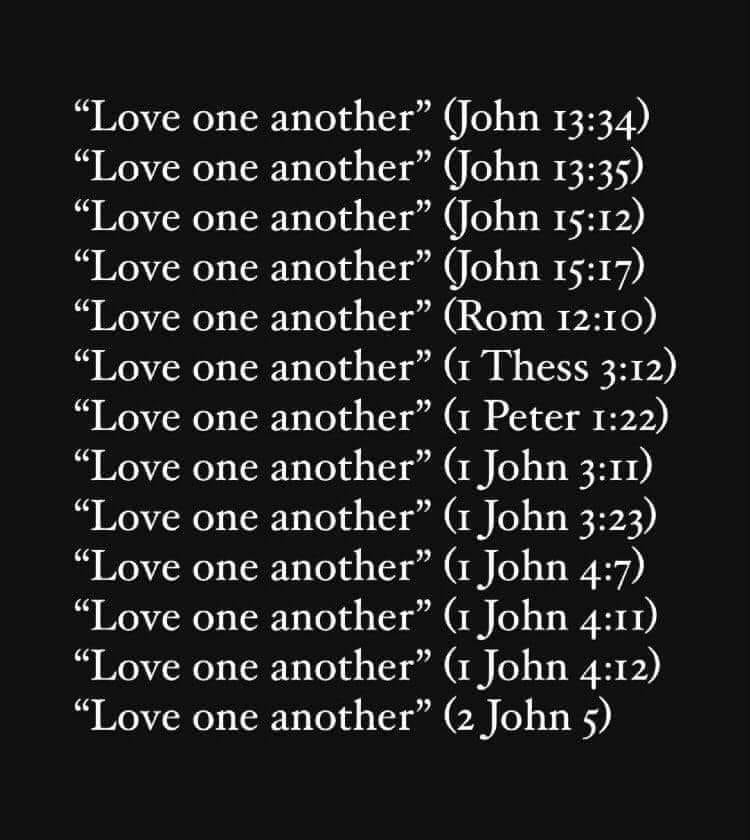
What does the Bible say? Does it affirm that intuition? The answer is clear that the Bible affirms that intuition of the importance of love ins spades!
What is love?
“Love is patient and kind; love does not envy or boast; it is not arrogant or rude. It does not insist on its own way; it is not irritable or resentful; it does not rejoice at wrongdoing, but rejoices with the truth. Love bears all things, believes all things, hopes all things, endures all things.” (1 Corinthians 13:4-7)
“This is love, not that we have loved God but that he loved us and sent his Son to be the propitiation for our sins.” (1 John 4:10)
“Greater love has no one than this, that someone lay down his life for his friends.” (John 15:15)
What is the source of love?
“[L]ove is from God”
1 John 4:7
“God is love.”
1 John 4:16
How important is love in the Bible?
“So now faith, hope, and love abide, these three; but the greatest of these is love.”
1 Corinthians 13:13
The supreme importance and place of love in Scripture reveals that love could not more more important or prominent in our theology! Any theology, therefore, that is light on love is light on truth.
(I started writing this one year and one day ago. I might as well finish what I started.)
As a child growing up, I learned to swim at a local swim club where I also spent many lazy, summer days in the water. The high dive was the ultimate challenge at the club, and the divers who trained there were the people I looked up to. The thrill of somersaulting in the air into water was alluring.
I never took diving lessons. We moved when I was still young, but high dives always called me. As a teenager, the Quarry which became my new summer hangout had a high dive anda tower. The tower was only opened on special occasions, and only the bravest of kids would jump off.
I never had diving lessons, but I learned to somersault through the air, swan dive and a host of other playground tricks. I didn’t pass up an opportunity to dive from the tower either. I was somewhat a reckless youth.
The tower is still there today, but I am told they never “open” it because of the liability. My experiences were 45-50 years ago now.
I recall these things because I woke suddenly from a dream early yesterday morning to a man curled tightly in a rotating somersault spinning in the air. At 60 years old, now, the thrill of somersaulting in the air is more tinged with fear than it used to be, and the sudden vision of it jolted me awake with Adrenalin.
Every once in a while, I show my kids I can still do it, but the body doesn’t move like it once did. I can’t bounce or curl or rotate like a 15-year old anymore.
The moment of fear-tinged thrill I felt as I woke was more like the feeling I had when I was younger when I was tempted to see how close I could jump from the high dive to the edge of the swimming pool without hitting it. The “thought experiment” conjured up the same kind of feeling.
The two things – somersaulting from a high dive and trying to jump close to the edge of the pool without hitting it – are risky things to do. A misstep doing either one might result in injury or even death.
Not being instructed in the matter of high diving, I probably had more confidence than I should have in my own abilities. I pushed myself beyond what I feared I could not do. I might have been a bit brash about it, but I wasn’t foolish. Attempting to jump as close to the edge of the pool without hitting the concrete would have been not only brash, but utterly foolish.
Life is full of risks. Just swimming in water comes with the risk of drowning. (How many times did our mothers scold us about not swimming within an hour of eating?) The mother who doesn’t teach her kids to swim, though, isn’t doing them any favors. A person who never learned to swim, for fear of drowning, is much more likely to drown in a sudden fall into the water than a person who learned to swim.
For me, swimming was as natural as riding a bike. I did it for hours every day all summer long. Swimming in the water was familiar to me, so I didn’t fear it. Perhaps, I was even overconfident in my abilities and didn’t take seriously the warnings from my mother (though I listened to her anyway because she was my mother).
There are good risks and bad risks. Any business person knows that, as going into business is full of risk.
We are currently in the sixth week of sheltering in place from the corona virus threat here in Illinois. People throughout the country are starting to get restless, calling for the governors to declare an end to the stay-at-home orders and open up the states for business as usual. Many people are hunkered down because they are vulnerable or scared, while protesters are taking to the streets in defiance with no masks, daring government intervention.
How does the risk of COVID-19 fit into the spectrum of risk? It depends a lot on you.
Financial advisors always survey their clients’ risk tolerance. People have different levels of risk tolerance. Some of us are bolder, brasher and more confident than others. Some of us are timid and scared. People with vulnerabilities have reason to be concerned. Some people are just plain reckless.
I consider myself fortunate to have been raised by parents who spoke about the evils of racial prejudice. I was rightfully appalled when I heard a racial comment spoken by a classmate in 1st grade. I was deeply affected by the assassination of Dr. Martin Luther King, Jr. when I was eight, so much that I remember what it was like walking to school the following day.
Dr. King’s death was a momentous event in my life. It affected me profoundly, but the darkness I glimpsed in the moment was as far away from me as the clouds way up in the bright morning sky that day as I walked to school.
As fortunate as I was to have had the good example of my parents’ just position on the issue of racism, I have been very slow to realize, personally, the real impact of racism in the routine lives of my brothers and sisters of color. The racism I understand (very incompletely) has has only slowly come into focus for me from the other side of that world.
I have never experienced racism directed at myself. I have not lived with the ever-present reality of racism bearing down on me from seen and, mostly, unseen sources (now).
I have never walked into a retail store knowing that someone, somewhere in that store, was watching me, suspicious of my every move. I have not driven my car in my own neighborhood conscious of the fact that eyes were following me, wondering what I am up to. I have not been stopped multiple times in my life on a pretense, though I was doing nothing wrong.
I do know the fear of being found out when I was doing something wrong, but that isn’t the same thing. I remember as a rebellious youth the fear that gripped me when I encountered a squad car at an intersection or when a squad car pulled behind me while I had an open container of alcohol in my car. But I could control my circumstances and change my ways to eliminate that fear.
I don’t know what it’s like to live in constant fear of circumstances I can’t control or predict – circumstances controlled by the fate of my birth in modern America with dark-colored skin.
As a child, I had hope and faith that we could truly see Dr. King’s dream come true: the dream that is deeply rooted in the American dream – that this nation would rise up and live out the true meaning of its creed:
“We hold these truths to be self-evident, that all men are created equal.”
We have made great strides, but the racism in this country is deeply rooted and pernicious than I believed it to be when I was child.
The deaths of Ahmaud Arbery and George Floyd are just the most recent examples of decades, generations and centuries of this cancer. The rioting that occurred last year is hard to understand from a purely rational perspective by those who don’t personally know the pain, grief, frustration and anger that wells up in response to injustice. Meanwhile, many people like me, people of good will, sit silently by.
We have not, yet, achieved the goal of the civil rights movement that was inspired by the tragic death of Dr. King. Half a century later, we aren’t colorblind. In fact, colorblindness has become a way of denying the racial disparities that still exist. Racial issues have gone underground and have become more insidious.
How does a white guy like me, who once thought that we had overcome racism with civil rights laws on the books, speak to these largely underground racial strains that remain? How do I conduct myself?
Some would say I have no legitimate voice to speak to these issues, but need to speak.
The inspiration for this article comes from an attempt by a black person to explain to a white friend what she means by white privilege. Much of the evangelical world resists the term, fearing its Marxist roots will poison the vine if we let it grow.
Before I get to the article explaining white privilege from anecdotal examples, I did a little research and found an article written by a Marxist critiquing of the concept, “white privilege”. Critique as I use it here means a critical (as in negative) view. (I found the article when searching for the origin of the term, thinking I would find its Marxist roots.)
I found the idea of white privilege can be traced back to a pamphlet, White Blindspot, generated by Noel Ignatin and Ted Allen in 1967 in which they presented arguments for “white-skinned privilege theory”. They argued that the white working class conspired with their exploiters against the non-white working class to achieve certain privileges that the non-white working class were denied. They called on the white working class to repudiate those privileges and stand with their non-white comrades.[i]
The 2020 article from which I take this narrative is critical of the “privilege theory” that developed. It identified the “privileges” that had been gained by largely white working class people included better access to medical care, better educational opportunities, and so on. The article took umbrage with the call for those workers to forgo those hard fought “privileges” to stand with their comrades of color against the capitalist elite.
“The problem with this conception is that these measures, rather than representing undeserved ‘privileges’, were in fact reforms won by the working class through bitter struggle. These class gains represented the return of a small part of the great wealth held by capitalists that workers had produced. Privilege theory – on the basis of unequal access to these gains under racist American capitalism – converted hard-won class victories, reforms and rights into “undeserved” workers’ ‘privileges’.”
The article says that “privilege theory” is “totally flawed” because it pits the white working class against the black working class. The article blames “privilege theory” on “divisive propaganda of the capitalist class” – a kind of divide and conquer strategy that served the interests of the capitalist class by creating tension in the working class on the basis of race. (Perhaps, the fact that “liberal elites” in cloistered universities developed “privilege theory” was another strike against “privilege theory” to a true Marxist.)
This article is not even a year old. Interesting, is it not? Just as the church is leery of white privilege, so are actual Marxists!
To a certain extent, this article exposes the weakness of Marxist theory which thrives on conflict. When conflict is part of the creed, it undermines itself; conflict conflicts with itself. Perpetual conflict begets perpetual conflict. “Privilege theory” is just one example of how Marxism pits factions against each other, even among factions with common interests.
On the other hand, I can argue that the idea of white privilege is actually more gospel than Marxist. I don’t necessarily believe that, but stay with me for a second. Paul urged the Philippians to have the same attitude as Christ Jesus, saying:
Though he was God, he did not think of equality with God as something to cling to. Instead, he gave up his divine privileges….
Philippians 2:6-7 (NLT)
Most translations say that God “emptied Himself”. The Greek word, kenoó, literally means “to empty” and is translated empty, deprive of content or make unreal.[ii] The HELPS word study adds, to be “perceived as valueless”.
The idea that God “gave up His divine privileges” captures the essence of the meaning of the Greek word in a very modern way. I think about this often when I consider the concept of white privilege.
This is the example of Jesus – that he had the attitude of emptying himself and giving up his privilege. Jesus calls us to be like him, to deny ourselves, take up our crosses and follow him. Thus, if we have any privilege (white or otherwise), our attitude should be the same as Jesus. We should be willing to give up our privileges, literally or figuratively, and empty ourselves (consider those things valueless) for the sake of the gospel and others.
In the next chapter of Philippians, Paul says,
“I count everything as loss because of the surpassing worth of knowing Christ Jesus my Lord. For his sake I have suffered the loss of all things and count them as rubbish, in order that I may gain Christ ….”
Philippians 3:8
Thus, the idea of recognizing the privileges we have, whether they are on account of being white, or American or whatever, actually has some biblical roots. Our willingness to recognize that privilege and to be willing to empty ourselves of it for others is consistent with Christian values and faith
The idea of recognizing privilege and being willing to empty ourselves of it may be more biblical than Marxist! (I am not completely jesting to suggest it.)
But this really isn’t the ultimate point I want to make today. I am not here to argue for the concept of white privilege in our interpretation or application of the gospel. I agree that foreign concepts, such as the notion of white privilege, should not be brought into the gospel message. The gospel message has integrity in itself and stands alone in its ability to transform lives and bear the fruit God intended of it.
I do want to argue, though, that Christians should not reflexively recoil from and demonize the notion of white privilege. It’s the language of the modern world, so demonizing it creates a divide between us and those God desires to save.
Rather, I think we can use the term to the advantage of the Gospel. If Paul used quotations from pagan poets and philosophers to bridge the gap to his Greco-Roman audience at Mars Hill (Acts 17), we can do the same with the notion of white privilege (and other words that are used in modern parlance).












 Navigating by Faith