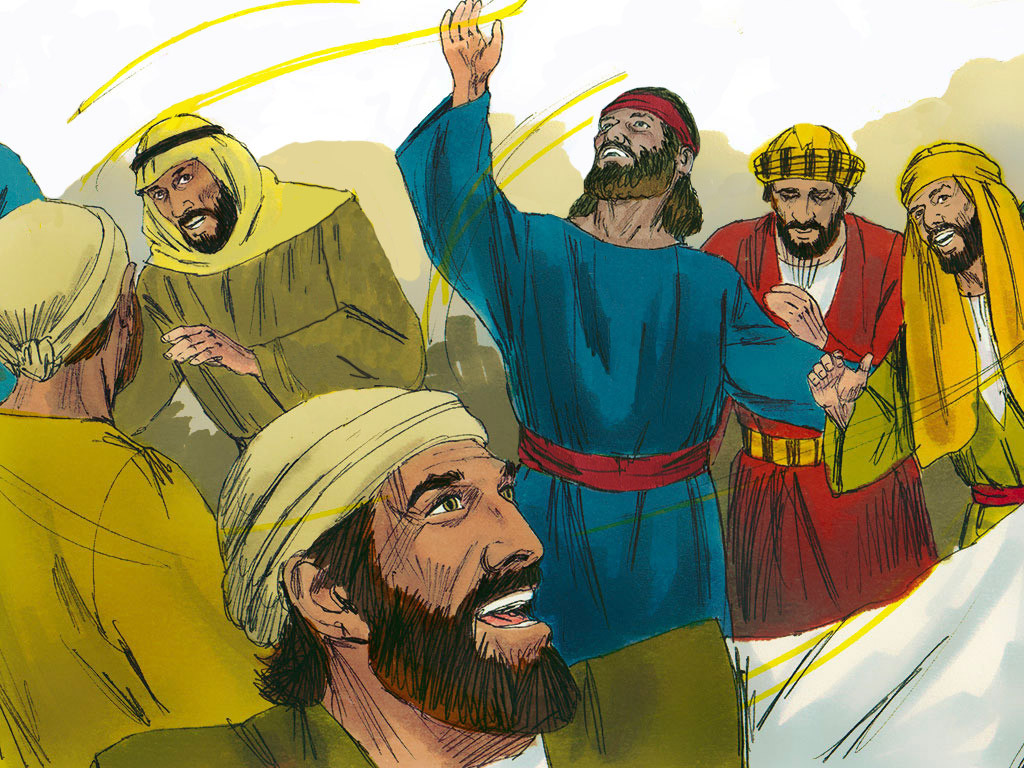
Be Like the Sons of Issachar Who Understood the Times

The Kingdom of God is among us and it is yet to come


I recently finished a review of the of history of the blogging on this site: Looking Back at 13 Years of Navigating By Faith. One article stands high above the rest in the sheer number of people who have read/viewed it.

I wrote that article, Who Were the Sons of Issachar? And What Might They Mean for Us Today?, during Donald Trump’s second presidential campaign. Christian support for Donald Trump was characterized by a sense of urgency and high stakes. State COVID restrictions jeopardized religious liberty. BLM aroused woke, liberal, mobs in streets around the country. Christians sounded the alarm that people of faith would be canceled by the most anti-faith Democratic ticket in years if Trump didn’t win.

Prominent Christian leaders like Robert Jeffress and Franklin Graham argued that Trump was a “strongman” needed to protect the nation from “anarchy” and “socialism.” Jeffress excused Trump’s obvious flaws, saying that American Christians didn’t need a “Sunday School teacher” but a “fighter” who would protect Christian interests in a hostile culture. Lance Wallnau framed Trump as a modern King Cyrus—the Persian king used by God to protect His people and restore them to the promised land.

Support for Donald Trump was increasingly framed as a battle against “darkness” and “anti-Christian” forces. While many traditional evangelicals focused on policy, the New Apostolic Reformation (NAR) was mobilized by prophecy, spiritual warfare, and the “Seven Mountain Mandate.” Dozens of self-identified prophets in this network insisted that Trump’s re-election was divinely mandated in a cosmic battle between good and evil controlled by a demonically influenced “deep state.” The current was strong, and a large number of Christians were swept along with it.

A conversation with my best friend from college, who I loved more than a brother, and who I trusted implicitly, left me in full spiritual crisis mode. He expressed his continued support of Trump on the basis of those prophetic claims predicting another presidential victory and the belief that God ordained Donald Trump for this time. My friend urged my to be like the sons of Issachar “who understood the times and knew what Israel should do.” (1 Chronicles 12:32)

I have a healthy respect for God’s ability to speak through people in what we call prophecy. The Apostle Paul commands us not to despise prophecy, but to test everything, hold fast to what is good, and abstain from every evil. (1 Thessalonians 5:20-22) I resolved to give Donald Trump another look and to reconsider him.

I had written in 2020 about wolves in sheep’s clothing with Donald Trump expressly in mind. Jesus said we would know falsehood by its fruit, and the fruit I saw in Donald Trump belied the claims of God’s providential blessing.

That a president is not a pastor made some sense. God can use anyone, even a donkey, right? Maybe Trump is like the Persian King Cyrus who is divinely appointed to restore the Christian heritage of the United States….

A year earlier, in 2019, I reflected on those claims that Trump is like a King Cyrus, and I came to a different conclusion. Trump seemed to me more like a King Saul, the king God’s people wanted – the king they wanted because they did not trust God. They wanted a king like all the other nations, though the Prophet Samuel warned them against it. God gave them the king His people wanted, even though they were rejecting God to ask for a king:


“[W]hen they said, ‘Give us a king to lead us,’ this displeased Samuel; so he prayed to the Lord. And the Lord told him: ‘Listen to all that the people are saying to you; it is not you they have rejected, but they have rejected me as their king. As they have done from the day I brought them up out of Egypt until this day, forsaking me and serving other gods, so they are doing to you. Now listen to them; but warn them solemnly and let them know what the king who will reign over them will claim as his rights.‘”

1 Samuel 8:6-9


God gave them the king they wanted in the same way that God gives people over “to the sinful desires of their heats.” (Romans 1:24) The people were rejecting God as their king, so God gave them over to the king they wanted.
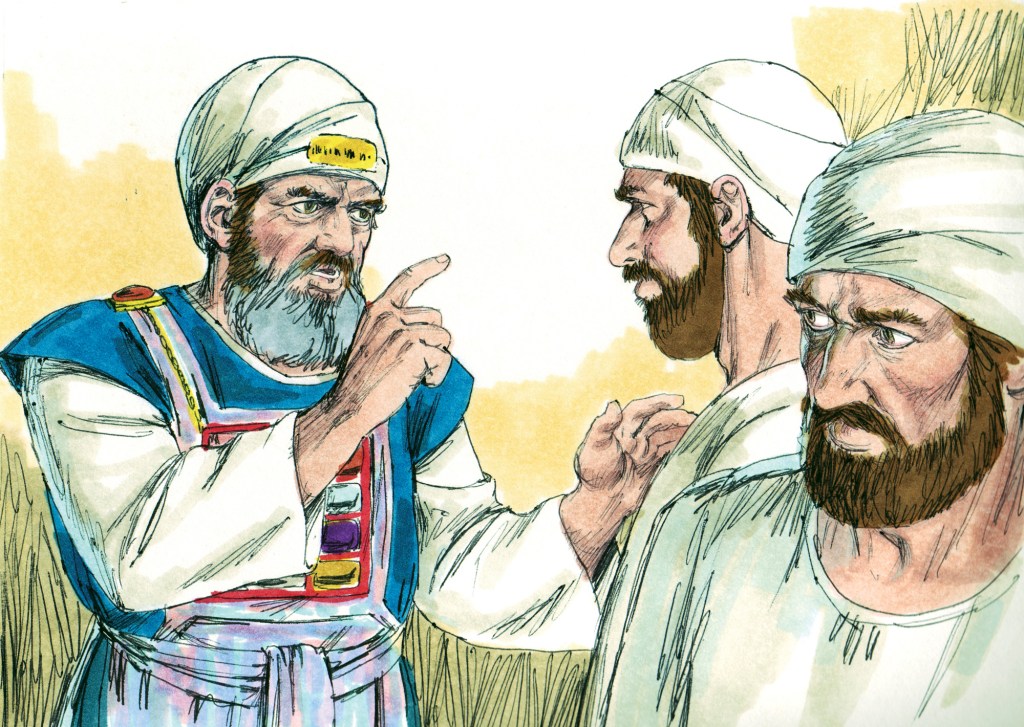

People of that day might have assumed that God was blessing them to give them the king they wanted, but that was not the case. Samuel warned them against it, but they insisted anyway.


King Saul was rebellious, insecure, self-absorbed, and psychotic. He failed to obey God’s commands. He became obsessed with his power and reputation among the people, and he became jealous of David.

Though Saul remained king, God had already rejected him and anointed David to succeed him. Saul tried to take David’s life multiple times in fits of jealous rage, and David escaped into the wilderness.

This is where the Sons of Issachar entered the picture. Though Saul was still king, they “understood the times.” They could see the proverbial writing on the wall. They knew that David was God’s man, and Saul’s reign was ending.

Many people have argued that Donald Trump is like the foreign king, Cyrus, who protected and funded the nation of Israel to return to the Promised Land. I have argued that Donald Trump is not like the foreign king, Cyrus, but like the Israelite King Saul. Donald Trump is the king that God’s people wanted.

Continue reading “Be Like the Sons of Issachar Who Understood the Times”

Who is Among the Prophets? A Lesson in Prophetic Things

A study in the contrast between Saul and David

“And it came about, when all who previously knew him saw that he was indeed prophesying with the prophets, that the people said to one another, ‘What is this that has happened to the son of Kish? Is Saul also among the prophets?’” (1 Samuel 10:11)

I wrote recently about King Saul and the question, which became a proverb, “Is Saul among the Prophets?” The oddity of Saul prophesying is implied in the question, and was apparently a significant enough point that it comes up not once, but twice in the narrative of Saul’s life. (See 1 Samuel 19:23-24)

Prophesying was out of character for Saul. He wasn’t known as a spiritual man, and he didn’t even make a great king. Yet, he was God’s chosen man to be Israel’s first king.

Saul wasn’t king for very long before God made it clear to Samuel, the prophet, that we rejecting Saul as king and would be replacing him with another man – a man after God’s heart. (1 Samuel 13:14) From this (and the narrative of Saul’s life itself), we know that Saul was not a man after God’s heart.

So why did God make him king?

Perhaps, it was an object listen in what happens when we reject God. Remember that the people demanded a king like the other nations around them. They were rejecting God in demanding a king, but God told Samuel to give them what they wanted anyway. Perhaps, God chose a king for them who was like them – not after God’s heart.

Perhaps, God wanted to demonstrate for the people that their desire for a king was a bad idea, so he gave them a bad king. Maybe. But then he gave them “good” kings (David and Solomon). They also had many worse kings!

I continue to mull over the uncharacteristic event of Saul prophesying (twice!) and the apparent fact that it was so out of character for him. It wasn’t what he said (we don’t know what he said), but the fact that he prophesied at all that was noteworthy.

Further, it seems that Saul wasn’t a willing mouthpiece either time he prophesied. The second time, he went looking in Ramah for David to kill him. David was hiding there from Saul. When Saul got there, though, he was overcome by the Spirit of God and began prophesying with the prophets there – “day and night” Saul lay naked and prostrate on the ground.

God stopped Saul from killing David by overcoming him with prophecy. Strange! Is it not?

In the previous article on the subject of Saul prophesying, I drew the conclusion that the prophecies are not the story here: the story here is the heart of the man (whether it be Saul or David).

Samuel prophesied that Saul would be made king, but Saul didn’t embrace or internalize the prophecies told by Samuel. Saul’s life would have been different, perhaps, if he had stepped up to the kingly anointing he received. Instead, he deviated from God at every turn.

Samuel’s prophecies did come true, but the end result was less than one might expect. Saul did become king, but he was a lousy king, and he certainly was not a man after God’s heart.

Saul wasn’t even king for long when God told Samuel He was taking the kingdom away because of Saul’s bad decisions. Samuel was led by God to David, who was merely a shepherd boy tending his father’s sheep, and anointed him to become king long before Saul ceased to be king. (1 Samuel 16:12-13) This happened even before David rose to fame by killing Goliath. (1 Samuel 17)

We might imagine that something as momentous as this anointing should be followed immediately by the act of making David king, but it wasn’t so. David simply went back to tending his father’s sheep!

David wasn’t even part of the army that was mustered to face the threat of the gathering Philistine horde. He was still tending his father’s sheep and running errands from his father to his brothers as they prepared for battle.

The Philistines faced off with Saul’s army for 40 days. All this time, David went back and forth between tending his father’s sheep and taking supplies to his brothers. (1 Samuel 17:14-18) David wasn’t supposed to be there the day he faced off with Goliath, except that he was delivering supplies.

Remember that Saul responded reluctantly to the anointing Samuel gave him and hid when Samuel came to announce the kingship publicly. David’s response to the anointing by Samuel seems to be even less robust than Saul’s response! David simply went back to tending sheep.

We know David didn’t lack the faith to rise to the kingly anointing, though, because of what happens next. David was bringing supplies to his brothers when he hears the taunts of the giant, Goliath. When David saw that no one was willing to stand up to the Philistine, David rose to the occasion.

David’s faith in God led him to stand up to the giant, Goliath, in the face of the huge army of the Philistines! Thus, we are right to conclude that David wasn’t shrinking back from the anointing, as Saul did, when he went back to tend his father’s sheep.

It’s also worth noting the curious focus on Saul prophesying in this narrative, while we read nothing at all about David prophesying. This is curious, first of all because Saul was an unlikely prophet. More importantly, we know from the Psalms that David was prophetic! Jesus quoted David’s words that prophetically anticipated the coming of Jesus, the Messiah! (See, for instance, Psalm 110)

So, what does this have to do with prophecy or with having a heart for God? I will get to that, but first there is more to the story….

Continue reading “Who is Among the Prophets? A Lesson in Prophetic Things”

Is Saul Among the Prophets? On Prophecy and a Heart for God

Anything that we rely on, trust in, and dream about and pour ourselves into more than God, Himself, can become a stumbling block and an idol to us.

These things all happened as Samuel said. When he arrived at Gibeah, a procession of prophets met him. The Spirit of God came powerfully upon him, and he joined in their prophesying. ‘What is this that has happened to the son of Kish?’ people asked, ‘Is Saul now a prophet?’ – Slide 16

The question – “is Saul among the prophets?” – was a question that was a matter of public discussion in Israel in the 11th Century BCE, which is when King Saul lived according to the biblical timeline. The incident that gave rise to the question was such a big deal that the question became known as a “proverb”. (1 Samuel 10:12)

What is it with this question? How and why did it become a “proverb”? What is the back story?

Twice Saul prophesied with the prophets. These incidents were considered so remarkable that the Israelites were abuzz about it. The attention those incidents received, however, was probably not a compliment. They were remarkable because Saul was an unlikely prophet.

Saul wasn’t a very good king, either. Saul, of course, was the first king of Israel, but he wasn’t known for his leadership or his spirituality. He was tall and handsome, but that’s where his talents ended.

Saul’s story begins while he is searching for his father’s lost sheep. His path leads him to the prophet, Samuel. Before they meet, God tells Samuel that Saul will be Israel’s king. As a side note, Samuel warned the people against having a king, but they wanted one, like all the other nations.

Therefore, Samuel orchestrates a big dinner and anoints Saul to be the future king among a small group of people. (You can read a good summary of the details here.) Saul had been out looking for some lost donkeys for his father, so the turn of events was wholly unexpected by him.

It seems Saul was a bit unsettled by Samuel’s news to him, and Saul wasn’t ready to be a king. Even after Samuel predicts three signs meant to convince Saul of the authenticity of the kingly anointing, Saul seems less than willing to embrace God’s anointing.

Two of the signs Samuel gave him come true, but Saul doesn’t grasp what he is supposed to do. The third sign comes true when Saul encounters some prophets, and this encounter gives rise to the proverbial question: “[T]he Spirit of God rushed upon him, and he prophesied among them”. (1 Samuel 10:11)

Saul continues to seem clueless, though, even after the fulfillment of three unlikely predictions. When he gets back home, he doesn’t tell his uncle that Samuel said he would be king or about the anointing. He doesn’t talk about the signs, all of which came true on his way home.

When Samuel finally comes to “seal the deal, to declare Saul the King of Israel publicly, Saul is nowhere to be found. Saul is hiding among some baggage!

Given Saul’s less than hardy reaction to the declaration that he would be king, we know that Saul wasn’t “playing along” or faking it when he prophesied. At best, he was a reluctant participant. He might have even been an unwilling vessel!  

Thus, the question: Is Saul among the prophets? Saul was not known to be a prophet. Saul wasn’t a particularly spiritual man. This wasn’t the only time, though, that Saul prophesied with the prophets. The second time was even more “out of character”.

I have been puzzling on these things in light of more current events – the prophesies about Donald Trump and a certain emphasis on prophecy in a segment of the church today. The tie in to more recent events prompts me to dig deeper into the story of Saul.

Continue reading “Is Saul Among the Prophets? On Prophecy and a Heart for God”

Postscript to the Sons of Issachar Who Understood the Times

We receive the Holy Spirit, not so that we will know the times, but so that we can be effective as His witnesses!

I wrote a piece on the Sons of Issachar recently. They are referenced in 1 Chronicles 12:32. The Sons of Issachar were 200 “chiefs” of the descendants of Issachar, one of the sons of Jacob. These men joined David with a multitude from the other tribes of Israel when David was hiding in the wilderness from the murderous rage of King Saul.

Saul was Israel’s first king. He was the king the people demanded. He was the king God gave them, despite the fact that His people were rejecting God as their king in the process of demanding a human king, like the other nations.

Saul got caught up in his own power and position. Saul began to lose touch with reality as he stopped obeying God and became paranoid of losing a grip on the power God gave him. He became jealous of David. and suspected David was out to get him. Though David could not have been more loyal, King Saul sought to kill David to eliminate his perceived threat.

Indeed, God was about to reject Saul as king because Saul ceased to listen to and follow God’s instruction given through the prophet, Samuel. God had chosen David to succeed Saul, because David was a man after God’s own heart.

David, for his part, loved and honored Saul because God had made him king. David had multiple opportunities to kill Saul, but he refused to do it, leaving Saul’s fate (and his own fate) completely in God’s hands.

Still, men from every tribe of Israel began to gather where David was hiding, including men from Saul’s own tribe (Benjamin). The Benjamites were some of the first men to join David. The 200 chiefs of the Sons of Issachar joined David later. Scripture says of them, specifically, that they were men “who understood the times and knew what Israel should do.”

That phrase has been invoked by people who style themselves modern prophets who support the presidency of Donald Trump. They claim, of course, that they are men who understand the times. They claim to know what Christian in the United States should do, particularly in regard to support Donald Trump.

I don’t dismiss what they say out of hand. God has spoken at various times through people considered to be prophets. One of the hallmarks of “the last days” is prophecy, visions, and dreams. Peter announced the last days were starting when he stood up on the Day of Pentecost and quoted the prophet, Joel:

And in the last days it shall be, God declares,
that I will pour out my Spirit on all flesh,
and your sons and your daughters shall prophesy,
    and your young men shall see visions,
    and your old men shall dream dreams;
even on my male servants and female servants
    in those days I will pour out my Spirit, and they shall prophesy.

Acts 2:17-18 (quoting Joel 2:28-32)

Some people believe that these displays of God’s power and authority were only for a dispensation in time long enough for the Holy Spirit to lead the disciples into truth and preserve it in what we now call the New Testament. I don’t see evidence of that in the New Testament itself. I think we should expect God to work through people today through prophecy, visions, and dreams, and I believe He does.

We, in the west, are not very open to God working in that way. We have staked out our position on the embankment of reason, logic, and “sound doctrine”. We are quite uncomfortable with the “messiness” of experiential phenomena like prophecy, visions, and dreams.

Yet, outside our western sanctuaries and cloistered halls of learning, these phenomena are regular experiences of Christian life. People who have done short-term or long-term missions often encounter these phenomena in places where people are not presumptively skeptical of what God can do.

Visions and dreams are ubiquitous in the stories of recent Muslims coming to faith in Christ. I once spoke with a Muslim woman who described for me a vision of Jesus coming to her in the midst of a near death experience she lived through. She described a subsequent “waking vision” of Jesus gaining her attention in the nick of time to save her son from being hit by a bus. She became a believer in Jesus because of these visions, though no one preached a word to her.

Her supernatural visions, though, didn’t lead her to a place of sound understanding of God and His word. They caused her to believe in God and Jesus, but she gravitated toward extremes in biblical understanding. This is just an anecdote, but I think there is a lesson to take away from it.

It would be a mistake to dismiss out of hand the prophecies, visions, and dreams that people claim to have today, but we also need to be careful. Paul admonished the Thessalonians, “Do not despise prophecies…!” (1 Thess. 5:20) But he added an important qualifier:

“…. test everything; hold fast what is good.”

1 Thess. 5:21

Continue reading “Postscript to the Sons of Issachar Who Understood the Times”

Who Were the Sons of Issachar? And What Might They Mean for Us Today?


A friend of mine referred to the “sons of Issachar… who understood the times” recently when speaking of the evangelical support for Donald Trump.  The reference comes from 1 Chronicles 12:32 where the “sons of Issachar” (descendants of the 9th son of Jacob) were described as men “who understood the times and knew what Israel should do”.

As I drifted near consciousness in my sleep last night, the phrase came back to me and ran through my head. I roused myself from a semi-conscious state and gave myself a reminder to look up the reference.

I followed up the next day. What does it mean? What does it mean for me? What does it mean in these times?

These were men who apparently understood the changing times in some unique way in a particular point in the history of Israel. The historical context was during the reign of King Saul when he became jealous of David and sought to kill him. David fled into the wilderness, taking with him other men who were loyal to him. As the various tribes learned of David’s plight and flight, they began to join David, including the sons of Issachar.  

Whether they were in tune with God’s purposes or simply saw that Saul was loosing stature in their society, while David was gaining in influence, we don’t know. My friend assumed the former meaning.

God was in the process of rejecting Saul and announced (at least to David) that He was making David king. Saul pursued David to kill him. Instead of confronting Saul, the man God chose as King of Israel, David went into hiding. David could have rallied the men who joined him to form a coup and dethrone Saul, but he would not do that.

The initial surge of supporters who joined David included warriors from the tribe of Benjamin, Saul’s own relatives. (1 Ch. 12:2) Members of the tribe of Manasseh joined David even though their desertion of Saul could cost them their heads. (1 Ch. 12:19) Day after day, men came to David’s aid at a place called Ziklag. (1 Ch. 12:20-22)

If the sons of Issachar knew the times, one might assume that they were among the first to join David, but that assumption would be wrong. They were not the first. They weren’t even in the first wave. The 200 sons of Issachar joined David at Hebron, after many others already joined David.

God had rejected Saul as king, and it was only a matter of time for Saul’s demise. God was making a change, and David was the one God chose to replace Saul. We know today that David was also the man through whom God planned, eventually, to raise up the Messiah – the root of Jesse’s seed – Jesus. (Jesse was the father of David, and Jesus is from the line of David and Jesse.)

Saul’s reign had run its course. Saul was out of touch with God. His head had gotten too big. Pride had taken over, and he no longer bowed to God in his heart. He was losing his grip on reality and the kingdom God had given him.

We know the rest of the story, but the men who joined David surely didn’t. Maybe they just believed it was time for a change. How much they knew of or perceived of God’s role in this story is just conjecture. I think we might take for granted that they did, but we have the benefit of hindsight memorialized in Scripture. They lived it in real time. 

As I read the story when I woke up in the morning, the number of the sons of Issachar who joined David struck me: 200 “chiefs” from the tribe of Issachar and all their kinsmen at their command. And, then I noticed something else.

Men from all twelve tribes of Israel joined David at Hebron, but only 200 “chiefs” from the tribe of Issachar were among them. Only 200 sons of Issachar actually joined David (though, perhaps, they represented all their kinsmen who were at their command). 

The number of men identified from the other tribes were far greater in number, including 120,0000 men from Reuben, Gad and the half-tribe of Manasseh; 50,000 men from Zebulun; 40,000 from Asher; 1000 “captains” and 37,000 men “with shield and spear” from Naphtali; and 28,600 from Dan.

So, what’s the big deal about only 200 men from Issachar? Why does Scripture say of them (and not of anyone else) that they were men who understood the times and knew what Israel should do?

One answer that occurs to me is that the rest of the “sons of Issachar” were not men who understood the times and did not know what Israel should do. Maybe only the chiefs of that tribe understood the times. In contrast, 1000 captains were accompanied by 37,000 warriors from the tribe of Naphtali! It seems none of the warriors of Issachar were willing to join the 200 chiefs of Issachar.

Were the 200 chiefs of the sons of Issachar the only people from all the tribes who understood the times? It seems not. In 1 Chronicles 12:32, it states, “And of the children of Issachar, which were men that had understanding of the times, to know what Israel ought to do; the heads of them were two hundred; and all their brethren were at their commandment.”

Of all the tribes of Israel, the men of the tribe of Issachar who came to David’s rescue were the least in number. Only the leaders were mentioned (who understood the times). Does that mean that they were least in tune with God’s plan and purposes? I don’t know. (I should acknowledge that God often works through the least, the smallest, the most unlikely.)

The backstory to all of this is that Saul was chosen (by God) as king, but God only chose a king for the people because they wanted “a king like the other nations”. In demanding a king, the people were actually rejecting God. They were putting their trust in a king, rather than trusting God to be all they needed. (1 Samuel 8:6-9)

So how does all this inform me and other Christians today?

Continue reading “Who Were the Sons of Issachar? And What Might They Mean for Us Today?”