Does God Flip Flop? Abraham, Isaac, and Us

What changed from the Old Testament to the New Testament?


I am listening to The Basic Folk podcast episode 316 with Joy Oladokun (an artist I like by the way) Perhaps, that is a strange way to open a blog post on the age old heresy of Marcionism – the belief that the god revealed in the Old Testament is different from God revealed in the New Testament. Hang with me though!

Joy Oladokun (who is a musical artist you should check out) grew up in the church and cut her musical chops on worship music and listening to Phil Collins with her father. She uses biblical themes in her music, which also has a distinctly spiritual character to it.

Though she may have some heretical ideas about God and the Bible, I believe we can appreciate and like music even when the artist doesn’t believe exactly as we do and, in this case, even when she has heretical ideas about God and the Bible. We are all on a journey in our relationship to God, and I appreciate that about people and the music people make on their own journeys.

Anyway, around the 15 minute mark in the podcast Joy Oladokun expresses her understanding that God, in the Old Testament flip flops. Then, she provides this short theological synopsis, “It’s like, ‘Sacrifice your son…. Never mind, here’s a goat.” I am chuckling even now, but her thoughts and the example she gives deserves a response.

Many people her age (and all ages, really) have an issue with the story of Abraham sacrificing Isaac. It also opens up a biblical theme that I glimpsed as a young nonbeliever reading the Bible for the first time many years ago that continues to develop as I age.

Perhaps, I am fortunate that I didn’t pay much attention to theology in my formative years, because I didn’t formulate many theological ideas that colored and warped my view of God. When I read the Bible for the first time in college, I came to it with no preconceived ideas and no assumptions (that I recall).

I was raised Catholic, but I didn’t even realize that the readings in the mass were from the Bible (until after I became a Christian). I could not recall anything from the catechism classes I took. I was pretty much too zoned out (and, later, stoned out) to latch onto many theological constructs.

I didn’t know anything about evangelical ideas, like biblical inerrancy, predestination, and eschatological schemes. I came at the Bible like I approached all literature, poetry, and philosophy. I let it speak to me and convey its message to me.

Early on (as I read Genesis), I learned that Abraham heard the voice of God, and he responded in faith (with trust). I learned that the Ancient Near Eastern people from whom Abraham descended and believed in many gods who were more or less arbitrary and capricious. One of those beliefs that was ubiquitous in Abraham’s day was the belief that gods require child sacrifice to be appeased.

I could see that the God who Abraham “heard” was not like those other gods that he and the people around him believed in. I could see that Abraham lived his life on a journey (quite literally) of discovery about this God whose “voice” he heard.

Abraham’s understanding was evolving as he sensed this God and responded in faith to Him. He was learning that God was not like the gods with which he was familiar. This God made promises, and He kept them. This God desired a relationship with Abraham, and He was trustworthy.

I have to admit that the story about Isaac was a bit of a mystery to me then, but I didn’t rush to any conclusions. I understood that child sacrifice was practiced throughout the ancient Levant, but something was different about this story that carried some significance, though I wasn’t quite sure of all that it meant at the time.

There was a lot I didn’t understand. I was on a journey myself, and I realized there was mystery in the stories that belied quick or simple explanations. I, like Abraham perhaps, was willing to explore where a connection to this God might take me (after a brief flirtation with Eastern religion).

I have been on this journey now for over 45 years. I responded to the God of Abraham when I was 19 (the summer after I first read the Bible). I was far from knowing all the answers (though I did go through a period in which I thought I knew much more than I did).

I guess the thought that we know more than we really do is a human trait, and it is one we are well advised to resist. We are finite beings, regardless of the knowledge we collect, and we will never be more than finite beings in these earthly bodies that we will take to our graves.

I can’t tell you how many years I have taken to get to a place of some comfortable understanding on the Abraham and Isaac story. It is more than I might like to admit, but I have always been willing to give God the benefit of the doubt, which is what Abraham did. It is what he was commended for: faith, which is simply trusting in the goodness of God.


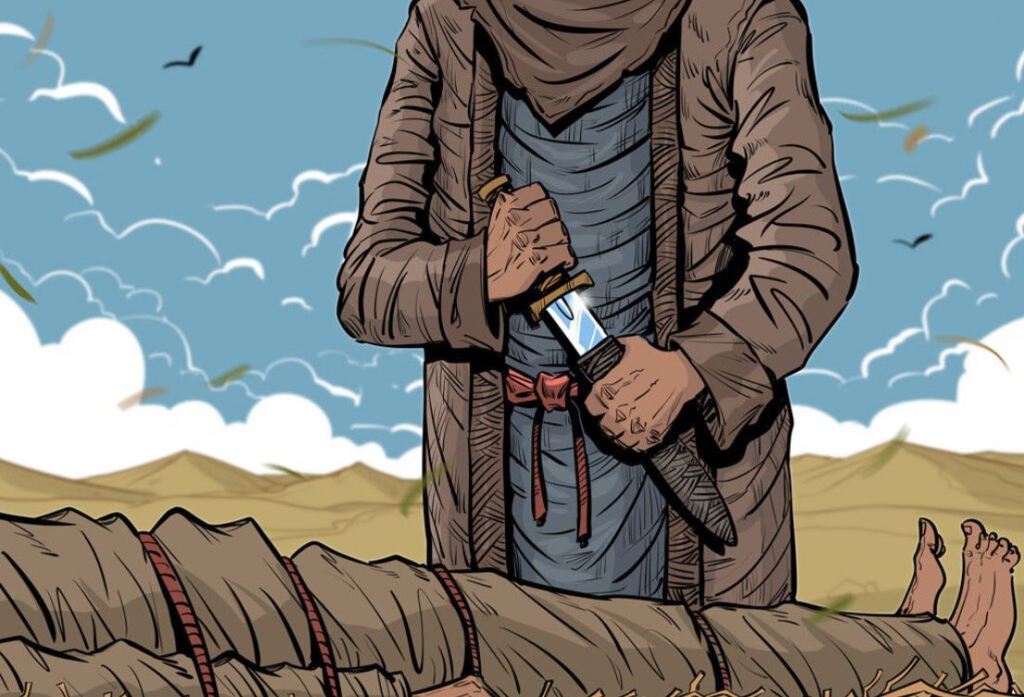
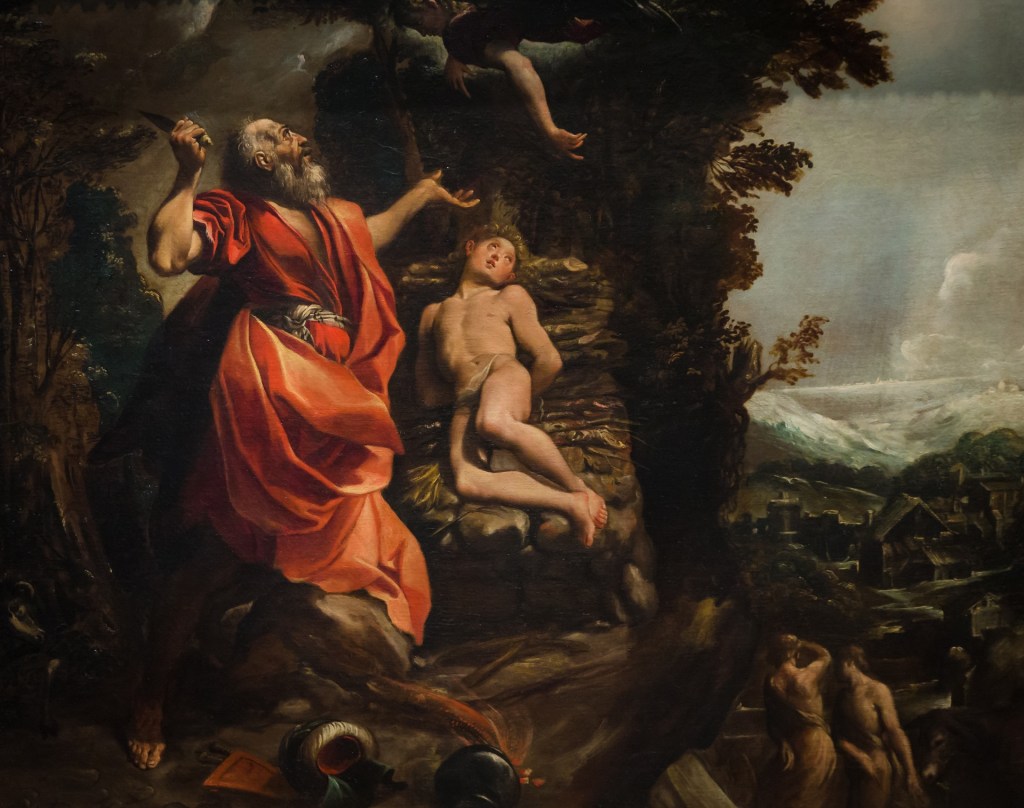
The Bible we have says that God told Abraham to go sacrifice his son, Isaac. We cannot escape that is what the Bible says. But, is that what God actually said?
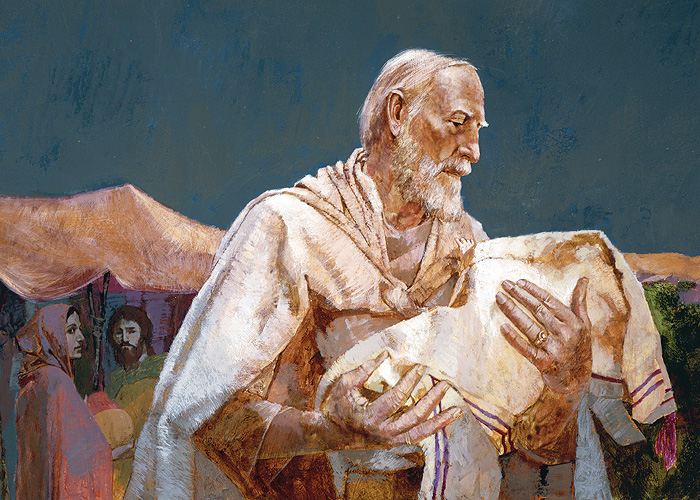

Or is that just what Abraham “heard”? Or is it just what Abraham understood? Or is it just what he felt compelled to do?

I don’t know, and I think it is ok to say, “We don’t really know.” I also think it is ok to ask the question and to assume we may not necessarily have the right answer.

In any event, Abraham clearly believed that God told him to sacrifice his son. That requirement, of course, is antithetical to the promise God had given Abraham – that Abraham’s descendants would fill the earth and become as numerous as the stars in the sky. Yet, Abraham dutifully (if not reluctantly) complied with what he believed he must do.

This is a kind of faith that we don’t understand today, especially in the post Enlightenment age of reason and science driven more recently by post-modern skepticism. We are told in Sunday school (as I have learned) that this story is about Abraham’s faith and willingness to do what he was told, though it didn’t make sense

I think that is partially true, but I have come to see that the story is not only (or maybe even primarily) about faith. The story isn’t primarily about Abraham, either. He is just the vessel through which the story unfolds. The story is about God, and who God is, and the character of God.

Whether God told Abraham to sacrifice his son, or Abraham jumped to that conclusion, doesn’t matter so much. Child sacrifice was demanded by the gods, according to Ancient Near Eastern religious thought that was formative in Abraham’s outlook on the world. He responded according to the custom, practice, and wisdom of his age.

I have written about this a number of times before. (See the Abraham and the Paradigm Shift, Abraham and the Love of God, Abraham and Isaac Revisited: Introduction, Abraham and Isaac Revisited: Here I Am, Abraham, Abraham and Faith and the Hope Deferred, and Abraham and the Blood Path) I am not going to cover all that ground again, but I return to the same theme again because it has roots in my initial revelation of God and my own journey of faith. As I hope to flesh out, it also provides some insight into the God who seems to flip flop.

Continue reading “Does God Flip Flop? Abraham, Isaac, and Us”

Abraham, Isaac, the Blood Path, Christ and Him Crucified

I started on a journey exploring the story of Abraham and Isaac deeper and with more nuance in my previous article, The Story of Abraham and Isaac Revisited: Introduction. The story of God’s seeming demand to Abraham to sacrifice his son, and Abraham being seemingly willing to do it, is quite misunderstood, especially without reference to the Ancient Near East context.

Child sacrifice was ubiquitous among the religions with which Abraham was familiar. Abraham would have thought the demand for the sacrifice of Isaac unsurprising among the arbitrary and capricious gods in the Ancient Near East world he knew.

The story is of the first 11 chapters of Genesis and of Abraham is a revelation that the God of Abraham is different than all the other Ancient Near Eastern gods. In the subsequent article, The Story of Abraham and Isaac Revisited: Here I am!, we explore the interpersonal dynamics of Abraham and Isaac that set the stage for much greater revelation of which God is.

Through Abraham’s dutiful and faithful obedience to the demand he feared would be required of him, God demonstrated His character in a way that was indelibly etched into the experience and psyche of Abraham and Isaac. They would learn that God does not make the same kinds of demands as the other gods: God would provide the sacrifice Abraham feared that God required of him.

In Abraham, Faith and a Hope Deferred, I may seem to take a sideways turn off the path of revelation of God’s character to Abraham, but I will finish the story in this article and get to that point.

The ground we covered in that last article included a blessing by God to Abraham, but the experience of God’s momentary blessing was dampened by the cold reality of God’s yet unfulfilled promise.

In Genesis 15, Abraham sought more assurance from God that the land he lived as a stranger would really become the land of his descendants and, more fundamentally, that he would actually have descendants. Many years had passed, and Abraham was still childless.

In response, God asked Abraham to set up a covenant with five animals of specific types to be slaughtered, cut in half and placed opposite each other on either side of a depression. The blood of those animals drained into the depression creating a blood path. This, Abraham knew, was the stage for entering a covenant with God.

These types of covenants were familiar to ancient Middle Easterners. I understand that similar covenant rituals are practiced today by Bedouins.

Abraham would have known the drill. As the lesser party to the covenant, he would go first, signifying that God should do to him (stomp on a pool of his blood) if Abraham didn’t keep his part of the bargain. With the lesser party committed to the covenant, the greater party would seal the deal, and go last, walking through the blood path.

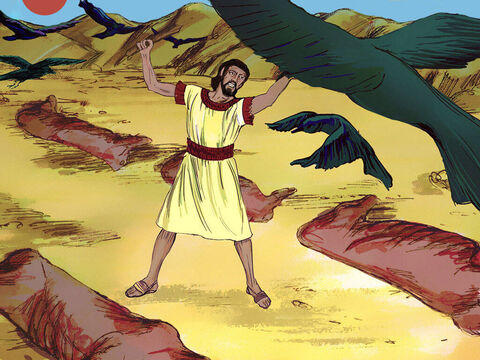
Only Abraham doesn’t initiate the covenant by walking through the blood path. He waits so long that he must drive the birds of prey away from the rotting carcasses. Then Abraham falls into a fitful and dark sleep.

Why did Abraham hesitate? Maybe he realized the significance of what God was setting up – a covenant between a fallible person and the Almighty God! Abraham was not likely worried so much about the commitment God would be making to him, but about the commitment Abraham would be making to God!

So, Abraham, perhaps, feared to enter in to the covenant. He falls into a restless sleep, and God comes to Abraham in his sleep. The “assurance” Abraham receives in his dreams is far from satisfying: God says the promise to Abraham’s descendants would not be finalized for 400 years!

Abraham would be long dead and gone.

This is where we pick up the story. This is where we get the next revelation of the kind of God the God of Abraham is. If we aren’t tracking with the story, we won’t appreciate what happens next:

Continue reading “Abraham, Isaac, the Blood Path, Christ and Him Crucified”

The Story of Abraham and Isaac Revisited: Here I am!

I set the stage for digging deeper into the story of Abraham and Isaac in The Story of Abraham and Isaac Revisited: Introduction. Abraham’s faith is the lesson we all learned in Sunday school. Faith is the basic place we start, but Abraham’s faith is only scratching the surface of the story.

We often view this story as simply a test of Abraham’s faith, which it is, but it’s much more than that. This story is not simply about Abraham’s faith, because what we learn through Abraham’s faith may be just as important, if not more important.

Think about it: Does God need to test Abraham to know who he is? God already knows what kind of man Abraham is. He knows our thoughts from afar and the words we speak even before we say them! (See Psalm 139) That should give us a clue that there is more to this story, so let’s go back and see what else there is to see.

Many decades before, we are told that Abraham believed God, and his faith was credited to him as righteousness. When God called Abraham to leave his country, his people, and his father’s household – which was his legacy – and God said He would make a great nation of Abraham’s descendants, Abraham left – though he didn’t even knowing where he was going! Though he was 75, Abraham responded with faith and went. (Gen. 12:1-4)

Many years and adventures later, Abraham was still childless, living in the land God showed him, and Abraham still believed the promise God made to him, though he had nothing to show for it. Abraham’s faith was already counted to Abraham as righteousness, but the promise Abraham believed was not yet realized. (Gen. 15:1-6)

Isaac was not born to Abraham and Sarah until Abraham was 100 years old, a quarter century after the initial promise was made. (Gen. 21:1-7) All the while, Abraham had faith. The story of Abraham and Isaac is not just a story about Abraham’s faith, but about how God is revealed through Abraham’s faith.


Though the story begins with the statement that God was testing Abraham, it doesn’t say God was testing Abraham’s faith. (Gen. 22:1) Perhaps, God tested Abraham, at least in part, to show Abraham (and us) who God is!

I will explain, but first we need to understand something of the Ancient Near East culture Abraham lived in. A key element of this story is the fact that child sacrifice was a common and universal practice in the Ancient Near East.

Abraham would have been intimately familiar with how people understood the gods of his culture. They were considered unpredictable, arbitrary, and capricious, demanding allegiance and sometimes even child sacrifice to be appeased.

What Abraham may have sensed, but didn’t fully understand, was that his God was not like the other Ancient Near East gods. The character of God, as revealed to Abraham, would have been a complete paradigm shift from what he and his culture believed about gods.

In our western mindset, we might expect God to announce at the outset who He is: we might expect Him simply to tell us. In a more eastern mindset, we they expected to discover truth through their lived experience and the lived experiences (stories) of other people.

Similarly, it seems, God doesn’t simply tell us who He is; God desires to show us. To “know” God is not simply an intellectual exercise; it is a lived experience. Thus, all of Abraham’s life is an example for us, and we learn who God is through Abraham’s lived experience (and our own).

God reveals Himself to Abraham experientially through Abraham’s faith, and He reveals Himself to us through Abraham’s story and our own faith. If you haven’t read the introductory article yet, I encourage you to do it now at the link above.

With this basic understanding, I encourage you to read Genesis 22:1-14. Then, we get into the details of the story.

Continue reading “The Story of Abraham and Isaac Revisited: Here I am!”

The Story of Abraham and Isaac Revisited: Introduction

God tests Abraham’s faith by asking him to sacrifice his son. Abraham in faith goes ahead but God intervenes to provide a ram for sacrifice instead.
Genesis 22.

Everyone in the western world has heard of the story of Abraham and Isaac. It is iconic. Even people who didn’t hear the story in Sunday school as a child have heard the story somewhere along the way in their lives. The story is a commonly referenced in literature and art, and often with negative connotations in our modern world.

Dare I say that most people have a shallow understanding of the story – even Christians? I would include myself in that category for most of my life, though I had the fortune of hearing the story and considering it for the first time, not in Sunday school, but in a college World Religion class.

The “fortune” of hearing the story for the first time in the context of an academic environment is that that I approached it first intellectually with an open mind. I approached it critically – not as in being critical of it, but as in being thoughtful about it.

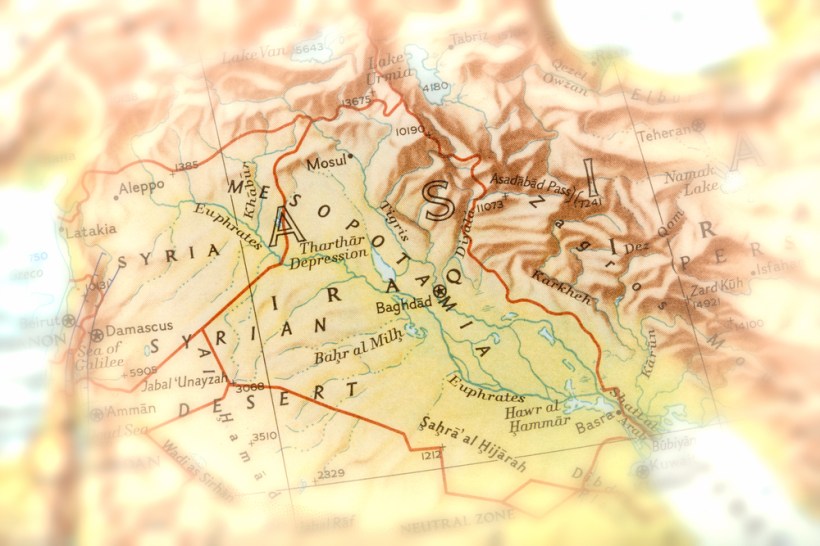
Those discussions have stuck with me. We learned about the Mesopotamian world in which the story arose, including the theory that monotheism was born in that time and region (not necessarily of Hebrew origin).

I have since spent many hours thinking and writing about those things I first learned in that class about the Ancient Near Eastern world in which Abraham would have lived. I have learned other things as well, such as the apparently universal practice of child sacrifice to the gods that dominated the religious thought in that culture.

The story of Abraham and Isaac must be read in that context to understand how it fits in. We learn through the story that the God of Abraham was radically different from the gods of the Ancient Near East culture in which Abraham lived.

In Abraham’s world, every people group and community had their own gods. While each community of people had their own gods, and each god was different from the next, one thing those gods all had in common: they were unpredictable, arbitrary and capricious.

Everyone Abraham knew assumed that the gods had to be appeased, and appeasing the gods often meant sacrificing your own children to them if necessary. Abraham would not have recoiled in moral horror at the thought that God was insisting he sacrifice his son. As difficult as it might be, you didn’t argue with the gods.

We tend to focus only on Abraham’s faith, as if that is the sum and substance of the story. Faith is the Sunday school lesson, but it’s only a shallow understanding if we see nothing else in the story. Faith is merely the beginning of understanding:

“And without faith it is impossible to please him, for whoever would draw near to God must believe that he exists and that he rewards those who seek him.”

Hebrews 11:6

Without Abraham’s faith in God, he would not have learned that God was different than other gods. Abraham’s faith was the key to learning that God was different, and Abraham’s discovery of the unique character of God is the real gem of this story – that He is not unpredictable, arbitrary and capricious like the other gods.

Abraham was a man of faith. He believed God exists, and he believed that his God was the God of gods. He believed that God could be approached; God could be trusted; and God rewards those who seek Him. Abraham was a man who sought to draw near to God, but that is only the beginning.

In the story, we see that Abraham expected God to be like the other gods he knew, but we also see that Abraham sensed something different about God. God used Abraham’s cultural understanding of the gods to show Abraham that He was different.

God is not arbitrary and capricious. He has plans for His creation. He desires to bless His creation. He desires relationship with His creation, and we (like Abraham) can engage God in that purpose by faith – by trust in God’s benevolence and good intentions toward us.

This understanding of the story will become more evident as we dig deeper in the next article: The Story of Abraham and Isaac Revisited: Here I Am. While the Sunday School version is all about Abraham’s faith, and the secular, cynical version fixates of the savage notion that a god might demand child sacrifice, the real gem of the story is that God is not like the other gods Abraham knew.


The Story of Abraham and God’s Redemption of all Mankind – Part 3

God works through the hot mess of our choices to accomplish His purposes.

I am covering some ground in the story of God’s redemption of mankind through Abraham and his progeny. This is a story of God redeeming people because of their faith (trust in God), not for their morality. It’s also a story of God accomplishing His purposes through people despite their messiness.

Abraham and Sarah were childless for 25 years after God gave Abraham promises that He would give Abraham a land for his descendants who would be numerous and that God would bless all the nations through them. On the basis of those promises, Abraham left his ancestral home and journeyed to “a land God would show him”. 

Through those 25 years, Abraham and Sarah continued to live their lives. The moved many times over those years, in and out of the land of Canaan, which is the land God promised to them.

Abraham wavered at times. At one point, when God visited Abraham, Abraham questioned God, saying, “[Y]ou have given me no offspring….”, and telling God (as if He didn’t know), “[T]he heir of my house is Eliezer of Damascus.” (Gen. 15:2-3)

God God didn’t waiver, though. He renewed the promise, saying, “This man shall not be your heir; your very own son [out of your loins] shall be your heir.” (Gen. 15:4)

Years went by. Abraham and Sarah had been in Canaan for 10 years already (Gen. 16:3), and Abraham was 86 years old. (Gen. 16:16), Sarah got impatient and offered her Egyptian servant, Hagar to Abraham, they conceived, and Hagar gave birth to Ishmael. (Gen. 16:1-4)

We find out that this wasn’t God’s plan either, but He let 13 more years go by before letting Abraham know. Abraham was 99 years old when God visited again!

God said again, “I will make you very fruitful; I will make nations of you, and kings will come from you” (Gen. 17:6); and, “The whole land of Canaan, where you now reside as a foreigner, I will give as an everlasting possession to you and your descendants after you.” (Gen.17:8)

How would Abraham have taken that?

God had made this same promise since Abraham stood in Haran imagining the land God was promising him and the descendants he would have, but that was 25 years ago! Abraham was now 99, and Sara was 90. The likelihood that the two of them would have a child together was slim to none.

Thirteen years prior, Abraham had a son. His name was Ishmael. Surely, Abraham thought by that point that Ishmael was the fulfillment of God’s promise, but it wasn’t so.

After almost 25 years, God finally gave Abraham some missing details:

“As for Sarai your wife, you are no longer to call her Sarai; her name will be Sarah. I will bless her and will surely give you a son by her. I will bless her so that she will be the mother of nations; kings of peoples will come from her.” (Gen. 17:15-16)

Abraham’s response isn’t surprising:

“If only Ishmael might live under your blessing!” (Gen. 17:18)

Abraham had not only come to accept that Ishmael was the fulfillment of God’s promise; Abraham had embraced it. Abraham undoubtedly loved Ishmael, despite his abrasiveness. Thus, his response to God’s new direction was, “What about Ishmael?!”

Why did God wait 25 years from the time He first promised to fill the land with Abraham’s descendants to give Abraham all the details? Why did God let Abraham sleep with Sarah’s servant and have another son first? Why did God wait 13 more years before letting Abraham in on the additional details?

I’m not sure I know the answers. It was obviously God’s plan, though, to fulfill the promise to Abraham through Sarah, his half-sister, the daughter of Abraham’s father, Terah. God also wasn’t done with using the line of Terah in this story.

Continue reading “The Story of Abraham and God’s Redemption of all Mankind – Part 3”