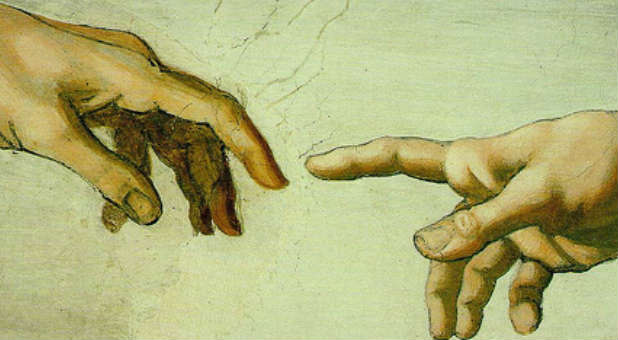
God Chooses Us So We Can Choose Him

Whoever abides in me and I in him, he it is that bears much fruit….

depositphotos Image ID: 438054 Copyright: ingridhs

“You did not choose me, but I chose you and appointed you that you should go and bear fruit and that your fruit should abide….” (John 15:16)

That seems to settle it. We did not choose Jesus. Jesus chose us. He also appointed us that we should go and bear much fruit and determined that our fruit should “abide”. There doesn’t seem much for us to do. God, the vinedresser, will do His work and cause us to beat fruit.  Right?

But then, why did Jesus direct his followers, “Abide in me”? That is a command, and a command requires a response. A response requires volition. Volition requires the exercise of the will, and that suggests we have a choice to make.

So whose choice is it?

So let’s be clear about this. We didn’t choose Jesus. He chose us, and he chose us to bear fruit… but then He asks us to do something.  He says that we must abide. We don’t bear fruit if we don’t abide:

“As the branch cannot bear fruit but itself, unless it abides in the vine, neither can you, unless you abide in me. Whoever abides in me and I in him, he it is that bears much fruit, for apart from me you can do nothing.” (John 15:4-5)

We can’t bear fruit apart from Jesus; we can only bear fruit if we abide in him.

But lest we think that we are left to our own devices, now that Jesus has chosen us, He makes it clear our abiding in Him isn’t enough! He must abide also in us.

Clearly, the relationship is reciprocal.

This is all well and good, but how do we abide in Jesus?

“If you keep my commandments, you will abide in my love, just as I have kept my Fathers commandments….” (John 15:10)

Taking it a step further, Jesus adds:

“This is my commandment, that you love one another as I have loved you. Greater love has no one than this, that someone lay down his life for his friends. You are my friends if you do what I command you.” (John 15:12-13)

After God chooses us and appoints us to bear fruit, we must abide in Him and allow Him and His word to abide in us. This requires doing on our part. We are not passive in this process. We must keep God’s commands, and that means loving others by laying down (laying aside) our own lives.

We must do all of this to beat fruit, which is what God appointed us to do.

And here is the kicker: if we don’t abide in Jesus, we die because a branch can’t live apart from the vine. It withers and dies when it is disconnected from the vine. It’s good for nothing but to be burned. (John 15:6)

So – Jesus chooses us out of the world, but we have to engage Him in that choice by exercising our own choice to abide in Him, by exercising our own choice of letting His word abide in us, by exercising our own choice to abide in love, which means following His example of laying down our lives for others.

Yes, Jesus chooses us … so that we can choose Him.

God Chooses Those Who Choose Him

Maybe God knows the outcomes, but He does not determine them.

depositphotos Image ID: 146437381 Copyright: SergeyNivens

A fellow blogger has written on Paul’s writing in Romans 11:1-6 and The Remnant of Israel where Paul says that “God did not reject His people, whom he foreknew”. Rather, God “reserved” for Himself “seven thousand who have not bowed the knee to Baal” in the time of Elijah, and Paul says similarly of his time when he wrote the letter to the Romans, “there is a remnant chosen by grace”.

This “dialogue” Paul has with himself in the letter to the Romans continues the theme I have been writing on lately: God’s choosing us (before the foundation of the world) and the choices God gives us. How can they both fit into our theology? How can it be that God chooses us and we choose God at the same time?

Paul’s brief summary of God’s interaction with the nation of Israel has evidence both of God’s choice and the choices He allows men to make. God chose Abraham and His descendants who became the nation of Israel. The history of the nation of Israel is a history of rejecting God and choosing other things, but for some outliers – some of the prophets, a few kings and other nonconformists.

Most of the people were continually running after other gods and failing or simply refusing to love God and His commands. Most of them rejected God, but Paul says God did not reject them – not all of them anyway. God reserved[1] for Himself a number – a remnant.

Is this God responding to the choices made by the people of Israel? Or has God carved out (reserved for Himself) a number of the people who would not turn from Him because He reserved them for Himself? Were the remnant chosen by God? Or did God choose the remnant?

Continue reading “God Chooses Those Who Choose Him”

The Choices God Gives Us

We must choose to receive Jesus, and then He gives us the right to become children of God.

Depositphotos Image ID: 7103912 Copyright: kohy81

“But to all[1] who did receive[2] Him, to those who believed[3] in His name, He gave the right[4] to become[5] children[6] of God— children born[7] not of blood, nor of the will[8] of the flesh[9], nor of the will of man, but born of God.” (John 1:12-13)

Johns packs a lot into these short verses, tucked into the first chapter of his Gospel that is profoundly full of other significant meaning:

“In the beginning was the Word, and the Word was with God, and the Word was God…. All things were made through him….In him was life, and the life was the light of men…. The true light…. was in the world, and the world was made through him, yet the world did not know him. He came to his own, and his own people did not receive him. But to all who did receive him… he gave the right to become children of God…. And the Word became flesh and dwelt among us….”[10]

These are some of the most profound and remarkable verses in all of Scripture. God became flesh, and He lived among the people He chose as His own, but they didn’t even recognize who He was. But those who received – who believed Him – He gave the right to become children of God.

I see two choices here: the choice of receiving Christ and the choice God gives us after receiving Christ – the right to become children of God. My Reformed friends might be tempted to overlook the import of this power-packed passage.  I am little unnerved by it myself, truth be told. I don’t trust my own heart to make the right choices!

Continue reading “The Choices God Gives Us”

God Chooses US

The Scripture presents to us a tension between the necessity of free will and the certainty of God’s sovereignty.

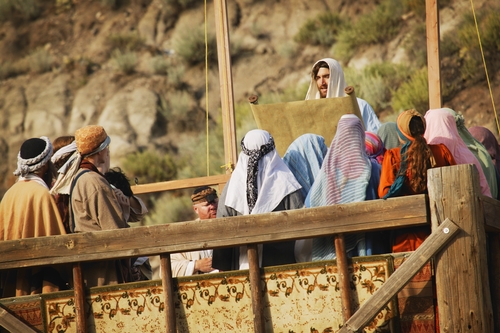
Creative Commons photo from Flicker

God lets us choose Him: “But to all who did receive Him, to those who believed in His name, He gave the right to become children of God.” But that isn’t the beginning of the story – or the end of it.

God chooses us. He gives us the right to become children of God[i], and He made that choice before the foundation[ii] of the world. We become the children of God not by blood descent, not by the will of parents or anyone else – maybe not even by our own will – but by God’s choice.[iii]

I do not have a systematic theology. I am not a theologian, and my understanding of systematic theology is limited, but free will has always seemed self-evident to me. It also seems eminently biblical. God created us in his own image[iv], and a primary characteristic of God is agency. We see in the story of Adam and Eve that God gave us agency too, by giving them dominion over the animals of the earth and in the choice to eat of the fruit of the tree of the knowledge of good and evil.

The freedom to choose is also a necessary condition of love. God is love[v], and he created us in His image to reflect Him, to glorify Him and to love Him.

The point of an image is to image. Images are erected to display the original. Point to the original. Glorify the original. God made humans in his image so that the world would be filled with reflectors of God. Images of God. Seven billion statues of God. So that nobody would miss the point of creation. Nobody (unless they were stone blind) could miss the point of humanity, namely, God. Knowing, loving, showing God.[vi]

God created us to love him. Therefore, we must have agency/free will in order to be able to reflect back His love as He intended.

But there is another side to this. There is not only what we call faith; there is grace. There is God’s unmerited favor. God chooses us. We call this predestination and attribute it to God’s sovereignty

Continue reading “God Chooses US”

God Lets Us Choose Him

If we encountered God “face to face” in our daily lives and if God was so evident in creation that we could not deny him, we would not have free will.

Depositphotos Image ID: 31693997 Copyright: DesignPicsInc

In back-to-back chapters in the Gospel of John (8, 9 and 10), Jesus has conversations with Jewish crowds who question who he is. Jesus never tells them in direct words, “I am God,” but the crowd clearly knows what he is talking about. This is similar to what we experience in life.

The world is made in such a way that it is governed by natural laws that have existed since the beginning of time. The cosmological constants were set from the beginning and are so finely tuned that they could not be changed this way or that way, even the slightest bit, without negating the possibility of life on Earth. Many scientists look at these laws and draw the conclusion that either they have always existed or they are simply all there is.

But where did the laws come from? Where did the universe come from? There is plenty of other evidence that God, the Creator, exists. The cosmological constants do not eliminate the possibility of a God. In fact, if those constants had a beginning, they must have had a beginner. But, there is room to question and to dismiss the idea.

Many of the Jewish people at the time of Jesus, especially the influential leaders, questioned who Jesus claimed to be.  Jesus did not get in their face about it. Just like God does not reveal himself in the created Universe in a way that we could not ignore him, Jesus was subtle, but clear.

I find this to be fascinating. It reveals a deep thread that has been coming into focus for me going way back in time.

God created us with free will. If he was in our face, we would have no free will. He would overwhelm and overcome us if we could not ignore Him.

Continue reading “God Lets Us Choose Him”