Who Are the Righteous and the Wicked? Part III

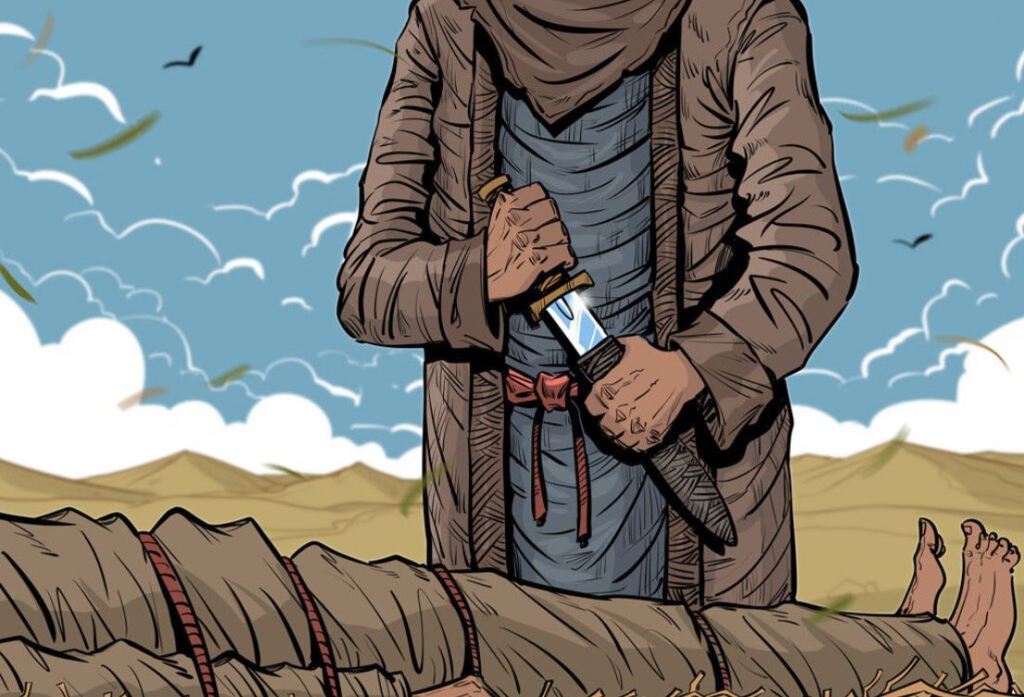
Abraham’s faith was more than naked belief; it was belief that prompted him to act in trust in God.

“All Scripture is breathed out (inspired) by God and profitable for teaching, for reproof, for correction, and for training in righteousness….” (2 Tim. 3:16)

I was prompted in reading Psalm 1 to focus on the distinction between “the righteous” and “the wicked” in Who are the Righteous and the Wicked? Part I. As I began to dig into it, I observed that only God is righteous, and our righteousness depends wholly on our relationship to God. If we believe (trust) Him, he credits His righteousness to us. (See Part II) Abraham is our example: when he believed God, His faith in God was credited to him as righteousness. (Gen. 15:6 & rom. 4:3)

This is all very fundamental to Christianity. It might prompt us to make the assumption that people who merely believe God, believe the Bible (and go to church) are righteous. There is a fly in that ointment, however; and James identifies it in his letter.

James acknowledges that Abraham believed God, and his belief was counted to him as righteousness (James 2:23), but James digs a little deeper into what “the righteousness that comes by faith” (Rom. 3:22) really looks like. After all, even demons believe in God (James 2:19), but they aren’t righteous! The difference between the righteous and the wicked, therefore, involves something more than merely believing in God

We explored the idea that righteousness is something that flows from God, out of His very Being. It is not something God decreed, but something that God is in His very nature. Righteousness is not an abstract ideal that God lives up to; God is righteous. We don’t describe God in respect to righteousness; we know righteousness by knowing God.

It helps, perhaps, to take morality out of the equation and to look at it through a more scientific lens. Just as gravity is what it is and operates the way it operates (because that is how God created the universe), righteousness is simply what it is. Righteousness, however, isn’t something God created, like gravity; righteousness flows from the very nature and character of God.

To put it very simply: God defines righteousness by who He is, and righteousness is defined in relation to God.

Thus, we can only know righteousness in relation to God. We can’t be righteous, because only God is righteous. God credits His righteousness to us who believe (trust) in Him, but that is only the beginning.

Christians might call this being born again. We believe God; God counts us righteous; and, thus, He welcomes us into relationship with Him. A birth, however, is only the beginning.

When we dig deeper, as James did, we see a specific characteristic to the belief that Abraham by which God credited it to him as righteousness. That characteristic is something more than bare belief. Demons, who also believe, don’t have that characteristic (otherwise their belief would be credited to them as righteousness too). This characteristic is what James is getting at when he says that “faith apart from works is dead”. (James 2:26)

Abraham’s faith prompted him to action. James says that Abraham’s “faith was active along with his works”, and his “faith was completed by his works”. (James 2:22) Thus, Abraham’s faith was more than naked belief; it was belief that prompted him to act in trust in God.

Having some understanding of what makes a righteous person righteous, and what doesn’t, is essential to our relationship with God.

Faith that doesn’t prompt a person to action is not the kind of faith Abraham had; it is not the kind of faith that is credited to a person as righteousness. Faith that only prompts feelings is not the kind of faith that leads to righteousness. (James 1:19) The faith that leads to righteousness is faith that prompts a person to be a doer of God’s word. (James 1:22-25) It is faith that prompts love for God and love for neighbor, and that love is active! (James 1:26-27)

Faith that doesn’t result in a change from the core of a person’s being that emanates out into a change of heart and change in action is not the kind of faith that can be described as being born again. It is not saving faith, and it is not the kind of faith that God attributes as righteousness to people. 

My Corona Viral Story, So Far

I am working, but mostly I am writing, thinking and searching the world wide web for clues to the viral mystery and the meaning and purpose for life.


I am inspired to today to write a story, a corona virus story. My corona virus story, so far. Thanks to Karla Sullivan for the inspiration and prodding necessary to jump start that inspiration. I take my cue from her article on National Stress Month.

Fitting, right? She thought so, and so do I. We are in week four (or is it five?) of sheltering at home in Illinois, sequestering ourselves away from the viral outbreak that creeps like exponential statistics across the globe, a hidden threat that remains as a much a mystery as God.

Not that we don’t know a lot about it by now. We have clues to its origin. We certainly know the effects it has on people, some mild and annoying, some deadly and terrifying.

This novel virus emerges into a world filled with fake news, conspiracy theories, short presidential tirades (tweets) and unrelenting social media. It’s April, and we’ve had inches of snow twice in the last several days. People are talking apocalyptic (a little less tongue in cheek than usual).

Most of my story is internal, the thoughts (and recently feelings) of living through a worldwide pandemic in what seems like quasi-apocryphal social isolation.

Continue reading “My Corona Viral Story, So Far”

The Difference Is In What We Do


These were the words I read this morning when I opened my Bible app:

“So then, as we have opportunity, let us do good to everyone, and especially to those who are of the household of faith.” (Galatians 6:10 ESV)

As I think about this exhortation from Paul, I realize that our faith is meant to be manifested in doing good. It also occurs to me that, maybe, we have gotten the emphasis wrong.

I can understand how it happened. Common people didn’t have the Scripture to read for themselves. The church had gotten corrupted by power and wealth. Priests sold indulgences and turned faith into a religion of required observances and superstitious piety.

John Wycliffe and others made Scripture available to the common people, and Martin Luther and the people he inspired rediscovered the that salvation is received by faith. It’s a matter of grace, not of works, lest any man boast.

These things were inspired by the Holy Spirit at the time, but we always flirt with the danger of settling into religious ruts that prevent us from appreciating and considering the whole counsel of God. Western Protestantism has tended for centuries to accept the stuffy air of an academic, heady faith that gets too little exercise in the “good works, which God prepared beforehand, that we should walk in them”.[1]

This is the progression: We are “saved through faith”; this is not our own doing; “it is the gift of God, not a result of works, so that no one may boast”.[2] But we can’t stop there. We have to realize the truth of the very next statement: “For we are his workmanship, created in Christ Jesus for good works, which God prepared beforehand, that we should walk in them.”[3]

We are saved by faith, not by works, in order for us to do the good works God prepared for us to do.

We are saved by faith, not by works, in order for us to do the good works God prepared for us to do.

Paul’s words in Galatians and the entire thrust of Scripture suggest that the hallmark of Christian faith is the good that we do that flows out of the salvation we received by faith.

Continue reading “The Difference Is In What We Do”

The Hole In the God of the Gaps Argument

All people, including scientists, fill in the gaps in their knowledge with a model of reality they believe best fills those gaps in light of the knowledge they have. 


Most people who have entertained the question, whether God exists, are familiar with the “God of the Gaps argument” that is made against the existence of God. It goes something like this: In the past, people couldn’t explain natural phenomenon, like rain, thunder, earthquakes, etc. so they attributed those things to the activities of the gods. People use the gods (or God) to fill gaps in their knowledge and understanding of how the world works out of ignorance.

From that observation (which is factually true as a simplistic statement), they add in the equally true observation that the progression of science over the centuries has been filling in the gaps in human knowledge and understanding of the natural world. We have found natural explanations for most phenomenon without having to resort to the conclusion that “God did it”. Thus, the argument goes, we should stop invoking divine explanations.

Many people take that even further and conclude that we should stop believing in God altogether. We don’t need God to do science; thus, we don’t need God at all, they say.

Thinkers realized during the Enlightenment period that they didn’t need to invoke divine explanations at all to be able to study the natural world. From that realization, a scholarly consensus the thinking has developed that divine explanations are not only not necessary; they are not appropriate.

Divine explanations are viewed today by most scholars as anti-scientific. Some people who are concerned with the purity of science would even deem divine explanations “heretical” to the current scientific orthodoxy.

The God of the gaps argument (as an argument to prove the nonexistence of God), however, is pretty weak. The fact that we can do science (which is, by definition, the study of the natural world) without appealing to a supernatural being or explanation isn’t surprising. It also can’t tell us what caused the natural world, as any cause of the natural world would have to be independent of it.

Just as the study of a painting can never introduce us to the painter, study of the natural world could never hope to introduce us to the creator of the natural world. At best, it might tell us something about the painter/creator. In both cases, we must be willing to look elsewhere to find the painter/creator.

Frankly, the order we see in the natural world is more surprising on a naturalistic worldview that assumes no intelligence behind the universe. We see intricate design in the universe, from the micro to the macro levels. How do unguided co-locations of molecules and matter acting randomly on each other produce the exquisite fine tuning we see?

The order to the natural world that we can study and know doesn’t preclude the existence of a supernatural (other than natural) Being behind it all. The order of the natural world is actually more difficult to explain without God.

The order of the world, by itself, is not proof that God exists, but the design we see is best explained by a grand Mind. This is not a gap-filling argument. It is an argument based on the best explanation we have – that all design we see in our experience is created by a being with agency who thought of it, designed it, and created it. This is the best explanation that we have.

If we resign ourselves to nothing but the study of the natural world, how do we expect to know anything about the possibility of reality beyond it? If we limit ourselves to naturalistic explanations, we foreclose any other possibility.

Thus, refusing to allow for the possibility of a God that might fill the gaps in our knowledge is just as arbitrary and closed-minded as filling every gap with God (and refusing further inquiry).

We all fill gaps in our knowledge, and we do it on the basis of what we know and believe about what we know. Our gap fillers are our basic assumptions. The theists assumes a Creator exists. An atheist assumes that no creative mind is behind the universe.

Frankly, there is a big gap between the fact that the natural world has order that we can study and the question whether anything beyond the natural world exists. I can turn the argument around and accuse the naturalist of filling the gap with the conclusion that no God exists.

But all of this really misses the important point. Hugh Ross addresses the God of the gaps argument in a recent interview with Kahldoun Sweis. He says,

“In science, there are always gaps. We will never learn everything. We are limited human beings.”

However, when we “push back the frontiers of science”, we have to ask ourselves whether the gaps in our knowledge are getting bigger and more problematic? Or are they getting smaller and less problematic?”

Continue reading “The Hole In the God of the Gaps Argument”

Deconstruction Can Lead to a Stronger Foundation for Faith


I began writing down my thoughts as I was listening to an interview of Lisa Gungor and Alisa Childers on the Unbelievable? podcast with Justin Brierley. Both women went through what we now popularly call a period of deconstruction. Christians might have formerly called this experience backsliding (or falling away).

People in certain Christian circles have long characterized this experience as sinful (calling it backsliding or falling away). The more modern characterization of this experience focuses on doubt (deconstruction). The unspoken tension between these views is in how we view doubt. Is doubt bad (sinful)?

Hold that question.

Lisa Gungor says that she emerged from her period of “deconstruction” as a progressive Christian, no longer believing that Jesus is the only way, the only truth or the only life, no longer believing that Jesus definitely rose from the dead. Lisa Gungor says she now doubts that truth can be known in any absolute or definitive way.

Alisa Childers, on the other hand, come through her period of “deconstruction”, with a stronger faith and a more certain foundation. She doubled down on her quest for truth, putting her faith to the test, and she is now a Christian apologist.

Both woman went through periods that they call a deconstruction of their faith, but one of them came out the other end with a stronger, more resilient and truer faith. In this blog, I explore why that might be. I hope also to shed some light on the question whether doubt is sin.

Continue reading “Deconstruction Can Lead to a Stronger Foundation for Faith”