Unto Us A Child Is Born

The world waited over 700 years after Isaiah told of the coming of the Christ, the Messiah. The world now waits in anticipation for the governance of that Christ in heaven and earth.

© Can Stock Photo Inc. / Anke

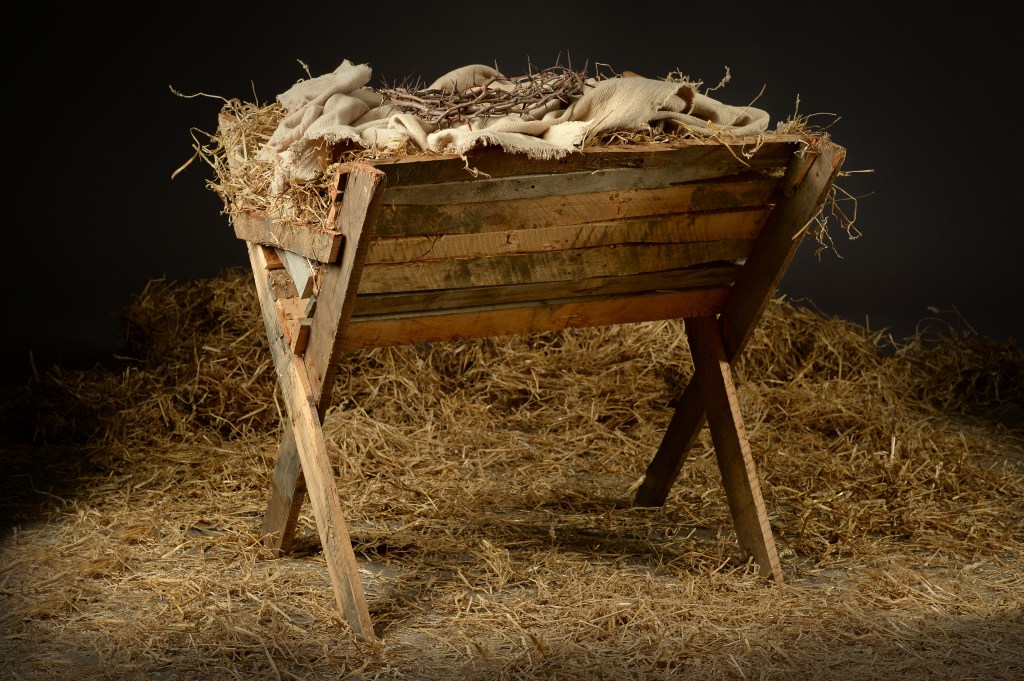
The prophet Isaiah, spoke the word of God and foretold of the coming of the Christ child over 700 years before Jesus was born into the history of mankind in a humble manger. 

For a child will be born to us, a son will be given to us; and the government will rest on His shoulders; and His name will be called Wonderful Counselor, Mighty God, Eternal Father, Prince of Peace. There will be no end to the increase of His government or of peace, on the throne of David and over his kingdom, to establish it and to uphold it with justice and righteousness from then on and forevermore. (Isaiah 9:6-7)

As Peter said, “the Lord is not slow about His promise, … but is patient toward you.” (2 Peter 3:9). In the fullness of time, God emptied Himself and entered into the history of His own creation. (Phil. 2:6-7)

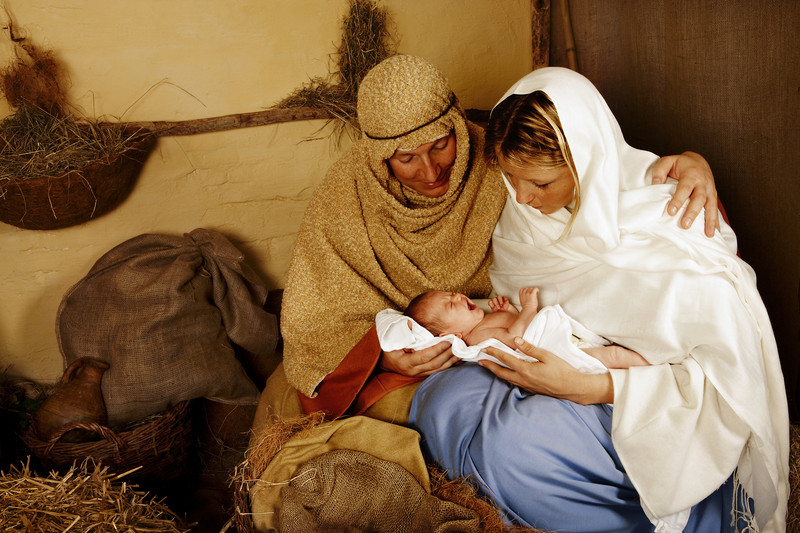
The angel appeared to Mary and gave her the news that Isaiah foresaw:

And behold, you will conceive in your womb and bear a son, and you shall call his name Jesus. He will be great and will be called the Son of the Most High. And the Lord God will give to him the throne of his father David, and he will reign over the house of Jacob forever, and of his kingdom there will be no end.” (Luke 1:31-33)

And it would not just be that this Christ child would come for the lineage of Jacob and David; He would come for all mankind. Continue reading “Unto Us A Child Is Born”

Sharper Than Any Two-Edged Sword

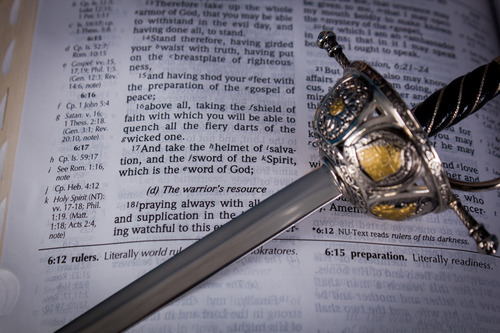
For the word of God is living and active and sharper than any two-edged sword….
lightstock_81985_xsmall_user_7997290


When I started this blog, I promised some autobiographical accounts, not that anyone is waiting with baited breath for them. True to my word, though, I will oblige.

I just revised one of my first blog posts, One of My First Light Bulb Moments. In that post, I recounted some early revelations about the Bible that marked my spiritual journey while I was still an unbeliever. I recalled my observation of the intricate harmony of the Bible and acknowledgement that the Creator of the world could communicate to us if He desired to, and He could also protect that communication if He wanted to.

I had these thoughts as I read the Bible for the first time in college. There were other thoughts too. The additional thoughts were not as philosophical; they were much more personal and uncomfortable.

In fact, reading the Bible made me feel uncomfortable. It was sharp. It seemed to expose my heart. It seemed to suggest I was at enmity to God. I virtually squirmed as I read it.

Though I read the Bible as part of an academic class on world religions, I approached each world religion as part of my own journey for truth. Not just the world religions class, I approached every class in college as part of my truth journey. I was eager to delve into the meaning of life. I was very much a product of 1960’s and 1970’s culture in that respect.

I did not really recognize the discomfort I was feeling as I read the Bible until I came across the following verse:

For the word of God is living and active and sharper than any two-edged sword, and piercing as far as the division of soul and spirit, of both joints and marrow, and able to judge the thoughts and intentions of the heart. (Hebrews 4:12) 

There it was: staring me in the face was an explanation for why I felt so uncomfortable. I at once desired to put the Bible down and leave it alone and to press further like a person exploring a cave in the dark with trepidation. God seemed unapproachable to me, and the conviction I felt was painful; yet I could see there was something there.

The Bible, unlike most religious texts, is unique in confronting the sinful, imperfect nature of man in all of the pride, selfishness and pettiness that we so clearly see in other people, of course, but are much less likely to see in ourselves. The Bible uniquely reflects that pride, selfishness and pettiness back at us. It forces us to be honest with ourselves.

It was many months before I learned a lesson that changed my life forever. If we do not turn from the conviction, but allow it to have its way with us, God’s Word brings us to the cross.

At the cross we see God, intentionally divested of His glory, dying as a sacrifice for us, redeeming us from the sin that is in us.  We are not left to be perpetually convicted of our sins; we are shown the way out of our condition that God provides. When we confess our sins and believe, we find the glorious truth of salvation, forgiveness of sin and relationship with our God and Creator.

“[W]hoever hears my word and believes him who sent me has eternal life and will not be condemned….” (John 5:24)

We must first see ourselves for who we are, as difficult and uncomfortable as that can be. The Living Word does that: it exposes the sin, but it also shows the way to mercy and forgiveness. It is sharper than any two-edged sword. The painful exposure of the sin that resides in us gives way to the healing that we desperately need by the same Word that smites us.
The Thoughts of Many Hearts Revealed

canstockphoto14185731
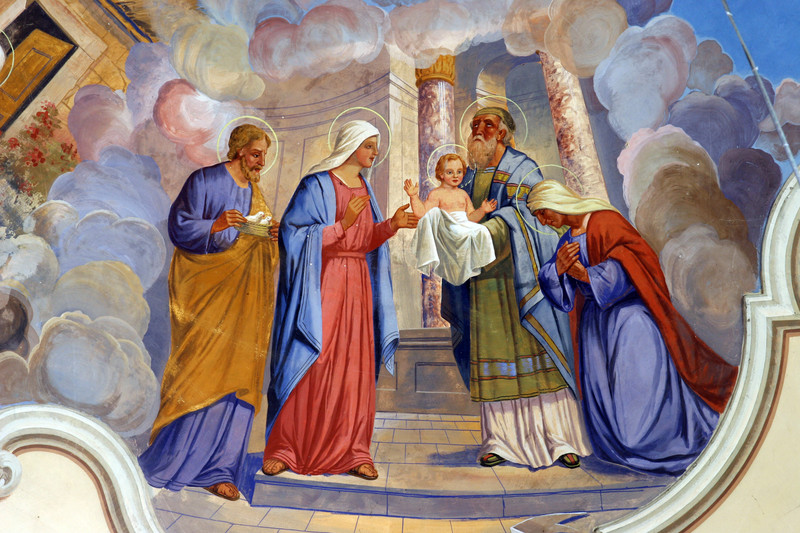
Young Jesus presented to Simeon at the Temple

“Then Simeon blessed them and said to Mary, his mother: ‘This child is destined to cause the falling and rising of many in Israel, and to be a sign that will be spoken against, so that the thoughts of many hearts will be revealed.'” (Luke 2:34-35)

People tend to focus on the “Christmas story”, but this verse that follows the account of the birth of Jesus is significant, if not subtle, in its ramifications.

Simeon was a temple priest who entertained the rituals performed by Mary after Jesus was born. Luke says that it was revealed to Simeon by the Holy Spirit that Simeon would not die before he had seen the Messiah.

Devout Jews of the time were expecting a Messiah (“Christ” in Greek). Keep in mind that more than 300 years had passed since the last of the Old Testament prophets who foretold the Messiah. Simeon knew this baby was the One because the Holy Spirit had spoken to him!

Following an article I read recently, the author had a back and forth discussion with a reader about whether Jesus actually existed. The skeptic questioned the reliability of the Bible and did not believe that Jesus of Nazareth was an historical figure. Among other things, he questioned the lack of reference in First Century historical accounts sources external to the Bible of Jesus and the miracles that the Bible describes. The reader argued: if so many miraculous things really happened, wouldn’t everyone have heard about them and made mention of them in historical accounts?

Never mind that social media was late to arrive in First Century Galilee and CNN had not yet been picked up Jerusalem at that time. I wonder, though, even if social media and CNN existed, would you believe accounts of miracles if they were reported in India? Mexico? Montana? Would you have even give it a second thought if some fishermen, homeless people, or prostitutes claimed to be healed?

Of course, this question begs another question: Is the Bible an historical account? The “books” of the New Testament are written like historical accounts, especially the Gospels and the Book of Acts. The epistles (letters) also have historical significance.

Simeon is recorded as saying to Mary that the Christ child was “destined to cause the falling and rising of many in Israel”. Isn’t that what happened with Jesus, who only lived a short 30 some years? He caused quite a stir, and the stir even continues today, almost two millennia later.

Many continue to speak against Jesus today, just as Simeon said they would, which is an odd thing if Jesus was never an historical figure. The thoughts of many hearts are revealed if this Jesus really was God who came in the flesh to walk among us. He is the continental divide between those who are open to God and those who deny him.

But, what is the evidence that Jesus was an historical figure who claimed to be God in the flesh?

Continue reading “The Thoughts of Many Hearts Revealed”

A Look at Slavery in the New Testament

Slavery in the New Testament re-examined.

A Message in a Manger


“God put eternity into the hearts of men”, said the writer of Ecclesiastes, and Jesus is the answer to that longing that is built into us.

We live imperfect, flawed lives, and then we die. We came from dust and to dust we return, and “all is meaningless”, according to the writer of Ecclesiastes. When Jesus Christ was born, however, all of that changed.

The sins and wrongs of fathers and mothers pass down to their sons and daughters and have done so from the beginning. In Jesus, God introduced a new lineage and a new possibility. Born a man, but also born of God, through Jesus comes the answer to the finite frailty of humankind.

The birth, life, death and resurrection of Jesus Christ is the core of the Gospel. If Jesus did not rise from the dead, all of our hope is in vain. If miracles are not real, then the atheists are right that we are to be despised. If Jesus did not rise from the dead, there is no escape from injustices, and they will never be righted in this life or by the oblivion to follow.

Continue reading “A Message in a Manger”