Are the Gospels Reliable?


I recently read a blog post by Brett Lunn, on his blog, Capturing Christianity, titled Why Everyone Should Believe that the Gospels are Reliable. If it were that easy, everyone would believe the Gospels are reliable. But, he makes some good points, and one in particular that sparked my interest.

The Gospels, of course, refer to the books we know as the Gospels according to Matthew, Mark, Luke and John. The earliest copies of those writings don’t actually contain a reference to authorship, which has occasioned a great deal of modern conjecture about who really wrote them. I say “modern conjecture” because the authorship wasn’t questioned for centuries.

In fact, the earliest charge from anyone raising a question about the authorship of the Gospels was advanced in the 4th Century by Faustus. Augustine, the great writer, thinker and theologian took on the skeptic, Faustus, with the response, “How do we know the authorship of the works of Plato, Aristotle, Cicero, Varro, and other similar writers but by the unbroken chain of evidence?”[1] With the Gospels, we have a history of acceptance that they are authentic writings of the men to whom they are ascribed all the way up to the 4th Century. That’s a pretty good chain of title.

Further, it’s not as if the writings didn’t actually identify the authors, as people suppose. They did identify the authors, but the identification was in the titles (not in the text), and they didn’t uniformly identify the authors in exactly the same format. Some said, “Gospel according to….”, and some simply said, “According to….” Much ado about nothing?

Another criticism is that the Gospels weren’t written by the most officious people. John, of course, was a close disciple of Jesus, and so was Matthew, but Matthew was kind of suspect. He was a tax collector, and tax collectors for the Roman government were persona non gratis in the Jewish outskirts of the Roman Empire. Couldn’t a disciple with better credentials have authored a Gospel?

Mark and Luke aren’t even disciples! Luke was a companion of Paul. He wasn’t even Jewish; he was a gentile! He wrote in the Greek style of the highly educated, using Greek expressions, instead of Hebrew ones. We know him chiefly through Paul’s letters: Luke the doctor (Col. 4:14) who was the last companion to remain with Paul before his death (2 Tim. 4:10-11) among other references.

And Mark? He was a companion of Peter. He was also a companion of Paul, being described as a missionary with Barnabas and Paul (John Mark) in whose house many gathered to pray. Paul also asks for Mark to come to him in the same letter in which he laments that Luke is the only person still with him. (2 Timothy 4:11) Peter referred to Mark as his son, which most scholars take to mean a term of honor and endearment. (1 Peter 5:13)

Mark also had a falling out with Paul at some point, however. (Acts 15:36-39) Luke was a Gentile. Matthew was a despised tax collector. Couldn’t even a fledgling religion come up with credible scribes of the central story?

Sure, if Christianity was nothing but a religion concocted by the imaginations of men. Frankly, why would anyone choose this cast of characters?

I think the answer is that no one would have chosen these guys, and the story wasn’t made up. These are the men who reported what they saw, what they heard and what they knew to be true from firsthand accounts. The truth is kind of like that. It isn’t neat and clean like a story someone made up. It is what it is.

And this is the point that intrigues me by the article that inspires this piece. Continue reading “Are the Gospels Reliable?”

Welcome to the Faith Club

Our commitment to brute assertions is faith.


Here is a bold statement: faith is the foundation on which all reasoning proceeds. Though it is a bold statement, indeed, I believe it is true (pun intended). Let me explain why.

First of all, though, I have to admit that didn’t come up with the statement. Tim Keller did, but it aligns with what I have come to believe is true: that we all have faith, even materialists who say they have no faith.

I have written about it from time to time, including Reflections on Confidence in Faith and Atheism, Darwin’s Faith: The Religion of the New Atheism, and  Are Reason & Faith in God Contradictory Terms?, to cite just a few examples. So this isn’t a new thought for me, but I like the way Keller approaches the topic.

Keller asks us to consider the Enlightenment premise: the only things we can really be sure of are things that are scientifically proven. This Enlightenment position is the popular modern sentiment on faith, science and the nature of truth and reality. We have increasingly come to trust science and what science can tell us, and we have grown to distrust faith. But is that a sensible position?

Continue reading “Welcome to the Faith Club”

Ramblings on Faith and Unbelief

Some musings from a few years ago remain top of mind.

kevingdrendel's avatarNavigating by Faith

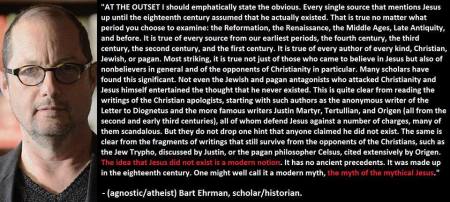
Bart Eherman Quotation


I became a believer, and then a follower, of Jesus Christ in college. It wasn’t just academic for me, though the beginning of my life as a believer and follower of Jesus began in an academic environment and was shaped and influenced by academics. I think that’s why I like the academic pursuit of faith even now, over 30 years later.

It’s important for me to be mindful that faith is not purely an intellectual affair. I think I may differ from many people in that respect, but I need to constantly be reminded of it. Faith is a relationship with the Living God; faith is a life and heart commitment; faith triggers action and change or it isn’t real faith.

I know that the words intellectual and faith probably don’t fit together in the minds of some people. Some people see those terms as opposites. They aren’t, but they…

View original post 2,194 more words

How Our Wounds Help Us Understand God

How we deal with our wounds is a model for how we relate to God.


In the prayer Jesus taught his disciples, he taught them to pray, “Forgive our sins as we forgive those who sin against us.” (Luke 11:4) Jesus illuminated that prayer with the parable of the unforgiving servant (Matthew 18:21-35), after Peter asked him how often we must forgive those who sin against us. In the parable, the master forgave the great debt the servant owed him, but the servant demanded payment of the small debt someone else owed him. At the end of the parable, the master says to the unforgiving servant, “Should not you have had mercy on your fellow servant, as I had mercy on you?”

I have been listening to Tim Keller a lot lately. Keller says, “How we deal with our wounds is a model for how we relate to God.” He adds that “’the mercy rule’ demonstrates that God distributes His forgiveness through people. He forgives us as we forgive others.”

It isn’t that we mete out forgiveness to others so much that God metes out forgiveness to us based on how we deal with our wounds from other people. God, apparently, has built into the fabric of His universe the principle that we are forgiven to the extent we forgive. It’s like a law of physics in the moral and spiritual world.

In addition, Keller says, “The way we distribute mercy says a lot about how we relate to God.” When Peter asked how many times must we forgive?” He offered what he undoubtedly thought was a generous amount: Seven times. You have undoubtedly heard the statement: Fool me once, shame on you; fool me twice, shame on me. This sentiment is not a new one. Sometimes we say, “three strikes, and you’re out!” Peter upped the ante generously to seven times, probably thinking that surely seven times is good enough.

But Jesus said, “No, seventy times seven!” We should forgive people exponentially more than we think! In fact, the real point of what Jesus was saying is that we shouldn’t keep tabs. We should always forgive… if we want to be forgiven.

Ultimately, though, we can’t understand this unless we begin to understand God.

Continue reading “How Our Wounds Help Us Understand God”

Remembering Palmyra: a Call to Enter Through the Narrow Gate

The destruction of the ancient ruin of Palmyra is a war crime, but we risk a greater loss.

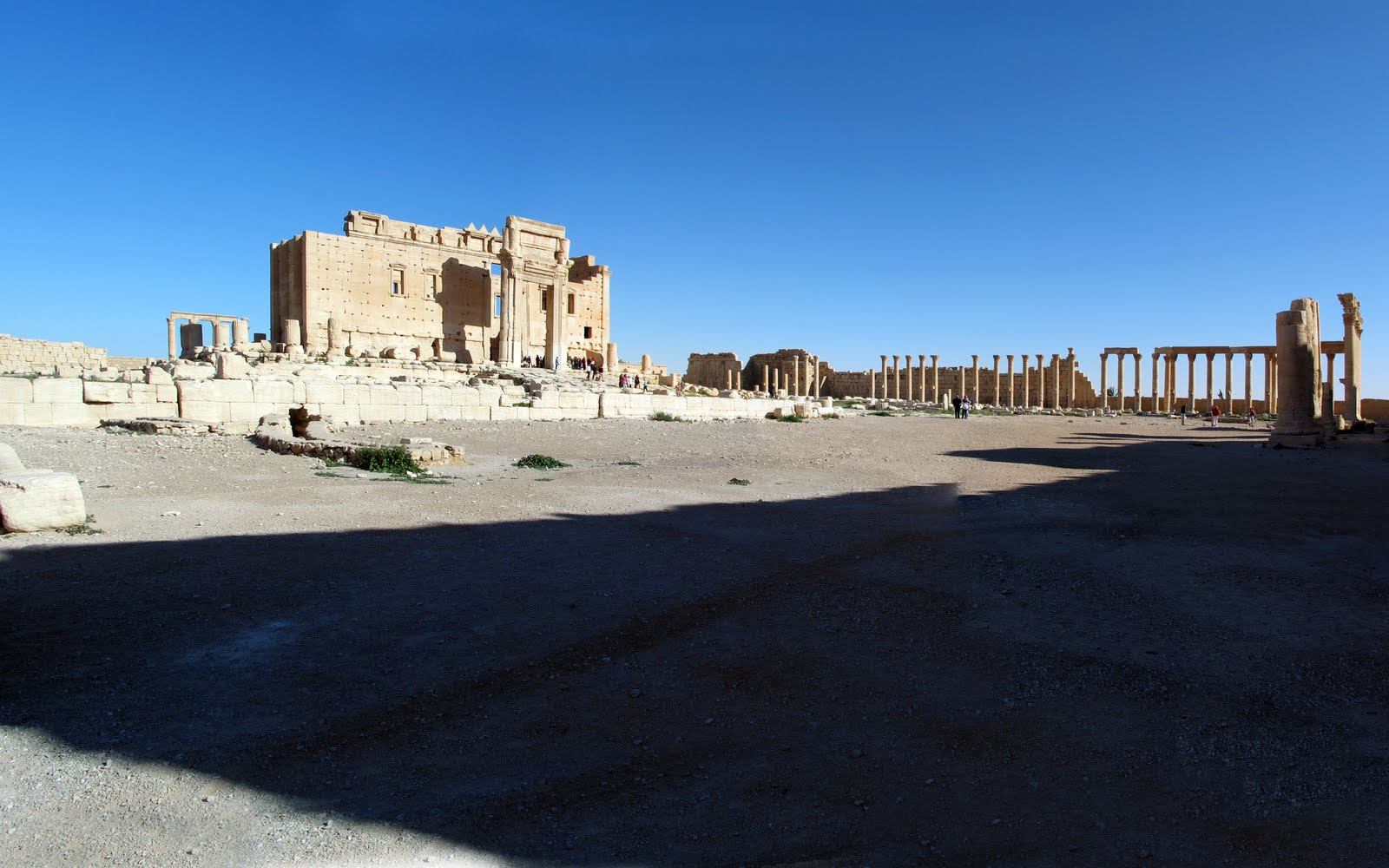
The Palmyran Valley and Oasis
The Palmyran Valley and Oasis by Steve Murray

Sometimes things we read in the news hit close to home, even from halfway around the world in an ancient, foreign land. A friend from college has a personal connection to the ruins of the temple in the Palmyra Valley of Syria. He visited there and took the photos I have published in this blog with his permission. He describes the Valley, sitting about 125 miles north-east of Damascus, Syria, in the desert, as it appears above, “a welcome relief after weeks, months on the road” for the people traveling the Silk Road from the east.

The “peaceful place… filled with memories” was no longer peaceful and filled with pleasant memories when I began this piece. I started this blog article years ago, when ISIS was at it’s public height. I don’t know how things stand today. The news has moved on, leaving whatever ravages that continue and desolation that remains out of the pubic eye.

“‘Among the great cities of antiquity, Palmyra is comparable only to Petra in Jordan, Angkor Wat in Cambodia, and the Athenian Acropolis in Greece,’ argues GW Bowersock, professor emeritus of ancient history at the Institute for Advanced Study in Princeton.””(quoted in Isis’s Destruction Of Palmyra: ‘The Heart Has Been Ripped Out of the City’ by Stuart Jeffries in the Guardian Sept. 2, 2015)

In light of fond reminiscences of a peaceful time, relationships developed between disparate brothers and sisters who shared good will and the historic significance of this desert oasis along the ancient Silk Road, the utter sadness and ache of the loss of the ruins is deep and vacuous. And more so now that my part of world has largely forgotten the devastation that exploded in front of the world’s eyes just a few short years ago.

Palmyra’s Baalshamin temple ‘blown up by IS’, read the headlines in Britain. Another British headline grimly pronounced, ISIS behead archaeologist who wouldn’t give up priceless artifacts for terrorists to loot and destroy.

In the Atlantic, the headline read with finality, An Ancient Temple in Palmyra Is Destroyed. “Reports of the site’s destruction come just days after the Islamic State killed Khaled Asaad, an 82-year-old Syrian expert on Palmyra who refused to divulge the location of artifacts despised by the militant group [and coveted for the booty they would bring]. Asaad had run Palmyra’s antiquities department for 50 years.”

“The taking of the historic city of Palmyra by Islamic State represents ‘the fall of a civilisation’, according to Syria’s antiquities chief Maamoun Abdulkarim. Speaking to Reuters today, he said: ‘Human, civilized society has lost the battle against barbarism. I have lost all hope.’” (Mark Woods Christian Today Contributing Editor 21 May 2015)

Temple at Palmyra
Temple at Palmyra by Steve Murray

Barbaric, incomprehensible, brutal, evil, criminal, atrocity …. Words fall short. No regard for history, culture, art, life …. The ISIS militants did not even have regard for their own lives, and the wrought unspeakable destruction and the taking of precious life in the Venice of the Sands.

Christians, humanists, peaceful Muslims, people of all stripes condemn what ISIS has done. The destruction of the ancient ruin of Palmyra is a war crime. The killing of Khaled al-Assad, the curator and protector of the Palmyran antiquities, is an atrocity of the worst order. He gave his life to protect those beautiful, ancient ruins…, but the ruins were destroyed with him. The various reactions to the crime and atrocity are understandable and expected.

The worldwide reports emphasized a common theme: the harsh clash of religious fundamentalism with civilized society is characterized by destruction and violence. “ISIS did not merely blast apart old stones—it attacked the very foundations of pluralistic society.” (The Rubble of Palmyra by Leon Wieseltier in the Atlantic Sept. 4, 2015). Indeed, ISIS displayed the worst of religion – the worst of humanity.

The destruction of ancient historical artifacts and buildings is nothing new, of course.

“In this iconoclasm – literally, the destruction of religious icons and other images or monuments for religious or political motives – Isis has its place in a rich history of destruction. Moses reduced the Golden Calf, made from Israelites’ golden earrings, to dust. Centuries later, the 93 carved relief sculptures of the life and miracles of the Virgin Mary in Ely Cathedral’s lady chapel, were hacked off during the Reformation. In between Moses and the mutilation of Ely was something called the Iconoclastic controversy in the history of the Eastern or Byzantine Christian church. Between AD 726 and 843, the then emperors of Byzantium believed icons were not only a reversion to the pagan idolatry of the ancient Greeks and Romans, but that their existence was the chief obstacle to the conversion to Christianity of Jews and Muslims, to both of whom the image was anathema. Iconoclasm, then, is by no means only an Islamic thing.” (quoted in Isis’s Destruction Of Palmyra: ‘The Heart Has Been Ripped Out of the City’ by Stuart Jeffries in the Guardian Sept. 2, 2015)

www.yourmiddleeast.com 660 x 390
www.yourmiddleeast.com

As we reel in sadness and righteous anger (something the irreligious seem to have learned well from the religious in recent times) over the destruction of such significant ancient preserves, there is a greater loss.  Ross Burns, adjunct professor of ancient history at Macquarie University in Sydney, Australia, whose life is devoted to the preservation, study and appreciation of antiquity, appropriately recognized,

“[T]here are more important considerations in Syria in 2015 than the preservation of ancient monuments. ‘The physical damage to monuments has to be assessed against the scale of the human tragedy….’” (Id.)

Continue reading “Remembering Palmyra: a Call to Enter Through the Narrow Gate”