On Faith, Doubt and Truth

If faith is not robust enough to hold up to scrutiny, it isn’t worth holding on to.


I traveled for 12 hours in a car recently and spent most of that time listening to podcasts. I listened to interviews of Tim Keller and Os Guinness, and a joint interview of Lisa Gungor and Alisa Childers. They talked about their own faith journeys, doubt and the quest for truth.

As I considered those interviews at the end of my trip, some thoughts congealed and took shape. I will try to capture them in this short piece.

Continue reading “On Faith, Doubt and Truth”

The Plans God Has for Us – Part III

Even in the midst of the very Judgment of God, God desires to bless us! He is every appealing to us to listen to Him and respond to Him. 


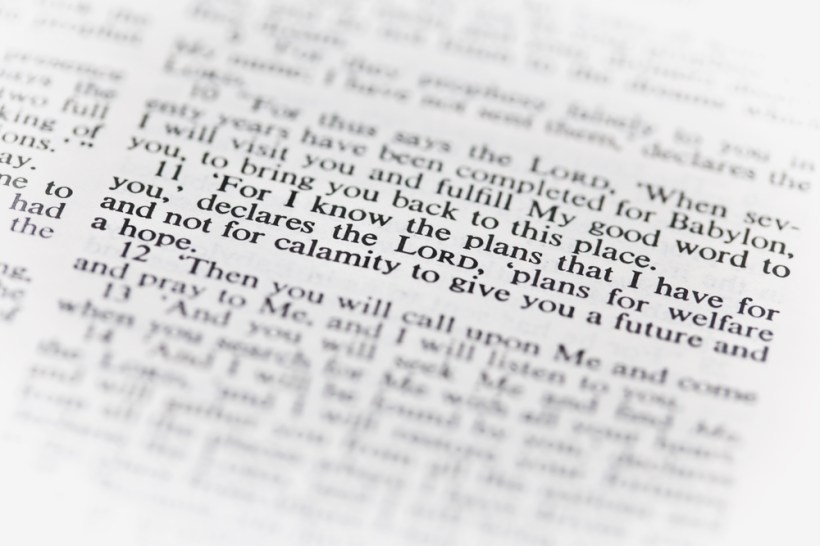
In the previous two blog posts on The Plans God Has for Us, we considered the fact that the often-quoted verse about the plans God us for us – plans to prosper us and to give us hope and a future (Jeremiah 29:11)[1] – should be viewed in historical context. (Part I) That historical context was the 900-year history of disbelief and disobedience of God’s people ending in 40 years of warning of impending judgment that culminated in the judgment coming to pass with the Babylonian conquest of Jerusalem and exile. (Part II) In this post, I will try to draw some conclusions in the application of this verse and relevance to our modern lives.

This letter was the message of God through the prophet, Jeremiah, to God’s people that He gave them at the very beginning of their exile. In this letter, God tells them that they will remain in exile for 70 years![2] In fact, this shocking statement – you will be here 70 years – is the statement that immediately precedes the famous verse we all know:

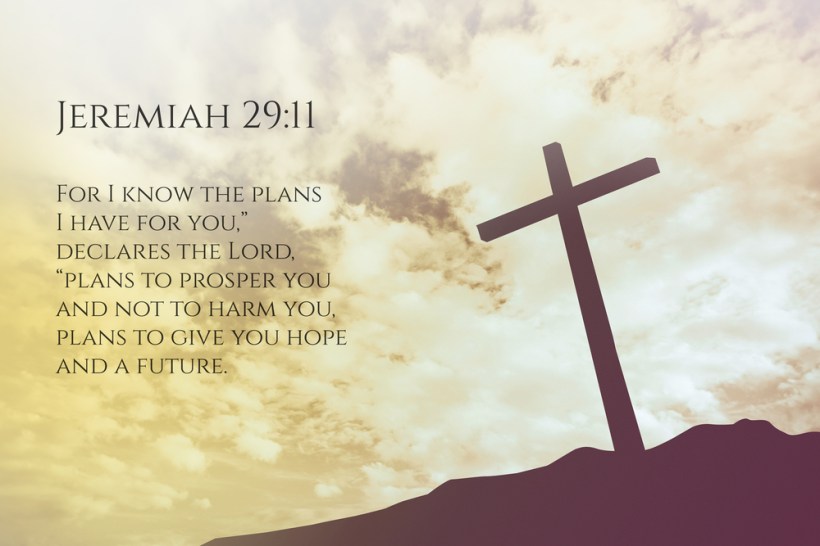
“’For I know the plans I have for you,’ declares the Lord, ‘plans to prosper you and not to harm you, plans to give you hope and a future.’”

In a sense, God is telling them, “I’ve got good news and bad news. The bad news is that I have imposed my judgment on you, and it will last 70 years. But the good news is that I have plans for you, good plans to prosper you and to give you hope and a future.

Thank about it: 70 years….

In an age in which the average life expectancy was about 35 years, that’s two generations! For the vast majority of the exiled people, this meant their lives would end in captivity. What kind of hope and future is that?!

The United States has been a country for less than 250 years, and our oldest ancestors in this country (unless you are Native American) go back only 400 years. The people of Judah had roots in their land going back almost 1000 years!

These were dire times, and this people had just lost everything. But even in the midst of this horrific circumstance, we need to look carefully at what God is saying. Just before announcing that this judgment thing is going to last 70 years, God gives them instructions:

“This is what the Lord Almighty, the God of Israel, says to all those I carried into exile from Jerusalem to Babylon: ‘Build houses and settle down; plant gardens and eat what they produce. Marry and have sons and daughters; find wives for your sons and give your daughters in marriage, so that they too may have sons and daughters. Increase in number there; do not decrease. Also, seek the peace and prosperity of the city to which I have carried you into exile. Pray to the Lord for it, because if it prospers, you too will prosper.’”[3]

Imagine the 40 years of warning and the weight of that impending doom on those who actually took it seriously. As with most things we fear, the fear is worse than the reality.

During this time of judgment in exile in Babylon, God says to them, basically, “Don’t despair! Go about your lives. Embrace the circumstances into which I have brought you. Live life. Make plans. Bless those around you, seek to better the community in which you find yourself, and I will bless you.”

Even in the midst of the very Judgment of God, God desires to bless us! He is ever appealing to us to listen to Him and respond to Him.

Continue reading “The Plans God Has for Us – Part III”

The Plans God Has for Us – Part II

The overarching theme of the Book of Jeremiah is judgment.


Though Jeremiah 29:11 is often quoted as a stand-alone verse, the context of it dramatically enriches its meaning. The context also reveals meaning that we would miss if we didn’t understand the circumstances in which these words were spoken. This is the main message of the first installment of this three-part series – The Plans God Has for Us – Part I.

When we read the following words, we should be mindful of the context:

“’For I know the plans I have for you,’ declares the Lord, ‘plans to prosper you and not to harm you, plans to give you hope and a future.’” (Jeremiah 29:11)

Aside from the fact that we often ask God merely to bless our own plans, not considering (or taking seriously) that He has his own plans for us, this verse is often quoted with anticipation of some immediate or not-too-distant hope and future in our own lives. The context suggests, however, that we should understand the much “bigger picture” and context the import of this verse that extends far beyond the immediate and near future circumstances of our own lives.

Consider that the prophet, Jeremiah, lived and served God during the last four decades leading up to the exile of the people of Judah to Babylon, including the beginning of that exile period. Jeremiah’s life and prophetic ministry spanned from the 13th year of the reign of King Josiah (627/626 BC) through the siege and capture of Jerusalem by the Babylonians in 586 BC and beyond.

These were doom and gloom years in which an ominous, dark cloud of loomed over Judah, and it eventually swallowed them up in the form of the siege of Jerusalem and march into Babylonian exile. Most of Jeremiah’s ministry focused on warning God’s people of this impending fate.

Jeremiah wasn’t a popular prophet (not that prophets are known to be popular). He was imprisoned, and his life was threatened multiple times during the course of his ministry. People didn’t like or receive well the drumbeat of warning that he pounded.

The Book of Jeremiah reveals a prophet whose life was full of emotional angst. The people of Judah didn’t want to hear what he had to say, and they were openly hostile to his message. He was faithful to God in spite of the unpopularity it brought him. He often lamented the hard-heartedness of the people and their refusal to take heed.

“Jeremiah found himself addressing a nation hurtling headlong toward judgment from God. The Israelites may have feared the future as the outside powers drew near, but rather than respond with humility and repentance, the people of Judah primarily lived as islands unto themselves, disregarding both the Lord’s commandments and the increasing danger that resulted from their disobedience.”[i]

Because Jeremiah’s ministry stretched over the 40 years just before the Babylonian conquest of Jerusalem and exile, the main theme of the Book of Jeremiah is judgment. Jeremiah 29:11 is quoted from a letter Jeremiah wrote to the Babylonian exiles after the judgment he had been proclaiming for four decades finally came to pass.

The larger context is the chronicle of the history of God’s people from the covenant God made with them in the Sinai Desert to the time of Jeremiah was approximately 900 years, and it was marked by ongoing disbelief and disobedience, culminating in the Babylonian exile. The immediate context is 40 years of Jeremiah warning God’s people of God’s imminent judgment and their refusal to listen or change their ways. In that gloomy scenario in which that judgment finally came to pass, Jeremiah writes:

“’For I know the plans I have for you,’ declares the Lord, ‘plans to prosper you and not to harm you, plans to give you hope and a future.’” (Jeremiah 29:11)

As we look at the entire letter from Jeremiah to his exiled brethren and consider its application, then and now, the nuances of Scriptural meaning and application to our lives becomes more poignant. We will do this in The Plans God Has for Us – Part III.

~~~~~~~~~~~~

[i] See Insight for Living, Jeremiah, by Charles Swindoll.

The Plans God Has for Us – Part I

‘For I know the plans I have for you,’ declares the Lord, ‘plans to prosper you and not to harm you, plans to give you hope and a future.’


“’For I know the plans I have for you,’ declares the Lord, ‘plans to prosper you and not to harm you, plans to give you hope and a future.’” (Jeremiah 29:11)

This is a popular verse often quoted to provide people hope in their personal circumstances in life. It’s also a verse about which people have written many critiques and admonitions not to take verses out of context.

On its face, this verse seems to say that God has plans for us, and by “us” I believe most people assume it means for each one of us. God has plans for you… and for me. His plans are to prosper us, not to cause us harm. His plans include hope and a future. That is exactly what this verse says, right?

I’m going to go out on a limb and says, “Yes!” It means what it says. But I think we tend to jump to the conclusion that it’s all about us. And here, I have to admit that the application of this verse to modern individuals in the 21st Century is not the primary meaning.

I don’t think that means that we shouldn’t find application of the verse relevant to our modern lives. “All Scripture is breathed out by God and profitable for teaching, for reproof, for correction, and for training in righteousness, that the man of God may be complete, equipped for every good work.”  (2 Timothy 3:16-17) This verse seems to suggest that all Scripture, not just some verses, are applicable and relevant to “the man of God” (each one of us).

But that being so doesn’t suggest that the context isn’t important. While God may speak to us, as I believe He does sometimes, personally through isolated verses and passages, there is a broader context. That broader context is itself, “profitable” to us. In fact, the broader context often provides insights we would fail to see any other way.

To be perfectly frank, we tend to view our lives, Scripture and even God in very myopic and provincial ways. We focus heavily on our immediate circumstances and our immediate future. Even when we are thinking beyond our immediate circumstances and future, our focus tends to be this worldly.

We are, at a basic level, finite beings. Our vision is finite. Our focus naturally gravitates toward the finite. But God is infinite, and He offers to us his infinite love and an infinite destiny.

When we think about Jeremiah 29:11 in the context of an infinite God who, therefore, has infinite plans for us, that perspective changes everything.

St. Augustine, I understand, emphasized the multi-layered meanings of Scripture. From the literal to the figurative, the present to the future, and so on, Scripture can be understood at different levels, and each level of understanding is “true” and is profitable, has application, to our lives.

In that vein, we should always be mindful of the big picture. The big picture is God’s grand design, His overarching plan for us and all humankind. And these plans are being worked out in the history of the world and in our collective and individual histories.

With that said, let’s look more closely at Jeremiah 29:11 in the context of the period in history in which it was written and in the greater scheme of God in the history of His dealings with mankind. We will do that in Part II of this series on The Plans God Has for Us. And then we will come back to its relevance and application to us today.

Some Thoughts by a Fellow Blogger with Mine Mixed in: On Apostasy and Genuine Faith

Depositphotos_31624721_s-2019_DesignPicsInc

Over the past month, two rather prominent Evangelical Christians have publicly announced that they are walking away from Christianity. First there is Josh Harris. Back in 1997, a 21-year-old Harris wrote I Kissed Dating Goodbye and became an instant celebrity within Evangelicalism. The book advocated courtship over dating, stressed sexual purity and abstinence before marriage,…

via Josh Harris, Marty Sampson: Why Some Christians Walk Away (…and why others, like Ken Ham, insist they have all the answers) — resurrecting orthodoxy

This is a thoughtful piece on the recent public “deconversions” of Marty Sampson and Joshua Harris. Most people (probably) (me included) didn’t know either name until they recently. They have become more highly visible in loosing their faith than they ever were in keeping it (so it seems anyway).

Before getting into the meat of the piece I am reblogging, I note that both men stepped into prominence in the Christian world at very young ages. Like childhood actors, that seems to me to be a recipe for difficulty. They might have been mature 21-year olds (I don’t know), but 21-year olds don’t have the life experience and perspective of, say, a 60 year old. There is a difference.

Maybe we shouldn’t be so eager to thrust influence on people so young. Just a thought. Talent for writing or singing doesn’t necessarily mean spiritual maturity. That’s another thing: we do tend to idolize the naturally gifted. But these aren’t really the points of this piece.

Joel Anderson, the blogger whose piece is the subject of this article, observes some things about the Christian culture that I think are worth examining. He says,

“Now, if you were an unbeliever who became a Christian, the external signs are obviously going to be pretty obvious: your life is going to look considerably different.
But sometimes it’s tricky if you grew up going to church and grew up in a decidedly Christian subculture. You’re already living among all the trappings of what it looks like to be Christian: you already go to church, go to youth group, etc. What do you do if you’ve grown up with all that, but then you’re faced with the clear Gospel message that to follow Jesus, one must repent and ‘crucify the old man’? What does that look like if you’ve always grown up in a very Christian environment?”

I grew up Catholic. I didn’t know I had an “old man” inside of me. I did know I was a sinner, something was wrong, but I saw nothing of any relevance to me in the church with its staid ritual. When God drew me and awakened a new spiritual reality to me, it was largely through evangelical Christians.

When I came to identify with being born again, it was a real experience. It wasn’t a doctrine taught to me in Sunday school. To that extent, it’s hard for me to imagine what it must be like to grew up in evangelical Christianity where being born again is “normal”.

But, I have noted that people who grow up with evangelical Christianity have similar experiences to what I experienced in the Catholic church. They get just enough of the “virus” to inoculate the from the real thing. Not that I see evangelical Christianity as a virus: the point is that mere familiarity with Christian “doctrines” without personalizing them and having a real faith experience can prevent the gospel from ever taking firm root.

Birth happens with pain, tension and angst. Perhaps, new birth must also occur in the same way. I don’t know. I wouldn’t make doctrine out of it, but there might be some truth to the idea. Joel continues:

“I remember growing up, both in church and at my Christian high school, there was just this unspoken assumption that said, ‘Well, we are obviously all Christians; we’ve already said the sinner’s prayer when we were 8 (or whenever), got baptized when we were 12 (or whenever), and now have all the answers right in this book (i.e. the Bible). So, are you doing all the right things and saying the right answers? You’d better—they’re clear, everything is clear. Don’t be a compromiser, here are the right answers you are supposed to give. It’s easy. Just stick to the script and everything will be okay.’ Nobody purposely pushed that, mind you. It was just the feeling that permeated everything.”

I often hear people blame the church for what Joel describes here, but I don’t think we should necessarily blame the church. The church is a place where we can encounter God with other believers, but the church can’t make a person a Christian. A person isn’t a Christian just because they go to church.

(Remember the car in a garage analogy? Just because you park yourself in a garage doesn’t make you a car.)

The reality of faith most be born in each person. Each person must be born again. We don’t inherit faith from our parents, grandparents, ancestors or culture. God has no grandchildren; God only has children.

That means the experience and the reality of faith must be personal… to each of us. We can’t ride anyone’s coat tails into the kingdom of God. We have to find our own way and encounter God for ourselves. Joel continuances:

Now, even though I grew up in a Christian home, went to church every Sunday and Wednesday night, and went to a Christian high school (and in a sense have been a Christian my whole life), it wasn’t until the summer after my junior year in high school that, after reading C.S. Lewis’ Mere Christianity that Christianity really started to challenge me and make sense. But that was also the same time that realized I no longer felt at home in the particular Evangelical trappings of my church and school. Sting’s song, ‘Consider Me Gone’ was my personal song for my senior year. When I came to Christ and made Christianity my own, a part of me died to, indeed repented of, the Evangelical Christian type culture in which I had grown up.”

What Joel says here may be hard to swallow for many evangelicals. Just like my leaving the Catholic church was difficult for my parents and my priest, no doubt. But I identify with him in what he says. Hear me out.

I embraced evangelicalism when I become born again. I found my home there, so I don’t say these things lightly. I still consider myself an evangelical, but I have learned that we have to be careful with the degree to which we identify with anything other than Jesus and the Gospel.

It’s axiomatic, and certainly true, that there is no perfect church. There is no perfect denomination. There are no perfect pastors, no perfect parents… no perfect people, period. This reality should give us pause to be humble.

It should also give us pause to be slow to try to control the journey for someone else. A lot can go wrong when we insinuate too much of ourselves and try too much to control outcomes for other people.

I am rambling a bit now, so forgive me, please. I see a lot of things wrong with evangelicalism today, though I still identify as an evangelical. But that’s true of every Christian stripe, every denomination and every church. To the extent that these labels are all human constructs and our corporate and individual attempts at maintaining “the body of Christ”, they are going to fall short.

Jesus said the tares will grow up with the wheat. God won’t destroy the tares now for fear of taking the wheat with them, but the tares will be separated from the wheat in the end. In the meantime, we should be mindful that God sees the difference. We might not accurately be able to identify the difference, but God knows.

The Father knows His children. The Father knows who is connected into His body through Christ. Many will say, “Lord, Lord!”, but the Father will say, “I never knew you.”

The “apostasy” of a couple of somewhat prominent men in Christian culture may (more not) create a crisis of faith in some. If a person is wrestling with a crisis of faith as a result, maybe that’s a good thing. If our faith is grounded only in the people we see as our spiritual guides, maybe we aren’t following Jesus as closely as we should.

Our faith must be genuine and rooted in Christ in a personal way to be real. While there is a corporate element to faith, we must be personally born again. The change (and there should be a noticeable change of some sort) should be real, personal and deep seated in the life of each individual who professes faith in Jesus. 

We don’t maintain that personal connection merely by going to church, identifying as a Christian, or through any other ritual or pronouncement. That connection is maintained between us, individually, and God.

Until we realize, as David did, that we can’t go anywhere that God isn’t present, that we can’t think a thought or say a word, that God doesn’t already know it, we may be tempted to think that God is only in our church, our labels, our rituals and our doctrines. These things can all be shaken. Even our understanding of the Word of God can be shaken.

When I went through a crisis of faith of sorts after leaving a “perfect” church with “perfect” leaders, I leaned heavily on Paul’s statement to the Romans: Let God be true, always, though every man be a liar. (My paraphrasing) When that “perfect” church crumbled, self-destructed and disintegrated, and some of the leaders walked away from the faith, I had to cling to God.

And, I’ve learned that clinging to God is the best place to be.