Christianity’s Ties to the Scientific Method

Christianity was the fertile soil in which scientific method and modern science began to grow


I have heard a number of people assert that Christianity gave birth to the scientific method. Perhaps, the first time I heard that claim was from John Lennox, the famous Oxford University professor of mathematics. I was intrigued, but I didn’t take the time to research his claim at the time.

I have heard the claim repeated multiple times, most recently by Dr. Michael Guillen the astrophysicist, former Harvard professor and TV personality. In fact, he devoted a podcast to the subject (embedded below), so I figured it was time to learn more.

I started with Wikipedia, which has a page on scientific method. Wikipedia begins with Aristotle and focuses on rationalism as the basis for scientific method.

Properly speaking, rationalism is not a method. It is a philosophy, a way to approach the world. Rationalism and Aristotle, though, seem to have led the way to the development of the scientific method.

Aristotle’s inductive-deductive method that depended on axiomatic truths and the “self-evident concepts” developed by Epicurus was an early conception of the way to do science. It was jettisoned, however, for something more like the modern scientific method beginning around the 16th Century. Perhaps, this is why Guillen doesn’t mention Aristotle, except in passing.

After those early pioneers, Wikipedia references some great Muslim thinkers who were influenced by Aristotle (including Avicenna (Ibn Sina) and Averroes (Abū l-Walīd Muḥammad Ibn ʾAḥmad Ibn Rušd)). They placed “greater emphasis on combining theory with practice”, focusing on “the use of experiment as a source of knowledge”. Guillen starts his history of scientific method with these early “flashes” of scientific method in the Muslim world.

These men of the Islamic Golden Age pioneered a form of scientific method, but the inertia did not continue. Moses ben Maimon (Maimonides), the great Jewish theologian, physician, and astronomer, developed a similar emphasis on evidence. He urged “that man should believe only what can be supported either by rational proof, by the evidence of the senses, or by trustworthy authority”. He foreshadowed a future scientific posture, but his prescience also did compel further advancement at the time.

Dr. Guillen credits Robert Grosseteste and Roger Bacon with the formation of the first actual principles of scientific method. Their ideas “caught fire” in Christian Europe from the tinder of academies that began just after the turn of the first millennium, igniting a blaze that would fuel scientific inquiry and endeavor for centuries to come.

“Concluding from particular observations into a universal law, and then back again, from universal laws to prediction of particulars”, Grosseteste emphasized confirmation “through experimentation to verify the principles” in both directions.

Roger Bacon, Grosseteste’s pupil, “described a repeating cycle of observation, hypothesis, experimentation, and a need for independent verification”, including the recording of the way experiments were conducted in precise detail so that outcomes could be replicated independently by others. Bacon’s methodology lead to the modern emphasis on peer-review in science, says Guillen.

Wikipedia mentions Francis Bacon and Descartes. Bacon and Descartes emphasized the importance of skepticism and rigid experimentation, expressly rejecting Aristotle’s dependence on first principles (axioms). Guillen, however, glosses over Descartes to get to Galileo Galilei and Isaac Newton.

Galileo Galilei introduced mathematical proof into the process and continued to distance science from reliance on Aristotelean first principles. Galileo and Newton reformulated the terms of scientific method that would inform modern scientists ever afterward.
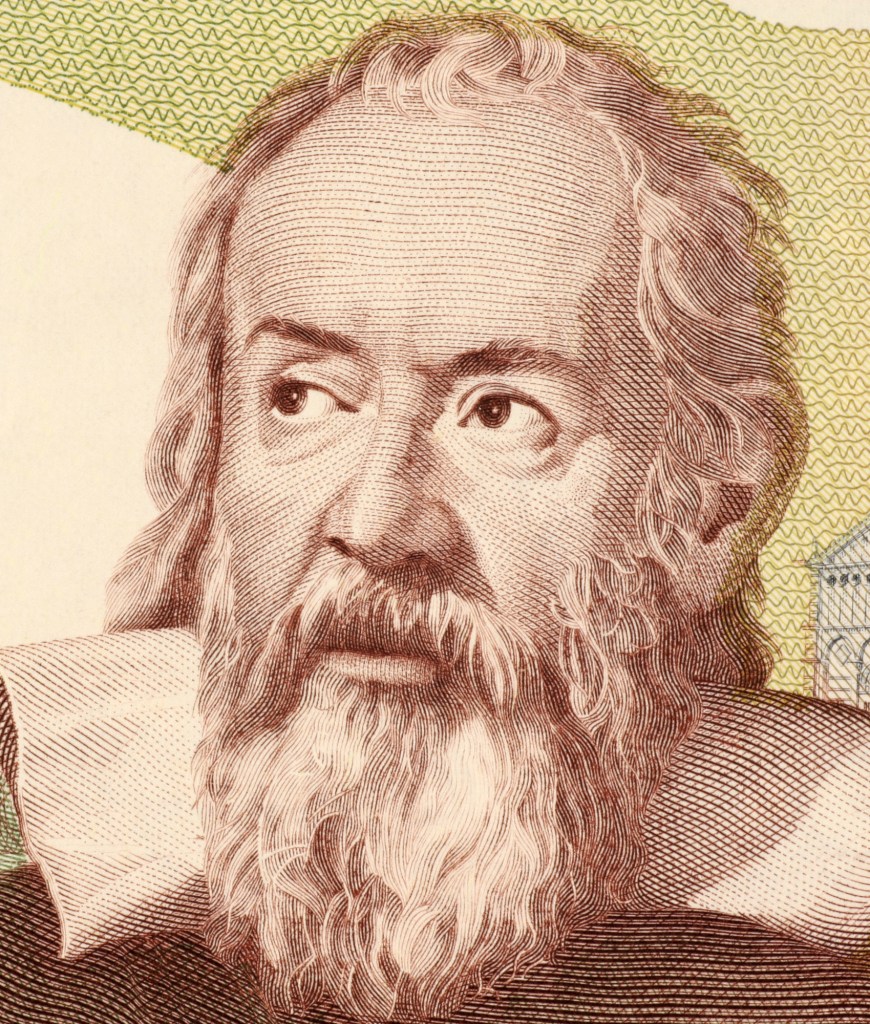

That the two latter men were men of faith, along with Grosseteste (a Catholic Bishop) and Roger Bacon, his student, is significant. Maimonides and the Islamic thinkers before him were also men of faith. These men who pioneered the way to modern science were all monotheists who believed in a creator God. 

Science did not really take off until the 17th Century. The trailblazers of the modern scientific method were religious men, and the modern scientific method was born in the religious environment in Christian Europe lead, primarily, by men of faith.

Why did science catch fire in Christian Europe and not in other parts of the world? Why not in China? Or in the world of the eastern religions? This is a question Guillen poses, and he provides a possible answer.

Continue reading “Christianity’s Ties to the Scientific Method” →

“If I Were God….”: An Exploration of the Human Heart and Need for God

Photo Credit to Tyler Drendel, a sunrise at Fermi National Laboratory in Batavia, IL

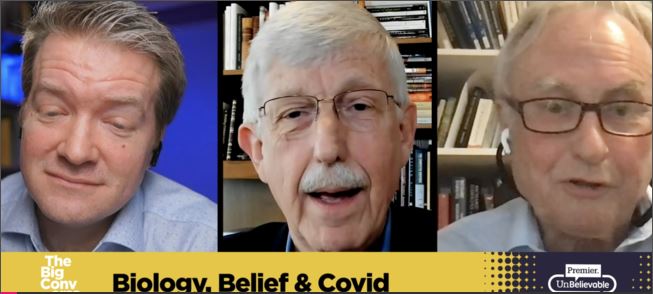
The last episode of the Unbelievable? Podcast (May 21, 2022) featured Francis Collins and Richard Dawkins on Biology, Belief and Covid: Can science and faith be reconciled? Justin Brierly has set the standard for facilitating thoughtful, civil conversations on opposing views of the world, like faith and atheism.

In this particular conversation, Francis Collins, the former head of the Human Genome Project and well-known scientist who professes religious faith, just finished explaining briefly why he came to believe in God at the age of 27. Richard Dawkins, the very well-known scientist and “new atheist”, responded this way:

“If I were God and I wanted to create life, maybe even human life, which is part of the expectation of a religious person, I think I would not use such a wasteful, long-drawn-out process. I think I would just go for it. Why would you choose natural selection, which has the possibly unfortunate property that it could have come about without you? Why would God have chosen a mechanism to unfold His design and chose the very mechanism that would make Him superfluous?

Dawkins speculated that God might have thought, “I wonder what would happen if I set up a primeval, self-replicating molecule and leave it to see what happens.” Dawkins called such an experiment “interesting” and sympathized with the thought of God experimenting in that way. Then he added, “If I wanted to make complex life, I wouldn’t choose that astonishingly wasteful, profligate – cruel actually – way of doing it.”

Dawkins focused on the suffering that comes from competition and evading starvation. He focused on the weeding out process of some animals starving to death, being eaten by predators and succumbing to disease. Dawkins summarized, “It is not a benign process at all.”

Dawkins admitted that this line of thinking is “not a good argument”, but it is what “struck” him as Francis Collins was talking. Indeed, I have heard Richard Dawkins say similar things in debate and in his writings. This line of thinking is obviously compelling to him, good argument or not.

I don’t want to be overly critical of Dawkins. I am not here to blast him or judge him. We all have a judge, I believe, and it isn’t me!

Dawkins is not an ignorant man, obviously. He is a foremost scientist who is a very poignant and elegant communicator and champion of the evolutionary paradigm. His many books and body of work speak to his exceptional intelligence. As people go, he is at the top of the food chain in scientific knowledge and understanding.

Francis Collins is good company for Dawkins, having advanced the relatively new science and understanding of human DNA, perhaps, further than any person before him. Yet, these two men have diametrically opposed views of whether God exists. Neither of them is an intellectual slouch.

I am writing, though, on what Richard Dawkins said. Just as Dawkins was “struck” by what Collins said to respond in the way he did, I am struck to respond by what Dawkins said.

His instinct or intuition or line of thought – whatever you want to call it – was to consider, “If I were God….” Dawkins gravitated toward comparing what he would do if he were God and the world as it exists. Dawkins’s point is, ultimately, that he finds the world as it exists not to live up to what he would have created if he were God.

Let’s examine that line of thinking.

Continue reading ““If I Were God….”: An Exploration of the Human Heart and Need for God” →

How Will the World Know You?

How will the world know you?

Will the world know you by your family, your ancestors and the legacy that comes after you?

Will the world know you by your wealth, your fiscal responsibility and ability to turn a profit?

Will the world know you by your great intellect, by the diplomas on your wall, the articles you have written? and the collection of books on your shelf you have read?

Will the world know you by your creativity, your command of a color palette, graceful and unique strokes of the brush and eye for design?

Will the world know you by your fame, by the number of people who know your name?

Will the world know you by your physical prowess, your ability to come through in the clutch, and your wins?

Will the world know you by your command of the English language, your artful turn of a phrase and your ability to move people with the written word?

Will the world know you by the instrument you play, the finesse of notes and rhythms, and the virtuosity with which you play your instrument?

Will the world know you by your professionalism, by your reputation for excellence in your field, and the accomplishments you have achieved?

Will the world know you by your stunning good looks, your impeccable fashion taste, and the company of beautiful people you keep?

Will the world know you by your eloquence, the depth and richness of your voice and your ability to command the attention of a crowd?

Will the world know you by your scientific mind, your understanding of technical details, and ability to apply scientific method and sound logic?

Will the world know you by your leadership, the number of people who follow you and your influence?

Will the world know you by the music you compose, the divine harmonies and intricate melodies you weave together in symphonic wonder?

Will the world know you by your politics, the platforms you have championed, and the dedication to your party allegiances?

Will the world know you by the roles you have played, the tears you have coaxed from fawning audiences, and the adoring fans you have?

Will the world know you by your architecture, by your complex end subtle designs, by the magnificence of the structures created from your drawings?

Will the world know you by your dedication, reliability and number of sick days you did not take?

How will the world know you?

In the end, we all go down to the grave, and the world is passing away. When an Ode to a Grecian Urn fades from collective memory, Jesus said we will be known as his disciples simply by our love for each other.

“Love one another. As I have loved you, so you must love one another. By this everyone will know that you are my disciples, if you love one another.”

John 13:34-35

“We know that we have passed from death to life,  because we love each other.  Anyone who does not love remains in death.”

1 John 3:14

“Be devoted to one another in brotherly love.  Outdo yourselves in honoring one another.”

Romans 12:10

“Love never fails. But where there are prophecies, they will cease; where there are tongues, they will be stilled; where there is knowledge, it will pass away….” And now these three remain: faith, hope and love. But the greatest of these is love. “

1 Corinthians 13:8,13

Clearing the Rubble of Hume in the Making of an “Unapologetic” Argument for God

Hume’s argument against miracles seems to be more of an exercise in satire than a sincere exercise in reasoning.

I have been trying to clear the way for an “unapologetic” argument for God. I am four articles in, and still making me way to the beginning. Standing in the way as I move forward is Hume’s standard of proof for miracles.

David Hume has had a profound influence on Western thought in the promotion of the Enlightenment view, which values human reason as the supreme measuring stick. Hume’s argument against miracles has been viewed as a gold standard among proofs that Christianity is not credible, especially to the extent that Christianity stands on the foundation of a miraculous event – the resurrection of Jesus.

Hume does not hide his antipathy for Christianity.[1] He calls the “Christian religion” a doctrine “so little worthy of a serious refutation … founded merely in the testimony of the apostles”. He labels belief in Christianity “arrogant bigotry and superstition”.

Hume speaks of the “greediness” with which “miraculous accounts” are received. He characterizes the “religionist” as “an enthusiast who sees no reality”, whose vanity is excited by strong temptations and self-interest to promote narratives he knows to be false for what he deems to be a “holy cause”. Hume accuses religionists of renouncing judgment by principle and losing grip on judgment by “passion and a heated imagination”.

Hume blames the popularity of religion on a “strong propensity of mankind to the extraordinary and the marvellous”. Hume’s disdain carries over from his view of “the generality of mankind” emerging from “ignorant and barbarous nations” who he says are fools … industrious in propagating the imposture” of the “supernatural and marvellous”, the “grossest delusions”, and “delusive prophecies”.

Hume rails on the religions “of ancient Rome, of Turkey, of Siam, and of China” equally. He lumps together the testimony of “a few barbarous Arabians” about Mahomet with “Titus Livius, Plutarch, Tacitus, and… all the authors and witnesses, Grecian, Chinese, and Roman Catholic, who have related any miracle in their particular religion”.

Me thinks he doth protest too much.

The standard Hume created to determine the veracity and credibility of a miraculous account contains the poison of his passionate convictions – a passion that smacks of the same kind of bias he accuses the “religionist” of committing. Yet, that standard has adherents today, perhaps because he reduces it to mathematical proportions that have the appearance of sacred science. Hume says,

“A hundred instances or experiments on one side, and fifty on another, afford a doubtful expectation of any event; though a hundred uniform experiments, with only one that is contradictory, reasonably beget a pretty strong degree of assurance. In all cases, we must balance the opposite experiments, where they are opposite, and deduct the smaller number from the greater, in order to know the exact force of the superior evidence.”

He acknowledges the importance of eyewitness testimony, but he imposes a standard on it that diminishes the value of any eyewitness testimony that contradicts widely established human experience. This seems reasonable on its face. “Marvelous” assertions are suspect; miraculous ones are even more suspect.

I think most of us can “go there” with him. On miracles, Hume says.

“A miracle is a violation of the laws of nature; and as a firm and unalterable experience has established these laws, the proof against a miracle, from the very nature of the fact, is as entire as any argument from experience can possibly be imagined.”

In one sense, Hume is merely acknowledging the nature of a miracle: it is a miracle that goes against (or seems to go against) the laws of nature that are commonly recognized and the weight of common experience. Nothing would be considered a miracle that was common to the experience of people, even if that experience is relatively uncommon among human experience. He reasonably says,

“There must, therefore, be a uniform experience against every miraculous event, otherwise the event would not merit that appellation.”

Hume, though, is not content to relegate miracles to the rarity they are by definition. He proceeds to define them out of the realm of possibility:  

“And as an uniform experience amounts to a proof, there is here a direct and full proof, from the nature of the fact, against the existence of any miracle; nor can such a proof be destroyed, or the miracle rendered credible, but by an opposite proof, which is superior.”

Perhaps, wanting to appear open-minded, Hume allows for some proof that might establish a miracle. The proof of a miracle, Hume says, must so weighty “that its falsehood would be more miraculous, than the fact, which it endeavours [sic] to establish”.

Even then, Hume says, such counter-balancing evidence only levels the scales; it doesn’t make the factual assertion of the miracle more likely than not (and rejection of the assertion of a miracle would be justified either way).


Hume says, the mere testimony that a miracle occurred should be dismissed out of hand unless the falsehood of the assertion would require believing the miraculous, itself.

Hume seems to assume the possibility of such corroborative evidence, but a simple application of math belies the lack of substance he saw in anything miraculous. Nil plus nil equals nil.

As Hume’s approach is a mathematical one, we can see by the application of math and the value Hume has given to the miraculous the impossibility of establishing proof of a miracle on Hume’s position. The likelihood of proof is nil.

Indeed, he sets his bar so high and makes the requisite proof so onerous that a miracle would be required to prove a miracle. Lest there be any doubt about the meaninglessness of Hume’s standard, he admits:

“I beg the limitations here made may be remarked, when I say, that a miracle can never be proved….”

Hume is saying that miracles cannot be proven by any amount or kind of evidence.

For this reason, Hume’s argument against miracles seems (to me) to be more of an exercise in satire than a sincere exercise in reasoning. I am surprised, therefore, that we take him at all seriously. To give further illustration and to remove all doubt about his pretense, Hume seems to beg the question in the following example:

“But suppose, that all the historians who treat of England, should agree, that, on the first of January 1600, Queen Elizabeth died; that both before and after her death she was seen by her physicians and the whole court, as is usual with persons of her rank; that her successor was acknowledged and proclaimed by the parliament; and that, after being interred a month, she again appeared, resumed the throne, and governed England for three years: I must confess that I should be surprized [sic] at the concurrence of so many odd circumstances, but should not have the least inclination to believe so miraculous an event.”

The fact that people still take him seriously, though the blunt force of his conviction seems stronger than his argument, is one reason I address him here.

Continue reading “Clearing the Rubble of Hume in the Making of an “Unapologetic” Argument for God” →

How Not to Look for God: An “Unapologetic” Argument for God

In two previous articles attempting to make an “unapologetic” argument for God, I have just been ramping up to make the argument. I still haven’t gotten there yet, and I am still just getting started.

That’s right. I am still working on getting to the starting line. Maybe I will still get there.

I say, “unapologetic”, rather loosely, in case you are wondering.  I am not being apologetic in the sense of apologizing for anything. Apologetics has nothing to do with being sorry, of course. It means to provide a defense, and it specifically describes the effort of providing a defense for Christianity.

The word, apologetics, derives from the Greek word, apologia, which means “a speech in defense” or a “verbal defense” or a “well-reasoned reply”. The world is used in Peter 3:15 as follows:

“Always be prepared to give an answer [apologia] to everyone who asks you to give the reason [logos] for the hope that you have.”

I am using “unapologetic” as a kind of play on words. I am not giving a typical apologetic argument for the existence of God, and I am not being apologetic about doing that.

I previously made the observation that we all start with axioms, premises on which we support our positions for and against God, but we are incapable of proving those axioms. We consider them “self-evident”, but that is, frankly, just another way of saying that we can’t prove our starting premises” we have to assume they are true, and we go from there.

We take our fundamental premises on faith, essentially. This includes everyone, even in science.

As an example, consider the scientist, like a few I have heard, who says that science is the only way to know truth and all truths can be revealed by science. That premise cannot be scientifically proven. Therefore, you just must take it on faith.

Ironically, that statement is also self-contradictory. If science is the only way to know truth, and the statement itself cannot be proven by science, then even if it is right, it is wrong! (Echoing John Lennox here.)

I recently heard the astrophysicist, Michael Guillen, say similarly that science does not prove anything absolutely. As an example, he says we could posit that ravens are always black. Every raven the modern world has ever encountered and documented may be black, but that doesn’t mean that every raven that ever existed and every raven that will ever exist is always black.

To make the claim that all ravens are black is to go beyond science. We can only verify the blackness of all the ravens we can find and the ravens that other people have documented, but we can’t verify the blackness of the ravens that were never documented or the ravens that have not yet existed.

William Lane Craig talks about the philosophy of logical positivism championed by people like AJ Ayer in the 1940’s and 50’s. Logical positivism, or “verificationism”, as Craig calls it, was claimed that consideration of the existence of God is meaningless because it is not verifiable by the five senses. The book, Language, Proof and Logic, was a kind of “manifesto” of this view, says Craig,

Verificationsim was used by Ayer to nix anything metaphysical. According to this view, a statement is only meaningful if it is capable of being empirically verified. Since metaphysical statements are beyond the reach of empirical science, they cannot be verified. Metaphysical statements were, therefore, dismissed out of hand. According to Craig,

“Ayer was very explicit about the theological implications of this verificationism. Since God is a metaphysical object, the possibility of knowledge was ‘ruled out’ by our treatment of metaphysics. Thus, there can be no knowledge of God.”

Do you see the problem with this view? One only need ask, “Is that statement capable of being empirically verified?”

Ayer’s view was built on an axiom he could not prove, and which could not be proven by the methods he arbitrarily limited according to the premise he assumed. His view could not even stand up to itself!

Craig says the collapse of verificationism was “the most philosophical event of the twentieth century”. The verification principal was not only unscientific; it was self-refuting. “The statement, ‘You should only believe what can be scientifically proven cannot, itself, be scientifically proven.’”

In the previous “unapologetic” articles, I claim that we all have to take certain things on faith, especially our starting premises, which are the tools by which we view and explore the world, but not all of those starting premises are created equal. Some of them cannot even stand up to themselves!

But, enough of that. I need to get to the point of this article.

It seems axiomatic that, if one wants to determine whether God exists, and if one is sincere in making that determination, one will not start with a premise that will inevitably result in the logic that God does not exist.

Continue reading “How Not to Look for God: An “Unapologetic” Argument for God” →