The Linguistic Origins of Modern Drumming

We have the Civil War to thank for modern rock music


I am going off my beaten path here today, though music is certainly a beat I follow. Music is a universal language. Music is a creative gift from our Creator who made us in His image. We reflect Him, therefore, in the creation of music.

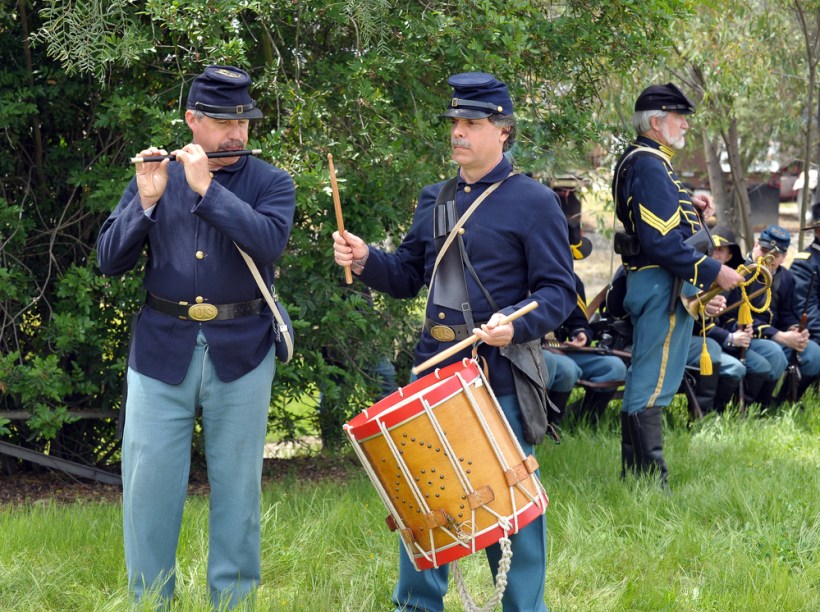
Music is mathematical and linguistic, even in its essence. I didn’t previously know, for instance, that drumming has an “alphabet” of 26 rhythms. I did know that drummers in the Civil War (and I assume previous wars) played a key role in their battalions. They weren’t just there to boost moral; they were the communicators on the battlefield, signalling the orders from the generals and commanders to their troops in the heat of the battle.

These things are discussed in the video embedded below on the originals of the shuffle – a type of pattern that mimics a train passing by on a track, and a basic backbone of most modern music. Marcus Petruska takes time in this video to talk about “the debt we all owe to the Civil War drummers”.

He goes into some detail about how drums (and bugles) were used to communicate commands in the fog of war to the troops in the battle. Those various beats used to communicate to troops in war became the percussion vocabulary that informs modern music – the 26 rudiments of drumming. It’s a bit mind blowing to think that we have the Civil War to thank for modern rock music!

These two subjects, music and the Civil War, meeting at the confluence of drumming resonate deeply with me because my great great grandfather was a drummer in the Civil War. He enlisted with the 40th Illinois Infantry that was organized by Stephen G. Hicks, a lawyer in Salem, Marion County, Illinois, and commissioned on July 24, 1861. He was part of Company “F” from Franklin County, Illinois, comprised primarily of farmers.

Continue reading “The Linguistic Origins of Modern Drumming”

Maker of the Universe

He made the forest whence there sprung the tree on which His body hung


The Maker of the universe,
As Man for man was made a curse.

The claims of Law which He had made,
Unto the uttermost He paid.

His holy fingers made the bough,
Which grew the thorns that crowned His brow.

The nails that pierced His hands were mined
In secret places He designed.

He made the forest whence there sprung
The tree on which His body hung.

He died upon a cross of wood,
Yet made the hill on which it stood.

The sky that darkened o’er His head,
By Him above the earth was spread.

The sun that hid from Him it’s face
By His decree was poised in space.

The spear which spilled His precious blood
Was tempered in the fires of God.

The grave in which His form was laid
Was hewn in rocks His hands had made.

The throne on which He now appears
Was His for everlasting years.

But a new glory crowns His brow
And every knee to Him shall bow.

By Phil Keaggy

The Inspiration Behind the Song Lean On Me


We have seen a lot of violence in the last few weeks as the American world has been stirred to protest over the death of George Floyd. His death, following on the heels of the death of Ahmaud Arbery, are the two most recent examples of the extreme results of racial attitudes in the US. The roots of these attitudes go back centuries.

Sometimes in our lives we all have pain
We all have sorrow
But if we are wise
We know that there’s always tomorrow

We’ve seen many videos of police violence posted on social media. We’ve seen many videos of rioting and looting in response. These constant reminders in the news fixate us on the violent side of humanity. In the meantime, we continue to wrestle with the isolation and fear of COVID-19 and economic recession.

If they make us uncomfortable, that’s probably good thing. If they stir up fear and anger, not so much.

The violent videos remind me that violence is not the answer. Dr. Martin Luther King, Jr. was clear on that (though he warned that violence would continue as long as racial injustice continued). Darkness cannot drive out the darkness.

Long term light and love is what we need – the light of understanding and the love of God who made us all in HIs image.

Lean on me, when you’re not strong
And I’ll be your friend
I’ll help you carry on
For it won’t be long
‘Til I’m gonna need
Somebody to lean on

Violence, fear and anger beget more of the same. Once the fire is lit, there’s no telling what will be destroyed in the process. Controlled fire can be used to our advantage, but fire burning out of control and uncontained does not discriminate in its destruction.

Just as violence destroys, love builds up. Love and understanding is something we can build on.

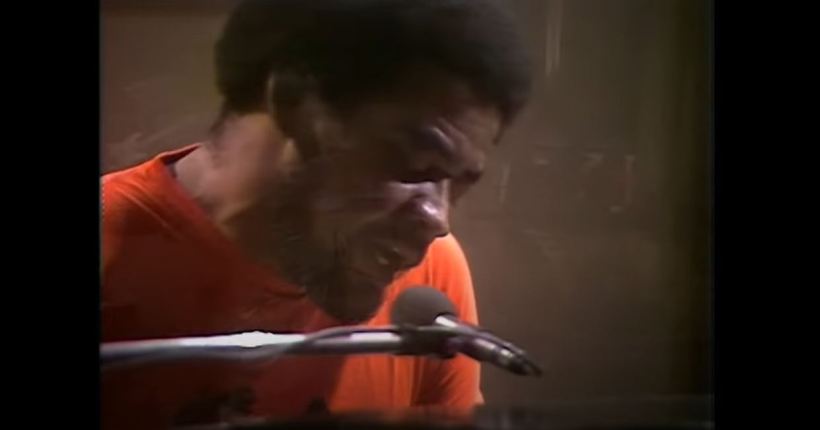
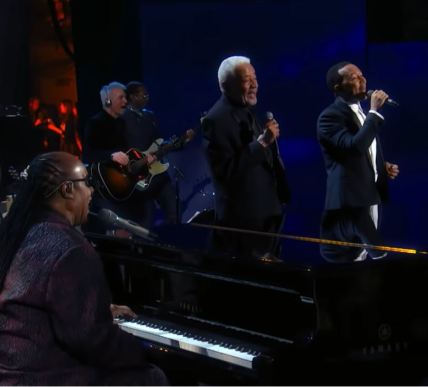
I was thinking about these things as I was listening to NPR on my way to a legal aid clinic I supervise once a month. The topic of discussion was the life of Bill Withers, the great songwriter of the 1970’s. Many people have covered his iconic songs.


Bill Withers died recently at the age of 81. His inspiration behind the song, Lean On Me, is what inspires me today in light of what is going on in the world.

Continue reading “The Inspiration Behind the Song Lean On Me”

Learning How to Die


Dying is a topic most us would rather avoid, but Jesus didn’t shy away from the subject. In fact, he focused on it – maybe because He came to die for us.

I guess I would probably be a bit fixated on the subject if I knew that was the fate that awaited me…. Wait a minute…. that is the fate that awaits me!

Well, maybe it was different for Jesus because it wasn’t just the fate that awaited him; it was among the primary purposes for which he became a man. Though he existed in the form of God, He didn’t hold on to His superior position. He emptied himself, taking the form of a servant and was born a man. “And being found in human form, he humbled himself by becoming obedient to the point of death, even death on a cross.” (Philippians 2:6-8) Simply put – Jesus came to die – for us.

As Jesus neared the time when He would be betrayed into the hands of the tribunal that would seal His death warrant, He said:

“Now my soul is troubled, and what shall I say? ‘Father, save me from this hour’? No, it was for this very reason I came to this hour. Father, glorify your name!”” (John 12:27-28)

For Jesus, death wasn’t inevitable. He chose to die. This does make him different than us: He chose to become one of us and die for us. And because He chose it, could it have been any different for Him?

Is it really different for us?

Maybe not. If you believe what Jesus said.

Continue reading “Learning How to Die”

Hard Time Killing Floor

Successive generations find inspiration in Hard Times Killing Floor

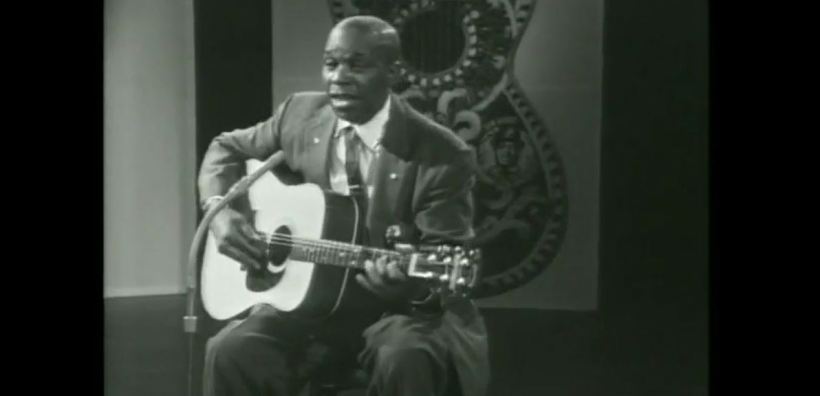
Skip James live in TV-Studio 1967

Skip James was born and grew up in Mississippi where his father was a bootlegger who found Jesus and became a preacher. Life was tough for a young black man in rural Mississippi at the turn of the century. Young Skip knew it well as a worker on road crews and levees in his 20’s. He no doubt drew from his experience as inspiration for one of his most famous songs, Hard Time Killing Floor.


Skip James’s musical prowess was developed early, likely honed in his father’s church. His talent was recognized by somehow by Paramount. They paid for his travel to Grafton, Wisconsin in 1931 to record his songs. Skip drew influence and style from blues and spirituals, bending genres with original and cover compositions, but the latent emotion and authenticity in his music was the substance of his own life.

The slaughterhouses that employed many black men at the time may have inspired Hard Time Killing Floor, though it isn’t clear whether Skip James ever worked in one. A blues song by nature, one might imagine a modern day psalmist pouring his heart out to God, expressing the emotional anguish of the drudgery of life under the sun. Inherent in the plaintive heart of the blues, though, is a sorrowful note of hope, a certain resigned peace and satisfaction in the singing of which hope rises above the pain.

Skip’s musical career never got off the ground with the heavy air of the Great Depression flattening out the wind under his wings. Skip James turned his attention to directing the choir in his father’s church. He was ordained into both Baptist and Methodist churches. His musical career was quashed even as it started. Not much would likely have survived about Skip James, the musician, if it wasn’t for the blues and folk music revival of the 50’s and early 60’s.

Continue reading “Hard Time Killing Floor”