“Love does no wrong to a neighbor; therefore love is the fulfilling of the law.” Romans 13:10 ESV
This little tidbit from Paul’s letter to the Romans packs so much into it. God gave Moses 10 commandments, and law followed after law until there were over 600 different laws for the people to follow. Jesus summarized everything in two statements: love God and love your neighbor.
Paul echoes those words of Jesus in Romans when he says” love is the fulfilling of the law” and equating love with doing no wrong to a neighbor. (Mark 12:30-31)
As I read Romans 13:10 this morning, I think about our Christian tendency to preach to the world about sin, a world that does not know God and has not accepted Him. I have heard Christians use the excuse that they are standing up for truth because Jesus says, “Whoever denies me before men, I will deny before My Father in heaven.” (Matthew 10:33) Paul told the Ephesians to “speak the truth in love.” (Eph. 4:15) Only Paul was writing to the believers in Ephesus, and he was talking about quipping the believers in the church in ministry and building up the body of Christ.
This is significant because, when we think of truth, judgment is not standing far off. Paul is talking to the church in his letters and instructing believers. Paul says, “What business of mine is it to judge those outside the church? Are you not to judge those inside? God will judge those outside.” (1 Corinthians 5:12-13) (The context is a man in the church who was acting immorally.)
The audience of Paul’s statement about speaking the truth in love seems significant this morning as I am thinking about all the times I have seen Christians blast their neighbors with “truth” on social media with not a lot of love. Social media isn’t like a sniper rifle; it’s like a shotgun. Anyone in front of the blast feels the sting – believers and non-believers alike.
Of course, what of the unbelievers who potentially face judgment for denying God? Do we have a heart for them? Do we care enough to get to know them and establish a relationship with them? When we speak the truth to them, are we speaking in love?
It seems to me that we often emphasize truth over love, and the result is that we tend to speak only the truth. We might as well not say anything at all. I’m afraid we often do more damage than good when we do that.
As I was praying for my children this morning, I was reminded that no one comes to the Father except through Jesus (John 10:6), and no one comes to Jesus unless he or she is drawn by the Father (John 6:44). As I prayed for my children who have not acknowledged Jesus as Lord and Savior and have not professed faith in Jesus, I am also reminded that God gives us free will.
God won’t violate the free will He has given us. How, then, should I pray?
I wish there was another way! I wish that God could just make them believe! If I only I were a Calvinist!
I am only half joking. Maybe not even half joking!
I had a conversation with my youngest about a year and half ago in which she told me that she thought she was an atheist. She said all of her friends are atheists. (I doubt that is true, but whatever.) She told me that she asked God for something (I don’t remember what), and He didn’t respond.
That conversation has stuck with me ever since. I was taken aback. She was only about 16 or 17 at the time. I was painfully aware as we spoke, as I am now, that I can’t make her believe. I was thankful that she felt comfortable enough with me to be open and honest, and I told her so. But that doesn’t make the pain of it any less.
I don’t remember exactly what she said she asked God, but she seemed convinced, at least as we talked at that point, that God must not be real if he didn’t respond to her. I didn’t want to preach. I wanted her to know that she always has an open door to talk to me so I didn’t press the issue with her.
I also know that God is faithful. God drew me out of my darkness, and I believe He can draw her too. After all, no one can come to Jesus except the Father draws her. But will He? Can He?
Asking who is your enemy may seem like a strange way to begin a blog article about loving your neighbor, but bear with me. My question is inspired by a different, but related, question. My question is inspired by the question asked by an expert in the law many years ago: “Who is my neighbor?”
This question followed a theological dialogue between the expert in the law and Jesus in which the expert in the law sought to test Jesus. (See Luke 10:25-29) As Jesus often did, though, the test put to Jesus turned into a challenge to the so-called expert.
The expert in the law asked Jesus the loaded question, “What must I do to inherit eternal life?” Jesus answered with his own question, “What is written in the law?… How do you read it?” Not to be shown up, the expert in the law answered:
“‘Love the Lord your God with all your heart and with all your soul and with all your strength and with all your mind’; and, ‘Love your neighbor as yourself.’” (quoting Deuteronomy 6:4 and Leviticus 19:18)
The expert in the law was probably looking for some debate, but Jesus wasn’t interested in debate. Instead, he simply concluded, “You have answered correctly…. Do this and you will live.”
The expert in the law had the tables turned on him. He wanted to test Jesus, but Jesus put the test to him, and now he was in defensive mode. He might said, “Wait a minute!” And then the question followed that leads me to my question, “Who is my neighbor?” If we have to love our neighbors, and if loving our neighbors is the measure for inheriting eternal life, we better know who are neighbors are!
But there is a back story here that leads from the one question to the other question. Apparently, the First Century Palestine Jews had interpreted Leviticus 19:18 to mean, “Love your neighbor; hate your enemy.”
How do we know that? It isn’t found anywhere in Scripture, but Jesus quoted the statement in the Sermon on the Mount when He said, “You have heard that it was said, ‘Love your neighbor and hate your enemy….’” Ah, and now you know where I am going, because Jesus followed with this:
“But I tell you, love your enemies and pray for those who persecute you, that you may be children of your Father in heaven. He causes his sun to rise on the evil and the good, and sends rain on the righteous and the unrighteous. If you love those who love you, what reward will you get? Are not even the tax collectors doing that? And if you greet only your own people, what are you doing more than others? Do not even pagans do that? Be perfect, therefore, as your heavenly Father is perfect.” (Matthew 5:43-48)
Lest there be any doubt who my neighbor, Jesus stretched it so far that love must reach all the way from my friends to my enemies and everyone in between!
And that leads me to the question, “Whos is my enemy that I must love?”
“If you really fulfill the royal law according to the scripture, ‘You shall love your neighbor as yourself,’ you are doing well. But if you show partiality, you are committing sin and are convicted by the law is transgressors. For whoever keeps the whole law but fails in one point he has become guilty of all of it…. So speak and so act as those who are to be judged under the law of liberty. For judgment is without mercy to one who has shown no mercy. Mercy triumphs over judgment.” (James 2:8-10, 12-13)
The immigration issues in the United States are much on everyone’s mind, if for no other reason than Donald Trump and the media are making a big to do about it. Most thinking and empathetic people, however, have watched with some angst as the treatment of families and children crossing the border has brought a moral crisis to our daily awareness.
What should we do with these illegal immigrants and asylum seekers? How should we be treating them and handling the situation? As the videos, photos, stories and reports stream in day after day, we can’t help but notice what is going on and react to it.
How does a Christian respond to the immigration issues that face our country?
“Now the story of Christ is simply a true myth: a myth working on us in the same way as the others, but with this tremendous difference that it really happened: and one must be content to accept it in the same way, remembering that it is God’s myth where the others are men’s myths: i.e. the Pagan stories are God expressing Himself through the minds of poets, using such images as He found there, while Christianity is God expressing Himself through what we call ‘real things’. Therefore it is true, not in the sense of being a ‘description’ of God (that no finite mind could take in) but in the sense of being the way in which God chooses to (or can) appear to our faculties. The ‘doctrines’ we get out of the true myth are of course less true: they are the translations into our concepts and ideas of that which God has already expressed in a language more adequate, namely the actual incarnation, crucifixion, and resurrection. Does this amount to a belief in Christianity? At any rate I am now certain (a) That this Christian story is to be approached, in a sense, as I approach other myths. (b) That it is the most important and full of meaning. I am also nearly certain that it really happened….”
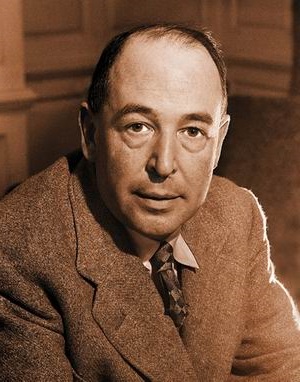
This quotation is from CS Lewis in a letter to Arthur Greeves: from The Kilns (on his conversion to Christianity), 18 October 1931. It captures the thought process of CS Lewis at the point in time when he was becoming convinced of the truth of Christianity.
If you have read much of what I write, you would easily notice that I quote and reference CS Lewis often. He resonated with me in my faith journey that began in college, and he continues to resonate with me.
He is cited by more diverse groups of people than any Christian thinker, perhaps, in the 20th Century. He had a unique way of approaching things from unique points of view, often pulling fresh ideas from the dusty tomes of ancient literature. His concept of myth and True Myth is one such point (though the source is actually JRR Tolkien).
Some might consider his frequent allusions to ancient, pagan myth heretical. Some might even confuse his love of pagan myth with New Age belief, but he flatly rejected the occult. He was orthodox in unorthodox ways, but his creative approaches to orthodoxy were refreshing and thought-provoking.
We don’t have to look any further than the ultra-orthodox, Apostle Paul, to find some common ground with CS Lewis. When Paul was in Athens, some Epicureans and Stoics he met in the marketplace brought him to the Areopagus to address an erudite Greek crowd. In that address, Paul referenced an altar inscribed “To An Unknown God” and quoted pagan writers when he said:
“in him we move and live and have our being”.
Acts 17:26 (quoting a line from Cretiga, by Epimenides of Knossos)
“For we are indeed his offspring ”
Acts 17:28 (quoting a line from Phenomena 5 by Aratus of Soloi)
Paul quoted the Cretan philosopher, Epimenides, also in Titus 1:12. Paul knew enough about pagan philosophy and poetry that he could quote from pagan works multiple times in his writings and addresses.
Paul quoted the pagan philosopher to express a spiritual truth about our lives in Christ, and Paul quoted the pantheistic poet, Aratus, to convey a theistic principle about God. (See Acts 17:22-28 – Quoting the Philosophers?) Paul connected with the people “where they were,” using language and references from the culture they understood to convey something about God.
Paul was well-read in the literature of his culture, and he used pagan philosophy and poetry to introduce people to the Gospel. This is exactly what CS Lewis does in in his own writing. Through his deep knowledge of pagan myth, he recognized strands of truth, and he recognized the difference between “man’s myth” and “God’s myth (the the “True Myth”).
In using the term, myth, Lewis is talking about story and narrative. Many stories and narratives convey a modicum of truth. CS Lewis observes that most myth from around the world contains some elements of truth, and Lewis insisted we shouldn’t be surprised by this – because truth is universal.
The difference between myth and True Myth, according to Lewis (and Tolkien), is that all other myth is a shadow of the True Myth. All myth is an attempt to shine light on truth. True Myth is the ultimate Light shining on the ultimate Truth.
All myth conveys truth through storytelling. True Myth isn’t just another story, though; it is “the” Story. It isn’t “just” myth, but reality, because “it really happened,” as CS Lewis said.
The True Myth is the Gospel. God, the Creator of the universe and everything in it, created man in His own image as His crowning creation. Then, God became a man, injecting Himself into His own creation, in order to communicate His very heart to us and to rescue us from going our own way by revealing the ultimate purpose for which God created us – to have loving relationship with God, our Creator.









 Navigating by Faith