Christmas Thoughts: The Heart of God’s Redemptive Story is Revealed through Mary

The final woman mentioned in the lineage of Jesus is central to God’s redemptive work in human history.

I have written a Christmas series of blog posts on the genealogy in Matthew that sets the stage for the narrative of the birth of Jesus, but I haven’t finished it… until now. The theme is the redemptive work of God in human history through the perspective of the five (5) women mentioned in the genealogy.

If that last statement gave you pause, you may have a hint of the radical nature of that storyline, which is the point of this redemotive story: There are five women mentioned in the genealogy. Five women.  

The Hebrew culture was paternalistic, like all cultures in the Ancient Near East, and almost all cultures down through history (and even now). The oldest male in that culture inherited his father’s estate. Lineage was traced from male to male.

So, what are five women doing in the sacred lineage of Jesus?

That Matthew mentions five women in his genealogy is truly remarkable. We might gloss over it in our modern thinking, maybe even being tempted to sneer that he didn’t include more. That he included ANY women is the the amazing thing.

I described four of those women in previous blog posts. I began with a post that sets out the genealogy in full and links to each of the subsequent blog posts. (Christmas Thoughts: God’s Redemptive Actions Through Women of the Old Testament). The posts continue in the following progression, from oldest to most recent:

  1. Christmas Thoughts: God Redeems the Line of Judah through Tamar;
  2. Christmas Thoughts: Rahab, a Foreign Prostitute & God’s Redemptive Plan;
  3. Christmas Thoughts: Ruth & God, the Kinsman-Redeemer;
  4. Christmas Thoughts: Uriah’s Wife and the Redemption Plan of God

All of the stories I have covered so far are of women from the Old Testament, showing God’s redemptive work leading up to the birth of the long awaited Messiah. The last of the woman is Mary, who gave birth to him.

This piece is inspired by Craig Keener, who has a Ph.D. in New Testament and Christian Origins from Duke University and is a prolific writer of scholarly works on the New Testament, among other things. He was interviewed recently by Preston Sprinkle on Theology in the Raw as part of a series on Christmas.

He contrasts the appearances of an angel to Zechariah (Luke 1:8-22) and to Mary (Luke 1:26-38). The passages are parallels, announcing the birth of the Messiah, but the response of the two are different. The contrast is intended, no doubt, to catch our attention: Zechariah responds with unbelief, while Mary responds, “May it be according to you word!”

The parallelism of the two passages is striking, so the difference in the responses stands out. It is meant to stand out.

Zechariah is an aged man, a priest operating at the center of the life and culture of his people, serving in holiest place in Hebrew culture: in the temple. He is male of course. Zechariah, of all people, might be expected to recognize and embrace God’s great entry into human history and the fulfillment of the long-foretold Messianic prophecies.

Contrasted to him is Mary, a young female (probably in her mid-teens), a relative nobody in a nowhere place in the eyes of that culture. She would not have been privileged to know Scripture like Zechariah She would have no stature, no power, no influence nor importance.

The contrast in status would be more evident to First Century Hebrews, but we can understand it even today. Despite the elevated stature of Zechariah, Mary is the hero of this story. She embraces what the angel says, while Zechariah hesitates in doubt at the threshold of God’s entry into the world.

Mary’s song (Luke 1:46-55) is one of the most eloquent and poignant responses to God’s redemptive work in all of Scripture.[i] Mary is glorified over the venerable old priest in the story. The spotlight is on her, and

Mary’s words also set the tone for the coming of the Messiah. She says God scatters those who are proud, but He lifts up the humble. He fills the hungry, but he empties the rich.

Leading the way to God’s appearance human history are five women who stand out in Matthew’s genealogy by the very fact that they were included at all. Their stories are at the center of God’s redemptive work and plans for mankind that He envisioned from before the foundations of the world.

The mention of five women in the genealogy of Christ, the Messiah, is no accident. In our western minds, we might tend to gloss over genealogy as a mundane recitation of historic fact. For Hebrews, the composition of a genealogy is not just about fact, but an emphasis of key facts.

The genealogy with the mention of five women sets the stage for the appearance of God. It is foundational and a central a part of that story. Take a moment to consider how utterly unusual that genealogy would have seemed at the time, and it’s significance in story of Jesus. Consider Mary’s grand response to God, and take some time to read the stories of the other women in the lineage of Jesus.


[i] And Mary said:

“My soul glorifies the Lord
and my spirit rejoices in God my Savior,
for he has been mindful
    of the humble state of his servant.
From now on all generations will call me blessed,
for the Mighty One has done great things for me—
    holy is his name.
His mercy extends to those who fear him,
    from generation to generation.
He has performed mighty deeds with his arm;
    he has scattered those who are proud in their inmost thoughts.
He has brought down rulers from their thrones
    but has lifted up the humble.
He has filled the hungry with good things
    but has sent the rich away empty.
He has helped his servant Israel,
    remembering to be merciful
to Abraham and his descendants forever,
    just as he promised our ancestors.”

The Story of the Magi Demonstrates the Universality of the Offer of the Gospel to the World

The significance of the story of the Magi at the beginning of the Gospel of Matthew

The Adoration of the Magi; Border with the Queen of Sheba before King Solomon, from a prayer book of Cardinal Albrecht of Brandenburg (text in German), Bruges, Belgium, about 1525-30, Simon Bening. The J. Paul Getty Museum.

Matthew provides us the story of the Magi priests (not kings) visiting Jesus with gifts “from afar”. Magi is a Zoroastrian term referring to “dream interpreting astrologers-astronomers from Persia or Mesopotamia who possessed secret knowledge”.[i] We don’t know the actual number, though three is the popular legend.

The number was postulated by Origen in the Third Century based on the number of gifts they brought: gold, frankincense, and myrrh. The Feast of the Epiphany, which was first celebrated in Alexandria, Egypt, at the end of the Second Century or beginning of the Third Century (the home of Origen), celebrates the appearance of God to the world who became flesh in the person of the Christ child.

The arrival of the Magi is acknowledgement of the worldwide, universal significance of the event.

“Matthew’s story about travelers following the trail of a mysterious star was all about including ‘foreigners’ in the Christmas story. Matthew showed Gentiles—in other words non-Jews, people who worshipped so-called pagan gods—acknowledging Jesus as king and, presumably, savior.”

The universal availability of Jesus beyond the Jewish community into which Jesus was born to the world is built right into the beginning of the narrative in Matthew. It resonates with Paul’s letters in which he maintains, to his own detriment among his fellow Jews, that Christ came for Jew and Gentile, alike.

That the offering of God in the flesh to the world which is built into the very beginning of the story was first celebrated in the Feast of the Epiphany in Northern Africa is intriguing to me. Though the Magi would have come from a different area of the world, the point of the story is the universality of Christ.

We also forget how prominent in early Christian history was the African church. This intrigues me as well.

The story in Matthew is only 12 verses long (Matt. 2:1-12). A longer version of the story exists in one other manuscript, the “Revelation of the Magi”.[ii] This Syriac text that was translated into English only recently is apocryphal and likely dates to the Second or Third Century.[iii] It depicts the wise men coming from Shir, which is in China today.

Like many apocryphal texts, it smacks of myth and legend (the star they follow comes down and transforms into the baby Jesus). It is a whimsical story, perhaps, like the Chronicles of Narnia.

While the Revelation of the Magi is apocryphal and fantastical in its details, the idea that men came from the Far East is not. The Spice Route that comes into Jerusalem connects all the way to China and can be observed still today.

I have meditated before on the thought that Jesus came at just the right time in history when much of the known world was unified by a system of Roman roads and order opening the world to the west and north (to the British isles) for the spread of the Gospel. So also, we see that the Spice Route opened the world for the spread of the Gospel to the east, just as other trade routes allowed the Gospel to spread south into Africa, with Alexandria being one of the three pillars of early Christian authority.

While I am very familiar with Paul’s ministry to the Gentiles and faithful devotion to the promise God made to Abraham to bless all the nations through his seed, I had not noticed the significance of the Magi in the Gospel of Matthew (a more Jewish-orientated Gospel).

Continue reading “The Story of the Magi Demonstrates the Universality of the Offer of the Gospel to the World”

Comments on Freedom and the Clash of Ideas

If any speech or expression is deemed unworthy of protection on the basis of its content, no speech or expression is safe.


“The clash of ideas is the sound of freedom.”  (Lady Bird Johnson)

I grew up in the 1960’s and 1970’s, bring born at the very end of 1959. My young, impressionable mind recalls the assassination of JFK, Robert Kennedy and Dr. Martin Luther King, Jr. I remember watching the riots during the Democratic National Convention in Chicago, the Kent State protest and shooting, the footage of the Vietnam War and the Nixon impeachment on the nightly news.

The world seemed a chaotic place, no less than it does today, on this 4th day of July, 2020.

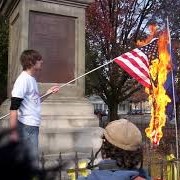
In the 1960’s, the dissident voice championed First Amendment rights that included the freedom of assembly and freedom of speech. I remember that freedom cry as a child superimposed over news footage of a burning US flag. The patriot in my young heart was equally shocked by the flag burning and impressed by the necessity of the freedom that allowed that flag to burn.

In law school, I learned the nuances of the jurisprudence that grows out of our US Constitution in which the First Amendment is enshrined. The clash of ideas is so sacred in our constitutional framework that it allows even the idea of abolishing that very framework to be heard.

In the 21st Century, many things have changed, while somethings have remained the same. Many of the dissident ideas from the 1960’s have become mainstream, and more “conservative” voices have become dissident. I am no longer shocked by the burning of the flag (and, perhaps, the point of burning a flag is no longer poignant for the same reason).

The angst of the 1960’s of my youth has been replaced by the angst of the 21st Century of my middle age. The reasons for my angst are much different, yet very much the same at their core. I have grown and changed in my views, but the emotional strain of the human condition remains.

I fear, at times, that the framework that protected the freedom to burn US flags in the 1960’s might, itself, be destroyed in my lifetime, or the lifetime of my children, by the fire of ideas that are antithetical to that freedom.


The ideas in colleges and universities around the country that seem to dominate those institutions promote the silencing of dissident voices. Speaker engagements are canceled as the loudest voices want not even a whisper to be heard in opposition.


One theme of the dominant social, philosophical and political ideologies that thrive on college campuses today is that certain voices should be silenced, while other voices should be magnified – a kind of totalitarianism of ideas. This worldview would destroy the foundation of the First Amendment if the First Amendment is not held firm.

I am shocked by this new predominant view as I was once shocked by the burning of a US flag. The shock stems not from the evils in society this ideological view aims to address, as I find some common ground in those concerns. I am shocked that the proposed remedy involves weakening the most fundamental freedom that protects freedom itself – the freedom of ideas and the right to express them.

The idea of “hate speech”, as well-intentioned as it sounds, is inimical to a framework of freedom that protects the clash of ideas. Nowhere is freedom more necessary to be protected, than at the intersection of ideas and the right to express them. One person’s hate speech is another person’s freedom of expression.

If we allow the idea of hate speech into the fabric of First Amendment jurisprudence, we threaten its very foundation. What we characterize as “hate” today is subject to change with changing societal norms tomorrow. No speech is safe from the label of “hate” if labels are allowed to silence speech.

While such a worldview has some appeal and laudable goals, it cannot be advanced by the abolition of freedom of speech. Yet, I realize at the same time, that freedom, real freedom, protects even those ideas that are antithetical to freedom and demands that they be heard.


As shocked as I was in my naïve youth to watch the US flag burn in the streets of America, I understood the importance of allowing that expression to be heard. That I am no longer shocked by that expression is of no consequence.


In fact, freedom of speech is nowhere more vital than the protection of speech that is offensive. Favored speech doesn’t need protection.  If any speech or expression is deemed unworthy of protection on the basis of its content, no speech or expression is safe.

Continue reading “Comments on Freedom and the Clash of Ideas”

The Resurrection from the Point of View of Mary Magdalene

In the resurrected Christ, there is neither Jew nor Gentile, male nor female. We are all one.

Mary Magdalene, Mary, & Salom walking up to the bright empty tomb of Jesus Christ early Sunday morning


Three days and two night ago, Mary’s entire world came crashing down. The earth opened up and swallowed Jesus, whom Mary loved, into the abyss. Mary’s world was thrown into darkness and confusion, leaving only soul crushing grief, bewilderment, and emptiness.

She barely had enough time to get him down from that tree on which he had died. A very generous leader risked his life and reputation to help her with the body and prepare the body properly for burial before Sabbath began. (John 19:42)

The crash of his arrest and the whirl of those events that followed came upon her in a rushing torrent so quickly that she was completely overwhelmed, reeling, barely able to breath from beginning to end, and they ended with his death. The commotion of the last minute burial gave way to the silent weight of yawning emptiness and overwhelming grief in the dark night that followed.

All the men abandoned Jesus as the world began to unravel. The petty squabbling that broke up dinner the night before left Mary confused about what Jesus had been saying. Jesus was trying to tell them something important, but she could only remember bits and pieces….

Something about a cup… and pouring out his blood and…. It was all so surreal and confusing. So impossible to fathom. Jesus seemed to know what was going to happen. She could see it in his eyes. He was resigned to it, but she didn’t understand.

All the mysterious things Jesus said during the exciting and hopeful years they traveled with the Jesus played in her mind like a long, beautiful song ending in a discordant whimper. The mystery that seemed so poignant and momentous now seemed ominously empty. Through the looming darkness, a slight flame of hope sputtered amid the whirlwind of elements around her.

Jesus wouldn’t let anyone try to defend him. “He just gave himself up!” she thought. He utterly gave himself over to them. It was painful to watch, and painful to remember.

But even in his weakness he was noble. He was so beautiful. He seemed like everything they thought he was. Even in the end. Even as he resigned himself to death. She wept.

And those men were always arguing about who was the greatest. They didn’t do anything. They couldn’t even stay awake with him and pray. They were too dull to realize Jesus needed them!

They could have, at least, gone with him! But, they left him. They knew what was happening, but they pretended not to know! they didn’t lift a finger. When Jesus needed them most, they abandoned him. Peter even claimed he didn’t know Jesus! Peter!

Mary and the other women would not leave him. They saw the whole, unimaginable thing … and John. At least, John was there. Not that he did anything.

If it wasn’t for Joseph, who knows where his body would have ended up. Mary was grateful that Joseph owned a tomb nearby and even more grateful that Joseph and his associates helped with the body. (Luke 23:50-53). Even so, Mary couldn’t help but wonder where they were when Jesus needed someone. Anyone!

Even as she felt her heart shrink in anger and frustration, she knew they could not have stopped what happened. She softened, and she wept again.

They had no time to prepare him properly. It was the Sabbath, and night was upon them. The hours labored by. It seemed like Jesus lay there for an eternity through the night. Everything weighed so heavily on Mary’s heart. She needed to get to him.

Joseph and Nicodemus came through with the spices and ointments for Mary to prepare the body in the morning. (Luke 23:56) She was up before the dawn. She couldn’t sleep anyway.

The hopeful sounds that emerge in light’s first dawn might have lifted her heart on any other morning. Tears came in waves. She could hardly see at times.

Tears she could not manage to wipe way with the back of her hands fell from her cheeks into the mixture of ointment and spices. She recalled the day she wiped tears from his feet with her hair in waves of repentant gratitude and joy, knowing her sins were forgiven, and her life was forever changed.

Her tears turned to waves of incontrollable sobs. She could not continue until they subsided.

Mary could not adequately express the depth of gratitude for Jesus for rescuing her from the demons that haunted and tormented her from her youth. She didn’t care what anyone thought.

Nothing had been more precious to her than the ointments she collected… until Jesus set her free. She would have spent her entire life pouring her very self out for him.

She desperately longed to wind time back. The impossibility of it all was maddening. Those demons lurked again in the back of her mind. She shuddered as if to shake them off, and she continued with the ointment and spices.

Continue reading “The Resurrection from the Point of View of Mary Magdalene”

The Cup of the New Covenant Poured Out for Us


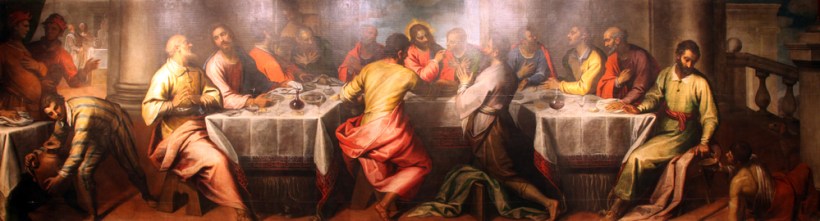
Imagine being a close friend of Jesus in the 1st Century, reclining at the table with him, eating a meal. It’s been a roller-coaster three years! Your whole world is buzzing about him. He is absolutely the talk of the town.

You are still not quite sure what all he is talking about, but you have come to believe in him. If he is not Messiah your ancestors have talked about for many generations, he is certainly a prophet. Maybe he really is the Messiah?!

Your people have held on to hope for hundreds of years of returning to former glory. This Roman rule is not the way it is supposed to be. God rescued your ancestors out of the land of Egypt, and He gave them the promised land. God drove out all the inhabitants of the promised land before them. He could do it again! Certainly, He would do it!

When Jesus rode into Jerusalem on that donkey, it seemed almost so real you could taste it. This really seems to be it! The people are behind him. Everyone is waiting to see what’s next. A new day for Israel seems to be right around the next corner!

But, you never know with Jesus. He is anything but predictable, and he says some really weird things sometimes. Hard things. You don’t completely understand what he is getting at when he talks about the Temple being destroyed and rebuilt in three days. What does that have to do with anything? All of those statements about being the Bread, and the Living Water and the Vine….

As you sit at the table, the talk is excited. It is Passover. Expectation in the air. This Passover is particularly poignant with all that has been going on, but Jesus is quiet.

Not that it’s unusual for Jesus to be quiet at times. They had gotten used to it. He often went off by himself, and he would often seem to drift into deep thought, especially lately.

Jesus had left all of you instructions about preparing the Passover meal. No one knew where Jesus was, but everything was left for you as he said it would be. He finally showed up and watched as you finished. You didn’t really notice his silence until he finally spoke as everyone was finally reclining at the table.

Jesus was obviously waiting for just this time. His voice carried a certain weight to it. More than usual. There was a firm, but calm, urgency to his words. The excited tones of the men around the table fell immediately quiet as Jesus opened his mouth to speak. Continue reading “The Cup of the New Covenant Poured Out for Us”