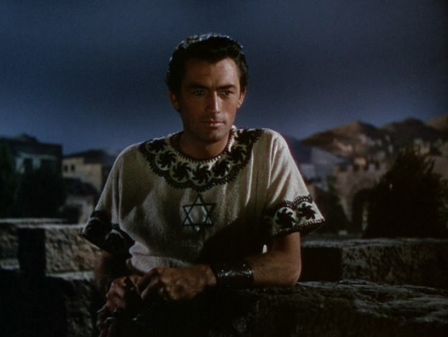
Search Me Oh God

Depositphotos Image ID: 67632305 Copyright: alazs

Judas Iscariot is a tragic figure in the Gospels. He is known best for betraying Jesus Christ, leading to his crucifixion. John wrote this of Judas many years after the events occurred in the garden of Gethsemane: “he was a thief; as keeper of the money bag, he used to help himself to what was put into it.”

Given John’s characterization of Judas, it’s a bit unnerving, perhaps, to think that Judas spent years in the company of Jesus. Judas knew Jesus intimately and was part of the very inner circle of followers of Jesus. Jesus certainly knew Judas as well. He knew well that Judas would be the one who would betray Him. He “called it” at the Last Supper.

Have you considered the fact that Jesus allowed Judas so close to him all that time, knowing what Judas would do? John’s comment about Judas many years later, describing Judas as a “thief” who helped himself to the funds that Judas oversaw for the group of disciples, suggests that John knew the character of Judas as well.

The betrayal of Jesus, of course, was part of God’s plan. It had it happen. Jesus came to offer himself as a sacrifice for the sins of men, but Jesus added, “But woe to that man who betrays him!”

What sort of man betrays Jesus? Was Judas just an evil person?

Continue reading “Search Me Oh God”

Who Are You Not to Forgive Yourself?

If you have confessed your sins and asked for forgiveness, God has forgiven you.

Depositphotos Image ID: 31059699 Copyright: prometeu

Mary Poplin is a former radical feminist, new age spiritualist, liberal professor who became a Christian and spent some time working with Mother Teresa. Hers is an unusual and intriguing story.

Among other things, she talks about Mother Teresa’s radical forgiveness. For instance, Richard Dawkins wrote an entire book about Mother Teresa in which he criticized her vilely for taking money from other people, among other things. The brief glimpse Mary Poplin gives us into the life of Mother Teresa reveals a woman who, perhaps as much as anyone in modern history, lived the sacrificial example of Jesus. This stands in contrast to the stark, cold criticism of the atheist, Dawkins.

The point of this blog article isn’t a comparison between the two, however, but, to focus “radical forgiveness”. Mother Teresa’s response was: “It matters not; he’s forgiven.”

And when Dawkins heard the response, he wasn’t very happy about it. He scoffed that he doesn’t need to be forgiven, and he didn’t ask to be forgiven. Mother Teresa’s response when she heard about his response was to laugh and to say, “It’s not I that forgives; it’s God. God has forgiven him.”

The point here, is that though Dawkins had reviled Mother Teresa, she forgave him unconditionally. Mary Poplin, summarized Mother Teresa and her followers, “They didn’t have any hooks left in them.” They didn’t hold on to any ill will whatsoever.

I don’t know about Mother Teresa’s theology, but the example of living out the forgiveness that Jesus demonstrated and called us to live out is the key. It is radical, and it’s rooted in our acknowledgment that God is God, and we are not. You might as well call it radical obedience because it matters not what we think or feel about the subject.

Continue reading “Who Are You Not to Forgive Yourself?”

Christmas Thoughts: Uriah’s Wife and The Redemption Plan of God


My Christmas thoughts a year ago were focused on the women in the genealogy that Matthew included in the beginning of his Gospel. Tamar, Rahab and Ruth are all women whose stories foreshadow the ultimate redemption saga of God entered into our story as human being to redeem the world. The grand story of global redemption is what we celebrate at Christmastime, and these women are each instrumental in that global redemption story.

A total of five women are listed in the patriarchal lineage included at the beginning of Matthew’s Gospel. The oddity of including women in a patriarchal lineage bears some investigation. Indeed, we find the redemptive theme when we look into it, and, that theme continues with the next woman on the list, but with a twist.

The twist begins with the fact that the next woman isn’t even named. The genealogy in Matthew reads like this:

Boaz the father of Obed, whose mother was Ruth,
Obed the father of Jesse, and Jesse the father of King David.
David was the father of Solomon, whose mother had been Uriah’s wife[i]

Another oddity signals that something is different here. The stories of Tamar and Ruth were stories of kinsman-redeemers, women who sought the shelter and protection of the relatives of their deceased husbands, and, thereby, gave birth to sons who would carry on the line that would eventually lead to Jesus, the Christ (Messiah). The stories of the first three women, including Rahab, are also stories of trust in God that are met by God in His faithfulness.

The story of “Uriah’s wife” is another example of God’s faithfulness, but the human side of the story is one of unfaithfulness. Bathsheba is the mother who had been Uriah’s wife. She isn’t named, perhaps, for the scandalous reason that King David murdered her husband and took advantage of her.

Continue reading “Christmas Thoughts: Uriah’s Wife and The Redemption Plan of God”

Christmas, Taxes and a Heart for God

What do Christmas, taxes and King David have to do with each other? You might be surprised to find out.

Archaeological site, City of David in Jerusalem, Israel 


This blog article is prompted by a Christmas tax article. Yes, Christmas and income taxes go together. Who would’ve thunk it?!

In Luke 2:1, we read that Caesar Augustus sent out a decree for a census. It turns out the census was declared so that the Caesar could tax people.

That fact, though, isn’t what caught my eye or what prompts this article, though. The article is also not about unjust taxes that burden the poor and avoid the rich. This article also isn’t about the controversy over whether Luke is accurate about the census and the timing of it.

What prompts me to write this piece is the reference to a previous census and previous tax and the surprising and shocking instigator of that tax – the man of God who allowed it to happen, David.

Continue reading “Christmas, Taxes and a Heart for God”

The Law Foreshadows the Spirit

The Law given to the nation of Israel was is a necessary precursor to the law of the Spirit.

  Photo by Steve Murray – Where Moses looked into the promised land

“But the fruit of the spirit is love, joy, peace, patience, kindness, goodness, faithfulness, gentleness, self-control; against such things there is no law.” (Galatians 5:22-23)

The Spirit does what the Law could never do.

The law is exterior to us. It imposes a standard for us to follow, but it does not give us the desire or the power to follow it. The Spirit gives us both.

Continue reading “The Law Foreshadows the Spirit”