Another Look at God In Light of the Evil in the World (Part 2)

The issue at stake in the problem of evil isn’t God’s power, but His goodness, His character.


I have taken a prompt from the explore God discussion series going on simultaneously in over 800 churches in the Chicago area to write up a summary of the problem of evil. More specifically, I was spurred on by the discussion of The Problem of Evil and Suffering on Veracity Hill between Kurt Jaros, the host, and John Peckham from Andrews University.

I think this is the most difficult problem to deal with in the modern western world for the theist, and specifically the Christian who maintains, as Scripture reveals, that God is both all-powerful and all-good.

  • If God is all-powerful, why did He create a world in which evil, pain and suffering exist?
  • Does that mean He really isn’t all-powerful?
  • Or maybe God isn’t good?
  • Or maybe the God of the Bible doesn’t really exist?

Many people who can’t resolve this problem in their minds (or maybe their hearts) end up rejecting the idea of God altogether.

I began the discussion in an introductory blog, and I laid some groundwork to address the problem in Another Look at God in Light of the Evil in the World (Part 1). I can’t rehash it all here, other than to emphasize that we should not be lazy in our approach to the challenge. As with science, we need to work through the premises of the truth as understand to a resolution, if indeed there is a resolution to be had.

If there is a resolution to the problem, we can’t do it justice by abandoning the premises we are given. We need to work through them.

For the Christian, those premises don’t just include the omnipotence and omni-benevolence of God. We need to fit all the pieces of the puzzle together. I have come to believe that, if we hold on to and expand the premises we are given, and fill out the picture, some clarity begins to emerge.

One of the additional puzzle pieces is that God isn’t just good; God is love. In fact, God is love in His very nature.

Some people have trouble with the idea of the Trinity, three in one. We can understand God’s triunal (communal) nature in the context of love. As three in Person and one in Being, God’s very character is love from before time even began. (See The Plurality of God) God has community and relationship (love) within Himself.

And, Scripture says that He made us in His image. If we are made in His image, we are made to reflect His love. This is another of the puzzle pieces.

Love requires freedom. Coercion has no place in a loving relationship. Thus, for us to know love and to love God, we need to be free, and that includes freedom to reject God and what is good.

The Christian, who accepts the premise that God is good, rejects the idea that God is evil or caused evil to exist. Evil is not in the nature of God because God is who He is. Evil, then, must be a byproduct of the freedom God gave His creation. Evil is the rejection of God and what is good.

Pain and suffering aren’t, per se, evil, though evil produces pain and suffering. God created a world in which pain and suffering exist from the beginning. (see Part 1). Pain and suffering are actually part of the creation God made and called good.

Finally, we find that God’s grand plan and purpose is that His creation would enter into a loving relationship with Him, not because it must, but because His created beings want to.

These are the basic puzzle pieces. (If you want to examine these premises more closely, you will have to read the previous posts and do some research of your own.) From here, we will go back to the premise of God’s power (sovereignty) and examine more fully how it can be that an all-powerful God (who is also good) can allow evil to exist.

Continue reading “Another Look at God In Light of the Evil in the World (Part 2)”

Another Look at God in Light of the Evil in the World (Part 1)

Love is a key component to understanding the problem of evil.


I introduced the problem of evil in a previous blog post, looking at God in light of the evil in the world. My writing is prompted by the discussion series being conducted by over 800 churches in the Chicago, explore God, taking on some of the big questions about faith.

I have tackled various aspects of the problem of pain before, but getting to a place of understanding is an ongoing process. I write as a way of working through issues to gain understanding. My understanding continues to grow and sometimes to change.

In the previous post, I suggested that we should approach the problem of evil in a similar fashion to the way we approach science,. Not that faith questions are susceptible of scientific inquiry, per se, but the answers aren’t always obvious. Sometimes they take considerable work on our part. We shouldn’t be lazy and give up simply because the work is hard.

As with science, we need to start with a premise. For the theist, the premise is that God exists. For the Christian, the God who exists is revealed in Scripture. He is a maximal being – maximally great, maximally good and maximally powerful. Of course, this is where the problem of evil arises for the Christian.

The problem of evil takes on different form, depending on the way each religion describes God. Not all religions describe God as a maximal, personal and volitional Being. For the Christian, therefore, the problem of evil leads to the question:

How can a good and all-powerful God allow evil, pain and suffering to exist in the world?

The skeptic would say: 1) either God isn’t all powerful, or 2) God isn’t good; or 3) God doesn’t exist at all (at least not as Christians conceive God).

I am not going to argue for the existence of God in this article. I am going to assume God exists as Scripture reveals Him. The proofs are satisfying to me, and I believe intellectually and experientially in the God of the Bible.

If God is God, then, how do we reconcile the issues posed in the problem of evil?

As with any complex problem, we need to hold to the premises we are given. Is there a way to do that? Can we harmonize these things? I think we can.

Continue reading “Another Look at God in Light of the Evil in the World (Part 1)”

Doubts About the Viability of Darwinian Theory Increase

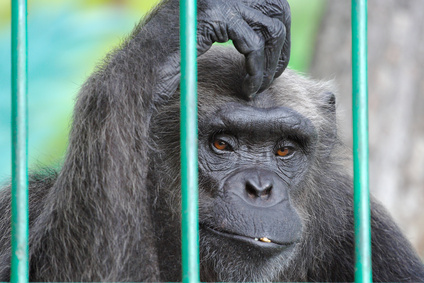
sad chimpanzee


I am reblogging this post as I have the distinct impression that most of the world, including most of the academic world, don’t realize that the Theory of Evolution, which seems to be accepted more like a fact in modern society, is still not completely settled. While the official face of the scientific world continues to bow in homage to Darwinian Theory, doubts of its ultimate viability and explanatory scope are increasing.

This is not to say that doubts about evolution, generically, are increasing. Evolution can mean any number of things, including the adaption of species over long periods of time. Garden variety evolution is not seriously in question (to put a layman’s spin on it).

Rather, evolution as an explanation of the origin of life and which defines the entirety of the biological process, from beginning to end, is still in some flux. If you don’t believe me, listen to Stephen Meyer and Perry Marshall debrief the Royal Society meeting of eminent biologists last November. (See Unbelievable? What happened to evolution at the Royal Society? Stephen Meyer & Perry Marshall)

Their report (as well as others) reveals a Neo-Darwinian theory in crisis. Many scientists are finding it increasingly difficult to maintain the old paradigm, even with a face lift, in light of ongoing research and discovery. The old model is straining under the pressure.

It isn’t any wonder, then, I suppose, that the number of scientists willing to sign a petition expressing skepticism about the contemporary theory of Darwinian evolution has risen ten times since 2001.

Skepticism About Darwinian Evolution Grows as Over 1000 Scientists From Around the World Declare Their Doubts About Darwinism WASHINGTON, Feb. 5, 2019 /PRNewswire/ — Over 1000 doctoral scientists from around the world have signed a statement publicly expressing their skepticism about the contemporary theory of Darwinian evolution, according to Discovery Institute. The statement, located online at http://www.dissentfromdarwin.org, reads: “We are […]

via Doubting Darwin — God does not believe in atheists

Is Jesus God? Part 3

What did the people closest to Jesus and those who were opposed to him think that Jesus was saying about himself?


Jesus said to his followers, in no uncertain terms, “You shall worship the Lord your God and serve him only.” (Luke 4:8, quoting Moses Deut. 6:13) Why, then, do Christians have this notion that Jesus was God?

That is the question being addressed in this blog series. The question was introduced in the first piece: Is Jesus God? Part 1. The question is being posed as part of a series of questions, that is being discussed among over 800 churches presently in the Chicago area. (See exploreGod) In the second blog post, Is Jesus God? Part 2, I covered the things Jesus said about himself.

In this third installment on that question, I will review what others said about Jesus in his time, both those who followed him and those who opposed him. The statement Jesus made about worshiping and serving only God is important to consider in light of the claims Jesus made about himself as well as the way other people reacted to Jesus.

Surely Jesus would not deign to suggest that he was God after making such a statement, right? How could his followers be confused about his deity? (If, indeed, there was any confusion.) What did others say about him? And how did they relate to him?

Continue reading “Is Jesus God? Part 3”

The Place for Experience in the Mix of Science, Faith and the Evidence for God

When asked what would make them believe, some atheists say a personal experience with God would do it.


On the show and podcast, Unbelievable! On Christian Premiere Radio in the UK hosted by Justin Brierley, the host often asks people, atheists and Christians, what would make them believe (or not believe, as the case may be). Most people think of arguments or historical or scientific proofs, but not everyone.

In one particular episode Michael Ruse, a professor and philosopher of biology at Florida State Universality, participated in discussion with John Lennox, a professor of mathematics and philosophy at Oxford, on the subject of Science, Faith and the Evidence for God. When asked the question about what would make him believe, Michael Ruse surprisingly (for me at least) said that it would have to be a personal experience with God.

Michael Ruse is a Fellow of the Royal Society of Canada and the American Association for the Advancement of Science. Ruse is an evolutionary biologist who has debated against intelligent design proponents. He has been on the Advisory Council to the National Center for Scientific Education. He is a Bertrand Russell Society award winner for his dedication to science and reason.

Thus, my surprise to hear him provide such an “unscientific” answer to the question of what it would take for him to become a believer. I have since heard other atheists provide similar answers. Intelligent Christians, I think, underestimate the power of personal experience.

To be fair of Michael Ruse, though is a decided atheist, he has a healthy respect for theology. Maybe that is because he is a philosopher, and not just a scientist.

I say “just a scientist” because there is a school of thought among modern scientists that we don’t need philosophy anymore, that science is all we need. (People like Richard Dawkins and Neil deGrasse Tyson have expressed this view.)

But science, by definition, is limited to the study of the natural world, matter and energy (or “molecules in motion” as some like to say). Anyone who makes the claim that science is all we need has made an a priori determination (an initial presupposition) that molecules in motion are the sum of all reality. Neither theology, nor philosophy, fit into a world like that. And, where, then, does that leave mathematics and logic?

Michael Ruse, being an expert in philosophy takes great offense at the notion that philosophy has gone the way of God and is dead (alluding to Nietzsche’s great contention). It’s natural for a philosopher to take that position, I suppose, even an atheist philosopher. After all, he has devoted his life to philosophy!

But then, consider that he knows something of what he talks about. Just as scientists know a great deal more about science than me, a philosopher knows a great deal more about philosophy than, well… a scientist (who studies only molecules in motion). It isn’t hard to understand why such a person might begin to see the world as nothing but molecules in motion when that is the constant and continual focus of life long study, but the theologians and philosophers, even atheistic one, protest there is more.

Continue reading “The Place for Experience in the Mix of Science, Faith and the Evidence for God”