Thoughts on the Sanctity of Human Life, Injustice and Unity in the Church in the United States

God’s desire is to save us, to have relationship with us, to renew our minds and to conform us to His image.

Reading in Exodus today, I observe that two passages in the first two chapters have poignant application to the Body of Christ in the United States today. I see two predominant lines of injustice in the United States to which the Church collectively has given its attention that are identified in these first two chapters of Exodus.

At the same time, the Church is divided on justice issues. I don’t say this to condemn or to be judgmental. It’s simply a fact that I think we need to recognize soberly, honestly and humbly.

We might find many examples, but the one that comes to mind – the one that is, perhaps, most poignant in this given time – is the division between black and white and the division between supporters and and non-supporters of Donald Trump.

I know: I said one example, and it seems I given two here. These are two examples, but they coalesce into one. The proof for that is in the statistics that show that approximately 80% of white evangelicals support Trump, and approximately 80% of black “evangelicals”[i] do not support Trump.

Now, I recognize that these statistics are sweeping generalizations, but generalizations do tell a story. There is some reflection of truth in them. I also don’t mention Trump to be divisive here. The example simply is provided for illustration.

Churchgoing African Americans can be as theologically conservative on things like what it means to be born again as white evangelicals, but their individual and collective experiences give them a different perspective on life. Their view of the world and injustice is different than their white, evangelical counterparts, for the most part, and influences them to have different political affiliations.

My reading in Exodus (which I will get to) is timely because today is Sanctity of Life Sunday. I didn’t even realize it when I did my daily reading after I woke up this morning.

I didn’t realize it until I tuned into the Manchester (NH) Vineyard Community Church service this morning. I have never tuned into their services, until today, though I know people affiliated with them. When I set out to participate in a more local church service, I believe God drew my attention away to this one.

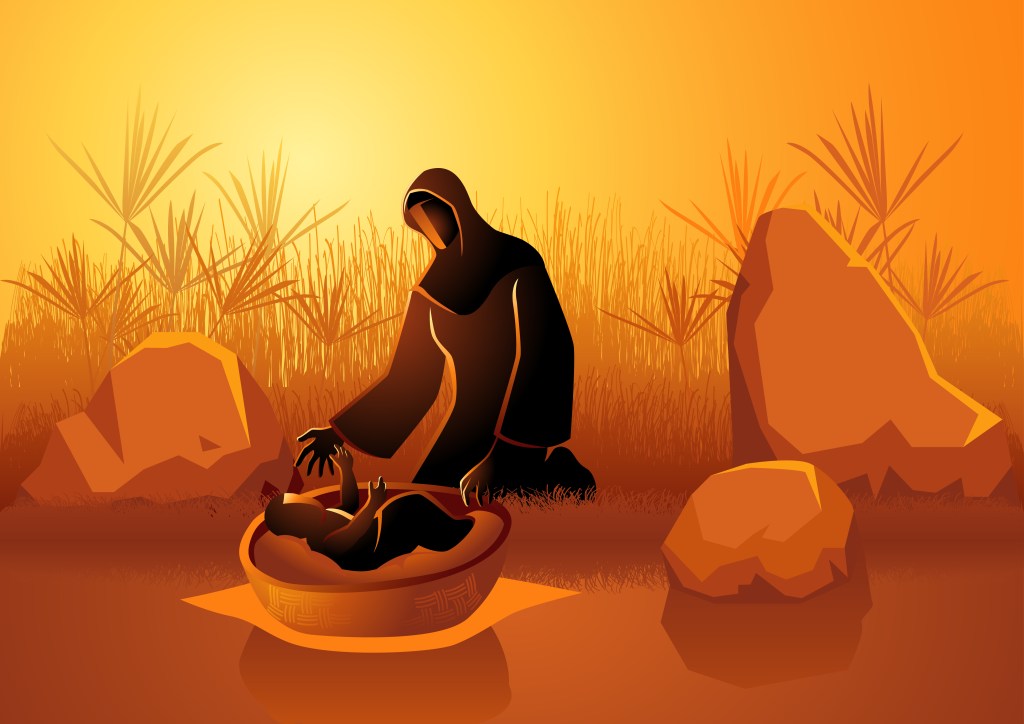
It was a great message, and I gained some perspective from it that, perhaps, God wanted me to have in writing this. With that introduction, let me explain the passages in Exodus that prompt my writing. Those texts include Exodus 1 (about the killing of babies) and Exodus 2 (about slavery).   

I will take these things one at a time and draw some conclusions consistent with the burden God has placed on my heart over the years. In another article, perhaps, I will explain how my perspectives have changed and, hopefully, shed some light on how the church can come together in the full council of God to advance His justice and righteousness.

Before I get into my immediate thoughts, though, I need to say that I speak with no condemnation in my heart
Just as Jesus said to the woman caught in adultery that he did not condemn her, I am reminded that God sent his son into the world not to condemn the world; God sent His son into the world so that the world might be saved through him. (John 3:17)

I do not say these things to condemn anyone because Jesus has redeemed us!


In the story of the woman caught in adultery, the Pharisees and Sadducees brought her to Jesus to challenge him because the Law required her to be stoned. They wanted to see what Jesus would do, but Jesus seemed to ignore them and began writing in the sand.

Some people believe that Jesus may have written the Ten Commandments out in the sand. When he looked up from from writing, Jesus “invited” them, saying, “He who is without sin may cast the first stone.” Then, he continued writing in the sand.
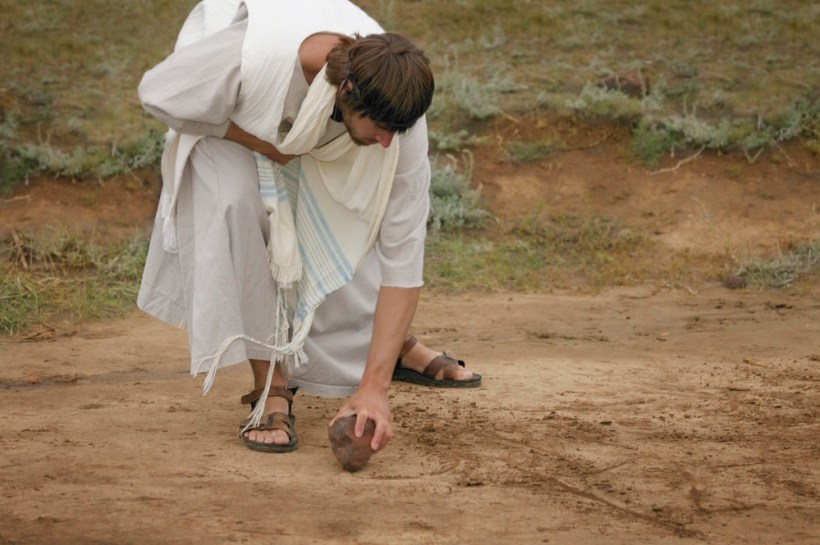
Some people believe he was writing down the sins those men had committed. They would say the men walked away silently because they realized that no one is without sin.


The wages of sin for every person is death.

Whatever he wrote, we know how the dialogue went next. “Jesus stood up and said to [the woman], ‘[W]here are they? Has no one condemned you?,” John 8:9) When she replied, “No one”, Jesus said, “Neither do I condemn you.” (John 8:10)

Jesus didn’t condemn the men either, because he told us he came not to condemn, but to save. I imagine that, Jesus would have received, forgiven and invited the men to follow him, if they had stayed and repented.

God desires to save us, to have relationship with us, to renew our minds and to conform us to His image. Our sin is the reason God became flesh and died for us. He came not to condemn, but to demonstrate His great love for us and to save us from the sin that enslaves us.

One last thing before I get into what I believe God has put on my heart to share: salvation and sanctification is a process. It starts where we are. When we are born again, God begins to work in us to will and to act according to His purposes and to conform us to His image, but we start that process in different places.

One point made in the sermon today, is that “a person doesn’t have to be pro-life to be saved”. People are saved by grace; it’s a gift that we haven’t earned. There will be no exam in heaven we must answer satisfactorily for salvation. It’s already been accomplished for us by Christ’s death and resurrection.

At the same time, if we are born again, God has begun a work within us. He has begun to renew our minds, and change our hearts, and we have begun to learn to think God’s thoughts after Him and become like Him.

With that said, I will address the two texts I read today in Exodus 1 and 2 that speak to me about the Church, collectively, in the United States. In writing this article, my hope is to provide some biblical basis on which we might begin to bridge the divide along racial and political lines and come together as the body of Christ. I hope to provide some perspective and understanding that will bring us together in Christ.

Continue reading “Thoughts on the Sanctity of Human Life, Injustice and Unity in the Church in the United States”
Daniel and Nebuchadnezzar: What Dreams Are Made Of?

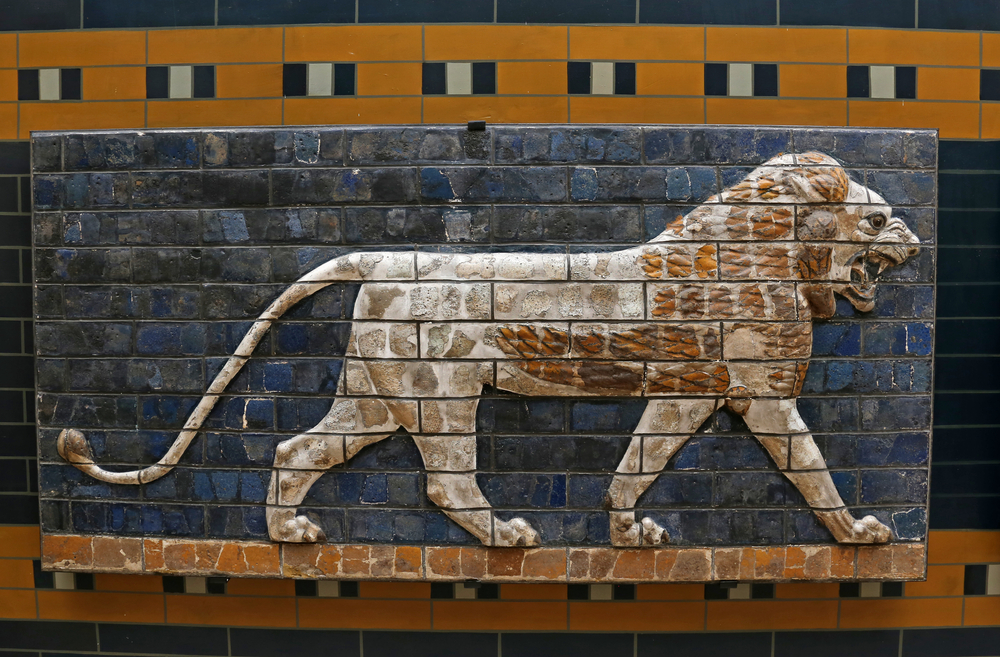
A lion from Ishtar Gate of Babylon built by King Nebuchadnezzar II in about 575 BC.. The piece is located in the Istanbul Archaeological Museum, in Istanbul, Turkey.

We all have them. I suspect that most dreams are just subconscious streams of thoughts and emotions played out in disconnected images in the twilight between full sleep and consciousness. They might be interesting to a psychologist, but we can hardly count on them for meaningful information or guidance.

Some people believe that all dreams have some meaning, and some people believe that dreams have external meaning and significance (not just internal, psychological meaning and significance). Though I question that, I don’t discount that God can speak to us through the medium of dreams.

For as much attention people give them, dreams are not a prominent feature of biblical focus. The dreams that come to my mind are the dreams of Pharaoh and the dreams of Nebuchadnezzar. One of those dreams stands out to me, not so much because of the dream, itself, or its interpretation, but the response to it.

We need a little backstory first, though. Nebuchadnezzar could be ruthless, as kings often were. When he had a dream that troubled him in the second year of his reign (see Daniel 2), he called in his magicians, enchanters, sorcerers and astrologers to tell him what his dream was. They were eager to interpret it, but the king had something else in mind.

The King said that he had determined before summoning them that they must tell him what the dream was and interpret it or he would them “cut into pieces” and their homes “turned into piles of rubble”! I’m sure they were a bit less eager, but they pressed him, “Tell your servants the dream, and we will interpret it.”

They didn’t understand him (or they didn’t want to understand him), so he clarified his demand again: “I am certain that you are trying to gain time, because you realize that this is what I have firmly decided: If you do not tell me the dream, there is only one penalty for you.” The King wanted them to tell him what his dream was. He figured if they could tell him what his dream was they could interpret it for him also.

They protested, “There is no one on earth who can do what the king asks!” Still, the King had them all executed. He would have executed Daniel also, but Daniel prayed to God and was shown the King’s dream during the night so that he was able to describe the dream and interpret it.

But this isn’t the dream I want to focus on. The interpretation of the dream in Daniel 2 was benign and foretold the distant future after the King’s life. King Nebuchadnezzar had another dream that is described in Daniel 4, and the interpretation of this dream was anything but benign.

To make a long dream short, the King dreamed of a mighty tree and a messenger from heaven who called out: “Cut down the tree and trim off its branches; strip off its leaves and scatter its fruit.” The messenger continued: “Let him be drenched with the dew of heaven, and let him live with the animals among the plants of the earth. Let his mind be changed from that of a man and let him be given the mind of an animal, till seven times pass by for him.”

Last, but not least, the messenger said that this is “the verdict, so that the living may know that the Most High is sovereign over all kingdoms on earth and gives them to anyone he wishes and sets over them the lowliest of people.”

Daniel was “terrified” when the king called on him to interpret this dream, and the reason becomes apparent quickly enough. The King didn’t hesitate to execute the men who couldn’t tell him what his dream was. What would he do when the interpretation isn’t to his liking?

Daniel explained it despite the terror he felt. He said the dream was a decree from God against the King. Daniel told him he would be driven away from his people to live with the wild animals until he renounced his sins, repented of his wickedness, did what is right and acknowledged God.

imagine that Daniel trembled a bit as he spoke those last words! Who tells the King to repent and change his ways?… and lives to tell of it!

But the King doesn’t have Daniel executed. He unreasonably put to death the men who couldn’t tell him what his dream was, but he didn’t punish Daniel for the extremely unfavorable interpretation of the second dream.

That puzzled me a bit previously, but I had a dream the other night, and I think I understand it now. Let me explain how.

Continue reading “Daniel and Nebuchadnezzar: What Dreams Are Made Of?”

An Invitation to Join Me or Visit Me on My Journey in 2021

The year 2020 has been difficult, but there is light ahead.

I have been using the YouVersion Bible app for a number of years now. I wake up in the morning, and the first thing I do is grab my phone and open it up. It has become a habit.

For the last two years, I have used year long reading plans by which I have read through the Bible from beginning to end. Last year I read it book by book. This year I read it in chronological order. (Did you know the books are not in chronological order?)

For 2021, I have chosen another (almost) yearlong reading plan that focuses on how Jesus is revealed in Scripture from beginning to end.

Jesus said that he came to fulfill the Law and the Prophets (Matthew 5:17). Jesus didn’t just fulfill the Old Testament Scripture; Moses (the Law) and the Prophets is all about him! (Luke 24:27) The story of Scripture finds its denouement in Jesus! Thus, I have decided to use a yearlong plan that focuses on Jesus throughout the Bible, from start to finish.

I am reminded this morning of Psalm 1, which says that a person “whose delight is in the law of the Lord and who meditates on his law day and night” is “like a tree planted by streams of water, which yields its fruit in season and whose leaf does not wither….” (Ps. 1:2-3)

Jesus, having fulfilled the Law God gave Moses (a law we cannot hope to fulfill in ourselves), has demonstrated for us a love which is the fulfillment of the law. (Rom. 13:10) We are, then, to love our neighbors as ourselves just as Jesus loved us demonstrably in giving up his own life for us. “Love one another…. [a]s I have loved you” is the commandment of new covenant (John 13:34), which is the outgrowth and the ultimate fulfillment of the old covenant.

The year, 2020, will go down as one year that we will never, ever forget. History books will be written about it no doubt. It was a year of tribulation, unrest, angst, fear, anger, isolation and polarization, but not all is dark.

Continue reading “An Invitation to Join Me or Visit Me on My Journey in 2021”

Ten Reflections on 2020 and Three Things to do in 2021

If God isn’t our first love, we are putting other things first.

The writer of Ecclesiastes asserted boldly many thousands of years ago that “there is nothing new under the sun”. The ancient date of that statement has always been a poignant reminder to me that we aren’t as wise as we think we are for all our modern sensibilities. We struggle with the same basic issues that are common to humanity, despite our scientific and technological advances.

God stands enthroned over all of His creation. From His vantage point outside of space/time, He watches as His purposes unfold, including the groaning of creation as some of His crowning creation “seek Him, feel their way toward Him and find him”. (Acts 17:27)

We fit into His purposes by doing just that – to know God and to grow in the knowledge of God is the ultimate fulfillment of God’s purpose for us.

We easily get mired in the mundane concerns of daily life. Our future planning is often limited to the benefits we can obtain in our years in these jars of clay we call our bodies. We often fail to give full room for the eternity God set in our hearts. (Ecc. 3:11) We fail to allow the Holy spirit to have full sway in our hearts and our lives.

We are easily distracted and easily preoccupied by lesser things than our relationship with God the Father and His purposes.

I am forever grateful for the grace He has shown to us in the sacrifice He made for us that He has made a way for us to come to Him despite our frailties and sinful tendencies, and to continue coming to Him who receives us in Christ. I am more indebted to His mercy and grace now than ever before. His lovingkindness is truly new every morning.

As we watch the time closing out on 2020, looking backward, and straining forward, I am borrowing from another writer for my own ten reflections on 2020:

Continue reading “Ten Reflections on 2020 and Three Things to do in 2021”

A Christian Upbringing Doesn’t Necessarily Lead to Genuine Faith: Faith v. Culture

We don’t inherit a relationship with God from our parents.

Julie grew up in a Christian family and “gave her life to Christ” around 10 years old. She didn’t really know what it meant. It was just something she was expected to do.

This is the story of many people in the United States where Christianity is culturally favored, especially in some areas of the country. Christian upbringing, though, doesn’t make one a genuine Christian believer.

I wrote a blog article titled, God Has No Grandchildren, on this point. Christian faith is about relationship with God. We don’t inherit a relationship with God from our parents.

Julie’s story is an example of this. She wandered far from the roots of her Christian upbringing because she didn’t have relationship with God.

Christian faith is only real if it is genuine and personal. No one can make that connection with you but God, Himself. When He does, it changes everything.

Julie’s story is also an example of coming to genuine Christian faith, of being born again and becoming a child of God.

Everyone’s journey is a bit different. Some take many twists and turns, but God is always there, knocking on the door to our hearts, waiting for us to open up and let Him in.

When we do that – knowingly, meaningfully – He gladly meets us where we are. It isn’t anything we do, other than to open up and yield to Him as our Lord and Savior.

We don’t enter into relationship with God on our own terms. The terms are all His, but they are freely given to all who would receive Him.

“[T]o all who … receive him, who [believe] in his name, he [gives] the right to become children of God, … born, not of blood nor of the will of the flesh nor of the will of man, but of God.”

John 1:12-13

Following is Julie’s story in her own words:

If Julie’s story interests you, and you want to hear other stories of people raised in Christian homes, by Christian families and going to church, who come to realize that they are missing something, you can read other stories that get posted from time to time of people raised in Christian families who discover genuine faith in God.