What Is the Place of Christians in the World?

“By faith [Abraham] made his home in the promised land like a stranger in a foreign country; he lived in tents, as did Isaac and Jacob, who were heirs with him of the same promise.”

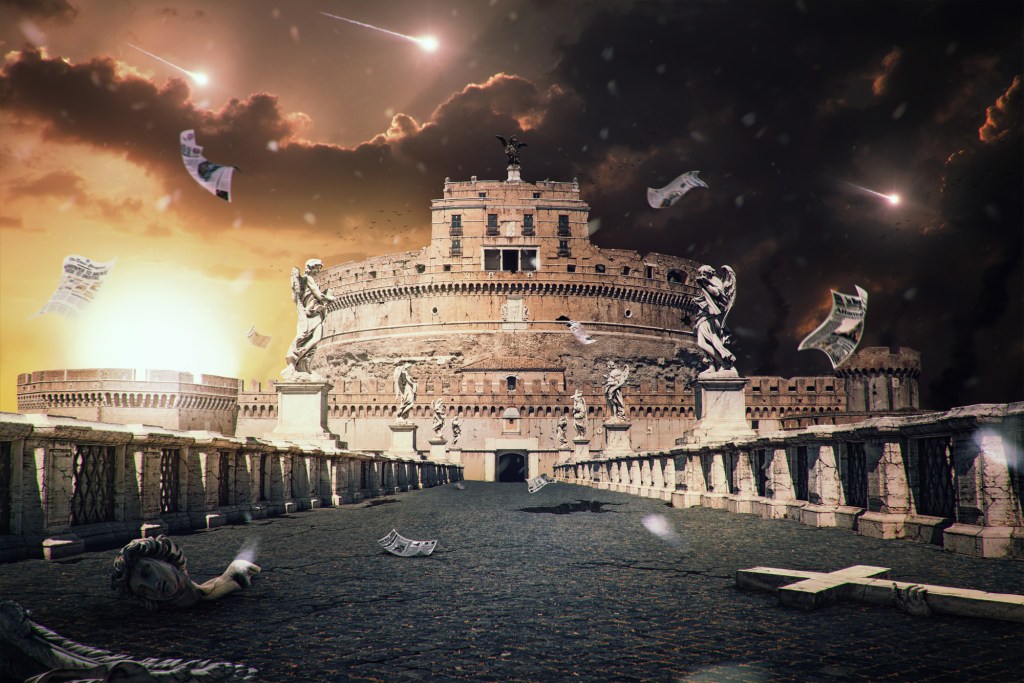
Apocaliptical scene to the Rome cityscape matte painting

I go back from time to time to the early “church fathers” for perspective. Most recently, I have focused on what we call The Epistle of Mathetes to Diognetus (the “Letter”). Even when translated from the Greek language in which it was written, the words and thoughts ring foreign to our American ears.

As I read this early Letter, I am impressed that Christians in the 21st Century have much to learn from 2nd Century Christians. They lived into the message of Jesus in ways that we seem to have long since forgotten

We don’t know who the author was. The Greek word, “mathetes“, merely means “student”. The person or ruling family to which the letter was written is also uncertain. We only know it was written in the early to mid 2nd Century.

The Church had grown slowly but steadily into the 2nd Century. Persecution ebbed and flowed around those early Christians, but they were more generally ignored and almost universally despised. In many ways, Christians were a complete oddity. They didn’t fit into the pagan (Greco/Roman) culture or the Jewish culture.

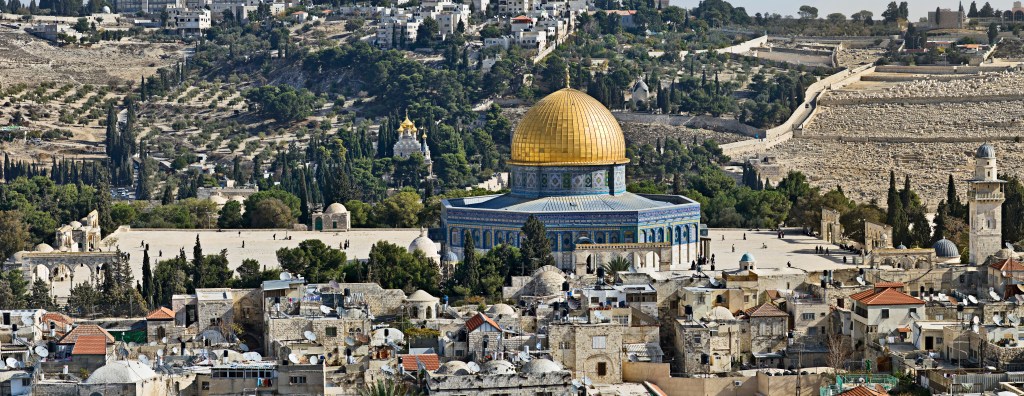
Christianity was centered in Jerusalem until the Roman war against the Jews and the destruction of the Temple in 70 AD. Christians scattered at that point, though Jerusalem remained one of many hubs of Christian life. The 2nd Century was a time of decentralization and spreading out throughout the Roman Empire and beyond – into areas of Africa and Asia, some of which were controlled by the Roman Empire, and some not.

According to the Letter, Christians were not physically, culturally, or linguistically distinguishable from the people in the many places in which they lived. They were distinguishable in other ways:

“But, inhabiting Greek as well as barbarian cities, according as the lot of each of them has determined, and following the customs of the natives in respect to clothing, food, and the rest of their ordinary conduct, they display to us their wonderful and confessedly striking method of life. They dwell in their own countries, but simply as sojourners. As citizens, they share in all things with others, and yet endure all things as if foreigners. Every foreign land is to them as their native country, and every land of their birth as a land of strangers.”

The Epistle of Mathetes to Diognetus
chapter 5

The most distinguishing feature of those Christians, according to the author of the Letter, was their “striking method of life”: they lived as strangers in their own countries. Though they were citizens in those countries, they “endure all things as if foreigners”.

We might be tempted to think that the “uprootedness” of early Christians was merely a product of rejection and persecution by non-Christians, but the Apostle Peter suggests otherwise: Christians are a “royal priesthood” and a “holy nation” who live as “foreigners and exiles” in this world. (1 Peter 2:9,11) This echoes the writer of Hebrews, who described all great people of faith as “foreigners and strangers on earth”. (Hebrews 11:13)

These passages in the New Testament epistles highlight a fundamental trait of Christians in the world at that time. But not just at that time; Jesus spoke to all his followers (including us) when he said, “[Y]ou are not of the world” (John 15:19), and, “My kingdom is not of this world.” (John 18:36)

How strange are these words and concepts to modern Americans! From the earliest days of our youth, we are taught about our freedoms and rights as American citizens. In contrast, 1st and 2nd Century Christians enjoyed some rights as citizens of the various countries in which they lived (maybe not as robust as the rights we enjoy), but they lived as if they had none. And, this was their “distinguishing “striking” feature as a people! It is what made them stand out.

They marry, as do all [others]; they beget children; but they do not destroy their offspring. They have a common table, but not a common bed. They are in the flesh, but they do not live after the flesh. 2 Corinthians 10:3 They pass their days on earth, but they are citizens of heaven.

the Epistle of Mathetes to Diognetus
chapter 5

Second Century Christians lived as if they were really not of this world. And, this “feature “striking method” of living was noticeable. They adapted and fit into their surroundings and culture wherever they lived, except for this one thing: they lived like they were not citizens of the countries in which they lived – even if they were actually citizens.

They were outsiders wherever they lived because they lived like citizens of heaven. They fit in wherever they went, but they stood out by their allegiance to loving God and loving others. How strange and foreign that may seem to us!

Continue reading “What Is the Place of Christians in the World?”
The Significance of Eve’s Seed in the Plan of God

The description of the virgin birth of Jesus harkens back to Genesis 3:15.


I am constantly amazed at the “new” things I see in reading the Bible year after year. I read the Bible for the first time in a World Religion class in college in 1978, and I have been reading it ever since. In the last 5 years (6, or 7, I don’t know), I have read the through the Bible from beginning to end – from Genesis to Revelation – in chronological order and in other ways.

At the beginning of this New Year, I am going to try writing some shorter articles, as I have noticed my articles are getting progressively more wordy and lengthy. The Bible is a rich tapestry, but some threads are longer than others, so I am going to try to pull on some shorter threads from time to time.

In this article, I am focusing on Genesis 3:15 inspired by a brief comment in a sermon I heard during the Christmas season. People often credit the following verse in Genesis as a foreshadowing of the coming of Jesus. God speaking to Eve after the fall said:

“And I will put enmity between you and the woman, and between your offspring and hers; he will crush your head, and you will strike his heel.”

Genesis 3:15 niv

I confess that this foreshadowing never seemed crystal clear to me. Jesus is the offspring of Eve, but so are billions of people. Thus, that connection didn’t seem obvious to me. I saw nothing in that verse that seemed to be specifically about Jesus.

I always figured that theologians connect the second phrase of Genesis 3:15 to Jesus: Eve’s “offspring” (Jesus) will “crush” the serpent’s (Satan’s) head, and the serpent will “strike” his heel. Crushing the head and striking the heel is imagery that doesn’t seem to tie in specifically to what happened with Jesus, except in a very general way. It isn’t completely inappropriate (Jesus certainly had the victory!), but the imagery doesn’t closely fit the details of the crucifixion (like Isaiah 53 does, for instance).

Crushing a head is a fatal blow. Striking a heel is not fatal. Satan’s blow wasn’t fatal, though it seemed to be the dramatic end to Jesus. The crucifixion turns out to be more like the striking of a heal, because Jesus rose from the dead! And that “blow” was crushing to Satan and his purposes.

The end!

Mic drop….

While this is generally accurate, the imagery doesn’t remind us of Jesus in the same way that other Old Testament passages clearly foreshadow him, like Isaiah 53 (by his stripes we are healed).

Hindsight helps us see Jesus in these words spoken by Isaiah hundreds of years earlier. Jews before the time of Jesus knew that many passages in the Psalms, the Prophets, and other places spoke of a Messiah to come. Scholars also go back to Genesis 3:15 to see the foreshadowing of the Messiah (an offspring of Eve crushing the serpent that fooled Adam and Eve into sin).

But, there is more in Genesis 3:15 than the crushing of the serpent’s head that may point to Jesus, and it points to Jesus uniquely and poignantly. It also reveals another thread that runs throughout Scripture.

To see the thread I want to pull on today, we need to focus on the first part of the verse:

And I will put enmity between you and the woman, and between your offspring and hers….

Genesis 3:15a
Continue reading “The Significance of Eve’s Seed in the Plan of God”

The Curious, Mysterious Nature of the Kingdom of God, Its Effects in the World, and Our Place In It

The coming of the kingdom of God is not something that can be observed


“Once, on being asked by the Pharisees when the kingdom of God would come, Jesus replied, ‘The coming of the kingdom of God is not something that can be observed, nor will people say, ‘Here it is,’ or ‘There it is,’ because the kingdom of God is in your midst.” 

Luke‬ ‭17:20‭-‬21‬ ‭NIV‬

I have been continually impressed by the countercultural and otherworldly nature of the kingdom of God. In response to the question by the Pharisees, Jesus plainly said that the coming of the kingdom of God is nothing we can observe, but it is in our midst.

As I think about his response, I am reminded that the Holy Spirit is like that as well. The Spirit is like the wind: we can’t see it, but we can see the effects of the wind.

The wind, of course, is a bit less of a mystery than the Holy Spirit or the kingdom of God. We can measure the wind, and we can (somewhat) predict the direction and velocity of the wind. (However, imprecise our predictions may be!)

The wind is a natural phenomenon driven by natural forces (no matter how difficult it may be to predict those forces). Natural forces are different than the forces of personal agency. The Holy Spirit (and the kingdom of God) are forces driven by agency – God’s agency. The Holy Spirit is a Person, and the kingdom of God is, presumably, advanced by God in the “form” of the Holy Spirit (and by the agency of believers as well).

We don’t confuse the wind with other effects in nature, though we might be apt to confuse the effects of the kingdom of God with other effects, such as political, cultural, and other worldview effects.

I suspect that volumes could be written on this!

What are the effects of the kingdom of God? We can’t see the kingdom coming, but I assume we can the see effects of the kingdom of God coming just like we can see the effects of the wind (or the Holy Spirit). It seems that we have some confusion about these things, just as the Pharisees were confused in the 1st Century. However, we do have some guidance from Jesus to help us.

Continue reading “The Curious, Mysterious Nature of the Kingdom of God, Its Effects in the World, and Our Place In It”

A Strategy for Reversing the Decline of Faith in the United States?

Over two-thirds of today’s immigrants to the United States are Christians

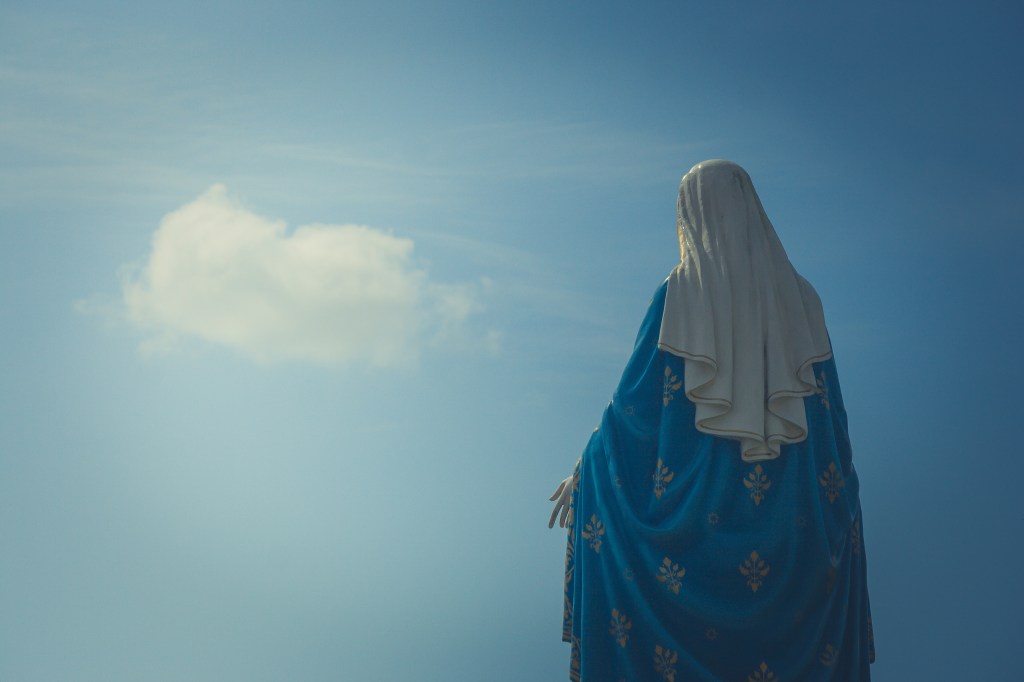
Statue at the Recoleta cemetery in Buenos Aires, Argentina

I read an article posted by the Free Press, A Church Grows in Brooklyn. The article draws a line between immigrants working jobs Americans don’t want and immigrants upholding faith traditions that Americans are abandoning. the author says:

“Over two-thirds of today’s immigrants to the United States are Christians, and prominent religious scholars forecast that immigrants will single-handedly reverse Christianity’s decline in America.”

Yet, a large segment of “the American church” monolith seems to be completely disconnected from this reality. Many American Christians are proudly “anti-immigration”. They will say they are in favor of “legal” immigration, but they would turn away hundreds of thousands of refugees and “illegals” – as if grace played no part in the salvation of immigrants.

If the American Church is positioned against generous immigration, we have not only forgotten our American heritage (“give me your huddled masses”); we have forgotten our spiritual roots:

“And you are to love those who are foreigners, for you yourselves were foreigners in Egypt.” (Deut. 10:19)

“‘Cursed is anyone who withholds justice from the foreigner, the fatherless or the widow.’” (Deut. 27:19)

“The alien who resides with you shall be to you as the citizen among you; you shall love the alien as yourself, for you were aliens in the land of Egypt: I am the Lord your God.” (Lev. 19:34)

“You shall not oppress a stranger, since you yourselves know the feelings of a stranger, for you also were strangers in the land of Egypt.” Ex. 23:9)

“For if you truly amend your ways and your doings, if you truly act justly one with another, if you do not oppress the alien, the orphan, and the widow, or shed innocent blood in this place, and if you do not go after other gods to your own hurt, then I will dwell with you in this place, in the land that I gave of old to your ancestors forever and ever.” (Jer. 7:5-7)

“You shall allot it as an inheritance for yourselves and for the aliens who reside among you and have begotten children among you. They shall be to you as citizens of Israel; with you they shall be allotted an inheritance among the tribes of Israel.” (Ezek. 47:22)

“Thus says the Lord of hosts: Render true judgments, show kindness and mercy to one another; do not oppress the widow, the orphan, the alien, or the poor….” (Zech. 7:9-10)

“’Then I will draw near to you for judgment; and I will be a swift witness against … those who turn aside the alien and do not fear Me,’ says the Lord of hosts.” (Mal. 3:5)

These are just a few of the verses that weave like a rich gold thread through the tapestry of Scripture. This thread began with the first step Adam and Eve took out of the Garden of Eden – banished from their home with God and doomed to walk the earth as aliens and strangers. The entire sweep of the Bible is about God’s plan to bring them home – to welcome the stranger back.

When we are home in this world, we are absent from God. when we become born again, we are no longer “of this world.” (John 15:19; 17:16) Our citizenship is in heaven. (Phil. 3:20) We have become strangers and exiles on earth like the great men and women of faith. (Heb. 11:13-16) If, indeed, we are of the faith.

Hebrews 11 urges us to model ourselves after the great people of faith. Those people did not call this earth their home because they were waiting for a city, the architect and maker of which is God. Peter says that we are (or should be) aliens and strangers in this world. (1 Peter 2:11) If we truly believe that, why do we resist sharing our temporary country with real aliens and strangers streaming in from the mission filed God has commissioned us to go into?

Continue reading “A Strategy for Reversing the Decline of Faith in the United States?”

The Reports of the Death of the Big Bang Are Greatly Exaggerated

Why the James Webb Telescope discoveries do not undermine the Big Bang theory

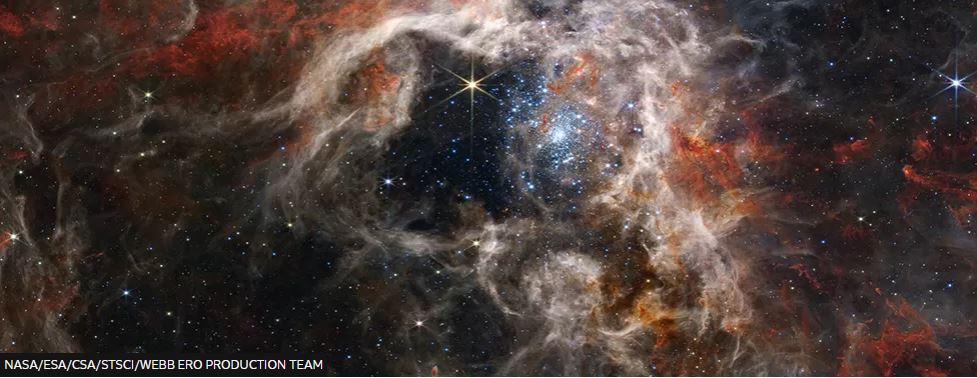
I previously wrote on the subject of the James Webb Telescope and the headlines claiming that recent discoveries call the Big Bang into question. (Is the Big Bang finally Over?) The Big Bang theory is a theory based upon the fact that we have an expanding universe, and the fact that we have an expanding universe suggests that it is expanding from a point in time. The Big Bang theory that the universe is expanding from a point of beginning some finite time ago is alive and well, but the standard model(s) developed to explain how the expansion we see is being called into question by the James Webb discoveries.

I didn’t go into technical detail about why the evidence for an expanding universe remains solid, mostly because I am not physicist, or even a “science guy”. I am interested in science and try to keep up with certain areas of science because they interest me, but I am not educated or trained in the sciences.

Today, however I heard an explanation for why the James Webb discoveries do not undermine the basic Big Bang principal, that the universe is expanding, that was simple and clear and worth repeating (if for no other reason than for me to remember it).

In conversation with Joe Rogan on his podcast, Stephen Meyer explains why the James Webb Telescope discoveries do not undermine the basic premise of the Big Bang theory. To understand this, we need to understand how the James Webb Telescope is constructed to observe matters in space further away from us than we have observed before.

We also need to understand the evidence for an expanding universe because the James Webb Telescope incorporates design elements that take advantage of the phenomenon that gives us proof of expansion in the universe. That evidence was discovered in the 1920s, and it provided the first evidence that the universe is expanding, and not static as was thought up to that point.

I will quickly explain that first evidence for an expanding universe. Then I will explain how the James Webb Telescope’s design is based on this evidence (thanks to Stephen Meyer in his conversation with Joe Rogan), and then I will explain how the success of the James Webb Telescope actually proves the basic Big Bang principal – that the universe is expanding.

Continue reading “The Reports of the Death of the Big Bang Are Greatly Exaggerated”