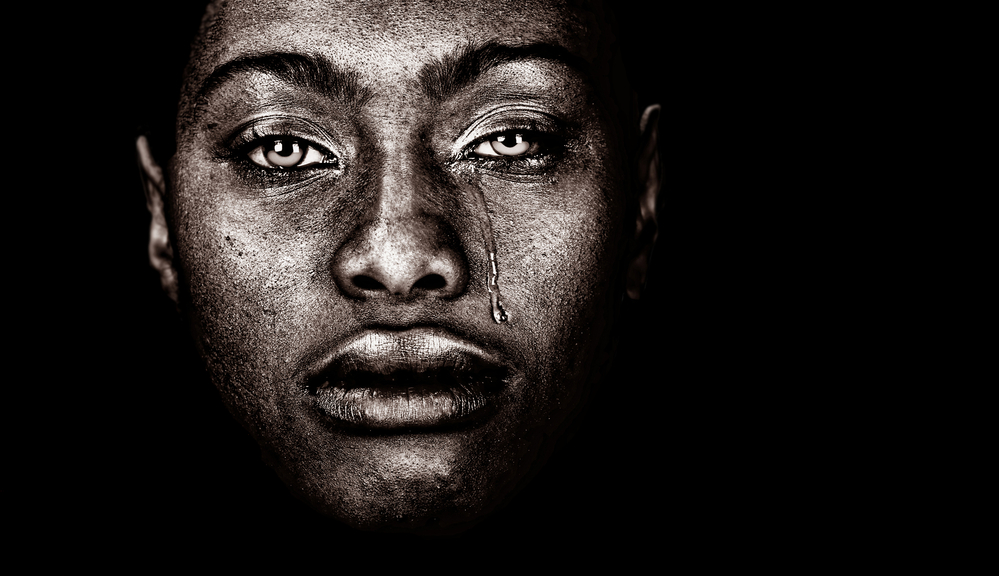
On Working to Establish a Biblical Orientation on Issues of Race

Christianity transcends all the natural barriers to human relationships.

Although the dust has settled (somewhat) on racial tensions since the maelstrom that was kicked up in the wake of the George Floyd killing in Minnesota, no one should think that the issue has been settled or will go away without some resolution. The country, including the church community, is divided on the facts, and issues, and measures that should be employed to resolve the racial tension. Even people of good will are uncertain on how to move forward.

A predominant worldview has emerged in academia that is filtering down into local communities that frames the issue and potential resolution in terms of oppression. This worldview divides the world into the oppressed and their oppressors. The people who hold to that narrative are aggressively pushing for change.

They push the people they are define as the oppressors in the racial tension. The people defined as the oppressors are white and predominantly “Christian” in name (at least). As with the laws of nature, so with the laws of natural human tendencies: when someone pushes, people being pushed naturally push back.

So it is today that the predominantly white, Evangelical Church in the United States is feeling the pressure of the desire and demand for change to address the racial disparities and tensions in our world, and we are tempted to reflexively push back against that pressure.

But how should we respond?

I have written on the differences between Critical Race Theory and biblical justice. We should recognize that the worldview based on the CRT framework is not biblical, though many of our brethren of color and more progressive white Christians have embraced it.

I submit, though, that CRT has come to prominence in the African American churches and among progressive white churches because the Church, generally, has left a vacuum, and “nature abhors a vacuum”. We have failed to recognize and address in a biblical way the deep and lasting pain of racism that continues to exist in a society that only recognized equal rights for African Americans in my lifetime.

The failure of the Church to address racial issues left room for a completely secular and unbiblical approach to sweep in. So, other than acknowledge our failure, what do we do now?

Continue reading “On Working to Establish a Biblical Orientation on Issues of Race”

Can We Find Peace in These Politically and Socially Tumultuous Times?

What if you could tap into peace, joy and gratitude regardless of your circumstances?

What year in our lifetimes has been more filled with angst and anxiety than 2020? The year, 1968, might be a close rival, politically and socially. Add to the political and social tensions a global pandemic, widespread unemployment and growing economic uncertainty caused by our response to it, and 2020 is easily the most difficult year in my lifetime.

The political anxiety and uncertainty has overflowed into tensions within families, among friends, in communities and even within churches. Collective and personal anxiety is even higher, now, with the Presidential election coming up. Hope is mixed with fear. What if the right person doesn’t get elected?

Everything seems to ride on this election, but there is that nagging doubt that even an election – even if it goes “right” (whatever you happen to believe that means) – will not calm the tensions and bring peace where current circumstances are boiling on the edge of overflowing.

We know in the pit of our stomachs that the “others” will not go down without a fight. A presidential election may shift the leverage (or not), but the fight is going to continue. It isn’t going away. COVID isn’t going away. The economy teeters on brink of failure.

The mantra during the 1960’s – the closest thing to our present circumstances – was peace and love. We don’t even dare hope for peace and love anymore. The hope held out in the ’60’s has been been replaced with anger, condemnation and unkindness. The peace has been replaced with rioting, gun violence and looting.

Not that the 1960’s didn’t see its share of violence and unrest. It’s just that we don’t pretend anymore that peace and love are achievable (or even laudable) goals. We will settle for an authoritarian dictatorship or equality forced by the arm of the law and reparations wrested from the clinging hands of people who inherited privilege.

It’s easy to feel that our generation faces difficulties that are unlike the difficulties faced by others in the past. We may feel that we are alone in these times, facing the anxiety of an uncertain future, but it isn’t so.

The details of our circumstances are unique, but nothing is new under the sun: other generations have faced similar hardships and much worse. Every previous generation shared the experience of angst and anxiety of an uncertain future, just as we do.

Looking back at history in static words written on sterile pages, we may not appreciate the common experience. In the fog of our present struggle, we can’t see as clearly as we do when we look back. Our emotions are in full flight as the noise and chaos happens around us. We don’t have the luxury of viewing the present from a comfortable chair in a quiet library.

On what basis, then, can we hold on to hope? What assurance do we have that peace will prevail?

The predominant view of politics, sociology and culture in academia today is idea of the oppressed ever rising up against their oppressors in an endless cycle of unrest, violence and change. Peace no longer has value. Hope is limited to the immediate future when the currently oppressed can change places – for a time – before the cycle repeats itself.

In the middle of our present angst and unease, I am reminded of a man who wrote about peace that defies that is not dependent on circumstances and hope that lasts beyond the foreseeable future. He wrote of peace that gave him confidence and sustained him in circumstances worse than you or I have ever experienced.

If we compare his circumstances to ours, I think most people would agree they were worse, by far, than anything we have experienced. Yet, he was fed by hope, and he experienced real peace in the midst of those circumstances – despite the circumstances. His story is worth considering.

Continue reading “Can We Find Peace in These Politically and Socially Tumultuous Times?”

God Will Not Be Mocked; His Purpose Will Be Accomplished Among Us

I have no doubt God is accomplishing His purpose, but what role we play may surprise us

21 February 2016: Republican Presidential candidate Donald Trump speaks to several thousand supporters at a rally in Atlanta, Georgia.

The Washington Examiner reported that Republican senator, Ben Sasse, said in a “campaign telephone town hall call that went to about 17,000 Nebraskans”, among other things, that President Donald Trump trash-talks evangelicals behind their backs”. After briefly citing some points of agreement with Trump, Sasse “began to unload” on the President.

Sasse identified a litany of issues he has with Trump – careening “from curb to curb” on COVID (first ignoring it, then going “into full economic shutdown mode”), selling out allies, “the way he treats women”, spending “like a drunken sailor” and flirting with white supremacists – but the issue I want to focus on is the charge that Trump “mocks evangelicals behind closed doors”.

Sasse commented, “I think the overwhelming reason that President Trump won in 2016 was simply because Hillary Clinton was literally the most unpopular candidate in the history of polling.” It’s true, and most evangelicals I know said they were voting “only” for Trump as “the lesser of two evils”. They couldn’t stomach another Clinton presidency, perpetuating that inbred political machine in Washington that is openly hostile to concerns of evangelicals.

So, where along the timeline did Donald Trump become our champion? When did he stop being an evil? (Albeit an “lesser” one)

A little googling reveals (for those who’s memory is short) that “long before” Donald Trump ran for President of the United States, he was a Democrat. Donald was registered as a Democrat from 2001-2009. Have we forgotten the criticism leveled against The Donald by Jeb Bush? “He was a Democrat longer than he was a Republican. He’s given more money to Democrats [including Hillary Clinton] than he has to Republicans.”

To be completely accurate, Donald Trump changed his party affiliation at least five times since 1987, when he registered as a Republican. He changed to Independent in 1999, to Democrat in 2001, to Republican in 2009, to Independent in 2011, to Republican again in 2012. (See Political positions of Donald Trump at Wikipedia) But should that give Republicans comfort?

On the issue that has been historically most influential on the Evangelical vote, abortion, Donald Trump has been described as shifting “from pro-choice to pro-life only as he planned a presidential run”. Robb Ryerse, a pastor at Vintage Fellowship in Fayetteville, AR, said earlier this year, “I personally believe that the President is cynically using pro-life voters for his own electoral purposes and doesn’t actually care about protecting innocent life at all.”

The LA Times was less skeptical in its description of Trump’s turnabout recently, calling him “a late convert” to the pro-life cause. Noting Trump’s position in 1999 (“pro-choice in every respect”), Trump told the March For Life crowd in Washington this year that “every life is worth protecting”.

The Times added: “Trump is counting on the support of his base of conservative activists to help bring him across the finish line.” While I don’t share the Times’ anti-pro-life stance, that’s what concerns me – that Trump is saying simply what a large block of his constituents want to hear. (To be fair, my skepticism runs deep with all politicians, especially when they are in campaign mode.)

After all, politicians seem to think that moderates are not tolerated by voters anymore. Both political parties have “taken harder-line positions for and against abortion rights”. Trump had to choose sides. As former White House Press Secretary, Ari Fleischer, said recently, “There used to be a middle”, but now candidates must choose sides in an increasingly polarizing political environment.

Digging deeper, Trump’s political views have shifted from moderate populist (2003) to liberal-leaning populist to moderate populist (2003-2011) to moderate populist conservative (2011-12), to Libertarian leaning conservative (2012-15) to “hard-core conservative” just before the 2016 election. Interestingly, he back-stepped to Libertarian-leaning conservative, then moderate conservative after the election, but he may (again) be described as “hard-core conservative” … now that he campaigns for re-election. (See Political positions of Donald Trump ibid.)

I can’t help noticing that his hard-core conservativism seems to be timed with election campaigning, and that’s one of the things that troubles me about him. So, I began wondering today: what are his long-standing convictions? From my reading, I would say populism, authoritarianism, and nationalism, so let’s take a closer look at those threads of Donald Trump’s political life.

Continue reading “God Will Not Be Mocked; His Purpose Will Be Accomplished Among Us”

Listening in on a Discussion of the Coronavirus and the Church

What some might see as a threat to the vitality of Christian community, others see as opportunity to advance the kingdom of God.


I am reading through the Bible chronologically this year and paying attention to themes that sweep from beginning to end. One great theme is the promise to Abraham and his descendants, that God would bless him and make of him descendants that would be too numerous to count, and by them God would bless all the nations of the world.

I just got done contemplating why, when God entered the world as a human being and came to “His own” His own people didn’t recognize or receive Him. They had developed their own expectations that were very focused, understandably, on the nation of Israel and the promised land, and Jesus didn’t meet the expectations they had. (See What We Can Learn from Expectations about What God Is Doing.)

Expectations are good. It’s good to be expectant about what God is doing, but the danger is that we anchor those expectations in our own perspectives, which are unavoidably limited. Our expectations should be shaped by Scripture and relationship to God alone, but (being human) we tend to superimpose our own personal, community, societal, cultural and philosophical models on top of that foundation. Sometimes we even import biblical principles on top of a foundation that is not biblical.

American Christianity is no different than any other cultural expression of Christianity in that regard. Perhaps, American Christianity is even super-sized in that tendency, however, because of our historical sense of manifest destiny and extreme confidence in the rightness of the great American experiment in Democracy, capitalism and constitutional framework that has allowed the United States to thrive and become the dominant country in the world.

Because of the human tendency to filter everything through our unique perspectives and miss what other people with different perspectives can see, I spend time listening to and reading Christians and people with other perspectives from other parts of the world. For that reason, I listen to many of the episodes of the Unbelievable? podcast with Justin Brierly, a British Christian, who interviews people from various parts of the world from various viewpoints, including Christian and non-Christian worldviews.

The coronavirus pandemic has created a confluence of varying viewpoints in the Church global, the American Church, and communities in and out of the Church and societies all around the world. That global pandemic has, perhaps, heightened the degree of angst that comes to bear on other issues in the world and locally, such as the current racial tensions in the US and particularly acute response that we have experienced as events have unfolded that have opened and exasperated old racial wounds that have not yet healed.

How we respond to these things as Christians is critical. It affects the effectiveness of our mission to carry out the Great Commission – the marching orders Jesus gave to His followers to spread the Gospel throughout the world. The pandemic means that we can no longer carry on “business as usual”. Indeed, God often used catastrophic and extreme measures to accomplish His purposes throughout Scripture and (certainly I believe) continues to do so today. There is opportunity in these times to adjust with what is happening, listen for what God is saying to the Church and advance His kingdom.

I think of these things as I listen to the recent interview by Justin Brierley of three Christians talk about the coronavirus: Mark Sayers from Australia, AJ Roberts from Los Angeles, Ruth Jackson from Great Britain. Continue reading “Listening in on a Discussion of the Coronavirus and the Church”

Who Were the Sons of Issachar? And What Might They Mean for Us Today?


A friend of mine referred to the “sons of Issachar… who understood the times” recently when speaking of the evangelical support for Donald Trump.  The reference comes from 1 Chronicles 12:32 where the “sons of Issachar” (descendants of the 9th son of Jacob) were described as men “who understood the times and knew what Israel should do”.

As I drifted near consciousness in my sleep last night, the phrase came back to me and ran through my head. I roused myself from a semi-conscious state and gave myself a reminder to look up the reference.

I followed up the next day. What does it mean? What does it mean for me? What does it mean in these times?

These were men who apparently understood the changing times in some unique way in a particular point in the history of Israel. The historical context was during the reign of King Saul when he became jealous of David and sought to kill him. David fled into the wilderness, taking with him other men who were loyal to him. As the various tribes learned of David’s plight and flight, they began to join David, including the sons of Issachar.  

Whether they were in tune with God’s purposes or simply saw that Saul was loosing stature in their society, while David was gaining in influence, we don’t know. My friend assumed the former meaning.

God was in the process of rejecting Saul and announced (at least to David) that He was making David king. Saul pursued David to kill him. Instead of confronting Saul, the man God chose as King of Israel, David went into hiding. David could have rallied the men who joined him to form a coup and dethrone Saul, but he would not do that.

The initial surge of supporters who joined David included warriors from the tribe of Benjamin, Saul’s own relatives. (1 Ch. 12:2) Members of the tribe of Manasseh joined David even though their desertion of Saul could cost them their heads. (1 Ch. 12:19) Day after day, men came to David’s aid at a place called Ziklag. (1 Ch. 12:20-22)

If the sons of Issachar knew the times, one might assume that they were among the first to join David, but that assumption would be wrong. They were not the first. They weren’t even in the first wave. The 200 sons of Issachar joined David at Hebron, after many others already joined David.

God had rejected Saul as king, and it was only a matter of time for Saul’s demise. God was making a change, and David was the one God chose to replace Saul. We know today that David was also the man through whom God planned, eventually, to raise up the Messiah – the root of Jesse’s seed – Jesus. (Jesse was the father of David, and Jesus is from the line of David and Jesse.)

Saul’s reign had run its course. Saul was out of touch with God. His head had gotten too big. Pride had taken over, and he no longer bowed to God in his heart. He was losing his grip on reality and the kingdom God had given him.

We know the rest of the story, but the men who joined David surely didn’t. Maybe they just believed it was time for a change. How much they knew of or perceived of God’s role in this story is just conjecture. I think we might take for granted that they did, but we have the benefit of hindsight memorialized in Scripture. They lived it in real time. 

As I read the story when I woke up in the morning, the number of the sons of Issachar who joined David struck me: 200 “chiefs” from the tribe of Issachar and all their kinsmen at their command. And, then I noticed something else.

Men from all twelve tribes of Israel joined David at Hebron, but only 200 “chiefs” from the tribe of Issachar were among them. Only 200 sons of Issachar actually joined David (though, perhaps, they represented all their kinsmen who were at their command). 

The number of men identified from the other tribes were far greater in number, including 120,0000 men from Reuben, Gad and the half-tribe of Manasseh; 50,000 men from Zebulun; 40,000 from Asher; 1000 “captains” and 37,000 men “with shield and spear” from Naphtali; and 28,600 from Dan.

So, what’s the big deal about only 200 men from Issachar? Why does Scripture say of them (and not of anyone else) that they were men who understood the times and knew what Israel should do?

One answer that occurs to me is that the rest of the “sons of Issachar” were not men who understood the times and did not know what Israel should do. Maybe only the chiefs of that tribe understood the times. In contrast, 1000 captains were accompanied by 37,000 warriors from the tribe of Naphtali! It seems none of the warriors of Issachar were willing to join the 200 chiefs of Issachar.

Were the 200 chiefs of the sons of Issachar the only people from all the tribes who understood the times? It seems not. In 1 Chronicles 12:32, it states, “And of the children of Issachar, which were men that had understanding of the times, to know what Israel ought to do; the heads of them were two hundred; and all their brethren were at their commandment.”

Of all the tribes of Israel, the men of the tribe of Issachar who came to David’s rescue were the least in number. Only the leaders were mentioned (who understood the times). Does that mean that they were least in tune with God’s plan and purposes? I don’t know. (I should acknowledge that God often works through the least, the smallest, the most unlikely.)

The backstory to all of this is that Saul was chosen (by God) as king, but God only chose a king for the people because they wanted “a king like the other nations”. In demanding a king, the people were actually rejecting God. They were putting their trust in a king, rather than trusting God to be all they needed. (1 Samuel 8:6-9)

So how does all this inform me and other Christians today?

Continue reading “Who Were the Sons of Issachar? And What Might They Mean for Us Today?”