Where is Our Confidence and Focus?

In Paul’s day, and I suggest in ours, the influences we most need to be concerned about are the religious ones in our own midst!

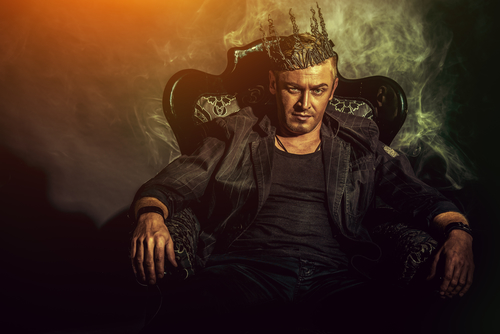
Depositphotos Image ID: 15807997 Copyright: Kuzmafoto

Paul, the man Jesus “recruited” face to face after His death and resurrection to be the apostle to the Gentiles, was concerned about the purity and integrity of that Gospel. He had every reason to be proud of his accomplishments and heritage as a Jewish Pharisee, a scholar and leader of the highest order, but counted them all rubbish for the sake of the Gospel. Paul did not boast in his accomplishments; he boasted in Christ.

At the same time, Paul was keenly concerned with bad influences creeping in to the little pockets of believers that Paul oversaw and nurtured. We see this concern in most of his letters, including the letter to the Philippians, which I have been reading the last couple of days. Paul says in Philippians 3:2-7:

“Look out for the dogs, look out for the evildoers, look out for those who mutilate the flesh. For we are the circumcision, who worship by [in] the Spirit of God and glory in Christ Jesus and put no confidence in the flesh—though I myself have reason for confidence in the flesh also. If anyone else thinks he has reason for confidence in the flesh, I have more: circumcised on the eighth day, of the people of Israel, of the tribe of Benjamin, a Hebrew of Hebrews; as to the law, a Pharisee; as to zeal, a persecutor of the church; as to righteousness under the law, blameless. But whatever gain I had, I counted as loss for the sake of Christ.”

This got me wondering: Who might Paul be talking about today?

Continue reading “Where is Our Confidence and Focus?”

Of Kings, the Gospel and Political Expediency

What is the fruit of the Holy Spirit? What does loving your neighbor look like? These are not idle questions. These are questions that will separate sheep from goats.

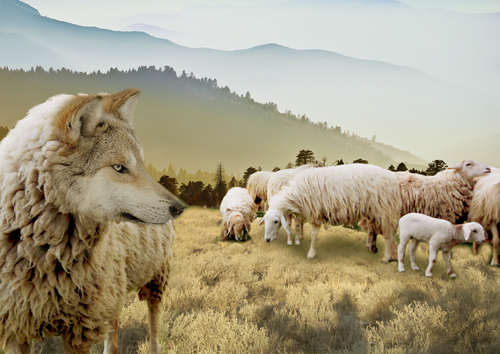
Depositphotos Image ID: 55708003 Copyright: prometeus

Over the weekend, I posted a simple message on Facebook: presidents don’t say things like that. I am referring to the “sh*thole nations” statement of course. That simple post spawned hundreds of comments, and many of the comments were from Christians defending Trump, or at least not denouncing what Trump might have said.

Durbin might have mistaken what Trump actually said. It’s possible. It’s highly likely that Durbin was motivated by his dislike of Trump and by political objectives when he reported what he claimed Trump said. While it’s possible that Trump didn’t say those words, at least not exactly as they were reported, it also doesn’t really matter.

It’s one thing to question the veracity of Durbin’s report, but it’s another thing to defend or overlook what was claimed to have been said. If he said what he is accused of saying, we shouldn’t be defending it.

I find the continued, unquestioned support for the president, no matter what he says or does, by the Christian community to be disturbing. Are we following Christ? Or are we following a political party? I can’t tell.

Some of the things that have been said include the following: 1) yeah but look at the good that he is doing; or 2) he’s not perfect, he’s a flawed human being;  or 3) other presidents have said much worse, and 4) all presidents have said things in private meetings that they would not say in public (to repeat some of statements I have seen).

Those statements may be accurate (or not), but regardless of that, let’s look at these things from a Gospel perspective.

Continue reading “Of Kings, the Gospel and Political Expediency”

Donald Trump, Fruit and Wolves in Sheep’s Clothing

We have no business judging those outside the church but are instructed to judge those within the church.


Paul wrote to the believers in Phillipi:

“Let your manner of life be worthy of the gospel of Christ… standing firm in the spirit, with one mind striving side by side for the faith.” (Philippians 1:27)

Paul’s earnest instruction to the Philippians was that their “manner of life” (conduct) be worthy of the Gospel of Jesus. The Greek word translated “manner” means, among other things, “recognized as fitting”.[1]

Paul is talking about what we see in people, the outside appearances. In essence, Paul is saying let your conduct and the way people perceive you match the fruit of the Spirit that is working within you.

The fruit of the Spirit is “love, joy, peace, patience, kindness, goodness, faithfulness, gentleness, self-control….”[2]

Jesus warned about false prophets, adding that we would know them by their fruits.[3] In contrast, Jesus said the world would know us by our love[4], which is the greatest of the fruits of the Spirit.[5]

In this context, how do we, as Christians, respond to the things that Donald Trump says and does? Why do we defend him? Why have we tied our destiny to him? What does the fruit look like that hangs from his tree?

Continue reading “Donald Trump, Fruit and Wolves in Sheep’s Clothing”

Faith, Reason, Leaping & Falling

Parallel Sidewalks in Pest along the Danube river

I came to the conclusion in college that a person cannot reason his way to knowledge of God. I don’t remember all of the details that led me to this conclusion, but the conclusion was solidified for me in a lecture given by a professor on Western Civilization featuring Thomas Aquinas.

This lecture was given every year by this professor and eagerly anticipated by students at my college, which is why I attended it. As I remember the premise of the lecture, my memory of it being simplified now so many years later, science and reason can and does lead one to God. I determined then, and I believe now, that this is not true.

Not that science, reason and faith are incompatible. It’s just that science and human reason are not adequate for the task. Just as God must, necessarily, be Other than the material universe, we who are limited to the senses that are part and parcel of the material universe are limited in our ability to “see” and know anything beyond it.

The material universe consists of and is limited to the space/time continuum. By definition, God (if He exists) is Other than the space/time continuum. He is “outside” of space time. He is timeless and immaterial. Our science and our minds exist in space time and are limited to it and by it as a first principal.

In my way of thinking, a God who exists outside of this material world (our immediate environment) would have to reveal Himself to creatures such as ourselves. We could not “ascend” to Him.

Yet this is not to say that we can’t know anything of God. If such a God were to reveal Himself to us, we could know Him, but would we recognize the significance of that revelation? Jesus claimed to be a direct revelation from God. John, the apostle, said, “He came into the very world he created, but the world didn’t recognize him.” (John 1:10)

Is Jesus who he claimed to be?

I was influenced in reaching the conclusion I came to in college about the value of science and reason in this endeavor, no doubt, by Immanuel Kant and Soren Kierkegaard. They came to the opposite position of Aquinas. They essentially say it is impossible for a finite being such as ourselves to reason or discover our way to God. There will always be a gap in our knowledge that we will never be able to close by the reason and evidence that is available to us.

This made more sense to me. There will always be a gap between a finite being and an infinite being.

Continue reading “Faith, Reason, Leaping & Falling”

Of Monuments, Saints Stephen and God, Our King Forever

We build monuments to kings, and even sometimes to martyrs, but only God endures.

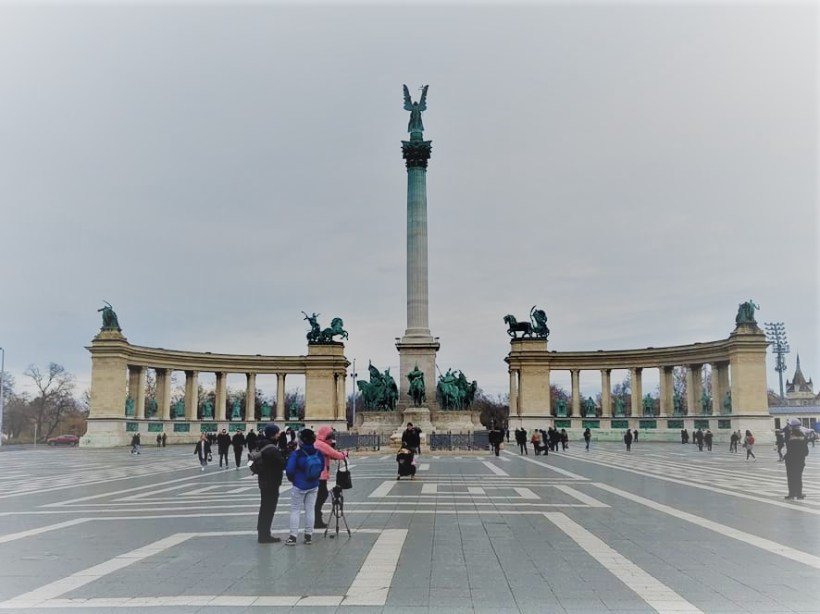
Heroes Square Budapest, Hungary

I recently returned from a trip to Budapest Hungary. Traveling to foreign lands and meeting foreign people expands our horizons and opens us up to new perspectives, and sometimes helps us to understand ourselves better.

I didn’t know much of Hungary before we left, not nearly as much as I know now. We had the intimate advantage of a guided tour by our own daughter who is living there now. She regaled us with some of the rich history that is proudly displayed throughout the sprawling city.

Budapest is a City full of strong, stately buildings and monuments to its past, good and bad.  We have our own monuments to the past that are no less stately, though many centuries more recent, but viewing the unfamiliar Hungarian monuments got me thinking.

Why do we do this? Why do we erect such proud monuments to our past?

Continue reading “Of Monuments, Saints Stephen and God, Our King Forever”