Exploring the Gospels from Different Angles: Location, Names and Nuance

Dr. Peter J. Williams looks at the Gospels from the angle of location, names and nuances that confirm the authenticity of the Gospels.

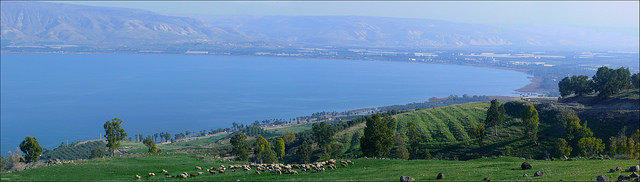
Kinnereth (Sea of Galilee), Israel - panorama of the southern end, February 5th, 2014

I am continually interested in the latest evidence for God and the authenticity of the Bible. Not that I am doubting and looking for evidence to bolster my faith. for me, it’s more like opening presents on Christmas.

I searched, and I found the path that I am on long ago. Not that I was a great discoverer; far from it. God saw me coming. Not that I have arrived, but there is no other path for me. I was meant to be on this one. When Jesus said, “I am the way, and the truth, and the life, and no one comes to the Father but through me”, I believed, and I have not been disappointed in that belief.

I still believe. Not that this belief is unsubstantiated faith. Far from it! God made Himself known to me years ago. He met me where I was then, and He continues to be true, trustworthy, faithful and present today. The older I get and more I learn, the more true it rings. 

At the same time, I have never been more open to entertaining truth than at any other time in my life, except (perhaps) for those years of searching before I became a believer. If God is true, then He stands up to truth wherever we can find it!

Continue reading “Exploring the Gospels from Different Angles: Location, Names and Nuance” →

Treasures in Heaven

Goonies Treasure Map by Scott Howard

Do not store up[i] for yourselves treasures[ii] on earth, where moth and rust destroy, and where thieves break in and steal. But store up for yourselves treasures in heaven, where neither moth nor rust destroys, and where thieves do not break in or steal; for where your treasure is, there your heart will be also. (Matt. 6:19-21)

I have been saying this a lot lately, and I have been trying to be more heavenly minded.

When you think about it, our lives are not only fragile but momentary. My life could end at virtually any time, and if I live to be 100, it will be over when it is over. Continue reading “Treasures in Heaven” →

When God Shows Up

Stormy Road by Ken Gortowski


Job was a good, God fearing man who did everything right. He was hard working, conscientious and treated other people well. He was a good father and a good husband. He was a man of integrity with strong morals that he lived out; his word was his bond. Then tragedy and calamity struck. Everything was taken away.

Job naturally began to question God. Who wouldn’t! Continue reading “When God Shows Up” →

Deliver Us From Evil

Lewes_Guy_Fawkes_Night_Celebrations_(2)_-_geograph.org.uk_-_1570186


“Deliver[i] us from evil[ii]” (Matt. 6:13) Is how the prayer Jesus taught us to pray aptly ends. Aptly because God’s end goal is deliverance of His children from evil, and not just deliverance from evil, but deliverance to God and His purpose.

Literally, this phrase in the original text means “draw us to Yourself (our Deliverer) and, thereby, deliver us from the pain and misery of evil”. God does not simply seek to deliver us from our troubles caused by the sin that entangles us: He delivers us to Himself for His divine purpose. Continue reading “Deliver Us From Evil” →

Lead Us Not Into Temptation

3987743756_40c0140c55_z


“And do not lead[i][ii] us into temptation[iii]….” (Matt. 6:13) is one of the things Jesus taught to us to pray to the Father. Does that mean that God might lead us into temptation (if we did not pray for Him not to)? Clearly not!

We must always be careful when reading Scripture to put a verse in context. Every verse should be read in harmony with the rest of Scripture. The Greek word translated “temptation” here can mean either temptations or tests (or trials), and the meaning of it in a particular passage must be derived from the context. It can mean sufferings that test or try or allurements that tempt us into evil. “Of these the former is the dominant meaning in the language of the New Testament, and is that of which we must think here.” Continue reading “Lead Us Not Into Temptation” →