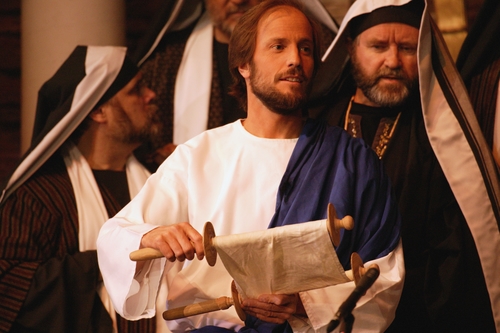
Is Jesus God? Part 3

What did the people closest to Jesus and those who were opposed to him think that Jesus was saying about himself?


Jesus said to his followers, in no uncertain terms, “You shall worship the Lord your God and serve him only.” (Luke 4:8, quoting Moses Deut. 6:13) Why, then, do Christians have this notion that Jesus was God?

That is the question being addressed in this blog series. The question was introduced in the first piece: Is Jesus God? Part 1. The question is being posed as part of a series of questions, that is being discussed among over 800 churches presently in the Chicago area. (See exploreGod) In the second blog post, Is Jesus God? Part 2, I covered the things Jesus said about himself.

In this third installment on that question, I will review what others said about Jesus in his time, both those who followed him and those who opposed him. The statement Jesus made about worshiping and serving only God is important to consider in light of the claims Jesus made about himself as well as the way other people reacted to Jesus.

Surely Jesus would not deign to suggest that he was God after making such a statement, right? How could his followers be confused about his deity? (If, indeed, there was any confusion.) What did others say about him? And how did they relate to him?

Continue reading “Is Jesus God? Part 3”

The Ebla Tablets Revisited

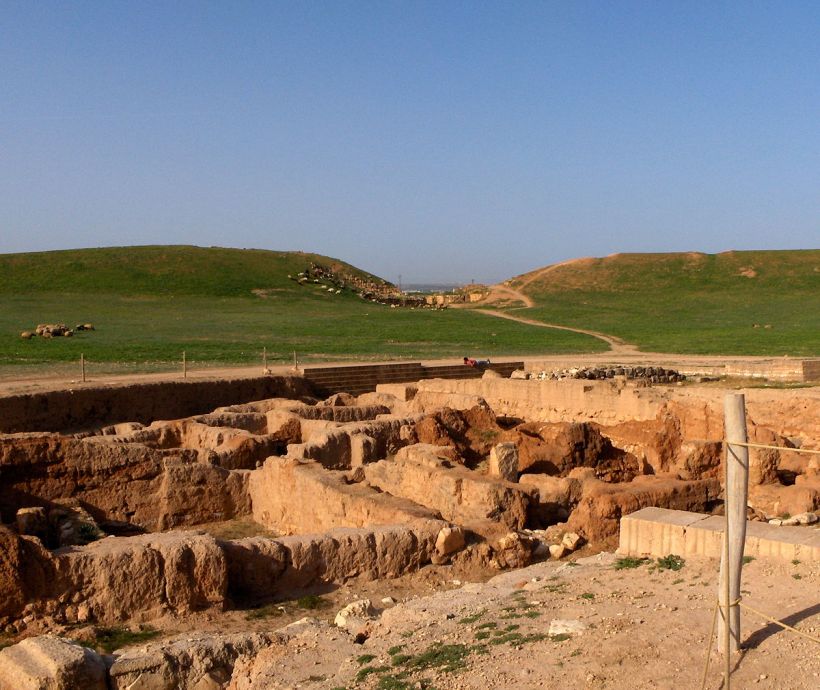
Ruins of the outer wall of Ebla and the “Damascus Gate”

One of the most popular articles on this blog is The Ebla Tablets Confirm Biblical Accounts. Though it was posted in 2015, it was still the most read article on the blog in 2016 and 2017 and was still third on the list in 2018.  Perhaps, that is why I feel prompted to revisit the subject today.

Digging a little bit deeper into the subject (pun intended), I found a 1979 Washington Post article that boasts no biblical claims. (Literally, it’s in the title.) The article asserts that, after initial enthusiasm that the tablets would reveal biblical treasures, “three years of intense study” disclosed no biblical claims. Dr. Robert Biggs, professor of Assyriology at the University of Chicago’s Oriental Institute, announced the verdict, “People who are looking to the Ebla tablets for proof of the authenticity of the Bible are going to be sorely disappointed.”

At the time of the article in 1979, 11,000 tablets had been discovered dating from 23 centuries before Christ in the ancient Sumerian city of Ebla in what is now northern Syria that was destroyed by fire around 2300 BC. Of course, only 48 tablets had been translated and published at the time of the article. While Professor Biggs was quick to render a verdict against the Bible, other scholars were not as quick to jump to judgment as noted by a Smithsonian expert who speculated at the same time that Ebla tablets may support the historicity of the Patriarchal narratives, “but we won’t know for decades.”

Fast forward to 2015, the number of tablets recovered from the ancient library in the ruins of Ebla had increased to 15,000, and the early verdict that they contain no “biblical claims” is much in doubt. (See Controversial Discovery: 15,000 Ancient Ebla Tablets Prove Old Testament To Be Accurate) The current number of tablets and portions of tablets may be closer to 17,000, and assessments are changing,

Continue reading “The Ebla Tablets Revisited”

Where in the World is God?

Our western view of God, heaven and the earth may get in the way of understanding where in the world is God.


I have been listening with some relish to the new podcast, Ask NT Wright Anything, with Justin Brierley the host of Unbelievable! podcast fame. NT Wright is currently the Research Professor of New Testament and Early Christianity at St. Mary’s College in the University of St. Andrews in Scotland. (Wikipedia) He is a renowned scholar and prolific writer and speaker.

In listening to the first few episodes of the new podcast, I have become interested in NT Wright’s view the kingdom of God, the ascension and what it means that someday Jesus will “come again on the clouds”.  calls westerners “innate Epicureans” who believe that “heaven is a long way away”. Thus, when we think of something like the ascension of Jesus, we imagine him rising up to heaven far away where He “sits at the right hand of the Father”.

This image of Jesus in heaven far away seems to be suggested in the passages from which we have coined the term ascension. The Gospel of Luke describes it this way: “While [Jesus] was blessing them, He parted from them [left them] and was carried up [taken up] into heaven”. (Luke 24:51 (NASB/ESV)) In Acts, the description is that “He was lifted up while they were looking on [taken up before their very eyes], and a cloud hid him [received Him] from their sight [out of their sight].” (Acts 1:9 NASB/ESV)

In Luke, the phrase, “parted and was carried” is a translation of the one Greek word, diístēmi, meaning literally “to set apart, to intervene, make interval” and translated as carried, parted and/or passed.[i] In the Greek, it appears (to me) that some interpretation is apparent in the English verb tenses used: “He parted and was carried [taken]”. The first phrase conveys action on the part of Jesus, and the second phrase conveys some action asserted upon Jesus, presumably from the Father.

The phrase is inserted as the interpretation of a single word so who undertook the action is really not implicitly expressed. It’s an interpretation (it seems to me). Further, the descriptor, “up” is added. That descriptor is not inherent in the Greek word, diístēmi. Rather, it seems to be a common sense addition to connect with the word translated “heaven”, which is ouranós. But is that an accurate translation?

After hearing NT Wright, I think not. Our western worldview filter may be to blame, and removing this worldview filter opens up a more accurate view, perhaps, of what the kingdom of God is, the ascension, and the second coming of Jesus.

Continue reading “Where in the World is God?”

Christmas Thoughts: Ruth & God, the Kinsman-Redeemer

Originally posted on Navigating by Faith:
maxresdefault REFUGE CHURCH Copyright © 2016. My Christmas thoughts have taken me to the genealogy in Matthew of the lineage of Jesus and the curious inclusion of five women in that patriarchal history. They stand out, not only as women in a patriarchal society, but as examples of faith…


Have you ever wondered why the genealogy of the lineage of Jesus in Matthew includes five women? The inclusion of women in the genealogy of Jesus, the Messiah, from the First Century account of the life of Jesus by one of his closest followers, Matthew, should stick out as a curiosity to explore. At least it did for me.

I am reblogging a series of articles I wrote last year leading up to the celebration of the birth of Jesus at Christmas on the women in the genealogy of Jesus. Their stories are interesting and reveal something about the heart of God that shines through them precisely because they are women in a patriarchal society.

Some of these women are not even descendants of Abraham! Yet, they are included in the lineage of Jesus, the Messiah from the root of Jesse’s seed of the people of Abraham. What does that say about God? About His plan of salvation for the world?

The story of Ruth is such a tale. Ruth isn’t a descendant of Abraham, yet her timeless story is part of the lineage of Jesus. Her story has central significance in the story of God’s redemptive work through Jesus whose birth we are about to celebrate.

kevingdrendel's avatarNavigating by Faith

maxresdefault-refuge-church-copyright-2016 maxresdefault REFUGE CHURCH Copyright © 2016.

My Christmas thoughts have taken me to the genealogy in Matthew of the lineage of Jesus and the curious inclusion of five women in that patriarchal history. They stand out, not only as women in a patriarchal society, but as examples of faith and of God’s redeeming love.

Tamar and Rahab, the first two women in the list, were unlikely examples. Tamar prostituted herself with Judah, and Rahab was actually a prostitute. That God would use such sinful and lowly women is shocking, if not remarkable. Their stations in life and their choices before the encounters which defined them were humble and base.

Their faith, however, is the story. They believed God. They made a choice to trust God and His promise. Though they were both flawed and of low station in life, they are remembered in the genealogy of Jesus Christ, the…

View original post 790 more words

Four Misconceptions about Christianity

Four basic assumptions that seem to be prevalent in the modern American world that are not not biblical.


I am continually impressed by the persistence of misconceptions about Christianity, even in the United States. The US is considered by many (still) to be a “Christian” nation. Most people may identify as Christian in the US, but that doesn’t necessarily mean that we all understand the basic tenets of the faith. Maybe it’s an example of familiarity leading us to assume things that aren’t necessarily true. Following I address just four very basic assumptions that seem to be prevalent in the modern American world that are not consistent with the Christian perspective that is revealed in the Bible. Continue reading “Four Misconceptions about Christianity”