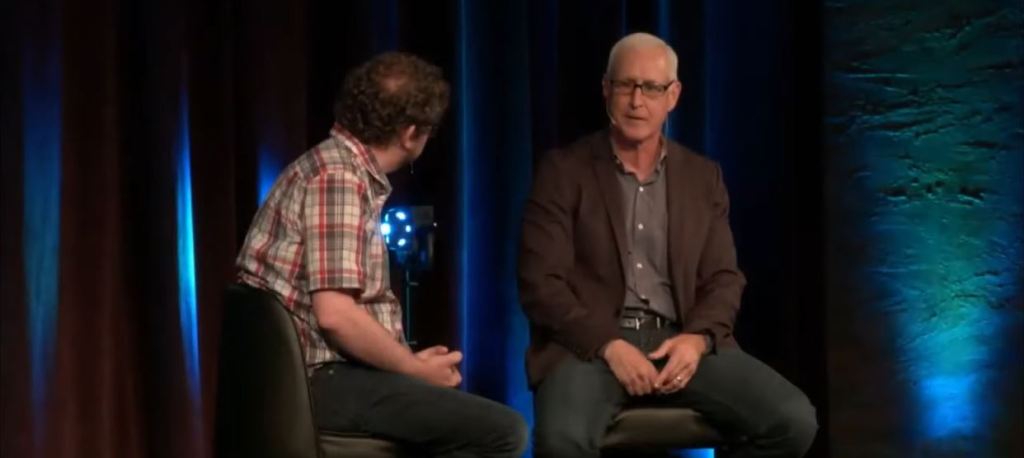
J. Warner Wallace on the Limited Usefulness of Personal Testimonies

Experience and testimony can move people, but it doesn’t tell us whether something is true.

J. Warner Wallace, the “cold case detective”, has become a leading Christian apologist. He brings a unique perspective to the world of faith.

Having grown up in an atheist family, he didn’t come to faith until well into adulthood. He didn’t grow up in the church, obviously. The traditional focus on personal experience and testimonies in evangelicalism was not part of his background. He didn’t come to faith through experience or the influence of personal testimonies. For him, it was simply a matter of the facts.

Wallace observes that the most popular answer people give for being a Christian is that they were raised in a Christian family. The second most popular answer people give for being a Christian is some experience that demonstrates to them personally that Christianity is true.

Wallace criticizes these bases for Christian faith because Mormons give similar answers to explain their belief in Mormonism. The number one answer people give for being a Mormon is that they were raised in a Mormon family, and the second most popular answer is some experience that demonstrated for them that Mormonism is true.

Christians don’t think Mormonism is true, but their stories of coming to faith are the same as ours. Thus, Wallace concludes, experience can be a powerful thing, but it doesn’t necessarily settle the truth of the matter, and people who rely on personal experience are relying on a weak anchor to faith.

More important than experience is whether something is true.

Wallace goes on to share his testimony in the short interchange linked at the end of this article with the caveat given above – don’t put too much faith in his (or anyone else’s) testimony. Still, we like testimonies, right?

Continue reading “J. Warner Wallace on the Limited Usefulness of Personal Testimonies”
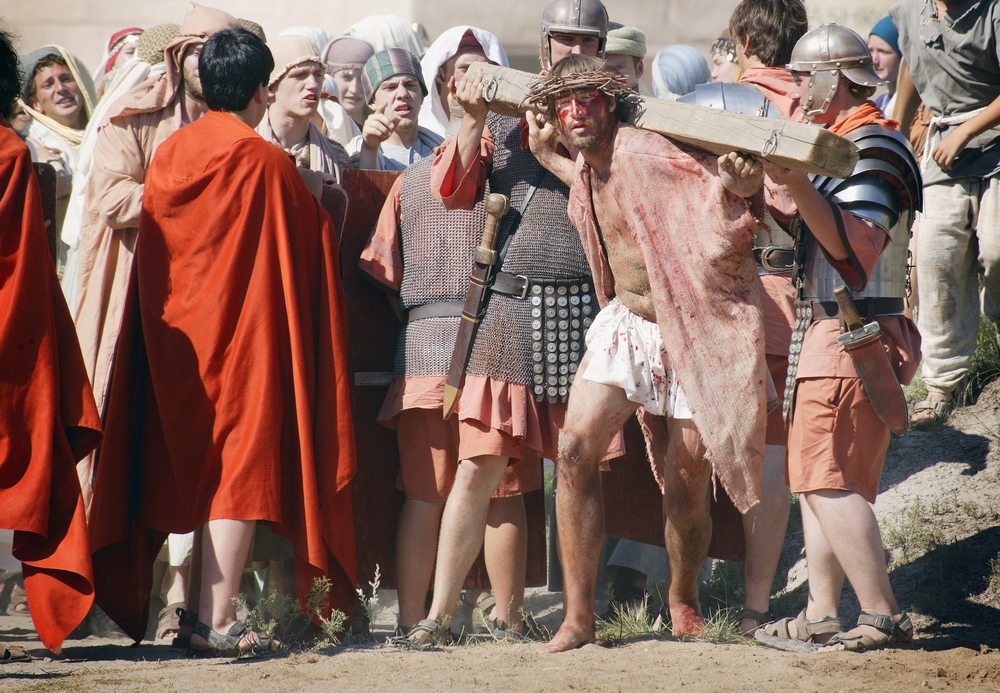
The Case for Jesus Christ Rests on the Evidence of Eyewitnesses

As a lawyer, I am keenly aware of the central importance of eyewitnesses to getting at the truth of any matter. There is no better proof in the law than eyewitness testimony. The rules of law allow hearsay testimony (the testimony of what someone else said) only in extreme and limited circumstances because eyewitness testimony is considered inherently much more reliable.

Eyewitness testimony is light years more reliable than secondhand testimony, but even eyewitness testimony needs to be carefully considered along with the credibility of the eyewitnesses. People aren’t always good at observing details accurately. People sometimes fill in the gaps in understanding of what happened with details that are assumed, but which aren’t accurate. People do this consciously and unconsciously.

Eyewitnesses can also be influenced by subconscious biases and influences. Sometimes eyewitnesses even lie about what they have seen.

Because eyewitness testimony isn’t foolproof, we always compare eye witness testimony with other evidence, including other eye witness testimony. Judges and juries weigh the credibility of the witnesses, and they look for evidence that corroborates or contradicts the eyewitness testimony. At the end, weigh the totality of the evidence to reach a verdict.

Still, most cases are built on eyewitness testimony. A case can be built on the testimony of a single, good eyewitness, but multiple eyewitnesses are always better. The more eyewitnesses that agree with each other on key facts, and the more evidence that corroborates that testimony, the stronger a case is.

The narrative accounts contained in the Bible that we call the Gospels keys in on eye witness testimony. The the biblical writings are expressly self-conscious of the eyewitness sources of the accounts. Following is a summary of the eyewitness testimony that runs throughout the New Testament.

Continue reading “The Case for Jesus Christ Rests on the Evidence of Eyewitnesses”

Francis Collins on Proof of God: The Options are Simple

Which position requires more faith? The existence of God? Or the existence of a multiverse?


Francis Collins is the former director of the National Human Genome Research Institute where he spearheaded the Human Genome Project. He is now director of the National Institute of Health. He is a member of the Institute of Medicine and the National Academy of Sciences and has received the Presidential Medal of Freedom and the National Medal of Science.

He graduated from the University of Virginia with a Bachelor of Science degree in Chemistry. He graduated as a Doctor of Philosophy in physical chemistry from Yale University. Then he earned a Doctor of Medicine degree from University of N. Carolina at Chapel Hill.

Francis Collins is best known for his work in sequencing and mapping the human genome. He has been involved in the discovery of genes associated with various diseases. Most recently, Francis Collins was announced as the 2020 Templeton Prize winner.

“The Templeton Prize is an annual award granted to a living person, in the estimation of the judges, ‘whose exemplary achievements advance Sir John Templeton’s philanthropic vision: harnessing the power of the sciences to explore the deepest questions of the universe and humankind’s place and purpose within it.’” The Templeton Prize exceeds the value of the Nobel Prize each year and is awarded to recognize progress toward research and discoveries about spiritual realities. (See Wikipedia)

The early trajectory of his life would not have predicted a Templeton Prize in his future. Francis Collins grew up on a small farm, in a non-religious home of parents he describes as hippies. He was home schooled through 6th grade. He loved science despite his more artsy upbringing, but any notions of the possibility of a God were wiped from the ledger of possibilities for him by the time he entered graduate school.

Francis Collins was an atheist, and he didn’t give God or religion much thought until sometime after his doctoral degrees were completed and he was working in the field of medicine. He was challenged one day by a cancer patient to support his view that God didn’t exist. While he was convinced of his position, he realized his position was based on assumptions he had not explored.

Collins realized he hadn’t really considered the evidence, or lack thereof. He had not come to his position in a scientific way.

The scientist in him recognized that he should know why he didn’t believe in God. He understand at that point that he could not hold that position with integrity without considering the contrary evidence. Thus, he set out to inform himself.

Along the way, he came to the conclusion that his original position wasn’t as tenable as he supposed. Reluctantly he came to believe that God is the best explanation for all the evidence he understood through science.

Francis Collins was in his late 20’s when he found himself a believer, and specifically a believer in the Christian concept of God. (A little bit of his story is captured in Inspiration or Artifice? Faith and Reason) That position has informed his life work ever since.

Francis Collins recently sat down (remotely) with Justin Brierley, the Unbelievable? Podcast, host, to discuss faith and science. I will embed the YouTube video of the interview at the end of this article, focusing on the question: what evidence of God is most compelling? (But the whole interview is worth a listen.)

Continue reading “Francis Collins on Proof of God: The Options are Simple”

On Being Ready to Give an Answer

Being ready means being in ready relationship


The article I link here, How an Ex-Christian And Counter Apologist Came Back To Jesus – Q+ A With Theologia Apologia, has a lot in it to chew on. Erik Manning is one of my favorite “apologists” on the Internet because he keeps it real. He comes from the other camp (atheism), and I think that always provides fresh perspective.

I put apologists in parentheses because many people, including Christians, don’t really know the term. An apologist is a person who studies and presents evidence defending faith (simply put). The term comes from the Greek word, apologia, which is used in 1 Peter 3:15 when Peter encourages people to “always be prepared to give an answer [apologia] to everyone who asks for the reason for the hope you possess.” (NIV)

I had not really focused on the part about “everyone who asks” before, but I think it’s relevant to the article and the message I hear in it. Maybe we spend too much time trying to convince people who aren’t asking us about our hope, people who don’t care, people who aren’t asking questions or seeking answers.

At the same time (speaking from my own experience), we miss opportunities when people actually ask us those questions! One of the problems with “apologists” is that we prepare for audiences that we choose to “walk into” with all of our memorized and canned responses, but we may not always be sensitive to the Holy Spirit speaking to us in midst of the audiences we encounter throughout our daily lives.

On a related matter, I see Christians posting things along the lines of not being ashamed to say they are Christians. (See also Christians on Social Media) Certainly, if the Holy is convicting a person about the fear of man and the need to “come out”, do it. But, that kind of statement is usually lost on the world, generally, and not very effective (it seems to me) in spreading the Gospel message.

As for the article, the interviewee was a new Christian when he went off to seminary, and he was ill-equipped to face the challenges he encountered. He wasn’t grounded in his own faith. He says, “It was hard for me to have intimacy with God when I was devoting a lot more time to reading and studying about the Bible for a class than I was to reading and studying the Bible devotionally, or when I wrote 10-page papers about a biblical theology of prayer while my personal prayer life was scarce.”

He came from a “seeker-sensitive” church that didn’t deal with the meaty subjects he encountered in seminary, and he “felt lied to”. Bitterness and disillusionment set it. He began to develop suspicion and skepticism about the surface level faith with which he was familiar when plunged into the deep end.

This is where the article speaks to me. This is here the lessons lie.

Continue reading “On Being Ready to Give an Answer”

Sy Garte: From Atheism to Agnosticism to Christianity

The assumptions of materialism he carried with him into the study of science were challenged by the science, itself


Sy Garte grew up in an atheist household. His ancestors for generations were atheists. His lateral relatives were atheists, and the people close to him in his life were atheists. He assumed atheism was normal. He didn’t question atheism or materialism as the basic assumptions of his life.

Sy Garte earned his Ph.D. in biochemistry and BS in Chemistry from the City University of New York. He has been a Professor of Public Health and Environmental Health Sciences at New York University, Rutgers University, and the University of Pittsburgh. He has written over 200 scientific publications in genetics, molecular epidemiology, cancer research and other areas, and he is the author of five books, and numerous articles published in Perspectives in Science and Christian Faith (PSCF) and God and Nature.  He is retired from a senior administrative position at the National Institute of Health. (See his biography at Biologos)

Wait a minute… articles on science and Christian faith?

He was an atheist and a scientist. So, what happened?

Well, Dr. Sy Garte has written a book about “what happened” – The Works of His Hands: A Scientist’s Journey from Atheism to Faith. I recommend the book, though this article more closely follows the interview embedded below, and it’s a pretty interesting story. I also added an interview of Sy Garte hosted by a once professed Christian turned hardcore atheist (the kind who isn’t content to allow other people to remain Christians) for an interesting exchange from two people who switched poles in their beliefs.

Continue reading “Sy Garte: From Atheism to Agnosticism to Christianity”