Ten Quick Responses to Difficult Questions on Faith with the Help of John Lennox

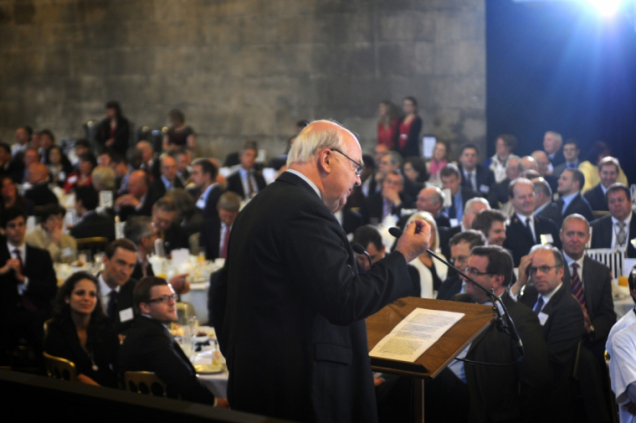
john-lennox-houses-of-parliament


The ten statements and responses suggested below are inspired by a presentation by John Lennox, the famous mathematician, philosopher and Christian theist. Neither the statements nor the responses are comprehensive in the least, but they offer a quick look into the richly rational world of faith through a theistic (and Christian) lens. At the same time, they expose the shallowness of many atheistic objections to the idea of God.

                1)   Christians are really just atheists regarding Zeus and other gods. True atheists go one god further and reject the Christian god.

Statements like these reveal a willful ignorance. The Christian God (as with Allah of Islam and Yahweh of Judaism, for instance) is an exclusive claim: there are no other gods. That Christians, Muslims and Jews cannot all be correct in their understanding of that exclusive God does not negate the possibility that such a God exists. Continue reading “Ten Quick Responses to Difficult Questions on Faith with the Help of John Lennox”

Myth, Appearance and Reality

What other appearances (like the sun orbits the earth) and corresponding realities (like the earth orbits the sun) exist that we have yet to debunk or lay hold of?

 (c) Can Stock Photo

(c) Can Stock Photo

Some of the great breakthrough realizations in human history are that the earth is not flat, that the earth is round and rotating, that the Sun does not revolve around the earth, that the Earth revolves around the Sun, and the earth along with other round bodies in space rotate around each other kept in correlation with each other by gravitational pull. These realities are different than the appearances.

We appear to be standing on a stationary earth that, for all we can see, is flat. The Sun appears to rise, cross the sky and set every day. It is no great leap to understand that the sun might move around the earth, though the perception of a flat earth persisted into modern times. The moon seems to move around the earth in the same way the sun seems to move around the earth, but one does move around the earth and the other doesn’t.

Although we have known the realities for centuries, we still talk in terms of the appearances. We talk about the Sun rising and setting. We describe the phenomena as sunrise and sunset. Someone unfamiliar with our colloquialisms might hear us speak and think that we are ignorant of the truth.

The appearances have a strong hold on us. So strong that they persist in our language and how we describe things on a day to day basis. Those appearances stubbornly refuse to leave our everyday speaking patterns.

What other appearances and corresponding realities exist that we have yet to debunk or lay hold of? Continue reading “Myth, Appearance and Reality”

How the New Testament Canon Arose

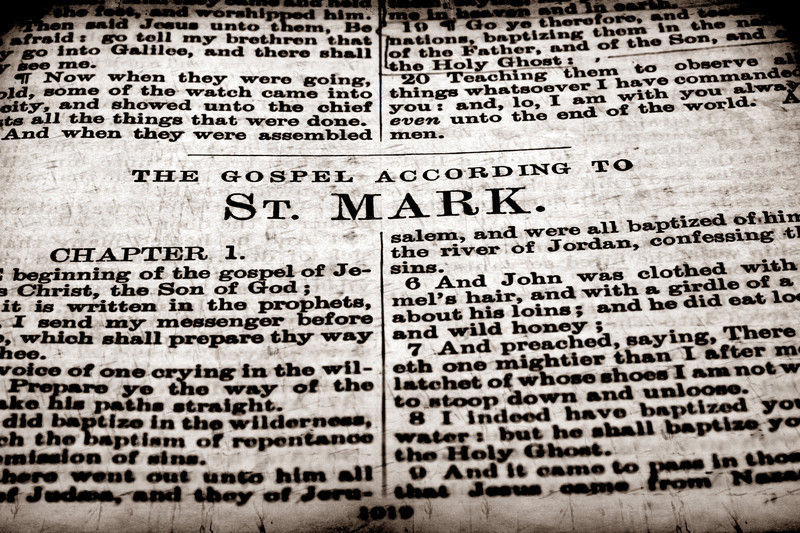
How the Gospels and other documents that have come to comprise the New Testament became recognized as scripture and other documents did did not, is the subject of this piece.

© Can Stock Photo Inc. / janaka

In this piece, I largely follow a presentation given by Dr. Danial Wallace*, but I add in some additional information about the early church to round out the information. Dr. Wallace underscores the fact that the early church was particularly concerned about the authorship of the writings they relied upon. They only trusted the writings of the apostles and associates of the apostles. We see this concern reflected in the writings of the earliest church fathers.

The original gospels, however, were anonymous, notes Wallce; that is they did not have internal references to who wrote them. They were only given names to distinguish them from each other externally, and this tradition went all the way back as far as we can trace them. The fact that the early church was so concerned with authorship, but universally accepted and used the four canonical gospels, suggests that the authorship of the Gospels was never in doubt.

This point will become more important below. How the Gospels and other documents that have come to comprise the New Testament became recognized as scripture and other documents did not, is the subject of this piece.

Continue reading “How the New Testament Canon Arose”

Intellectualism and Scholarship for Christ

On the other side of our language is something which sustains it which can’t be contained within it … and that’s what we call God.

Olin Hall


As Christians, we naturally emphasize faith because faith is what God rewards. Faith is what connects us to God. Without faith it’s impossible to please God. But, faith also separates people from God – when they don’t have it.

Faith is a stumbling block for the agnostic and the atheist.

When agnostics and atheists (and sometimes even Christians) talk about faith, they often talk about faith in the “blind” sense, divorced from reason and rationality. Real faith, however, is anything but blind or irrational.

For the Christian, faith informs a God logic that is captured in doctrine. This logic is far from irrational or inconsequential. Faith is part of that God logic, but it isn’t divorced from logic or truths discoverable in  the material world that God created. Continue reading “Intellectualism and Scholarship for Christ”

The Exclusivity of Truth

We cannot take the position that all religions are getting at the same truth unless we claim the kind of superior knowledge that we say no one has a right to claim.

On the Right Road - Ellen Posledni
On the Right Road – Ellen Posledni

Most people are not comfortable with atheism. They believe (know?) there is something greater than us, a cosmic Being or some Divine Truth. They intuitively know that the universe did not form itself out of nothing. But many people are also not comfortable with the exclusivity of religious propositions, especially in this post modern, pluralistic world.

In my opinion, the statement that all religions are equally true just doesn’t hold up. I say this having studied world religions in college and being a religious nerd for the last 40 years.

There are some similarities among religions at the surface, and there are some shared principles, but the ultimate, fundamental propositions of the various religions cannot be aligned with each other. Each of them has principals that are exclusive of other principals of other religions.

Most people who are realistic and honest (in my opinion) don’t attempt to say that all religions are true, in this ultimate sense, because it simply isn’t a tenable position, but that thought creates a dilemma. It makes us uncomfortable in the increasingly pluralistic world in which we live.

Continue reading “The Exclusivity of Truth”