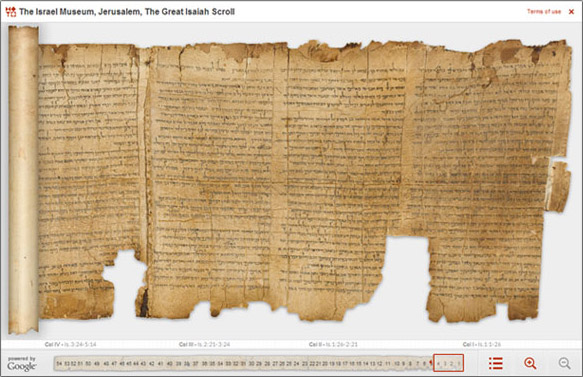
These words where written by a man named Isaiah[1], considered a prophet, about 700 BC, before Christ Continue reading “Remembering Jesus on Good Friday”
These words where written by a man named Isaiah[1], considered a prophet, about 700 BC, before Christ Continue reading “Remembering Jesus on Good Friday”

We all know the story of Job. Job was considered a righteous man, as far as men go. He was a God-fearing man, and He was also blessed with wealth, a good family and many friends.
Then, according to the story, God allows Satan to destroy Job’s wealth, family, and health. He lost everything, and he can’t understand why God would allow such a righteous man as himself to fall on such hard times.
Job became the poster child of bad things happening to good people!
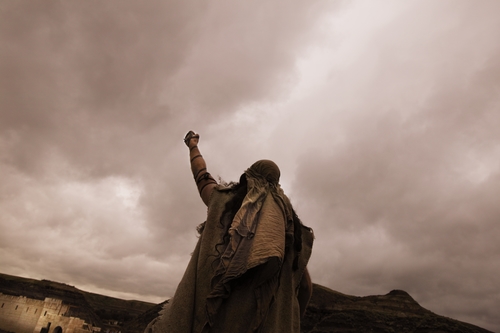
Job put on sackcloth and sat in ashes demanding to know of God why he was suffering such injustice. He counted all the ways he had been righteous and just and challenged God to explain why he was suffering while men not as righteous or just as he were living in relative comfort and abundance.
Job’s friends tried to counsel him, but they didn’t believe that he was as just and good as he claimed to be. They, like Job, believed that God wouldn’t allow a righteous man to suffer as Job was suffering. Thus, they concluded that Job wasn’t as good as he claimed.
This is a common paradigm. Job’s dilemma is our dilemma as well. We think that good people should have good lives and bad people should pay the price of their badness.
Only, it doesn’t seem to work out that way. It obviously isn’t that simple. We have a keen sense of justice (especially when we feel the sting of injustice close to home). We can see that injustice exists in the world, and we it bothers us.
The Bible doesn’t shy away from the issue, as some suppose. It doesn’t soft peddle the problem. It tackles “the problem of pain” head on.
Continue reading “What Is Man That God Should Take Notice?”


Easter is just around the corner so thinking about the Christian claim that a man from Nazareth in 1st Century Palestine died and rose from the dead three days later is a timely consideration. The accounts of this event don’t read like mere story or legend. They have all the characteristics of Greek biographies capturing historical accounts.
Many modern scholars accept the Gospels as part of the Greco-Roman biography genre (focusing on the similarities), while others find them uniquely Jewish (focusing on the differences). Central to this ongoing debate is the apparent intention of the authors to assert a factual, historical narrative.[1]
The difficulty modern scholars have with the text, which reads like biographical and historical accounts, is the inclusion of fantastical claims of miracles, the resurrection of Jesus and theological statements, many of which are penned as statements made by Jesus.
From the early to mid-19th Century, much of the biblical scholarship has leaned in a skeptical direction, and that inertia continued robustly into the 20th Century. That scholarly trend produced a skeptical consensus weighted toward a view for instance, that the Gospels, were written long after the events they describe, probably in the 2nd Century, making the resurrection and appearance of Jesus to his followers something akin to legend.
This thread of scholarship suggested that early formulations of the message of Jesus did not include his resurrection or appearances. These things were believed to have been added many decades and two or more generations after the events took place.
The 20th Century view began with skepticism and ended with a skeptical conclusion explaining the resurrection claim by the kind of embellishment that comes with the passage of time. This was the consensus view when I studied religion in the late 1970’s.
But one man, wrestling with his own doubts, took the facts the skeptics would give him and pieced together an analysis that does not square with the view that the resurrection claim is a later embellishment of what the first followers of Jesus believed. These “minimal facts” have changed the views of most 21st Century Scholars, even skeptical ones.
The Scholarly consensus has now changed on when the Gospels were written and on what the early message of the first followers of Jesus was. For instance, the scholarly consensus now agrees that all the Gospels were written in the First Century. Even skeptical scholars date the Gospels between 70 AD and about 95 AD. The scholarly consensus also agrees that the message included the death and resurrection of Jesus from very early on.
Continue reading “The Resurrection: 2nd Century Legend? or 1st Century Factual Claim?”

if God is not the supreme moral law giver, on what basis do we have morality, and how do we judge something like genocide?

In a naturalistic world in which there is nothing supernatural, nothing other than the material world, and everything there is can be summed up by what we can touch, see, hear, feel and measure, survival of the fittest reigns. In a world like that, what is wrong with genocide?
Genocide is like the ultimate survival of the fittest. The superior people group dominates, overcomes and wipes out the inferior people group. What could be more Darwinian? What could be more natural in a naturalistic world?
This, in fact, is largely the history of the world. Why, then, is this expression of survival of the fittest wrong?
Thankfully most people today recoil from such a notion, but on what basis?
Continue reading “Questions on Morality and the Materialist”

We can live our lives on our own, going our own ways or we can live life in harmony with God and His ways.

The plans of the heart belong to man,
but the answer of the tongue is from the Lord. Prov. 16:1
God expects us to make our plans. The ability to plan, to exercise choice, was given to us by God, who created us in His own image. But we do not control the outcomes. On the one hand, we do not control our own destinies. On the other hand, we are not left to our own devices.
The heart of man plans his way, but the LORD establishes his steps. Prov. 16:9
We have the responsibility to plan our ways, but God determines the outcomes. We can spend our entire lives planning our ways without any thought to God, who determines our outcomes. We have the ability to live as if God does not even exist, but we do not escape the One who establishes the course we actually take. We may have no choice in the outcomes, but we have choice in our planning.
To that extent, we could plan our ways with God in mind, seeking God’s wisdom, God’s purposes and God’s plans. Or we can choose to plan our ways without regard to God at all. God gives us that choice.
A man’s steps are from the LORD; how then can man understand his way? Prov. 20:24
The actual courses we take, however, are affected by the “circumstances” of our lives, the opportunities and obstacles that come our way, and the almost unlimited variety of influences, happenings and factors that ultimately determine the “steps” we take. This is just another way of saying that God establishes our steps.
Come now, you who say, “Today or tomorrow we will go into such and such a town and spend a year there and trade and make a profit”— yet you do not know what tomorrow will bring. What is your life? For you are a mist that appears for a little time and then vanishes. Instead you ought to say, “If the Lord wills, we will live and do this or that.” As it is, you boast in your arrogance. James 4:13-16
We don’t control our own way though we often think (presume) and act as if we do. God doesn’t frown on our plans. He made us with the capacity to plan our own ways, but we err (sin) if we fail to understand that we are not in control of the outcome of our plans. Our ability to freely plan our ways creates an illusion that we are the captains of our own destinies, but thinking and acting as if we actually do captain our own destinies is arrogance of the first order.
What is your life? For you are a mist that appears for a little time and then vanishes. James 4:14
Our lives are but a breath. (Job 7:7) Our lives are like clouds that appear and then vanish into thin air. (Job 7:9) Our days on earth are just a shadow. (Job 8:9) Our days are like the runner, fleeing away. (Job 9:25) Our days pass on like grass boats slipping downstream. (Job 9:26) Our lives are like a wind that passes and never returns. (Psalm 78:39) We are like flowers that bloom and quickly wither. (Job 14:2)
LORD, make me to know my end and what is the extent of my days; Let me know how transient I am. Psalm 34:9
Don’t presume about your life. Be mindful that life is short. Be aware that God is ultimately in control. God has his purposes. Pray and seek God and to understand His purposes. Make plans, but always be mindful of God and his plans and purposes. Invite God into your plans; seek for your plans to be harmonious with God’s plans.
We can live our lives on our own, going our own ways or we can live life in harmony with God and His ways. God gives us that choice, and we are responsible for the way we exercise that choice. At the end of our short days, as the bloom withers, what will be the outcome of our lives if we lived them our own ways?
The creed of this world lived our own way, apart from God, is I Did It My Way. We can do that. We can boast we did it our way. But, to what end?
As for me, when I think of the alternatives, when I consider the temptation to be the captain of my own soul, come hell or high water (as it is said), I think of the disciples complaining of the words of Jesus spoken to the crowds:
“This is a hard saying; who can listen to it?” (John 6:60)
Jesus didn’t change His message to accommodate His followers, and, as a result, “many of his disciples turned back and no longer walked with him”. (John 6:66)
In this context, Jesus turned to the twelve disciples and asked,
“Do you want to go away as well?” (John 6:67)
This is the question we all must face. This is point to which we all have or will arrive, either in this life, or when our days are done. How we respond to it is the ultimate choice we make or will make.
We don’t control when the light that is our life will go out. Our days are numbered, and they are in God’s hands. We don’t control when the choice to accept and follow Him can be made.
The plans of the heart belong to man,
but the answer of the tongue is from the Lord. Prov. 16:1
We make our choices, but God is the determining factor in our destiny. Will we choose to submit our selves, our plans, our destinies to God? Or will we go our own way.
When Jesus asked his disciples whether they wanted to go away too, as the others followers did when the message got difficult for them, Simon Peter answered for the group:
“Lord, to whom shall we go? You have the words of eternal life, and we have believed, and have come to know, that you are the Holy One of God.”
This, too, is my response. Though I often stumble, there is no other path for me. There is nothing else for me. There is nowhere else I want to be.
How about you?

Take a few minutes to slow down and think about what's going on in your world...
Letters on my journey of rediscovering hope
"The LONG VIEW ON THE HIGH ROAD" -- Intriguing perspectives on life
Using the wisdom of the past to enhance your future event
Doggedly pursuing the truth, with joy and faithfulness
 Navigating by Faith