
One of the most discussed texts in early Christian ethics is 1 Peter 2:13–17, because it calls believers to “submit… to every human institution” and to “honor the emperor,” even in times when those institutions were hostile or unjust. Peter, who penned this admonition, ultimately lost his life to an arbitrary, capricious, and unjust Roman Emperor.
“13 Submit yourselves for the Lord’s sake to every human authority: whether to the emperor, as the supreme authority, 14 or to governors, who are sent by him to punish those who do wrong and to commend those who do right. 15 For it is God’s will that by doing good you should silence the ignorant talk of foolish people. 16 Live as free people, but do not use your freedom as a cover-up for evil; live as God’s slaves. 17 Show proper respect to everyone, love the family of believers, fear God, honor the emperor.”
1 Peter 2:13–17
Paul, who lost his life to the same Roman Emporer, says similarly,
“Let everyone be subject to the governing authorities, for there is no authority except that which God has established. The authorities that exist have been established by God. 2 Consequently, whoever rebels against the authority is rebelling against what God has instituted, and those who do so will bring judgment on themselves.”
Romans 13:1-2
These two passages speak to the way Christians should honor and submit to earthly authorities. They have posed challenges to Christians from the time there were written. In Peter’s and Paul’s time, Nero was the Roman Emperor. Nero was a brutal, harsh, paranoid ruler who had his own wife and children killed to protect himself and to advance his own ends. Peter and Paul were both martyred by his decree.
The great American story is a far cry from the brutality and caprice of Roman history, but we have lived through our own unjust laws, including laws that protected the institution of slavery and the laws that perpetuated Jim Crow after slavery was finally prohibited. In more recent times, American have laws protected the practice of abortion, and we could find other examples of unjust laws and laws that protect unjust practices if we dig deeper.
I doubt I am exaggerating to say that no nation governed by men has ever been perfectly just, and I doubt no nation of men will ever be perfectly just. How then should Christians in any age govern themselves in light of Peter’s and Paul’s admonitions to honor and submit to governing authorities, including unjust ones?
I previously tried to parse these tensions when I published How Should the Church Act Regarding Authority? the day after January 6th, when supporters of Donald Trump, including many people flying banners of Christian faith, stormed the Capitol building in response to what they thought were unjust election results. At that time, I was critiquing the “insurrection” against the election and inauguration of President Biden. Even if the election results were unjust, shouldn’t Christian have submitted to them?
Now, I find myself critiquing the Trump Administration’s unjust enforcement of immigration laws. Some of the people who defended Trump’s complicity with the January 6th insurrection are now defending the current immigration enforcement practices based on the biblical mandate to honor and submit to authority. It seems to be a tangled mess!
We should obviously be consistent, and not selective, about the law and order we submit to, but how we should live that out in the face of injustice may not seem crystal clear. It’s important, though, that we do the work to rightly divide the Word of God
1. What Peter is Saying in Context
It’s always helpful to consider the context in which Paul and Peter wrote. Peter’s and Paul’s audiences were scattered believers under suspicion, marginalization, and persecution (off and on) from the Roman Empire. They were certainly well aware of the stakes. Paul may have already been under house arrest when he wrote those words.
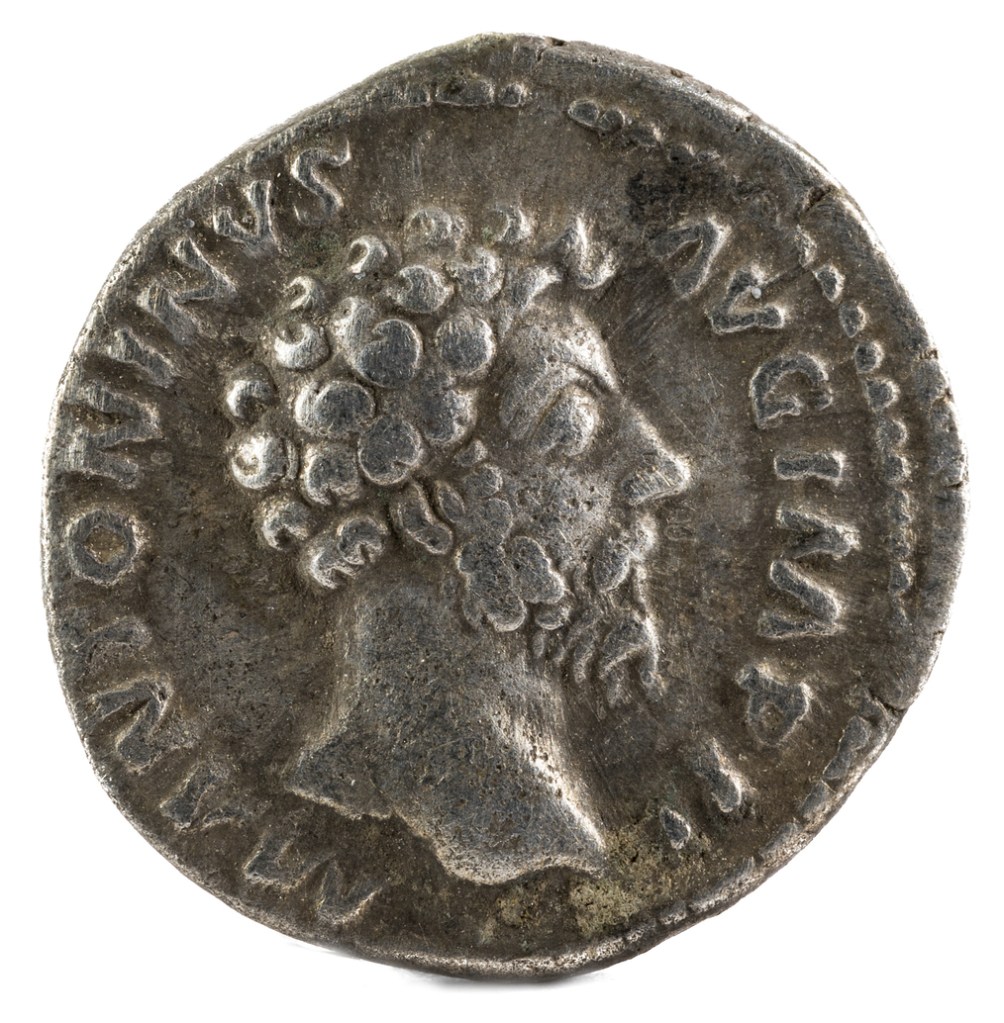
Jesus told us to render unto Caesar what is Caesar and to render unto God what is God’s, but he didn’t provide us details or examples of what he meant when he spoke those words.
Peter is the one who said, “We must obey God rather than men” (Acts 5:29), when the Sanhedrin ordered him not to preach the Gospel, yet he also wrote that Christians should to submit to authority. A cynic might just say that Peter was a hypocrite, saying one thing but doing another thing.
Both Peter and Paul refused orders of the authorities who commanded them not to speak, yet both of them tell us to submit to authority. I believe (as Paul did) that Peter’s words are God’s revelation to us, and I believe we need to hold these things in tension. We cannot ignore one thing and hold on to the other. We need grasp both things and find the biblical resolution.
2. A Review of the Greek Words Used by Peter
It’s also helpful in understanding Scripture to consider the original Greek words that were used. The exhortation to “submit” (hypotagēte) in 1 Peter 2:13 and “be subject to” in Romans 13:2 are the same word. The idea of hypotagēte is voluntary deference “for the Lord’s sake” (according to Peter). If we are to submit “for the Lord’s sake,” the right motivation, then, is to submit for God’s purposes, including the spread of the Gospel and the making of disciples.
When conflict is unavoidable, Peter and Paul agree that we must obey God rather than men! Thus, the voluntary deference we should show to human authority cannot be interpreted as a call to blind obedience or approval of authority, especially when it runs contrary to God’s clear instruction (for instance, to speak (Acts 5:29)). Peter and Paul were consistent both in their insistence that Christians hypotagēte to authority and in their disobedience of authority when they were commanded not to speak.
That tension seems clear enough in that example, but applying that “fine line” to modern circumstances is not as easy it as seems. On that note, I find some helpful nuance in Peter’s emphasis:
- Submission “for the Lord’s sake” to every authority (2:13-14) means for the sake of God’s purposes;
- Living in such a way that our good conduct would “silence the ignorance of foolish people” (2:15) means being aware of our reputation as ambassadors of Christ;
- Submission is meant to disarm accusation (not to endorse injustice); and
- “Show respect for everyone” and “honor the emperor”, but “fear God” establishes the hierarchy, because our ultimate allegiance is to God, not to earthly rulers. (v. 17)
- Thus, we are to comply with earthly authority unless it directly conflicts with our obedience to God.
Interestingly, the phrases Peter uses, “respect to everyone” and “honor the emperor”, employ the same word, but they are translated differently in the NIV as “respect” and “honor”. The Greek word is τιμάω (timaó), meaning to honor, to value, to revere, to respect. Peter applies the same word (timaó) to everyone that he applies (timaó) specifically to the emperor. Peter makes no distinction.
The Greek word Peter uses that we have translated as submission or submit is ὑποτάσσω (hypotassō). Interestingly, This same word peter uses in respect to “every human authority” is used by Paul when he urges believers to “submit to one another out of reverence for Christ.” (Ephesians 5:21) Just as Peter uses the same word (honor) for everyone and for the Emperor, Paul uses the same word (submit) to fellow believers to each other that Peter uses for believers to authority.
The equivalence is noteworthy. Our respect and submission to authority is not different than our respect for everyone and submission to each other. It is the posture Christians are to adopt toward other people, generally. In fact, Paul follows a similar pattern in Romans 13:7: “Give to everyone what you owe them: If you owe taxes, pay taxes; if revenue, then revenue; if respect, then respect; if honor, then honor.”
The general sense of the admonition to honor and respect is a posture of humility and respect toward authority, but it is the same humility, honor, and respect we should show to every person.
The propriety of honoring and respecting authority is not diminished by injustice either. Because the Roman system of government in Peter’s time was demonstrably unjust, we should understand our obligation is to honor and respect authority anyway.
Peter and Paul don’t give us much more direction than the general admonition, however. Paul provides a little more direction than Peter in saying to “do what is right” (Rom. 13:3) and to pay taxes (Rom. 13:6), but neither of them give us much more than that.
3. Hierarchy of Duty to Obey
The general rule is to show voluntary deference to authority, but does not that mean we must obey always? Peter and Paul are in harmony on the need to honor and submit to authority, but both of them demonstrated in their own lives that honor and submission to authority has its limits. Both of these pillars of faith refused to be quiet in the face of direct orders to stop speaking.
The Prophets also reveal a strong tradition of speaking to injustice – even when that injustice is perpetrated by the rulers of God’s people. The Prophets spoke primarily to the leaders of Israel and Judah, and they were brutal in their critiques.
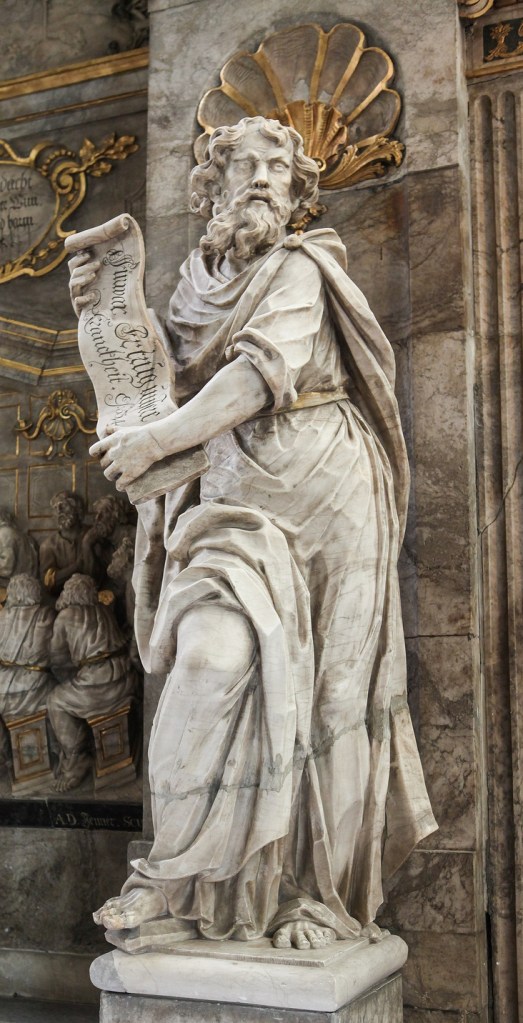
The Prophets demonstrate that God is not ok with injustice and evil, and neither can we be. We must be prophetic and speak out or we are complicit with the injustice and evil. If this is true even when God’s people are the authority perpetrating that injustice/evil, is it also not true when that authority is secular government? (Statue of the Prophet Isaiah in the Martini church in Braunschweig, Germany)
Honoring and respecting the emperor, therefore, does not mean blind and unquestioning obedience – especially when God’s direction to us is contrary. Peter demonstrated this when he was ordered not to speak: he chose to obey God rather than man.
While hypotassō generally carries a meaning that includes obedience, Peter and Paul demonstrate that our duty to obey human authority ends when it conflicts with our duty to obey God. When there is conflict, we must defer to God over the emperor.
Submission is a posture or disposition of respect, but whether we obey is a matter of hierarchy of values. As between God and human authority, we must value and obey God’s commands first and foremost.
As I have noted elsewhere, this tension is displayed in the way Peter and Paul conducted themselves. These pillars of Christian faith refused to obey human authorities who demanded they stop preaching the Gospel. At the same time, they duly submitted to their punishment, and both of them exulted in their suffering, rather than fight against it. This is how Peter and Paul balanced honor, respect, and submission to human authorities while valuing obedience to God above all.
Their conduct is consistent with Jesus in the way he addressed the religious authorities. Jesus spoke out (sometimes with brutal honesty) against the religious authorities, but he told his followers to pay the Temple taxes (Matthew 17:24-27) and Roman taxes. (Matt. 22:21) Jesus also told his followers to observe what the religious leaders told them to do, but added that they should “not do the works they do. For they preach, but do not practice.” (Matthew 23:3)
Because Jesus challenged those religious authorities, they conspired with the Roman authorities to put him to death. When he stood before Pontius Pilate, Jesus told Pilate he only had authority over him because it was given by God. (John 19:10) Previously, Jesus said, “I lay down my life—only to take it up again. No one takes it from me, but I lay it down of my own accord.” (John 10:17-18)
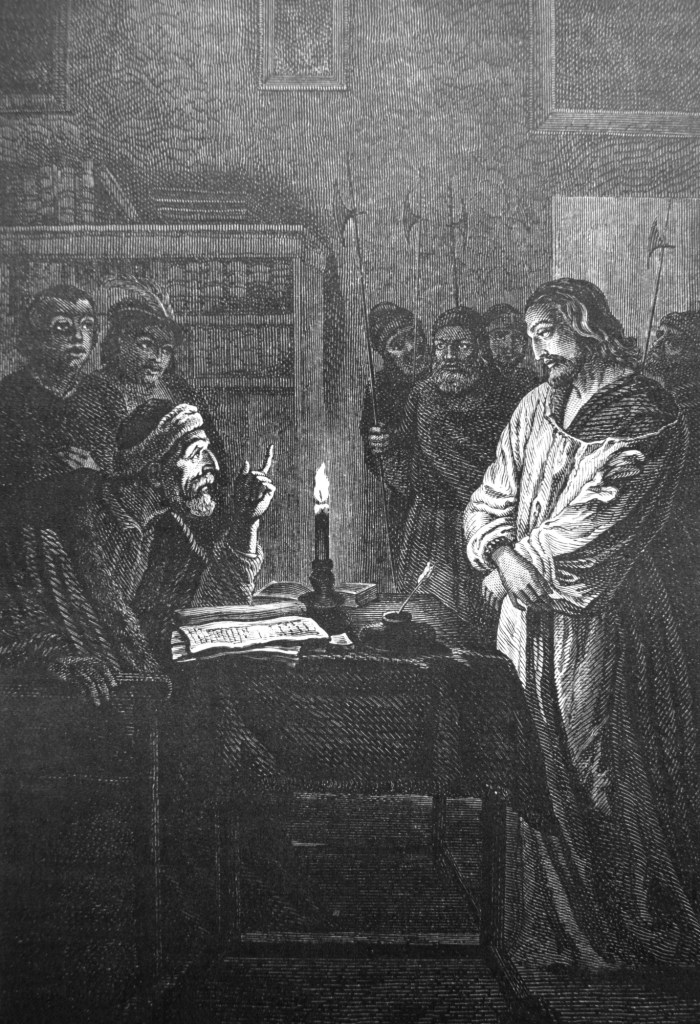
In this way Jesus perfectly modeled the tension of honor and submission without approving of or being complicit with evil. He called out the evil, but he accepted the punishment of those evil authorities at the same time, recognizing that God was using them to accomplish His purposes.
4. Speaking Prophetically to Injustice
If we look through the full counsel of Scripture, we find that God does not bless blind obedience to authority. When that authority is unjust and adopts unjust laws, God raises up His prophets to speak to the powers in place. The prophetic calling is deeply embedded in Scripture:
- The prophets of Israel confronted kings and rulers (Nathan confronted David, Elijah confronted Ahab, Amos confronted the elites of Samaria, Isaiah, Jeremiah, and other prophets confronted the people of Israel and Judah, etc.).
- John the Baptist rebuked Herod.
- Jesus called out the hypocrisy of religious and political leaders.
- Steven called out his fellow Israelites (and was stoned for it).
To speak prophetically means to bear witness to God’s justice and truth. A very large portion of Scripture is devoted to the prophetic voice of men of faith. Not incidentally, most of that prophetic voice was directed at the rulers and people of God.
Speaking prophetically, however, must be done, in the character of Christ — without hatred, pride, or violence. This is where the tension of honor and respect for those in authority comes to play. The ends never justify means that are not holy or godly.
Thus, a Christian may honor a ruler’s position (as Peter says) but refuse to participate in evil and injustice. A Christian may (and must, as God calls) speak truth about injustice, appealing to conscience and God’s standards. The Christian also should be willing to accept the punishment at the hands of those unjust authorities as a cost of that faithfulness — as Christ, Peter, Paul, and the prophets did.
I cringe as I say this, knowing that no one wants to suffer unjust punishment. Yet, Peter and Paul counted themselves blessed to suffer! Indeed, early church history is full of stories of the faithful who embraced suffering at the hands of unjust authorities even to the point of death.
4. Peter’s and Paul’s Own Death and Example
Peter and Paul were executed by Nero, one of Rome’s most unjust emperors. That fact doesn’t contradict their teaching; it embodies it. They honored the emperor as emperor. They did not revolt or pay back evil with evil. They continued to proclaim Christ’s lordship (implicitly a challenge to Caesar’s claim to divinity), but they voluntarily submitted to the unjust suffering following the pattern of Jesus. (1 Peter 2:21–23)
They did not fight for their rights in the Roman political sense; they bore witness through endurance and truth-telling. Their submission was not silence — it was faithfulness in the face of injustice.
The Tension Summarized
| Principle | Expression |
| Honor Authority | Respect office and person; avoid contempt and rebellion. |
| Fear God | Never compromise God’s moral will; obey Him first. |
| Speak Truth | Call out injustice with humility, clarity, and love. |
| Suffer for Righteousness | Accept consequences without retaliation (1 Pet 2:20–23). |
| Bear Witness | Let suffering and integrity testify louder than outrage. |
I think there is much more that can be said on this subject, but I would trying the readers’ patience to continue much further in this article. We need a right understanding of Scripture and good discernment to apply these principles in modern contexts.
Were Donald Trump and his supporters acting in concert with Peter’s and Paul’s admonitions to submit to authorities on January 6th? Are the “No Kings” protesters acting in concert with Peter’s and Paul’s admonitions to submit to authorities in their protests?
Did Trump supporters violate the requirement to submit to authorities when they stormed and overran the capital building? Do protestors of the current immigration enforcement efforts violate the requirement to submit to authorities when they seek to prevent ICE from detaining people?
Is there a difference between speaking out and acting out? Where do we draw the lines? Perhaps, most importantly, are we doing what we are doing “for the Lord’s sake”? How are our speaking and our acting advancing or inhibiting God’s purposes in the world?
~~~~~~~~~~~~
For a similar, but different, view of Romans 13 and 1 Peter 2 from an historical perspective, I recommend this short but packed and well-thought out summary:

 Navigating by Faith
One thought on “Submitting to Authority For the Lord’s Sake”