
I became a follower of Jesus in 1979, though I was a wild, untamed stallion when I was first confronted with the Lordship of Christ and verbally submitted to him. I wandered down my own paths in the year that followed, leading me to a breaking point and more complete surrender. (A cycle I have unfortunately repeated more than once.)
Over the following two years, I was about as surrendered to God as I have been my whole life. I was all in – or as all in as I was capable of being at that time, perhaps. During that time, I became a big fan of Keith Green. I even saw him in concert in Des Moines Iowa in 1981 or 1982. He died in a place crash within a year or two after that, and his impact and memory has faded.
When I saw him in concert, though, his radical Christian commitment had been a huge impact on me, and that impact carried with me beyond his death. Thus, my daily reading today recalls to my mind these lyrics by Keith Green:
To obey is better than sacrifice
I want more than Sundays and Wednesday nights
If you can't come to me every day
Then don't bother coming at all

Keith Green was a musical child prodigy who was radically saved by Jesus. He used his great musical talent and platform to become a prophet of sorts to young Christians at the time who wanted an authentic faith.
I was very drawn to a monastic, cloistered life at that age that Keith Green represented, like a modern Essene. The truth is that I had long been drawn to that kind of thing going back to the book, My Side of the Mountain, that I read in grade school (about a boy who leaves his parents to hollow out a summer home in the trunk of dead tree in the Catskills).
That book seeded in me a longing for something authentic and pure. The idea took root in me that I could not find “it” in the bustle of the world. I needed to escape to solitude, self-reflection, and devotion to a simple life.
In a poignant moment in my senior year in college, I faced up to that longing and desire that ran deep in me, and I made a conscious decision to follow Jesus into the messy clamor of human society. Jesus often escaped to the mountains and the wilderness to be alone with God, but he always returned to the highways, and byways, and the public squares where people live.
Still, the Keith Green spirit of uncompromised obedience to Christ and Christ alone left an imprint on me. His prophetic insistence on radical commitment carried me forward in those early years of my journey with Christ.
Now, I find myself some 40+ years down a road that has taken many twists and turns. That road has taken me through long and winding wilderness areas that were darker than I care to dwell on. It has taken me to the other side of those dark times into the light of a new day, more weary and (hopefully) wiser for the experience. I am still following Jesus as best as I can, but I have a slightly different view of Keith Green’s words today. I hope I can give this the nuance it deserves.
I don’t have a problem with the idea of a radical commitment. The words of Jesus and the call on people to believe and follow is still radical. It is countercultural, and it always will be.
Keith Green was a charismatic personality. I imagine Jesus was also, but no one but Jesus is Jesus. Perhaps, God spared us (and Keith himself) by taking him young. So many charismatic Christian leaders have fallen in recent years: Ravi Zacharias, Bill Hybels. James McDonald. Mark Driscoll, and most recently Mike Bickle, leader of the International House of Prayer fellowship in Kansas City, to name just a few.
But, the real thing I want to focus on is the kind of obedience that God seems to be looking for from us. The song lyric that came to my mind (that I have quoted above) came to me as I read the following words from the Prophet Micah in my daily reading:
“With what shall I come before the Lord and bow down before the exalted God? Shall I come before him with burnt offerings, with calves a year old? Will the Lord be pleased with thousands of rams, with ten thousand rivers of olive oil? Shall I offer my firstborn for my transgression, the fruit of my body for the sin of my soul? He has shown you, O mortal, what is good. And what does the Lord require of you? To act justly and to love mercy and to walk humbly with your God.”
Micah 6:6-8 NIV
We may be tempted in accepting the challenge from Keith Green to double down on a sacrificial, ritualist kind of obedience that may be just the kind of thing Micah was warning about. If we simply go to church every day, pray every day, read our Bibles every day, and so on, the bare act of doing those things every day can be no different than doing them twice a week or once a week, or a month, or whatever.
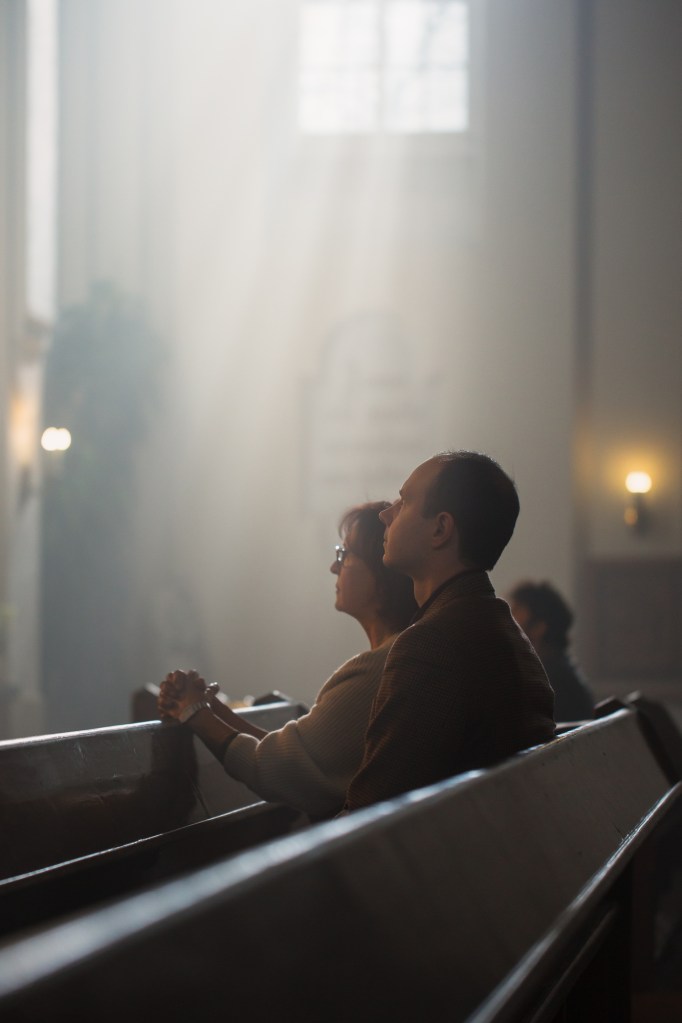
I agree with the sentiment that we need to come to God every day and have an ongoing, deeply personal, and intimate relationship with him. That doesn’t simply happen by going to church on Sundays and Wednesday nights. It also doesn’t necessarily happen by going to church every day. It isn’t the sacrificial act of going to church, or even of praying and maintaining spiritual disciplines, that is important.
He wants you! He wants all of you. He wants a relationship with you. He wants to know you, and for you to know Him. Intimately.
I believe God would rather show you mercy and forgiveness for your shortcomings than to have all your sacrificial, ritualistic acts of spirituality without connection or relationship with Him. This, of course, does not mean there is no benefit from these disciplines. They are practices and habits that help us develop our relationship with God – but only if we do them for that purpose.
Our relationship to God also should result in relationships to others that are characterized by doing justice and loving mercy. If we have authentic connection with and relationship to God, we should authentically desire to reflect His character and sentiment toward others. God is just and forgiving, and so we should desire to become just and forgiving. God is love, and we should be developing conduits of His love if we are truly connected to Him as He desires us to be.

The kind of obedience God desires is obedience in keeping with his Spirit, and His character, and his essential attributes that flow out of us because we are connected to Him, love Him and abide in Him. He isn’t interested in our rituals for their own sake. It doesn’t matter how spiritual we feel or perceive them to be.
If we do not seek to know God and align our hearts to God in the process, they are of no benefit. If these things do not produce in us the fruit of God’s character, we have to take a long, hard look at ourselves and wonder, “Why not?”
The Prophet, Micah (quoted above), and the Prophet Isaiah (quoted below) explain the “why not”:
“Is not this the kind of fasting I have chosen: to loose the chains of injustice and untie the cords of the yoke, to set the oppressed free and break every yoke? Is it not to share your food with the hungry and to provide the poor wanderer with shelter— when you see the naked, to clothe them, and not to turn away from your own flesh and blood? Then your light will break forth like the dawn, and your healing will quickly appear; then your righteousness will go before you, and the glory of the Lord will be your rear guard.”
Isaiah 58:6-12 NIV
“Then you will call, and the Lord will answer; you will cry for help, and he will say: Here am I. If you do away with the yoke of oppression, with the pointing finger and malicious talk, and if you spend yourselves in behalf of the hungry and satisfy the needs of the oppressed, then your light will rise in the darkness, and your night will become like the noonday. The Lord will guide you always; he will satisfy your needs in a sun-scorched land and will strengthen your frame. You will be like a well-watered garden, like a spring whose waters never fail. Your people will rebuild the ancient ruins and will raise up the age-old foundations; you will be called Repairer of Broken Walls, Restorer of Streets with Dwellings.”
Our church attendance, and the rituals we participate in are just a way of orientating our hearts and minds toward God. They are a means to an end, and the end is to know God, to love Him, and to be like Him in the world – to live out the reality of God’s character in the world. Only then –
- when we loose the chains of injustice
- when we untie the cords of the yoke,
- when we set the oppressed free,
- when we share our food with the hungry,
- when we provide the poor wanderer with shelter,
- when we clothe the naked,
- when we do not turn away from our own flesh and blood,
- when we do away with the pointing finger and malicious talk,
- when we spend ourselves in behalf of the hungry and satisfy the needs of the oppressed….
– only then will God answer when we pray;
– only then will our light break forth like the dawn and our healing quickly appear;
– only then our will light rise in the darkness and our night become like the noonday;
– only then our will righteousness go before us and the glory of the Lord be our rear guard;
– only then the will Lord guide us;
– only then will He satisfy our needs in a sun-scorched land and strengthen our frame;
– only then will we be like a well-watered garden, like a spring whose waters never fail.
From these statements, we get the sense that God doesn’t care about our gatherings and rituals if they are making no difference in how we live, and if we are not living out our lives as representations of who God is. The Prophet Isaiah says that God is weary to the point of hating the religious gatherings and religious rituals performed by people who do not live out His character:
“Stop bringing meaningless offerings!
Isaiah1:13-17
Your incense is detestable to me.
New Moons, Sabbaths and convocations—
I cannot bear your worthless assemblies.
Your New Moon feasts and your appointed festivals
I hate with all my being.
They have become a burden to me;
I am weary of bearing them.
When you spread out your hands in prayer,
I hide my eyes from you;
even when you offer many prayers,
I am not listening.
Your hands are full of blood!
Wash and make yourselves clean.
Take your evil deeds out of my sight;
stop doing wrong.
Learn to do right; seek justice.
Defend the oppressed.
Take up the cause of the fatherless;
plead the case of the widow.”
Yes, God desires obedience, rather than sacrifice! But, He wants obedience from the heart – for the right reasons – because He is worthy – because we know and love Him. He wants us to be just, merciful, faithful, and loving – like He is.
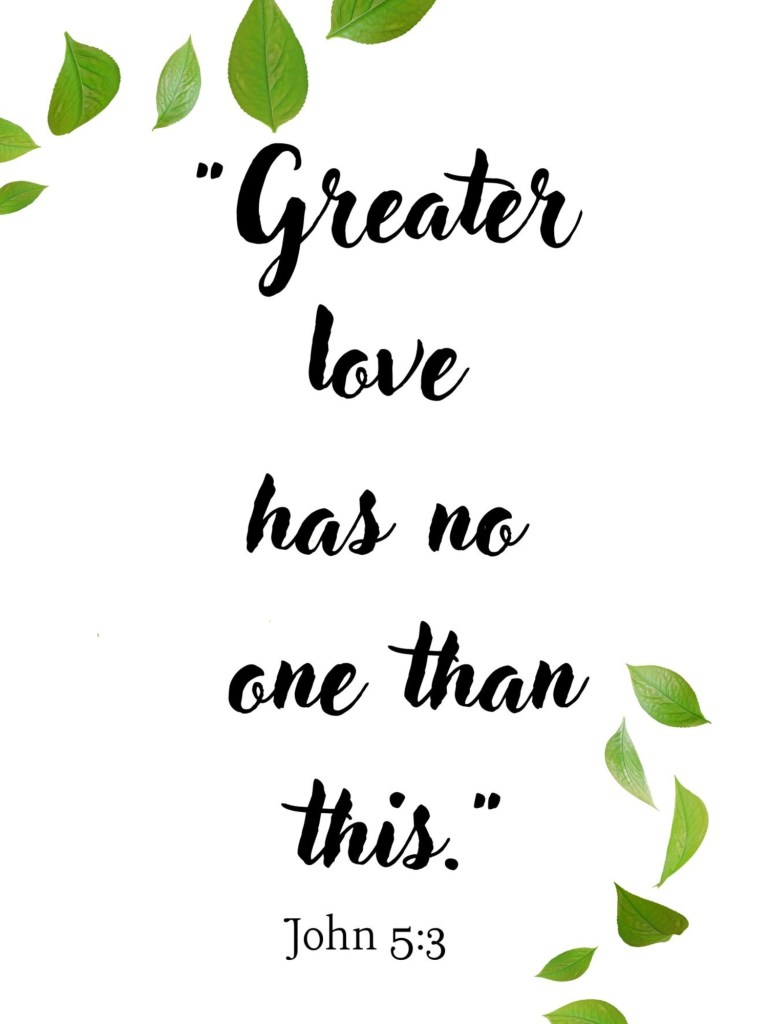
This is why James says that true religion is not religiosity, but looking after orphans and widows in their distress. (James 1:27) This is why John says that we cannot hate our brother who we can see and love God who we cannot see. (1 John 4:20)
I am not saying that we shouldn’t go to church. We should certainly do that, but we should also be living out our lives in light of the character of God, our Father, who loves us and loves all people.
“God is love” (1 John 4:8), and God’s message that we heard from the beginning is this: “we should love one another.” (1 John 3:11) “Dear children, let us not love with words or speech but with actions and truth.” (1 John 3:18)
“And this is his command: to believe in the name of his Son, Jesus Christ, and to love one another as he commanded us. The one who keeps God’s commands lives in him, and he in them.”
1 John 1:3:23-24
Jesus made love the universal sign to the world that we are children of God: “By this everyone will know that you are my disciples, if you love one another.” (John 13:35)
It starts with loving each other – brothers and sisters – but it doesn’t end there. That’s just the beginning, because God so loved the world that He gave His only son, and He calls us to be His ambassadors to reflect that love to the world.
This post is already long, but I want end with some recent insight I have into the verse, “to obey is better than sacrifice,” which was spoken by the prophet/priest, Samuel, to Saul after he failed to follow the instruction not to take any plunder from the enemies he vanquished.
Saul’s response was to offer up some sacrifices to God. This is the idea of going to confession, saying some “Hail Mary’s” or “Our Fathers.” Dutifully going to church, or a Bible study, or a prayer group can amount to the same thing. If we are not living out the fruit of the righteousness of God in our daily lives that comes from an intimate connection and identification with God, we are just offering sacrifices.
But, it’s more than that.
We need to pay attention when one passage echoes another in the Bible. Hosea, the Prophet, echoes Samuel’s words as he is urging God’s people to return to God. He said, “For I desire mercy, not sacrifice, and acknowledgment of God rather than burnt offerings.” (Hosea 6:6)
In that context, God is signaling that He is not looking for dutiful observance from us; He wants to be merciful to us, which He will do if we live in acknowledgement of Him. He wants us to be mindful of Him, and He wants us to reflect Him like children who are proud of and love their parents and desire to be just like them.
Hosea goes on to rue the ways God’s people have been unfaithful to Him. They include doing evil, shedding blood, and carrying out wicked schemes. These things all relate to the way they were living – the way they treated others – not their religious observances and sacrifices.
Proverbs 21:3 says, “To do righteousness and justice is more desirable to the Lord than sacrifice.” Again, we see sacrifice contrasted to doing righteousness and justice. The obedience God wants us to live out is conformance to His character, which is righteousness and justice. (Ps. 89:14 (Righteousness and justice are the foundation of God’s throne.))
Finally, when Jesus was challenged by the Pharisees about eating with tax collectors, prostitutes, and sinners, he responded by saying, “It is not the healthy who need a doctor, but the sick. But go and learn what this means: ‘I desire mercy, not sacrifice. [quoting Hosea)’ For I have not come to call the righteous, but sinners.” (Matthew 9:12-13)
When Jesus was challenged later by the Pharisees about healing on the Sabbath, he recited Hosea again: “If you had known what these words mean, ‘I desire mercy, not sacrifice,’ you would not have condemned the innocent.” (Matthew 12:7)
God’s heart is to show mercy, and He wants us to have the same heart. He wants us “to do justly and love mercy” as we “walk humbly with God” (Micah 6:8) – in lockstep with Him – as Jesus did. This is the obedience God desires!

 Navigating by Faith
Obedience is HUGE! And I love how God gives us messages on the same topic to post at the same time. I just did one on it yesterday.
LikeLiked by 1 person