
Carolyn Weber has always been an academic, but she is no longer an atheist. She has a B.A. Hon. from Huron College at Western University, Canada and a M.Phil. and D.Phil. from Oxford University, England. She has taught at faculty at Oxford University, Seattle University, University of San Francisco, Westmont College, Brescia University College and Heritage College and Seminary, and she was the first female dean of St. Peter’s College, Oxford.
My inspiration today comes from an interview of Carolyn Weber by Jana Harman on the Side B Stories podcast. You can listen to the hour long interview in episode 4, Finding God at Oxford – Carolyn Weber’s story. She turned her personal story into a book, “Surprised by Oxford”, which is being made into a screenplay staring Phyllis Logan from Downton Abbey and Mark Williams from the Harry Potter movies.
In the interview, Carolyn Weber shared that she was drawn to the romantic writers of the 17th and 18th centuries in her college years because they wrote about infinite longing. Carolyn long recognized a similar longing in her own life, and they romantic writers resonated with that longing in her.
Carolyn was raised in a non-religious home. She had no experience with religion, and she was not familiar with the detail of Christianity or the Bible.
She recalls that she knew nothing of the Bible until she read the Bible for the first time in a college class. As an undergraduate literature major, her first impressions of the Bible included included recognition of how well the story of the Bible holds together in intricate detail, though it was written over many centuries by almost four dozen different writers.
These elements of Carolyn Weber’s story remind me of my own story. I was raised in a religious home. We were Catholic, and we went to church every Sunday, but I had never read the Bible. I knew next to nothing about the Bible before college, and church seemed to have no relevance for me.
I was also an English Literature major. I also read the Bible for the first time in a college class. I wasn’t particularly drawn to the romantic writers, but I did notice the theme of longing, and it intrigued me. (You can read my story here.) Our first impressions of the Bible were also very similar.
I recognize that my resonance with Carolyn Weber’s story may not translate to every reader (and maybe not to any reader). A statement she made in telling her story, however, may. She said, “God speaks to us in our love languages.”
I can identify with that, perhaps, because my “love language” seems to be so similar to hers. The same things that spoke to her, spoke also to me. I will explain below, but I invite you to consider as you read (or go back to listen to her story) what your love language is and how God has spoken intimately to you in your love language.
Like Carolyn Weber, I noticed the longing in the romantic English writers, and (though it didn’t attract me) it intrigued me. I was in an English Literature class one day around the same time I had been reading Ecclesiastes for a different class. The juxtaposition of the longing of the romantic writers and Ecclesiastes was particularly poignant to me.
Ecclesiastes, of course, is full of existential angst. This is how Ecclesiastes opens:
1 The words of the Teacher, son of David, king in Jerusalem:
2 “Meaningless! Meaningless!”
says the Teacher.
“Utterly meaningless!
Everything is meaningless.”
3 What do people gain from all their labors
at which they toil under the sun?
4 Generations come and generations go,
but the earth remains forever.
5 The sun rises and the sun sets,
and hurries back to where it rises.
6 The wind blows to the south
and turns to the north;
round and round it goes,
ever returning on its course.
7 All streams flow into the sea,
yet the sea is never full.
To the place the streams come from,
there they return again.
8 All things are wearisome,
more than one can say.
The eye never has enough of seeing,
nor the ear its fill of hearing.
9 What has been will be again,
what has been done will be done again;
there is nothing new under the sun.
10 Is there anything of which one can say,
“Look! This is something new”?
It was here already, long ago;
it was here before our time.
11 No one remembers the former generations,
and even those yet to come
will not be remembered
by those who follow them.”
The writer is summarizing a long exploration of meaning that turned up nothing but struggle, toil, and death. The writer sought meaning in every possible place: riches, pleasure, the accumulation of things, power, fame, work and even in wisdom, itself. Because we all die, however, everything is meaningless: “chasing after the wind”. (Ecc. 1:14)

Wisdom only leads to sorrow, and knowledge leads to grief (Ecc. 1:18), because wisdom and knowledge bring to bear all the more critically the fact that we are all going to die. We take nothing with us, and our lives count for little or nothing when we are gone. Future generations will not remember much more than our name and some basic details. (If even that!)
I felt the full weight of that Ecclesiastical reality as a college freshman. Ecclesiastes is where I “lived”. It spoke to me and echoed the thoughts in my head and the angst in my heart. I wanted my life to count, but the led me to wonder why? If we are doomed to die, so what?
Why should I even care? Why not just eat, drink, (be ignorant) and be happy?
That was the way I lived in high school, but I was miserable. It seemed to me there must be something more, but it also seemed that my longing was nothing more than wishful thinking – a chasing after the wind (or Dust in the Wind, as one of the anthems of my youth proclaimed).
In reading Shakespeare and the romantic I recognized that they lived with the same kind of existential tension that I did. Carolyn Weber and I connected to those writers through our own experiences.
For me, my excesses in high school (drugs, alcohol, pleasure) proved the emptiness of pursuing them, and I sought meaning, then, in the academic pursuit of wisdom. Yet, wisdom seemed only to heighten and sharpen the ultimate lack of meaning. Knowledge only added grief, while drugs and alcohol, at least, covered it up – for a time.
Only for a time, though, and that was the rub. I concluded that drowning out my existential angst with drugs, alcohol, pleasure, and thrills was a certain dead end, so there was no way but forward for me.
I read Ecclesiastes shortly before a class on Shakespearean sonnets, and that intersection of thinking set the stage for one of the most poignant “discoveries” of my life. I noticed that Shakespeare was not just fixated on longing, generally; he wrote very specifically and ubiquitously about death. He rallied his imagination against death, succumbing to its ultimate grip, yet clinging still to the longing to live on after death (even if only in posterity).
I saw in Shakespeare the same existential tension I encountered in Ecclesiastes, and I saw it in the romantic writers, and I began to see it everywhere in great writings and art throughout history. This human preoccupation with longing, death, and eternity (even if all we can ultimately hold on to is posterity) was addressed long ago and with much greater sophistication, it seemed to me, in Ecclesiastes, which was written almost two millennia earlier!
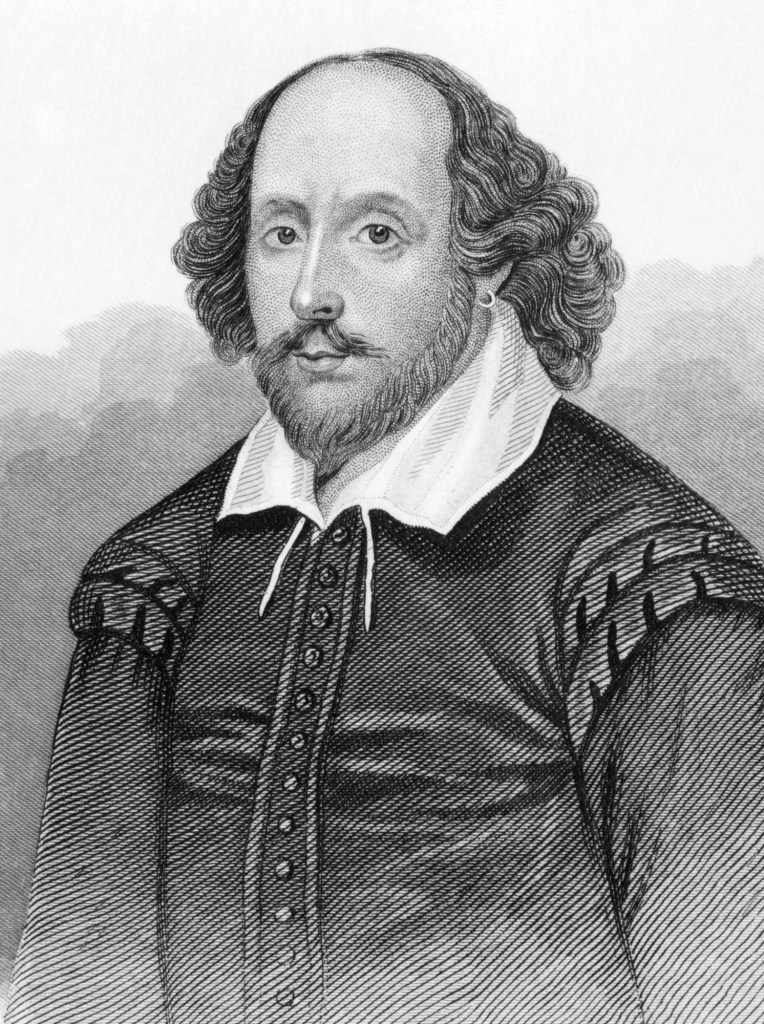
“The eye never has enough of seeing,
nor the ear its fill of hearing.
What has been will be again,
what has been done will be done again;
there is nothing new under the sun.”
“Nothing new under the sun” took on new meaning for me. Shakespeare and his fellow writers seemed to think they were plowing new ground, but they were only tilling fields that were planted millennia ago. (Perhaps as long ago 3000 years earlier!) I learned in that process to take the ancient writing seriously.
More poignant (and life changing) to me is Ecclesiastes 3:11, which says,
“[God] has made everything beautiful in its time. He has also set eternity in the human heart….”
The writers I was studying were good at seeing beauty in the world (if only to long all the more to escape death), and their struggle with death seemed to demonstrate the reality of having eternity in their hearts. So much, that they longed for it. They were obsessed with it!
These thoughts led to a realization that swept over me like a gentle ocean wave breaking onto a tranquil, sandy shore. These writers were demonstrating the reality that God put eternity into the hearts of men. Though they didn’t recognize God, their writings reflected the reality of Ecclesiastes.
I wondered, “Why is it that human beings are so preoccupied with death?” If death is simply the natural order, why do we long to live on? Could it be that God built that longing into us? Could this be proof that we are meant for more?
I let these thoughts wash ashore in my mind and linger in my heart. The poignance of human longing (even in the apparent absence of the reality of God) was a signpost for me on my journey. Carolyn Weber’s similar encounter with the romantic writers and the theme of longing reminds me of my own journey.

She studied world religions for a time in college, but she says she was least interested in Christianity. This is my story as well. I was drawn to the more exotic elements of Buddhism, particularly.
I had been a nominal Catholic all my life, but Catholicism was not relevant to me. I had zero attraction to it, and not a little repugnance to the affected piety I saw in the churchgoers of my youth.
As with Carolyn Weber, when I read the Bible for the first time in a college world religion class, however, it rang true. The hallmarks of reality seemed to echo through it.
I did not assume that the miraculous stories were anything more than stories, but those stories and the other portions of the Bible, like Ecclesiastes and proverbs, seemed to capture something real in the human heart and at the heart of human existence.
The Bible also had a different quality to it than the texts of the other major world religions. The Bible was less comfortable to read. It had a sharp edge, and it seemed more “dangerous” to my ego. I found myself hesitant to read farther, but the ring of truth in it attracted me at the same time.
Much of Carolyn Weber’s story is similar to mine. Her entrée into Christianity through college religion classes and reading the Bible from the perspective of an English literature major attracted to the romantic writers who wrote about infinite longing is very similar to my own story. Her first impressions of the Bible were also similar to mine.
Thus, when she said, “God speaks to us in our own love language”, I strongly resonated with her statement. I have long believed that God knows how to be intimate with each one of us. Indeed, my experience suggests that God was intimately acquainted with me in the way He made Himself known to me.
In fact, I believe that God knows us better than we know ourselves. Psalm 139 says that God “knows our thoughts from afar”; he knows the words we speak before we even say them. Jesus said that God even knows the number of hairs on our heads. God knows us intimately, and He can reveal Himself, therefore, in ways that are intimate to us.

I think this is what Carolyn Weber is saying, when she says that God speaks to us in our love languages. I believe this is the same idea expressed in Nathaniel’s encounter with Jesus:
“Philip found Nathanael and told him, ‘We have found the one Moses wrote about in the Law, and about whom the prophets also wrote—Jesus of Nazareth, the son of Joseph.’
‘Nazareth! Can anything good come from there?’ Nathanael asked.
“Come and see,” said Philip.
When Jesus saw Nathanael approaching, he said of him, ‘Here truly is an Israelite in whom there is no deceit.’
‘How do you know me? Nathanael asked.
Jesus answered, ‘I saw you while you were still under the fig tree before Philip called you.’
Then Nathanael declared, ‘Rabbi, you are the Son of God; you are the king of Israel.'” (John 1:45-49) (emphasis added)
Nathaniel was swayed to believe in Jesus by the intimate and personal way in which Jesus related to him. Nathaniel recognized in that intimacy that Jesus was more than a mere man.
I like Carolyn Weber’s observation that we find just about every type of person in the Bible. She said, “There is nowhere to hide.” The Bible speaks to each of us as we need to hear the message.
Finally, she said that when she heard the gospel for the first time, it had a profound impact on her. She said she could not unhear it. The idea that God offers us salvation by grace completely undid her.
I had a similar experience. Being raised Catholic, the message was ingrained in me that we get what we deserve. Having sown my wild oats as a teenager, I was convinced I could not earn heaven (if there was even such a thing as heaven).
When I was told that salvation (heaven) is a free gift, that we are saved by grace, and we can’t earn it (even if we tried), I was caught off guard. (Ephesians 2:8-9) I had no compartment for that idea. It blew my concept of moral and spiritual reality out of the water.
Carolyn Weber says that there is nothing we can do to earn it, and we cannot control it, and those things makes it powerful. She also recognized that this message is unlike the message of any other religion.
She is right. I became a student of religion, like she did, and I learned also that every major world religion provides a path that must be walked to obtain salvation (nirvana, etc.). Every major religion requires us to live up to and measure up to some standard to achieve salvation – except for Christianity.
(I note that Christians often do not even understand this critically essential idea. Perhaps, human nature is so bent toward the idea that we must earn our way that we resist and repel the offer of the free gift of grace. Perhaps, human pride is so strong that we would rather die on our own terms than live on God’s terms.)
Christianity, alone, is based on the love of a God who stooped to our position, became like us, and died for us so that we may live. If we take this seriously, we can no longer hold onto the pride that separates us from God, others and even ourselves. Because of what God has done, gratitude and humility is the only adequate response. Acceptance of what God has done for us and gives to us is the only way forward.
And this God who was willing to leave His own privilege as Creator of the universe to become one of us not only demonstrated love in giving Himself up for us; we discover that He is love. He is intimate with each of us, and He speaks to us in our love languages – if we will let Him.

 Navigating by Faith
A beautiful reflection Kevin and and such an illuminating emphasis on Ecclesiasties, of which I am only passingly familiar. I am still early in my faith journey. I have moved away from atheism because it has an end point, which does not allow for continual exploration. It posits that, if you continue to entertain the possibilities of faith, there is something wrong with you.
I recently recorded an interview with Justin Brierley in which we explored the idea of faith in one of the most harsh of human experiences – end of life care in my Nursing. I related the story of a young woman of deep faith who was diagnosed with an aggressive brain tumour. Rather than dismiss her faith in the presence of this most terrible diagnosis, her faith strengthened, allowing her to endure much longer and with a quality of life that was superior to what could have been had she succumbed to anger and the sheer brutality of her situation. Of course, it was an inevitably difficult end for her but I was humbled in her presence and I experienced a powerful expression of faith from her. She has imprinted on me and at least, while I remain alive, I will never forget her.
I heard this from Dr. Jordan Peterson just this week in conversation with Douglas Murray, which I find incredibly helpful as I navigate my life by faith;
“I think faith is a decision to act in courage and trust and I think it is a decision to make that a practice and I think, in some ways, it’s a decision to make that a practice regardless of the evidence.”
I don’t know if that is true as such, but it has meaning for me.
Thank you for this post Kevin.
LikeLiked by 1 person
You have given me some food for thought. I would have, perhaps, resonated more with Peterson’s description of faith (courage and trust regardless of the evidence), but for years of pushing back against Dawkins’s charge that faith believes with no evidence, and sometimes “in the teeth of the evidence”. I am caught up this morning by the possibility that I have so set myself against Dawkins’s definition of faith that, perhaps, I have lost some element of it. Sometimes, faith is trusting courageously despite the evidence (for instance, that we will die). Thank you for that.
LikeLike