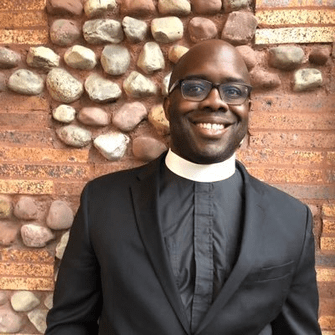
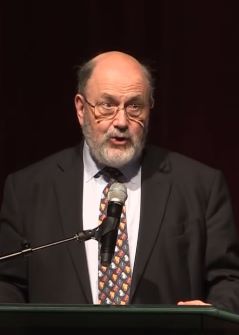
Esau McCaulley interviewed NT Wright on his Disrupters podcast last year. NT Wright is a British New Testament scholar of some renown who became McCaulley’s mentor at St. Andrew’s University in Scotland. McCaulley made a comment after the interview that prompts my writing today. He said,
“I feel like I am a mix of a bunch of things. I have this kind of British, evangelical side, and I have this kind of African American church side, and strangely they have coalesced in ways I didn’t expect.”
N.T. Wright Forces an Overdue Conversation on the Disrupters Podcast 2-3-22
McCaulley was raised Southern Baptist in the deep south, so their relationship is intriguing to me. The conversation between Wright and McCaulley is interesting and rich. The fact that they come from unique and diverse backgrounds permeates the discussion as they explore the things that unite them.
Esau McCaulley is a New Testament scholar in his own right, due in no small part to the influence of NT Wright. He has written one book on Galatians, and he is now writing a second. McCaulley also became an Anglican priest, but his heritage and unique experience, personally and communally, as a black man in America remain central to his identity.
The close relationship between these men from very different backgrounds and from different areas of the world has me thinking about the church in the United States and the global Church. I recently heard someone comment on an unfortunate, unforeseen, and unintended consequence of the Reformation. That consequence was the fragmentation of the Church.
The post-Reformation church fragmented into dissenting groups, and some of those dissenting groups fragmented further into groups of people who spoke English, French, and other European languages. Over time, the fragmentation rippled out from Europe to the New World and beyond.
The Reformation splintered into many “protestant” groups, and that fragmentation exploded in the New World where Lutherans, Presbyterians, Methodists and others splintered apart from each other into various and distinct groups, and many more new denominations sprung up. The fragmentation continued along cultural, doctrinal, ethnic, ritualistic, racial, governmental, language and other lines.
Today in America we can find a mind-boggling number of separate church bodies aligned in linguistic, ethnic doctrinal, geographic, and cultural huddles of believers that keep largely to themselves based on language, ethnicity, race, heritage, doctrine, worship preference, governmental protocol, and other things.
This fragmentation is still evident in the United States, and churches in the United States have been accused of being more segregated than the rest of the country (which is still pretty segregated).
The intersectionality (to use a very loaded term) of the disparate backgrounds, experiences and heritage of Wright and McCaulley, and their ongoing relationship remind me of the need for unity in the Church. We need to come together. We need to talk.
We need each other.
Continue reading “On the Intersection of Differences and Unity in the Body of Christ”






 Navigating by Faith