Understanding the Hiddenness of God: Insights on the Nature of and Mystery of God

God is not a physical being like we are in this material world

The “hiddenness of God” is a reality that causes some people to doubt the existence of God. If God is so great and so loving, why is He hidden to so many people? If God really exists, why isn’t God plainly evident to everyone? If God desires everyone to know Him, what’s the problem?

I have many thoughts about this dilemma, and I have written on the hiddenness of God many times before. Today, however, I want to highlight some thoughts that come through comments by an Australian YouTuber, Confident Faith, on a conversation between Jordan Peterson and Bishop Barron.

They discuss the nature of God – what kind of “being” God is. We naturally approach the idea of God from our human perspective. A person might wonder, “How can we even know what kind of a being God is?” Especially, if we are not even sure God exists!

But, we can know what kind of a “being” a God who could have created the Universe may be. Our reason suggests to us that a God who is capable of creating the time, space, and matter that comprises the Universe must be separate from and “other” than the reality of the Universe. Such a creating God must exist in a reality that is not contained within the Universe.

If we might think of the Universe as a box, we might say that boxes don’t simply for or create themselves. A box maker (who is not a box) creates them. Thus, we can intuit that Universes don’t form or make themselves. A Universe maker is required who is contained within a Universe.

If the box (or universe) is all we know, it’s hard to conceive of something outside the box (universe). It’s exceedingly hard for us to conceive of reality other than the basic units of time, space, and matter that comprise the physical Universe in which we live. Therefore, we have an exceedingly difficult time wrapping our minds around the idea of a Creator of those who is not contained within the reality of our Universe.

Even my attempt to describe the problem is inadequate, as the only reality we know is a physical one (comprised of that same time, space, and matter). For a God to have created those things and to have formed them into the Universe, that God would have to have been timeless, spaceless, and immaterial (not contained within that box), yet present with it.

I know that many people believe that a thing can create itself. Stephen Hawking famously said, “Because there is such a thing as gravity, the Universe can and will create itself from nothing.” This is a box creating a box analogy. Hawking is essentially saying that the substance that makes up the components of the box (Universe) self formed and self organized into a box (Universe).

I, personally, find it harder to believe that the Universe created itself than to believe that God, who exists “outside” time, space, and matter, created the Universe.

This fundamental difference in approach and perspective is the Continental Divide on the issue of the existence of God. A person who is unwilling or unable to consider anything “outside” the bounds of the time, space, and matter that comprise the Universe is going to be utterly incapable of “seeing” (grasping, conceiving, or even allowing for) the possibility of God.

But, this way of thinking is not foreign to any of us. In fact, it’s most natural for us to think this way, because all we know is the box (Universe) in which we live.

In dealing with this dilemma, Bishop Barron goes back to the ancient text in Deuteronomy when Moses asked God, who should I say sent me. Barron says that Moses was basically asking, “What kind of a being are you?” In doing this, Moses is trying to put God into categorical terms.

God’s response was, “I am who I am!”  God is saying that He cannot be categorized as we categorize things in this Universe. This response points Moses to outside the box (Universe). This means, says Barron,, “God is not a being, but Being, itself.”

If we follow down the path of Moses’s questioning, we inevitably end up as an atheist. If we insist on putting God into categorical terms, like the time, space and matter we can touch, see, feel, and measure, God remains a mystery. We can’t touch, see, feel, or measure God because He is not comprised of (or limited by) physicality (time, space and matter), and, therefore, God is not a categorical object in the world.

Augustine called God the “Prius” – the thing that is prior to being, itself. God is that upon which the categorical world depends. God is not the highest being (as we often conceive Him to be), the highest being is still just a being; rather, God is the essence of being.

I like the way Confident Faith wraps up these things. He says,

“God is not a physical being like we are in this material world. For example, humans, animals and plants are all physical beings in this physical world. However, the pitch of God’s existence is infinitely higher. He is not physical like we are. He is Spirit. God does not exist somewhere in this physical universe. You won’t find him hiding behind some distance galaxy way out on the known limits of the known universe. Likewise, you won’t find Him hiding somewhere in the subatomic realm. It’s foolish to expect or demand that God be found in this way…. God is not just one being among many in this world. God is the very source of being.”

We are finite; God is infinite. We are contingent and caused; God is non-contingent and uncaused. We are physical, but God is Spirit. Therefore, Confident Faith says,

“Taking these factors into account, it’s reasonable to hold that God’s existence in nature will always, to a degree, be a mystery or hidden from us.”

The hiddenness of God, therefore, is a function of the difference between a box maker and the things in the box. We are a “thing” in the box of this Universe, and God “outside” of it. We are constrained by our physicality, and God is not constrained by physicality because God is Spirit.

Our ability to grasp and to understand such a God, therefore, requires us to let ourselves think outside the box of this Universe. We have to be willing to think outside the box to be able to begin to gain some understanding of God.

I have embedded the short YouTube video on this subject below, but I will close with a few other passages in the Bible the speak profoundly of the nature of God. These passages reveal that God’s hiddenness has purpose, that God knew what He was doing in creating the world the way He did, and His “hiddenness” from us is part of that purpose.

“God is spirit, and those who worship him must worship in spirit and truth”

John 4:24

The God who made the world and everything in it, being Lord of heaven and earth, does not live in temples made by man, nor is he served by human hands, as though he needed anything, since he himself gives to all mankind life and breath and everything. And he made from one man every nation of mankind to live on all the face of the earth, having determined allotted periods and the boundaries of their dwelling place, that they should seek God, and perhaps feel their way toward him and find him. Yet he is actually not far from each one of us, for

“‘In him we live and move and have our being’;

as even some of your own poets have said,

“‘For we are indeed his offspring.’

Acts 17:24-28

Paul recognized in his address to Greek philosophers in the passage quoted above the “hiddenness” of God, such that we must “seek” Him and “feel [our} way toward Him”. I believe, as some have objected, that God could have made himself plainly evident to us, but He chose not to do that.

I believe the reason He chose not to reveal Himself plainly to us is to give us space to seek Him because we want to, not because we must. If God was plainly evident, what choice would we have?

I believe that God is not looking for automatons that are programmed to obey. God wants us to know Him and to love Him authentically. He does not desire that we merely believe in Him; He desires a reciprocal relationship with us. but A clue to this lies in the words of James:

Even the demons believe—and shudder!

James 2:19

The demons have no doubt that God exists, but they hate God, and they “bristle” at the thought of God!

In the event a person might be tempted to think that the hiddenness of god is unfair, we have these promises:

Ask and it will be given to you; seek and you will find; knock and the door will be opened to you. For everyone who asks receives; the one who seeks finds; and to the one who knocks, the door will be opened.

Matthew 7:7-8

 Behold, I stand at the door and knock. If anyone hears my voice and opens the door, I will come in to him and eat with him, and he with me.

Revelation3:20

God may be “hidden” to us, but He desires to be “found”. He promises that He will reveal Himself. We can’t be half-hearted about it, however.

 You will seek me and find me when you seek me with all your heart.

Jeremish 29:13

God’s Purpose from Babylon to the New Jerusalem

I am inspired today to try to attempt to trace the sweep and arc of God’s plan as revealed in the Bible.


God had a purpose when he created the universe and put man in the center of it. This is what the Bible tells us. I believe God’s plan was not thwarted by Adam and Eve eating from the fruit from the tree of the knowledge of good and evil. God’s plan was not thwarted by Cain killing Abel, and God’s plan was not thwarted by the Babylonians constructing a tower to their own glory.

God is patient and long-suffering. He created His universe and called it good, but His plan is and always has been to perfect His creation.

God gave us the ability to go our own way, but God’s purposes will be accomplished despite the freedom God gave us.

God gave us the ability to create our own kingdoms, but God’s purposes are to invite all people to embrace His kingdom. He provides the way freely as a gift, but our kingdoms often look better to us, and our ways seem right in our own eyes.

This is a very simplistic view of the whole sweep of Scripture, from beginning to end, which I believe we need to see so we don’t miss the forest for the trees. Of course, only God has perspective to see and to make sense of all the trees in that Great Forest. But, He gave us His word so we can begin to catch a glimpse of God’s great plans.

I want to focus on the big picture today, to survey the sweep and arc of God’s plan as revealed in the Bible, but I am not going to start with the creation of the universe or in the garden. I am going to start in Babylon. After all, we all live in a spiritual Babylon today.

We read in Genesis 11 that the world had one language and common speech. The people moved eastward, found a plain, and they settled there.

Recall that God instructed Adam and Eve to fill the whole earth. Their descendants settled in Babylon, however, and they remained there contrary to that instruction. They didn’t want to follow God’s plan; they wanted to follow their own plans.

The people came together to build a city for themselves and “a tower that reaches to the heavens” to “make a name for themselves.” This is a description of human beings choosing to go their own way, rather than God’s way.

They were afraid of being scattered over the face of the whole earth because that is what God wanted: for them to fill the earth. Because they resisted they were afraid..

The people were unified in going their own way against God. Their unity in going their own way was an obstacle to God achieving His purposes. For this reason, God confused their language, and they scattered over the whole earth.

People do not do well with differences. We isolate. We become group-focused. We despise others who are not like us, and we have inordinate pride in ourselves and our own kind. THIS is the story of human history.

It is also the story of God working His purposes in the world He created to achieve his ends. We may have trouble following it, but I think it will come into better focus if we jump quickly to the end. Then we will fill in the middle. All of this is just a brief snapshot of what God has revealed.

Continue reading “God’s Purpose from Babylon to the New Jerusalem”

Lessons from Moses of Faith, the Lack Thereof and the Purposes of God

Moses knew better, but his own emotions got the best of him.

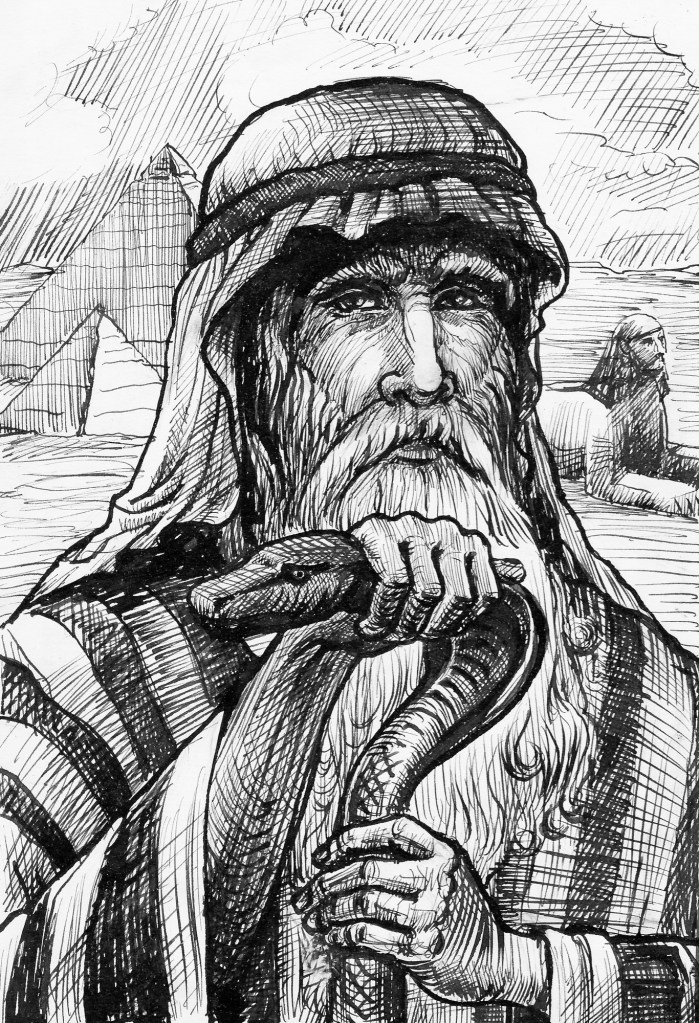
Egypt, Sinai, Mount Moses: view from road on which pilgrims climb the mountain of Moses

The passage in Numbers 20:1‭-‬13, which I quote below (in the NIV), has puzzled me in the past. It didn’t sit well with me, and I figured I simply didn’t understand it well.

As with many things I don’t understand well, I often “shelve” them for later consideration. Later is now, as I have just read through the passage again in my yearly journey through the Bible. This is the setting:

“In the first month the whole Israelite community arrived at the Desert of Zin, and they stayed at Kadesh. There Miriam died and was buried.”

Miriam, the sister of Moses and Aaron, had just died. Not much is said about her death, but Moses and Aaron must have been grieving. That grief on top of resistance from the Israelites they were trying to lead according to God’s direction, and the harsh circumstances of the desert must have weighed heavily on them.


“Now there was no water for the community, and the people gathered in opposition to Moses and Aaron. They quarreled with Moses and said, ‘If only we had died when our brothers fell dead before the Lord!'”

I believe their “brothers” who “fell before the Lord” refers to Korah who led a rebellion against Moses. (Numbers 16) Korah challenged Moses and his right to lead the Israelites, because Korah was not happy with his clan’s roll in caring for the Tent of Meeting. In challenging Moses, he was basically saying, “Who put you in charge?!”

Instead of confronting Korah directly, Moses set up a test before the people to allow God to identify who was in charge. When Korah and his clan burned incense, the ground rumbled, and Moses told the people to back away from Korah and his tribe of rebels as the ground swallowed them up.

Not long afterward, the wanderings of the Israelites brought them to the Desert of Zin, where the Israelites became so angry and distraught about the conditions in the desert that they wished they died with Korah in rebellion against God. The desert conditions must have seemed pretty inhospitable. Moses was losing the hearts of the people, and they were turning against him. Again! The people said:

“‘Why did you bring the Lord’s community into this wilderness, that we and our livestock should die here? Why did you bring us up out of Egypt to this terrible place? It has no grain or figs, grapevines or pomegranates. And there is no water to drink!’” 

Of course, Moses was God’s man. That fact was demonstrated graphically in the Korah situation, but they continued to take their dissatisfaction over their circumstances out on Moses. Instead of God, they blamed Moses for their situation. When Moses and Aaron the assembly of the people, the made a beeline for the entrance to the tent of meeting where they “fell facedown”, and “the glory of the Lord appeared to them.”

Moses and Aaron knew the score. They knew that the people were really finding fault with God, not Moses or Aaron. They were intimate enough with God to know that God was not to be trifled with.

When the glory of God appeared to them, they should have been emboldened to stand resolute on their confidence in God’s direction. They should not have doubted that God was with them. Right?

Of course, the Israelites should not have doubted that God was with them, either. God’s visibly demonstrated Himself to them over and over again. His visible presence went with them in a pillar of cloud by day and fire by night. They had seen the demonstrations of the power and holiness of God at the Red Sea, at Mount Sinai and in the ground swallowing up Korah and his band of rebels.

What more did they need to see to understand that God was with them?

Yet, they did not trust that God had their back. God gave them manna every morning, and God gave them so much meat when they demanded meat that it came out of their nostrils. Yet, they continually grumbled and complained and wished they were back in Egypt.

Something had to be done to put down the unrest!

“The Lord said to Moses, ‘Take the staff, and you and your brother Aaron gather the assembly together. Speak to that rock before their eyes and it will pour out its water. You will bring water out of the rock for the community so they and their livestock can drink.’” (Emphasis added)

The instructions were simple and pretty clear: take the staff and speak to the rock.

“So Moses took the staff from the Lord’s presence, just as he commanded him. He and Aaron gathered the assembly together in front of the rock and Moses said to them, ‘Listen, you rebels, must we bring you water out of this rock?’” 

Moses started out all right. He took the staff as he was commanded, but things begin to go off the rails after that. Moses was obviously perplexed that the people were so angry, and he might have been taking it personally. Instead of speaking to the rock, Moses turned and spoke to the people, and he was full of wrath for them in that moment.

It’s hard for me to blame Moses for feeling this way. I am sure I would take it personally also. It was personal!

The people were obstinate. What more could Moses do to demonstrate that God put him in charge?! Yet, they continued to challenge Moses and blame him for their unsatisfactory conditions.


Moses knew better, but it seems his own emotions got the best of him. He took their opposition personally, and his anger led him to forget God’s instructions to him:

“Then Moses raised his arm and struck the rock twice with his staff. Water gushed out, and the community and their livestock drank.”

The result was good, right?

But, Moses didn’t do exactly what God commanded him. God told him to speak to the rock. Instead, Moses spoke to the people, and Moses struck the rock with his staff. These clues pop when God responds:

“But the Lord said to Moses and Aaron, ‘Because you did not trust in me enough to honor me as holy in the sight of the Israelites, you will not bring this community into the land I give them.'”

I have long thought that the punishment didn’t fit the crime. Perhaps, I didn’t understood the significance of these things. God’s response seemed harsh in light of the faithfulness of Moses before Pharaoh, in receiving and delivering the Ten Commandments, and in putting up with the grumbling, and complaining, and obstinance, and waywardness of the Israelites, but maybe I was missing something.

Keep in mind that Moses grew up in luxury and privilege in Pharaoh’s household. The Israelites were “his people”, but only by genetics. Moses put up with a lot with these people he didn’t grow up with and didn’t even know very well. It seemed to me that Moses had been pretty faithful to God but clearly, his disobedience to God was more significant than I have appreciated.

Continue reading “Lessons from Moses of Faith, the Lack Thereof and the Purposes of God”

The Plans God Has for Us – Part I

‘For I know the plans I have for you,’ declares the Lord, ‘plans to prosper you and not to harm you, plans to give you hope and a future.’


“’For I know the plans I have for you,’ declares the Lord, ‘plans to prosper you and not to harm you, plans to give you hope and a future.’” (Jeremiah 29:11)

This is a popular verse often quoted to provide people hope in their personal circumstances in life. It’s also a verse about which people have written many critiques and admonitions not to take verses out of context.

On its face, this verse seems to say that God has plans for us, and by “us” I believe most people assume it means for each one of us. God has plans for you… and for me. His plans are to prosper us, not to cause us harm. His plans include hope and a future. That is exactly what this verse says, right?

I’m going to go out on a limb and says, “Yes!” It means what it says. But I think we tend to jump to the conclusion that it’s all about us. And here, I have to admit that the application of this verse to modern individuals in the 21st Century is not the primary meaning.

I don’t think that means that we shouldn’t find application of the verse relevant to our modern lives. “All Scripture is breathed out by God and profitable for teaching, for reproof, for correction, and for training in righteousness, that the man of God may be complete, equipped for every good work.”  (2 Timothy 3:16-17) This verse seems to suggest that all Scripture, not just some verses, are applicable and relevant to “the man of God” (each one of us).

But that being so doesn’t suggest that the context isn’t important. While God may speak to us, as I believe He does sometimes, personally through isolated verses and passages, there is a broader context. That broader context is itself, “profitable” to us. In fact, the broader context often provides insights we would fail to see any other way.

To be perfectly frank, we tend to view our lives, Scripture and even God in very myopic and provincial ways. We focus heavily on our immediate circumstances and our immediate future. Even when we are thinking beyond our immediate circumstances and future, our focus tends to be this worldly.

We are, at a basic level, finite beings. Our vision is finite. Our focus naturally gravitates toward the finite. But God is infinite, and He offers to us his infinite love and an infinite destiny.

When we think about Jeremiah 29:11 in the context of an infinite God who, therefore, has infinite plans for us, that perspective changes everything.

St. Augustine, I understand, emphasized the multi-layered meanings of Scripture. From the literal to the figurative, the present to the future, and so on, Scripture can be understood at different levels, and each level of understanding is “true” and is profitable, has application, to our lives.

In that vein, we should always be mindful of the big picture. The big picture is God’s grand design, His overarching plan for us and all humankind. And these plans are being worked out in the history of the world and in our collective and individual histories.

With that said, let’s look more closely at Jeremiah 29:11 in the context of the period in history in which it was written and in the greater scheme of God in the history of His dealings with mankind. We will do that in Part II of this series on The Plans God Has for Us. And then we will come back to its relevance and application to us today.

Plans, Paths and Choices on the Way

We can live our lives on our own, going our own ways or we can live life in harmony with God and His ways.

positphotos Image ID:: 76630903 Copyright: Aitormmfoto

The plans of the heart belong to man,
but the answer of the tongue is from the Lord. Prov. 16:1

God expects us to make our plans. The ability to plan, to exercise choice, was given to us by God, who created us in His own image. But we do not control the outcomes. On the one hand, we do not control our own destinies. On the other hand, we are not left to our own devices.

The heart of man plans his way, but the LORD establishes his steps. Prov. 16:9

We have the responsibility to plan our ways, but God determines the outcomes. We can spend our entire lives planning our ways without any thought to God, who determines our outcomes. We have the ability to live as if God does not even exist, but we do not escape the One who establishes the course we actually take. We may have no choice in the outcomes, but we have choice in our planning.

To that extent, we could plan our ways with God in mind, seeking God’s wisdom, God’s purposes and God’s plans. Or we can choose to plan our ways without regard to God at all. God gives us that choice.

A man’s steps are from the LORD; how then can man understand his way? Prov. 20:24

The actual courses we take, however, are affected by the “circumstances” of our lives, the opportunities and obstacles that come our way, and the almost unlimited variety of influences, happenings and factors that ultimately determine the “steps” we take. This is just another way of saying that God establishes our steps.

Come now, you who say, “Today or tomorrow we will go into such and such a town and spend a year there and trade and make a profit”— yet you do not know what tomorrow will bring. What is your life? For you are a mist that appears for a little time and then vanishes. Instead you ought to say, “If the Lord wills, we will live and do this or that.” As it is, you boast in your arrogance.  James 4:13-16

We don’t control our own way though we often think (presume) and act as if we do.  God doesn’t frown on our plans. He made us with the capacity to plan our own ways, but we err (sin) if we fail to understand that we are not in control of the outcome of our plans. Our ability to freely plan our ways creates an illusion that we are the captains of our own destinies, but thinking and acting as if we actually do captain our own destinies is arrogance of the first order.

What is your life? For you are a mist that appears for a little time and then vanishes. James 4:14

Our lives are but a breath. (Job 7:7) Our lives are like clouds that appear and then vanish into thin air. (Job 7:9) Our days on earth are just a shadow. (Job 8:9) Our days are like the runner, fleeing away. (Job 9:25) Our days pass on like grass boats slipping downstream. (Job 9:26) Our lives are like a wind that passes and never returns. (Psalm 78:39) We are like flowers that bloom and quickly wither. (Job 14:2)

LORD, make me to know my end and what is the extent of my days; Let me know how transient I am. Psalm 34:9

Don’t presume about your life. Be mindful that life is short. Be aware that God is ultimately in control. God has his purposes.  Pray and seek God and to understand His purposes. Make plans, but always be mindful of God and his plans and purposes. Invite God into your plans; seek for your plans to be harmonious with God’s plans.

We can live our lives on our own, going our own ways or we can live life in harmony with God and His ways. God gives us that choice, and we are responsible for the way we exercise that choice. At the end of our short days, as the bloom withers, what will be the outcome of our lives if we lived them our own ways?

The creed of this world lived our own way, apart from God, is I Did It My Way. We can do that. We can boast we did it our way. But, to what end?

As for me, when I think of the alternatives, when I consider the temptation to be the captain of my own soul, come hell or high water (as it is said), I think of the disciples complaining of the words of Jesus spoken to the crowds:

“This is a hard saying; who can listen to it?” (John 6:60)

Jesus didn’t change His message to accommodate His followers, and, as a result, “many of his disciples turned back and no longer walked with him”. (John 6:66)

In this context, Jesus turned to the twelve disciples and asked,

“Do you want to go away as well?” (John 6:67)

This is the question we all must face. This is point to which we all have or will arrive, either in this life, or when our days are done. How we respond to it is the ultimate choice we make or will make.

We don’t control when the light that is our life will go out. Our days are numbered, and they are in God’s hands. We don’t control when the choice to accept and follow Him can be made.

The plans of the heart belong to man,
but the answer of the tongue is from the Lord. Prov. 16:1

We make our choices, but God is the determining factor in our destiny. Will we choose to submit our selves, our plans, our destinies to God? Or will we go our own way.

When Jesus asked his disciples whether they wanted to go away too, as the others followers did when the message got difficult for them, Simon Peter answered for the group:

“Lord, to whom shall we go? You have the words of eternal life, and we have believed, and have come to know, that you are the Holy One of God.”

This, too, is my response. Though I often stumble, there is no other path for me. There is nothing else for me. There is nowhere else I want to be.

How about you?