Is Your Faith Determined by Where You Live, Your Parents and Your Culture?

People do tend to adopt the faith perspective that is predominant where they live, that their parents had, and in the society in which they were raised, but….


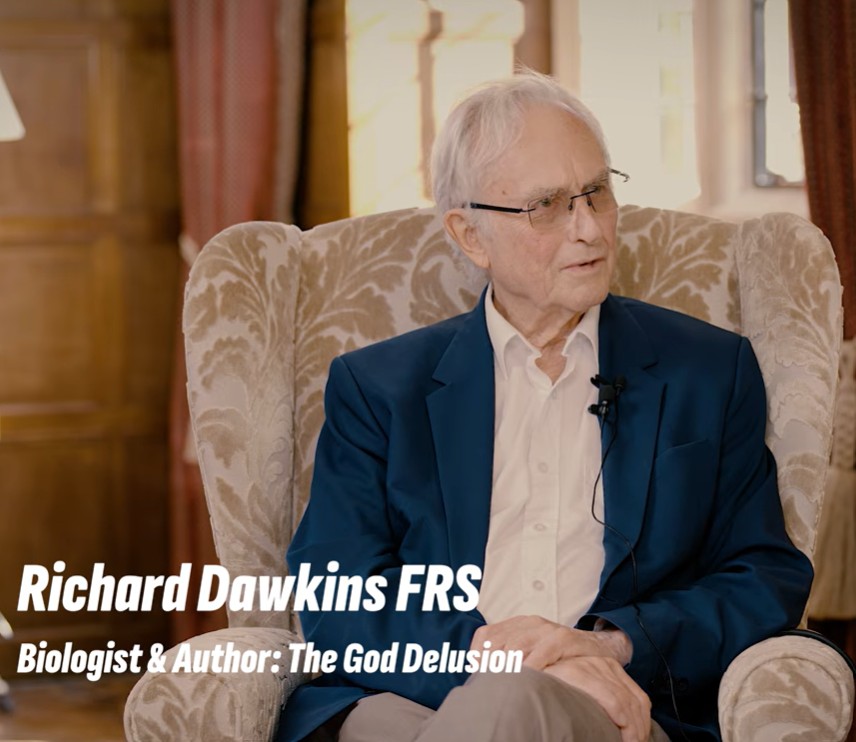
Richard Dawkins famously claims that religion and faith are a product of where people live and the influence of their parents and the culture in which they live. A quick look at data on religious faith might suggest Dawkins is right.

On other hand, Richard Dawkins was raised in the Anglican faith and was confirmed at the age of 13. He didn’t remain a Christian, though. In his later teens, he rejected the God and religion he was raised to believe in and the religion he was confirmed in.

Dawkins, himself, proves the falsehood of his own claims – unless, of course, Dawkins is the extremely rare outlier.

Dawkins’ assertion is generally true if we take a quick look at the data, but even the data reveals it isn’t so simple. People who live in areas in which religious belief is enforced by law and social custom tend to remain (at least) nominally loyal to that religious belief, but there are significant outliers in the data.

Iran, for instance, had 100,000-300,000 Christians in 1979, comprised of ethnic Armenians, Assyrians, and Chaldeans who had lived there for centuries. Organizations like ELAM Ministries and Transform Iran reported only 300-500 Muslim converts to Christianity in 1979.

In 1979, revolution dethroned the Shah formed an Islamic state. Since that time, Islam has been enforced by law and strong social mores. Onerous legal and social penalties are imposed on people who convert from Islam to other religions, including physical punishment, social exile, imprisonment, and even death.

For the past 44 years, Iranians who decided to become Christians have been persecuted with religious zeal and governmental force. (The World’s Fastest Growing Church, July, 20, 2023 (International Christian Concern)) “All missionaries were kicked out, evangelism was outlawed, Bibles in the Persian or Farsi language were banned and several pastors killed.” (A spiritual revolution in Iran?, September 16, 2020) Global Christian Relief))

Some people report that the number of Armenian, Assyrian, and Chaldean Christians has slowly dwindled to around 100,000. (See The World’s Fastest Growing Church) This kind of outcome is to be expected in a country like Iran in which one religion is not only predominant; it is enforced by legal decree and social coercion.

Unexpectedly, though, the number of Muslim converts has risen exponentially since 1979 according to faith-based groups that support them. Until recently, the claims of exponential growth in Muslim conversions to Christianity in Iran were largely anecdotal reports from faith-based organization.

Those claims have recently been affirmed by the secular, Netherlands-based research group, GAMAAN. A 2020 poll of 50,000 Iranians aged 20+ Iranians shows that 1.5 percent of then identify as Christian. (Survey supports claims of nearly 1 million Christians in Iran, Aug, 27, 2020, (Article 18)) With a population of 80M+, that works out to 1,200,000 Islamic converts to Christianity in 2020. (See A spiritual revolution in Iran?)

Continue reading “Is Your Faith Determined by Where You Live, Your Parents and Your Culture?”

The Problem of the Intelligibility of the Universe

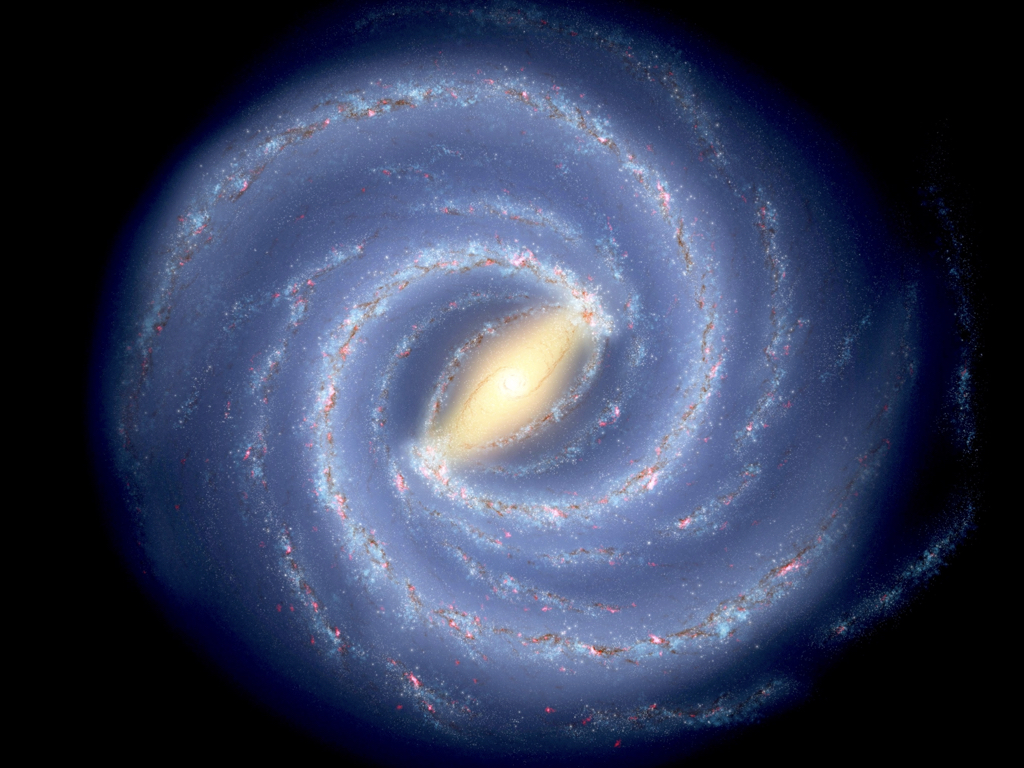
The Milky Way

The most incomprehensible thing about the universe is that it is comprehensible.” Albert Einstein

I am intrigued by the stories of peoples’ journeys, especially of their thought journeys. Some are more intriguing than others. The story of Pat Flynn fits squarely into the more intriguing category. (See the Side B Stories Podcast – Episode 78 – Science, Philosophy, and Reality – Pat Flynn’s Story)

Patrick Flynn has an educational background in philosophy. He embraced naturalism at an early age, but he encountered philosophical problems with naturalism when he read people like HL Menken and Frederick Nietzsche. These problems led him to seek answers that might provide a more coherent view of reality.

I am not going to try to summarize his whole story. You can listen to him describe his thought journey at the link in the first paragraph. I just want to focus on one aspect of his journey from atheism to theism.

Flynn’s journey took him from atheism to theism through the medium of philosophy. This process was intellectual for him, and not experiential. He became convinced of theism, first, before he even told his spouse, because he knew she was not particularly fond of religion.

He didn’t dive into Christianity after he became convinced of theism. He explored Eastern religions, first, perhaps because he had a good friend who was Indian. When the Eastern religions didn’t solve the philosophical problems posed by naturalism, he reluctantly began to explore Christianity.

One of the big issues Flynn had with atheism was the lack of explanation for the fact the universe is intelligible. Digging further, Patrick Flynn found that the fundamental, core commitments of science fit much better with theism than with atheism.

Continue reading “The Problem of the Intelligibility of the Universe”

Exploring the Edges of Our Knowledge on Matters of Science and Faith


As often is the case with me as I read, listen to discussions, and watch YouTube videos, a number of strands from those media come together. I am going to attempt to weave some of those strands together today as I tackle the edges of our human limitations, dark matter, and knowing God.

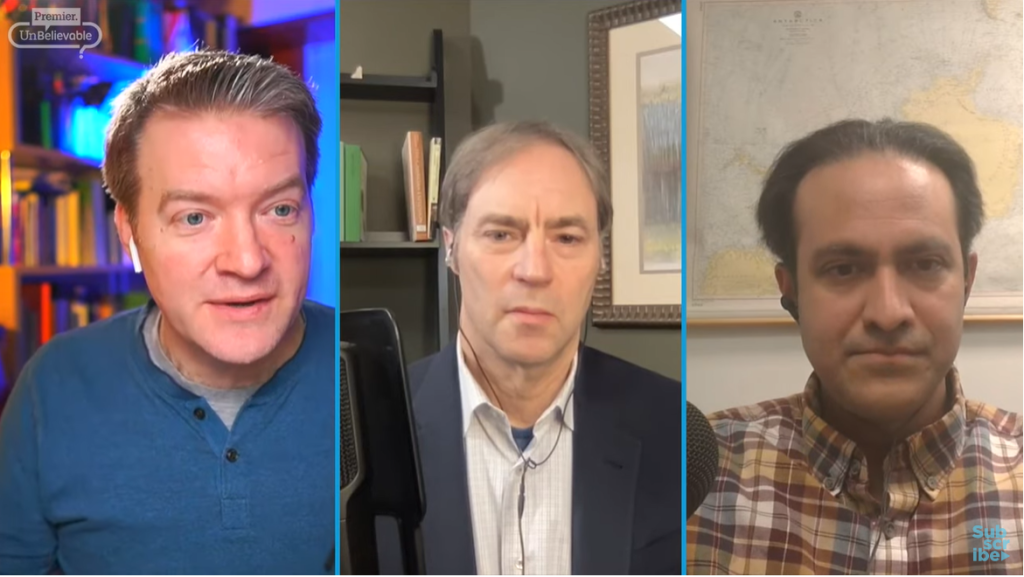
In a recent discussion between Saleem Ali and Stephen Meyer on the Unbelievable! podcast, Some things that Ali said prompted me to want to respond. I wrote of the discussion recently in What is the Basic Order of the Universe? Bottom Up? Or Top Down? But, today, I want to take my observations a bit further.

Saleem Ali has a background in chemistry and environmental studies, and Stephen Meyer has a background in physics, history and the philosophy of science. In their discussion, Meyer argues that our study of the physical world reveals evidence for a God who created it (a top-down design). In Ali’s response, I agree with his statement that certain things are unknowable to human beings because of our empirical limitations.

Ali said these things to highlight that we cannot know with scientific certainty that God exists. I agree with that. I would simply add this: Because science is the study of the natural, physical world, and humans are creatures of the natural, physical world, we are constrained to the limitations of the natural, physical world in our scientific endeavors.

Ali also admits that we may not ever be able to know the origin of the causes of the universe, or of the origin of the laws of physics, or of the origin of life because these things would require us to search beyond the parameters of the constraints of the natural, physical world in which we are bound.

Since we, ourselves, are physical creatures in a world that is limited by physical constraints, we may never know with scientific certainty what else exists.  

This assumes, however, that we have no capacity to know of anything that exists beyond the natural world. Some people are content to foreclose the idea that we are incapable of knowing anything that is not material and physical in nature. I am not convinced, and I see evidence that we are not so limited.

We have basically two choices: 1) assume that the existence of the universe is nothing more than a brute fact; or 2) assume that the universe had a creator. We can either resign ourselves to agnosticism or choose to test one of those two assumptions.

I made the assumption that the universe makes more sense on the premise of a creator, and I have been testing that hypothesis ever since. I won’t apologize for making that assumption, and the degree to which I have tested that assumption has not left my unsatisfied.

To those people want to judge me on that point, I say that you may be in a worse position than me to be a judge. I assume an intellect far greater than me created me with intellect. I do not trust it on my own account. On what basis do you have confidence in your intellect and agency that derived merely from inert, unintelligent matter?

To the extent that you believe your reasoning power evolved from lower life forms, why do you have confidence in the reasoning of a monkey’s mind? I say this not of my own accord; I am applying Darwin’s reasoning that he applied to own his convictions. (See Reflections on Faith and Atheism and Universal Design Intuition and Darwin’s Blind Spot))

As hints of the painter appear in his painting, our study of the natural world can (and does I believe) give us hints of the God who created it. We see the personality of the painter in his painting as we see the personality of God in His creation – including the creation of human beings.

I cannot prove that, just as I could not prove the painter by virtue of his painting. If I had no connection with the painter and knew no one who knew him, my knowledge of him would be mere speculation. But, I would be right in assuming a painter.

Ali says that finite creatures such as ourselves are going to encounter a certain amount of mystery and awe, but that mystery and awe does not necessarily validate a theistic explanation. Mystery and awe by themselves do not warrant a conclusion that God exists. I agree with him on the statement, as far as it goes, and I think we need to be candid about these things.

If God exists, who preexisted, and caused the universe and all things that we know to come into being, including ourselves, we may be cut off from knowing that God and from viewing that causality by our physical limitations and the physical limitations of the universe in which we are bound. Even if the universe hints of Him, we may be incapable of knowing Him by our own abilities because of our limitations.

The only exception I can think of would be for such a God to reveal himself in some way to us. Of course, that is the claim of theism.

We do not know the painter of a painting unless we meet him, and we cannot know the God of the universe unless we “meet” Him in some way. We might be able to track down the painter of a painting, because that painter exists within the same bounds of the same world as we do. Because of our limitations, however, God would have to introduce Himself to us.

That is the claim of people who claim to have “met” God in some fashion. We can explore those claims as we can explore the claims of anyone who witnessed an event or met a person we we have not met ourselves, but let’s lay that aside for the moment.

Continue reading “Exploring the Edges of Our Knowledge on Matters of Science and Faith”

A Preface to the Problem of the Origin of Life

The problem of the origin of life is an Achilles heel, not for science, but for the materialist

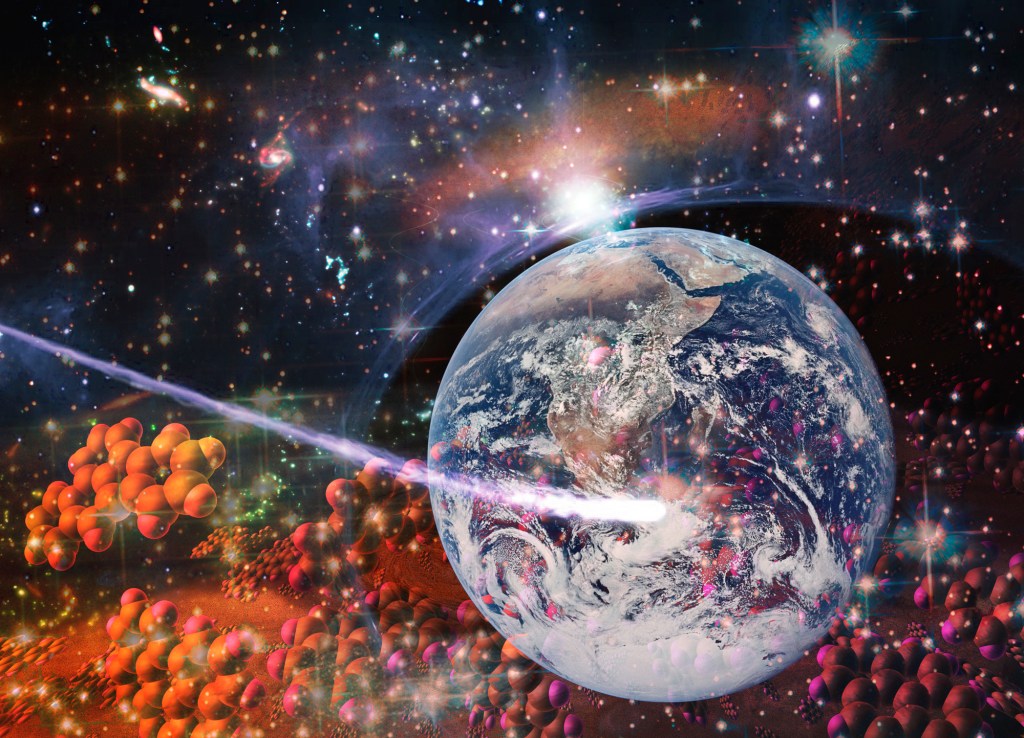
Particles of DNA strands flying through space to Earth.
Concept of the origin of life. Elements of this image furnished by NASA.

Michael Guillen, who obtained degrees in physics and mathematics from Cornell University, where he studied under Carl Sagan and Fred Hoyle, and who taught physics at Harvard University, has a podcast in which he addresses the problem of the origin of life (among many other things). (See Science + God with Dr. G. Episode #44)

Guillen was an atheist into his late 20’s or early 30’s. Then he became a theist, and then a Christian. He has always been a “science guy”, however.

You can find the explanation of how he gravitated from atheism to Christianity in earlier episodes of the podcast. I am not going to address it here. I want to address the origin of life problem using this particular episode as a backdrop because I think he explains the problem well.

Before I do that, I want to preface the origin of life problem and put it in some context. The unspoken and unexamined assumptions we make can cloud our understanding, so I want to seek a little clarity first.

Continue reading “A Preface to the Problem of the Origin of Life”

“If I Were God….”: An Exploration of the Human Heart and Need for God

Photo Credit to Tyler Drendel, a sunrise at Fermi National Laboratory in Batavia, IL

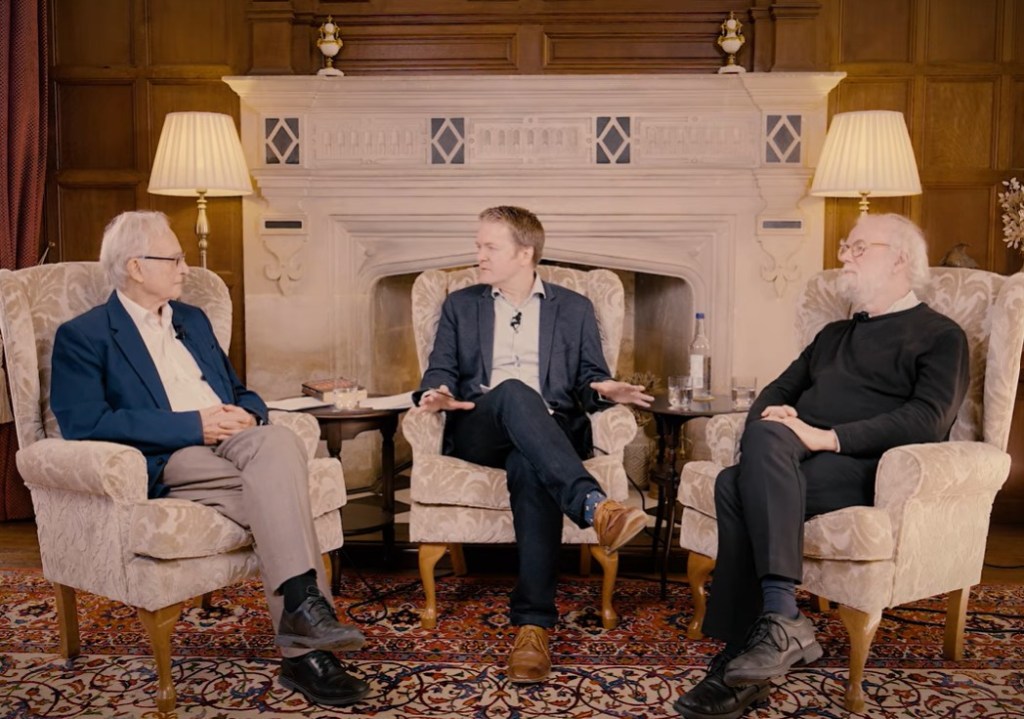
The last episode of the Unbelievable? Podcast (May 21, 2022) featured Francis Collins and Richard Dawkins on Biology, Belief and Covid: Can science and faith be reconciled? Justin Brierly has set the standard for facilitating thoughtful, civil conversations on opposing views of the world, like faith and atheism.

In this particular conversation, Francis Collins, the former head of the Human Genome Project and well-known scientist who professes religious faith, just finished explaining briefly why he came to believe in God at the age of 27. Richard Dawkins, the very well-known scientist and “new atheist”, responded this way:

“If I were God and I wanted to create life, maybe even human life, which is part of the expectation of a religious person, I think I would not use such a wasteful, long-drawn-out process. I think I would just go for it. Why would you choose natural selection, which has the possibly unfortunate property that it could have come about without you? Why would God have chosen a mechanism to unfold His design and chose the very mechanism that would make Him superfluous?

Dawkins speculated that God might have thought, “I wonder what would happen if I set up a primeval, self-replicating molecule and leave it to see what happens.” Dawkins called such an experiment “interesting” and sympathized with the thought of God experimenting in that way. Then he added, “If I wanted to make complex life, I wouldn’t choose that astonishingly wasteful, profligate – cruel actually – way of doing it.”

Dawkins focused on the suffering that comes from competition and evading starvation. He focused on the weeding out process of some animals starving to death, being eaten by predators and succumbing to disease. Dawkins summarized, “It is not a benign process at all.”

Dawkins admitted that this line of thinking is “not a good argument”, but it is what “struck” him as Francis Collins was talking. Indeed, I have heard Richard Dawkins say similar things in debate and in his writings. This line of thinking is obviously compelling to him, good argument or not.

I don’t want to be overly critical of Dawkins. I am not here to blast him or judge him. We all have a judge, I believe, and it isn’t me!

Dawkins is not an ignorant man, obviously. He is a foremost scientist who is a very poignant and elegant communicator and champion of the evolutionary paradigm. His many books and body of work speak to his exceptional intelligence. As people go, he is at the top of the food chain in scientific knowledge and understanding.

Francis Collins is good company for Dawkins, having advanced the relatively new science and understanding of human DNA, perhaps, further than any person before him. Yet, these two men have diametrically opposed views of whether God exists. Neither of them is an intellectual slouch.

I am writing, though, on what Richard Dawkins said. Just as Dawkins was “struck” by what Collins said to respond in the way he did, I am struck to respond by what Dawkins said.

His instinct or intuition or line of thought – whatever you want to call it – was to consider, “If I were God….” Dawkins gravitated toward comparing what he would do if he were God and the world as it exists. Dawkins’s point is, ultimately, that he finds the world as it exists not to live up to what he would have created if he were God.

Let’s examine that line of thinking.

Continue reading ““If I Were God….”: An Exploration of the Human Heart and Need for God”