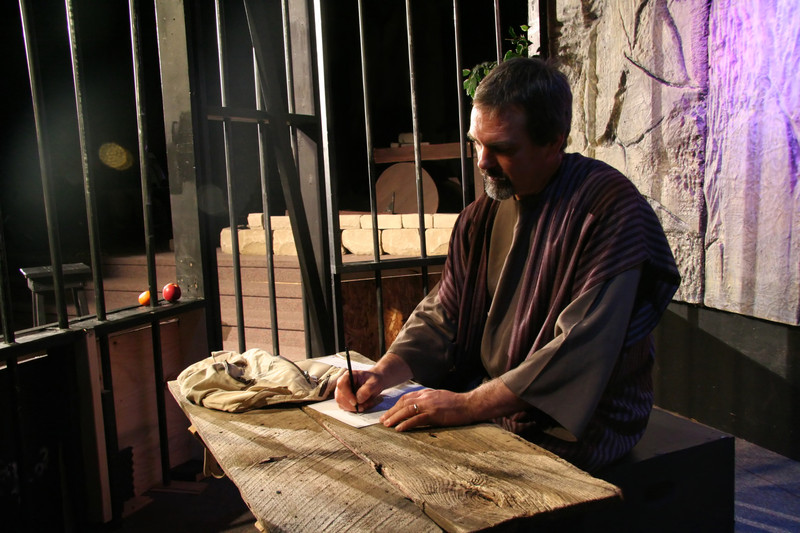
The Rightness of God

God is right because he is God.

ChristianPics.co

For, being ignorant of the righteousness of God, and seeking to establish their own, they did not submit to God’s righteousness. For Christ is the end of the law for righteousness to everyone who believes.” (Romans 10:2-4)

Paul was writing here of the Jews. Paul spoke with particular authority about this because he was a Jew, trained in the highest Jewish traditions by the greatest teacher of the time, and he had once zealously protected the Jewish tradition of the law against the upstart followers of Jesus. And then, he dramatically encountered the risen Jesus.

Paul is saying that the Jews were ignorant of God’s righteousness because they sought to establish their own righteousness, instead of accepting (submitting to) God’s righteousness. Paul knew this because Jesus was the embodiment of God, righteousness and all, in the flesh.

But righteousness seems sometimes like a nebulous concept. It seems better understood with “self” in front of it. It’s hard to think of righteousness without thinking self-righteous. In truth, only God is righteous. We can only try to understand His righteousness.

Another way to look at righteousness is through the lens of “rightness”. Simply put, God is right because he is God. When we think we are right, especially in comparison or contrast to God, we are asserting that we are the measure of right, rather than God.

Continue reading “The Rightness of God”

Was the Jesus Story a Copycat from Pagan Myth?

Is the Jesus story just is an amalgam of pagan myths?


The answer is pretty decisively, no! Much has been said of this popular Internet opinion by actual historians and biblical scholars of every stripe, Christian, agnostic and atheist. Very few, if any, modern scholars, meaning men and woman who have proven themselves in the world of academia, which usually means have been vetted by peer review, hold to this view today.

This is true whether the scholar happens to be a theist or atheist, believer or nonbeliever. There simply isn’t any credible evidence for it. The only evidence lives in the active imaginations of people who want it to be true, like Bill Maher. In fact, he did a movie about it.

Continue reading “Was the Jesus Story a Copycat from Pagan Myth?”

The Resurrection: 2nd Century Legend? or 1st Century Factual Claim?


Easter is just around the corner so thinking about the Christian claim that a man from Nazareth in 1st Century Palestine died and rose from the dead three days later is a timely consideration. The accounts of this event don’t read like mere story or legend. They have all the characteristics of Greek biographies capturing historical accounts.

Many modern scholars accept the Gospels as part of the Greco-Roman biography genre (focusing on the similarities), while others find them uniquely Jewish (focusing on the differences). Central to this ongoing debate is the apparent intention of the authors to assert a factual, historical narrative.[1]

The difficulty modern scholars have with the text, which reads like biographical and historical accounts, is the inclusion of fantastical claims of miracles, the resurrection of Jesus and theological statements, many of which are penned as statements made by Jesus.

From the early to mid-19th Century, much of the biblical scholarship has leaned in a skeptical direction, and that inertia continued robustly into the 20th Century. That scholarly trend produced a skeptical consensus weighted toward a view for instance, that the Gospels, were written long after the events they describe, probably in the 2nd Century, making the resurrection and appearance of Jesus to his followers something akin to legend.

This thread of scholarship suggested that early formulations of the message of Jesus did not include his resurrection or appearances. These things were believed to have been added many decades and two or more generations after the events took place.

The 20th Century view began with skepticism and ended with a skeptical conclusion explaining the resurrection claim by the kind of embellishment that comes with the passage of time. This was the consensus view when I studied religion in the late 1970’s.

But one man, wrestling with his own doubts, took the facts the skeptics would give him and pieced together an analysis that does not square with the view that the resurrection claim is a later embellishment of what the first followers of Jesus believed. These “minimal facts” have changed the views of most 21st Century Scholars, even skeptical ones.

The Scholarly consensus has now changed on when the Gospels were written and on what the early message of the first followers of Jesus was. For instance, the scholarly consensus now agrees that all the Gospels were written in the First Century. Even skeptical scholars date the Gospels between 70 AD and about 95 AD. The scholarly consensus also agrees that the message included the death and resurrection of Jesus from very early on.

Continue reading “The Resurrection: 2nd Century Legend? or 1st Century Factual Claim?”

Evidence of the Resurrection

 (c) Can Stock Photo
(c) Can Stock Photo

The resurrection is the centerpiece of Christianity. If Jesus did not arise from the dead, everything is for naught. If He didn’t rise from the dead, he would be just a man. If he was just a man, he wasn’t even a wise man (like Ghandi or Khalil Gibran); he was a madman or a liar because no wise man is confused about his deity.

Most modern scholars accept, at a minimum, that the people who followed Jesus in the 1st Century believed that He arose from the dead and appeared to them in his body after his death. Paul wrote to the people of Corinth, recounting a list of people who had seen Jesus alive after His death on the cross, including more than five hundred (500), some of whom Paul said were still alive.

Think about that: about 35 years after Jesus died, most of more than five hundred people who claimed to see Jesus risen from the dead in his body were still alive.

This is not proof that Jesus arose from the dead, of course, but we can’t just write it off either! Continue reading “Evidence of the Resurrection”

Dating the Gospels and the Resurrection Story

© Can Stock Photo Inc. / CWMGary

When were the Gospels written? This is an important question.

Most scholars date the Gospels between 40 and 65 years from the death of Christ as follows: Mark 70 AD, Matthew 80 AD, Luke 85 AD and John 95 AD. The scholarly position is stated concisely in the narrative on Dating the Gospels linked here.  Other scholars date them much earlier than that, but Gary Habermas, adopts the majority scholarly view in making his argument for the historical resurrection. (Gary Habermas Explains The Earliest Source Of Resurrection Facts.)

Virtually no one disagrees that Paul’s letters (the ones scholars concede) were written in the 50’s AD. James, Peter and Paul all died in the 60’s AD during the persecution of Christians by Rome. Another key date is the destruction of the Temple in Jerusalem in 70 AD. The scholarly consensus is that “the deaths of these important figures likely encouraged the writing down of the narratives about Jesus”.

Some scholars maintain the narratives were written down well before that time, the reasons for which I will explore in this article. Incidentally, that was the the common view until about the 19th Century, when scholars from the Tubingen school in Germany began to posit the idea that the Gospels were written much later, even as late as the 2nd Century. They also began to question that the Gospels were written by the people attributed to them.

That view of the Gospels is what I learned in college in the late 1970’s, but modern scholars have backed off that view and concede that the Gospels were written within a generation of the death of Jesus. Most scholars agree that Mark was the first Gospel to be written, and that Mark was written around the year 70 AD. Most scholars believe the Gospels of Matthew and Luke were composed in the 80’s, using Mark as source material and a “collection of Jesus’s sayings” (oral tradition). The Gospel of John was believed to derive from different sources (like the Apostle John, himself) and was written toward the end of the 1st Century..

While there is some disagreement on how early the Gospels were written, the work of Gary Habermas has convinced many (most?) scholars, even skeptical ones, that the message of the Gospel – that Jesus, lived, died and rose from the dead, appearing to his followers – goes back many years before the Gospels are believed to have been written. 

In fact, it seems fairly clear that this message (of the resurrection) goes back virtually to the beginning. It goes back, at least, to the time when Paul says he “received” the message at his conversion, but it goes back further than that because he corroborated the message he received with the apostles in Jerusalem who were sharing the same message before Paul did. That message was also at the heart of all the creeds found in Paul’s writings, which were arguably before the Gospels were written.

Continue reading “Dating the Gospels and the Resurrection Story”