The Importance of Asking Tough Questions and Candidly Seeking Answers

Don’t settle for blind faith. Question and seek answers.


Today, I want to do something a little bit unusual. I find my inspiration in a question posed in a Facebook group, Seekers with Questions about Christianity. You will need to become a member if you want to find the post and the response thread that follows it. This is the question:

Hi can someone please help me understand this: If God doesn’t like the idea of concubines (multiple secondary wives), then why didn’t he tell his holy prophets so? Why did He give rights and laws regarding concubines instead of tell his prophets not to have concubines? He made so many rules and instructions so that people know how to please Him and do his will – so why not also add that he doesn’t like men having concubines? And if someone wants to answer that its a matter of embracing the culture of the time, God never changes, and we are never to conform to the world around us; we are supposed to be different to the world and cultures around us.

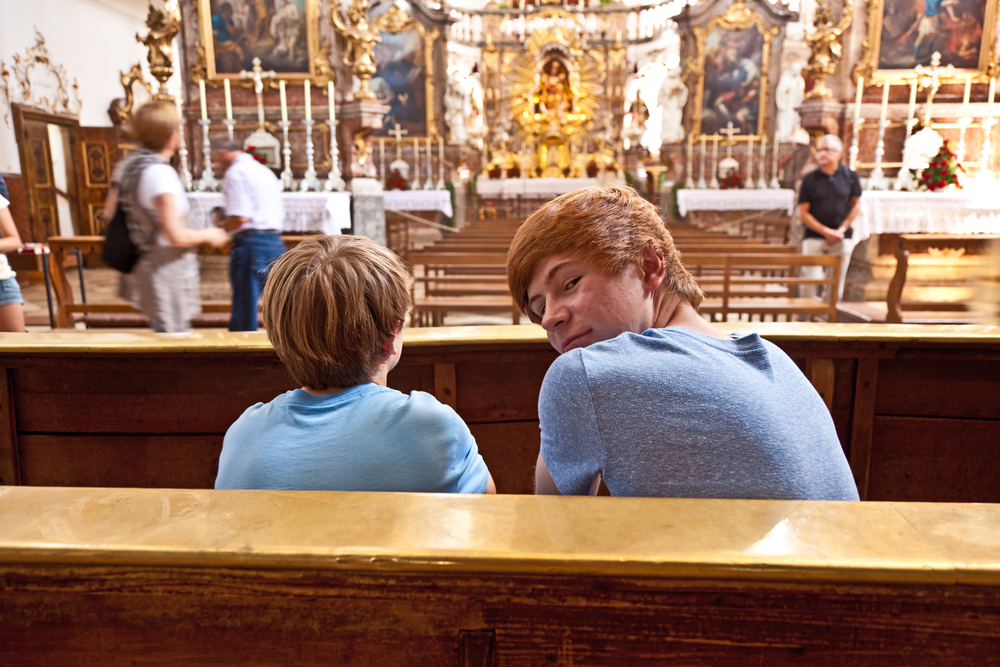
It’s a really good question! We should be asking questions like these. The culture in some Christian circles and churches discourages people from asking tough questions. Or worse: people are actually told not to ask these kinds of questions!

I believe God expects us to ask the tough questions, and He invites us to search out the answers. I also don’t believe doubt is the opposite of faith. A lack of trust in God is more like the opposite to faith. Our doubts often drive us to seek answers and to seek God who has those answers.

In some ways, I believe our certainty can be antithetical to faith. When we think we know all the answers, we can begin to trust in our own understanding more than we trust in God. We run the risk of a shallow, intellectual faith that is wooden and stiff when we value certainty over truth.

If we reach a point where questions are no longer important, we are likely to stagnate and grow spiritually cold and distant from the world around us that has questions. If we stop asking questions, we stop growing in our knowledge of God and stop maturing in our walk with Jesus.

Thus, I think we need to encourage questions, allow ample space for questions, and take them seriously. In that vein, I want to commend Daniel Mann, who is the administrator (or one of the administrators) of the Facebook group in which the question above was posed. He is also a fellow blogger. (See Mann’s Word)

Continue reading “The Importance of Asking Tough Questions and Candidly Seeking Answers”
Thinking Outside the Circle and Focusing on the Center: What Direction are You Moving?

If we are not challenged to rethink what we think we know from time to time, we are not likely coming into close enough contact with Jesus.

I watched the Chapelstreet church service today and listened to the sermon by Jeff Frazier in Batavia, IL. It was just what I needed to hear. Not that it tills new ground; it covers familiar ground from a new angle. It avoids the ruts of old, tired ways of thinking and finds fresh new ground (for me) from which to approach how we see Jesus.

The sermon today was inspired by Matthew 9:9-13.[i] You can read it in full at the endnote below. In summary, Jesus called Matthew from the tax booth where he was sitting to follow him, and Matthew responded by following him. That was the extent of the initial story

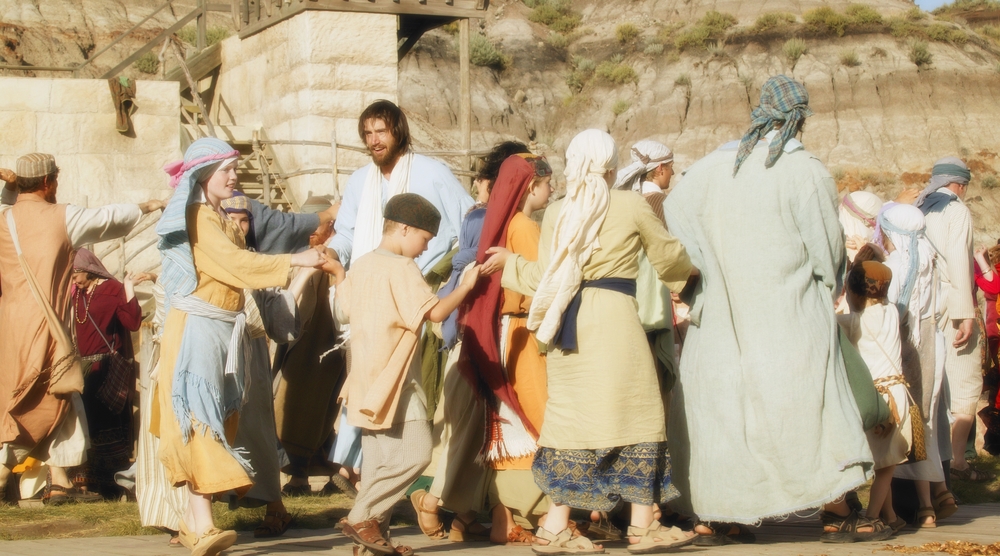
Then Scripture jumps to another scene: Jesus reclining at a table with “many tax collectors and sinners”. We are left to draw our own conclusions about what happened in the interim. It could be that Matthew invited all his friends, who were naturally other tax collectors and “sinners”, to met Jesus who had just connected with him.

The focus of the new scene, though, isn’t on Matthew anymore. The focus shifts to the Pharisees who ask the disciples why Jesus eats with “tax collectors and sinners”.

Before I describe how Jesus responded to them, I want to focus on the fact that the people who had a problem with Jesus were the religious people. Jesus was hanging around with all the wrong people according to the religious insiders of his day.

This is nothing new. I have written often about the Pharisees, Jesus and tax collectors and sinners. In fact, I wrote on the same subject just two weeks ago. (The Danger that Good, Upstanding, Religious People Face Today)

It isn’t a new thing to realize Jesus defied categorization; he shattered expectations and common ways of thinking. He challenged everyone he met to see the world differently, but we sometimes forget the radicalness of Jesus in our routine orthodoxy.

I dare say, if we are not challenged to rethink what we think we know from time to time, we are not likely coming into close enough contact with Jesus!

Back to the story: in First Century Judea, tax collectors were traitors and sell-outs. They were Hebrews who collected taxes for the Romans and used the authority of the Roman occupiers of the Hebrew Promised Land to accumulate wealth for themselves. They were hated by good Jews. They were outsiders in their own community.

As outsiders, they naturally associated with other outsiders (“sinners”). Thus, for Jesus to establish a relationship with Matthew – and worse than that: to “hang out” with other tax collectors and “sinners” – was scandalous. It was unthinkable!

When Jesus heard the Pharisees challenge the disciples to explain why Jesus was associating with “such people”, Jesus famously responded:

“Those who are well have no need of a physician, but those who are sick. Go and learn what this means: ‘I desire mercy, and not sacrifice.’ For I came not to call the righteous, but sinners.”

Matthew 9:12-13

This is a familiar passage to us, but I think the application of the message is sometimes lost on us today. I think we can fall into the trap of the Pharisees in our thinking without even realizing it. Thus, we need to be challenged to see things from a different angle, just as Jesus challenged the Pharisees in the first century.

Again, these are not new thoughts, but the the change of perspective (for me) comes courtesy of Paul G. Hiebert. Born to missionary parents in India, he became “arguably, the world’s leading missiological anthropologist”.[ii]

When he moved back to the west, he wrestled with questions like these: What does it mean for an illiterate, Hindu peasant to know Jesus? How much of their old life and traditions must be left behind?

Having observed missionaries in India, he concluded that the western mission movement was importing too many western traditions and thoughts. He saw the need for thinking outside the western box – like Jesus encouraged the followers of his day to think outside the box…. or rather, outside the circle, as we will see.

Continue reading “Thinking Outside the Circle and Focusing on the Center: What Direction are You Moving?”

A Christian Upbringing Doesn’t Necessarily Lead to Genuine Faith: Faith v. Culture

We don’t inherit a relationship with God from our parents.

Julie grew up in a Christian family and “gave her life to Christ” around 10 years old. She didn’t really know what it meant. It was just something she was expected to do.

This is the story of many people in the United States where Christianity is culturally favored, especially in some areas of the country. Christian upbringing, though, doesn’t make one a genuine Christian believer.

I wrote a blog article titled, God Has No Grandchildren, on this point. Christian faith is about relationship with God. We don’t inherit a relationship with God from our parents.

Julie’s story is an example of this. She wandered far from the roots of her Christian upbringing because she didn’t have relationship with God.

Christian faith is only real if it is genuine and personal. No one can make that connection with you but God, Himself. When He does, it changes everything.

Julie’s story is also an example of coming to genuine Christian faith, of being born again and becoming a child of God.

Everyone’s journey is a bit different. Some take many twists and turns, but God is always there, knocking on the door to our hearts, waiting for us to open up and let Him in.

When we do that – knowingly, meaningfully – He gladly meets us where we are. It isn’t anything we do, other than to open up and yield to Him as our Lord and Savior.

We don’t enter into relationship with God on our own terms. The terms are all His, but they are freely given to all who would receive Him.

“[T]o all who … receive him, who [believe] in his name, he [gives] the right to become children of God, … born, not of blood nor of the will of the flesh nor of the will of man, but of God.”

John 1:12-13

Following is Julie’s story in her own words:

If Julie’s story interests you, and you want to hear other stories of people raised in Christian homes, by Christian families and going to church, who come to realize that they are missing something, you can read other stories that get posted from time to time of people raised in Christian families who discover genuine faith in God.

The Longing of Faith and the Pleasure of God

Faith is the exercise of rejecting all other choices in this life but God.

I recently gave a presentation on faith (and doubt). We moderns tend to think of faith as the opposite of doubt – as in proof or evidence, or the lack thereof – but that isn’t the way Scripture presents faith to us. Cosmological and fine-tuning arguments for the existence of God and so on are elementary.

We shouldn’t be commended for merely believing God exists. God has made himself obvious. (Rom. 1:20) Even the demons believe … and bristle! (James 2:19)

Rather, faith involves trust and relationship. It involves a willingness to rely on God, rather than rely on ourselves. A willingness to wait on Him, to trust Him, and to be confident in His goodness toward us. Faith is believing God loves us and desires us to love Him.

We receive God’s grace by faith; it’s not anything we do, lest anyone boast. Rather the grace we receive is the gift of God offered to us out of His love for us. (Eph. 2:8-9)

“Anyone who comes to God must believe He exists”

Hebrews 11:6a

Of course!

and that He rewards those who earnestly seek Him.”

Hebrews 11:6b

Faith is not just believing that God exists, but believing that He really does reward those who desire Him.

I had not previously thought of the story of Adam and Eve in the context of faith before. After all, they didn’t doubt God existed. God walked with them in the cool of the day in the garden. They knew God face to face!

When Satan tempted them, however, they lacked faith. They failed to trust that God was trustworthy.

It may not seem immediately obvious that the story of Adam and Eve is a story of unbelief, but I think it is. When Satan focused their attention on the seeming goodness of the fruit to eat and questioned why God would not want them to eat what was good for them, Satan was tempting them to doubt God’s goodness toward them.

Adam and Eve ignored God’s warning, determining for themselves what was best for them. Unbelief is an unwillingness to rely on God and a choosing to rely on ourselves and our own ability to determine what is best for us – rather then rely on God.

Adam and Eve were intrigued by Satan’s claim that eating the fruit would make them like God. They bought into the claim that God didn’t want them to be like Him, knowing good from evil. At the core of that temptation is the desire not to be dependent on God and to be self-sustaining, self-determining, and self-righteous.

Of course, God did want them to be like Him. After all, God made them in His very image! It was the very core purpose of His plan for them to be like Him!

Continue reading “The Longing of Faith and the Pleasure of God”

What Does it Mean that God Is a Person?


An elementary truth claim of Christianity is that God is a “Person”. Not a thing. Not a force. Not a principal of reason or intangible construct, or a feeling.

But what does that mean?

We may smirk at the practice of people in the Bronze Age who constructed gods out of hand-made objects and worshiped them. We may think ourselves better than primitive people who worshiped the sun, moon,  mountains, and trees. We may not worship physical objects anymore (most of us), but are we any different than they?

When we conceive of God as a force indistinct from the universe, we are doing the same thing, albeit with more subtlety. Our concepts of God may be more sophisticated than most people in primitive cultures in the past, but only in degree.

When we approach think of God as an intellectual construct or a feeling, we may be walking in the footsteps of our primitive ancestors. The same is true when we view God as an abstract idea. An abstract idea, or ideal, is still a thing. Not a thing made of human hands, but a thing imagined by human intellect.

When we construct a god, whether by our hands or in our minds, or view God as indistinct from the universe, we are not perceiving God in the way He is revealed in the Bible. These are constructs are “idols” that are poor substitutes for the “person” of God.

Continue reading “What Does it Mean that God Is a Person?”