Can Laws Like Gravity Create Something from Nothing?

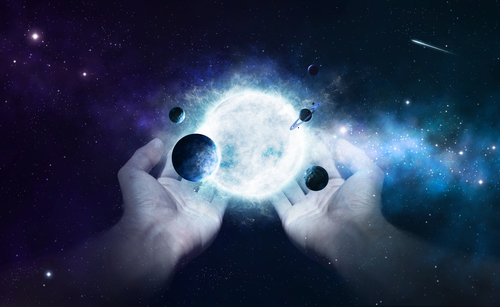
If gravity created the universe, the universe wasn’t created out of nothing.

Photo by Tyler Drendel at the Garden of the Gods

I’m not a scientist, and I am not even “a science person”, though I have become much more interested in science as an adult than I was as a child. I am more of a philosophical and theological person. My background is English literature, world religions, and American jurisprudence (law).

We give scientists quite a bit of deference in our modern society, and so we should. They are peeling back the layers of this universal onion in which we live. Scientific discoveries are fascinating, life-changing and significantly valuable.

I would be quickly lost in the weeds in a discussion of science among scientists, but scientists are human. They have flaws, and they usually are not schooled in philosophy or theology.

For instance, Stephen Hawking is one of the most brilliant scientists of our age. In his book, The Grand Design, he says, “In a world in which a law like gravity exists, the universe can and will create itself out of nothing.”

This isn’t a statement of science; it’s a philosophical statement with theological impact. The question is: does it make sense?

Continue reading “Can Laws Like Gravity Create Something from Nothing?”

Who Created God?

The question “Who created God?” has stumped many a person who believes in God, but the question is flawed.

Depositphotos Image ID: 10605683 Copyright: kevron2002

One of the “show stopping” questions posed by atheists is this one: If God created the universe, who created God?

It is a clever question, and has stumped many a person who believes in God, but the question, itself, is flawed. Let me explain.

In my response, I am indebted to John Lennox who’s answer to this very question is embedded at the end of this blog article. John Lennox, is a Professor of Mathematics at Oxford University and a frequent speaker on topics of science, philosophy and religion. He has twice debated the vocal atheist, and Oxford professor, Richard Dawkins, who wrote a book, The God Delusion, using this question as a centerpiece.

The flaw of the question is that it is loaded with the assumption that God was created. The response of the Christian (or theist generally) is that such a notion (that God was created) is not a notion about God at all, but a notion about a god – a created thing. Another word for such a thing is an idol.

Continue reading “Who Created God?”

Evidence, Love and Faith

Pat, Don & Mulligan 4 - Copy


The 2010 debate between Richard Dawkins, and John Lennox, both professors at Oxford University in England, is interesting to consider if you have the time and inclination. Dawkins is famous for his books supporting atheism and opposing religion. Lennox is a mathematician and philosopher of science who is an outspoken Christian.

The debate uses The God Delusion, a book by Richard Dawkins, as the backdrop. The outline consists of six points (theses) from the book to frame the debate whether science and faith are compatible. Richard Dawkins famously maintains that science and faith are not compatible, and Lennox takes the opposite position.

At one point in the debate, Dawkins attempts to define faith to exclude evidence or reason. Faith is commonly defined as “strong belief or trust in someone or something”. The dictionary definition does not make any reference to evidence. Faith could mean strong belief or trust, with or without evidence. The definition of faith does not necessarily include or exclude evidence or reason.

Dawkins’ definition of faith is loaded – his definition of faith is belief without evidence, or “belief in the teeth of the evidence”. Lennox defines faith as belief supported by strong evidence, and robust faith supported by robust evidence.

In this context, Lennox asked Dawkins a question: he asked, “I assume you have faith in your wife. Is there any evidence for that?” Grinning nervously at the personal nature of the question, Dawkins responded that he had “plenty of evidence” regarding his wife,  and proceeded to give evidence for how he knows his wife loves him.

Dawkins clearly misunderstood what Lennox meant. Lennox was only asking about faith that Dawkins’ wife existed. Dawkins assumed,  however, that Lennox meant whether Dawkins’ wife loved him. This assumption made for an interesting twist to the debate. Continue reading “Evidence, Love and Faith”

Ten Quick Responses to Difficult Questions on Faith with the Help of John Lennox

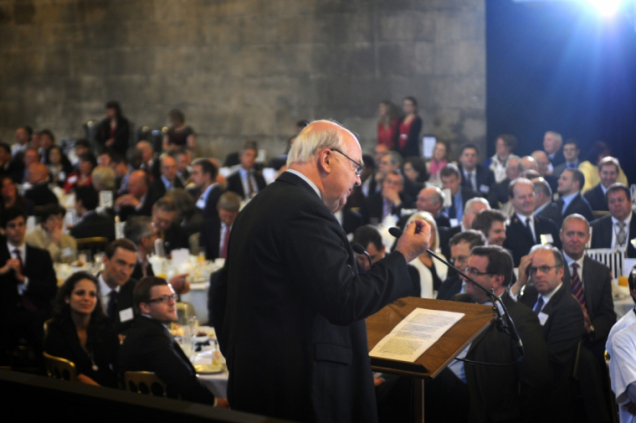
john-lennox-houses-of-parliament


The ten statements and responses suggested below are inspired by a presentation by John Lennox, the famous mathematician, philosopher and Christian theist. Neither the statements nor the responses are comprehensive in the least, but they offer a quick look into the richly rational world of faith through a theistic (and Christian) lens. At the same time, they expose the shallowness of many atheistic objections to the idea of God.

                1)   Christians are really just atheists regarding Zeus and other gods. True atheists go one god further and reject the Christian god.

Statements like these reveal a willful ignorance. The Christian God (as with Allah of Islam and Yahweh of Judaism, for instance) is an exclusive claim: there are no other gods. That Christians, Muslims and Jews cannot all be correct in their understanding of that exclusive God does not negate the possibility that such a God exists. Continue reading “Ten Quick Responses to Difficult Questions on Faith with the Help of John Lennox”