“Suicidal Empathy” and Weakness: Trust and the Church

Confusion and red flags are reason to stop and consider who we are and where we are going


A funny thing happened to me one evening recently. I received a text from a number that was not in my contacts. The texter introduced himself and said he was from “VBC”. He said he emailed me, but I didn’t respond, so he was sending me a video of the child I sponsor from Uganda with a link for me to click.

I didn’t know the person. I didn’t get an email, and I don’t sponsor a child from Uganda.

Since scamming people is a billion dollar industry, I was cautious,. I do sponsor a child from Africa, but she lives in Ethiopia. The initials, “VBC”, are the initials for the church I go to, so I didn’t just delete it. I looked up name of the texter, but I couldn’t find his name in the directory.

I wanted to respond positively if he was a brother in my church, but I didn’t know him. What if someone hacked into the church directory? What if they found just enough information to make it sound good and to get me to click on a malicious link?

I texted him back and asked what email he had for me. The email he sent back was one letter off. He also sent an email with a shortened version of my former wife’s name, but it isn’t the shortened version she uses. It was close, but wrong. He had just enough of the right information for me to think it was legitimate but just enough of the wrong information for me to pause.

Finally, I texted the campus pastor, and he confirmed that the man was from VBC (but a different campus). He also did go to Uganda where the church has an ongoing missionary presence.

Then, I remembered: there is a young man in the church with exactly my first and last name. I have only met him once because he is a distant relative, and he goes to a campus of the church that is furthest from the one I go to. With this information, I called the man who texted me, and we had a good a laugh.

My name isn’t common. We both sponsor children in Africa. We both were marred to women with the same first name (different nicknames). The similarities were uncanny, but the differences signaled the need for caution.

I was thinking about this after doing my routine reading the next morning. The reading plan focused on James’s letter “to the twelve tribes scattered among the nations” (James 1:1), and it posed this question:

Have you ever been confused about who sent a text, email, or note?

In light of my experience the previous night, I realized that God might be talking to me! The follow up questions ask whether not knowing who sent the message confuses the meaning and whether knowing who the sender is changes our understanding.

The answer is definitely, yes and yes! I was confused when I wasn’t sure who sent me the original text, and knowing it came from a trusted source changed everything.

The context in which this story and my thoughts arise this morning is the confusion in the church caused by Donald Trump and his sidekick, Elon Musk. I have seen red flags since 2015 and reason for caution. The topic has been much on my mind, because some Christians champion these men and defend everything they do, and other Christians don’t.

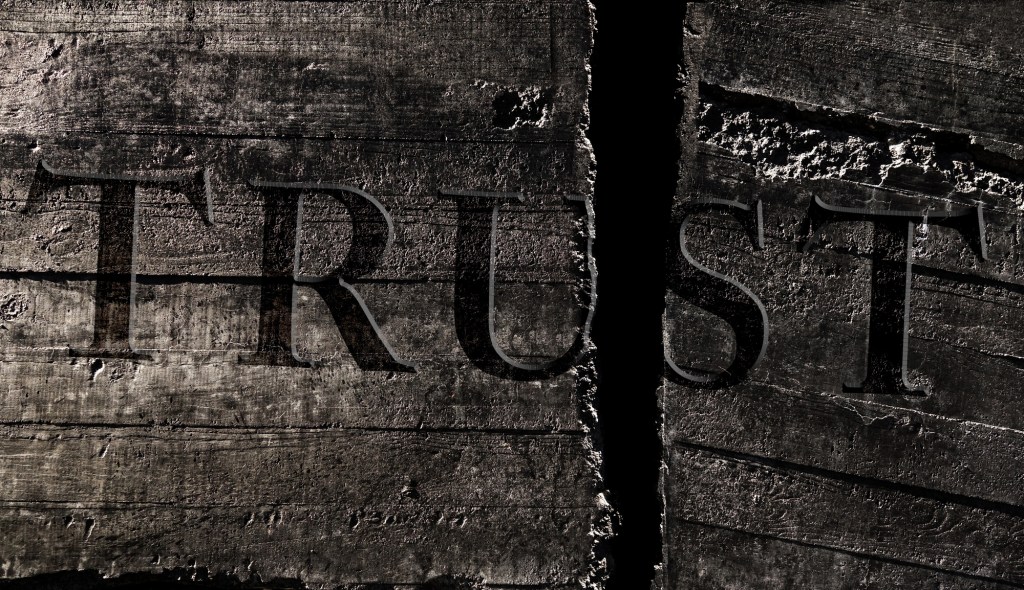
It seems to boil down to who you trust and whether we should ignore look the other way at the things that seem a little “off”.

What are we to think? Can we trust them? Do we know who they are? Do we ignore the red flags? Perhaps, more importantly: Do we know who we are?


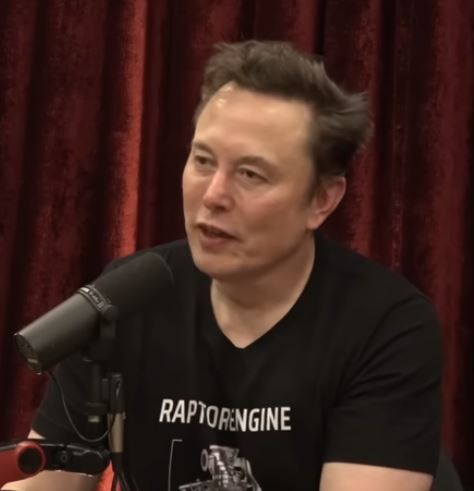
I am afraid I can’t get very deep into this subject without writing a tome, and I have already written much, so I want to stick with the context out of which this experience and these thoughts flow. Specifically the controversy over Elon Musk’s comment to Joe Rogan: “The fundamental weakness of western civilization is empathy.”

Continue reading ““Suicidal Empathy” and Weakness: Trust and the Church”

Faith, Hope, and Love in These Times

These times are exciting and scary for people

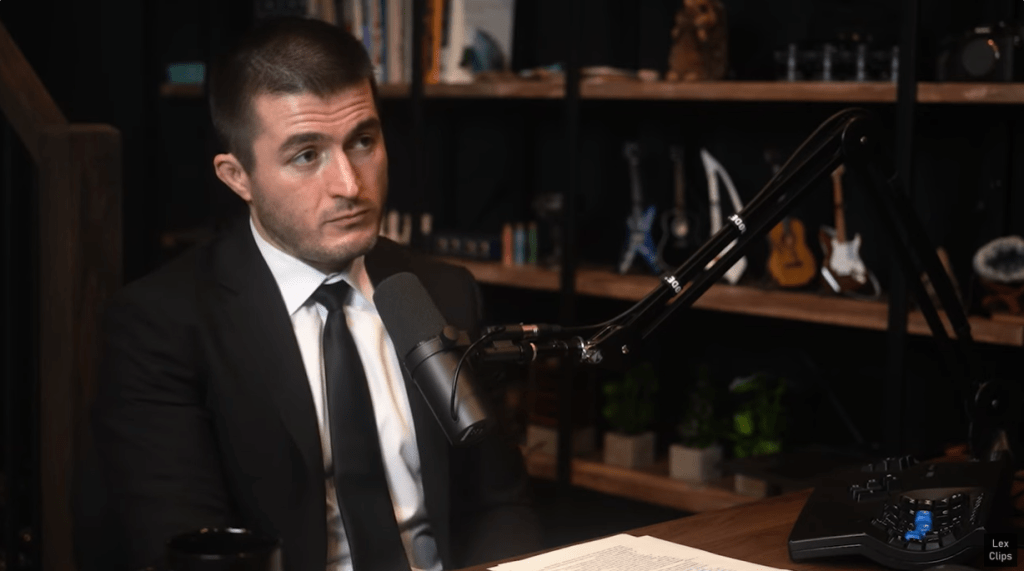
Elon Musk: 100 million people with Neuralink implants in the future | Lex Fridman Podcast

My writing today comes from my quiet time when I read the Bible in the morning. I have been sensing the importance of hope in recent days (or weeks) in the light of the troubling times we live in. It’s easy, even as a Christian, to lose hope in these times. I do.

Just a week ago, I had a conversation with my 31-year old about a great leap in technology being pioneered by Microsoft that could increase technological advancement exponentially. (See Microsoft’s NEW Quantum Chip is Mind Blowing!) Glenn Beck speculates, “If they can put that one chip in your phone, it would make your phone as powerful as the best supercomputer with a server farm the size of the planet earth.”


Or conversation focused on his wife’s concern (and mine) that such a technological advancement may exceed our ability to do good with it. Imagine people having that power at their fingertips….

Six months ago, Elon Musk discussed the distinct possibility of fitting 100 million people with Neuralink implants in the future. This device implanted in the brain would allow “superhuman abilities”. It would replace cell phones. We would essentially have computers in our brains.


Musk somewhat presciently said, “The problem will be figuring out what we want….” A person who wants to cause harm could cause greater harm exponentially faster and exponentially more devastating than can be done now with our merely human brains, like going from muskets to a nuclear capabilities.

Lex Friedman commented, with maybe greater prescience, “I think it’s exciting and scary for people because … it changes the human experience in ways that are very hard to imagine.” Interestingly, Musk agreed, “We would be something different.”

This uncertainty suggests we should be cautious with technology that may fundamentally change the human brain. The specter of the availability to change the human brain to make us different in ways we can’t even predict raises similar ethical questions as the ability to clone humans.

Not only should we be circumspect and careful with these things; we need to be cautious about trusting such powerful technology to people with varying worldviews. Do we want a materialist driven people who believe there is no God, nor objective morality, nor any no purpose in life other than what we want it to be to be in control of such technology. What about an Islamic world? Or a Trump and Musk world that is driven by the almighty dollar?

Pick your suspect worldview. I wonder, “Can we handle it?” And, “Are we playing God?” And, “What unintended consequences might we trigger?”

As I write these things, I can hear another voice in my head nagging me to reconsider my cautionary approach. “Wouldn’t it be great to control your world with your mind?!” Imagine how a Neuralink might empower and improve the life of a quadriplegic. It could be used for so much good!

In reality, such technology is likely to be used both for good and to be abused. That is the pattern of humanity. Whether it might be used more for the good than abused is something no one can predict, though it may depend on how slowly, cautiously, and circumspectly we roll it out.

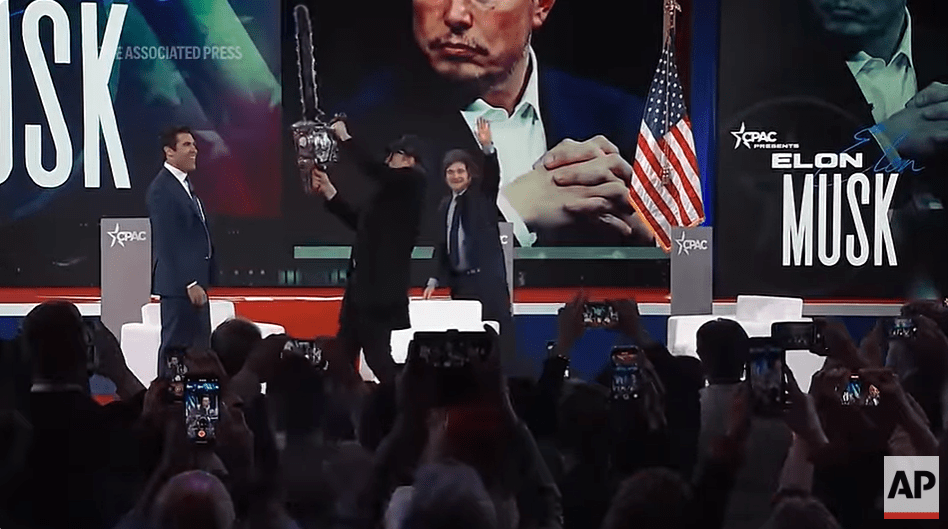
On that score, consider what Elon Musk is doing with the power Trump has given him in the federal government. He has wielded that power with glee like a chain saw massacre. He even boasted about it:

This is the same man who wants to put his technology in your brain.

I might be tempted to think that I am being overly cautious, but recent developments highlight the concerns. Elon Musk has been invited into the inner workings of our government by Donald Trump. He has been given unprecedented access to personal and private information of all people who live in the US. Together they have been freezing funds, firing people, and shutting down programs at an unprecedented rate.

I have likened what they are doing to a corporate Board of Directors for a hospital identifying inefficiencies and wasteful spending and taking a wrecking ball to the hospital with the patients, doctors, and nurses still in it. In weeks, they have have attempted to freeze the expenditure of billions of dollars already committed to operating programs in this country and around the world, and they are gutting and shutting down those programs.

The rashness and imprudence of doing what they are doing is almost unimaginable, and they are doing it because they have the power to do it. Right now, there is no check or balance in the way. They are moving faster than the other branches of government can respond.

We don’t know, yet, what the fallout will be. We are seeing only anecdotal results right now – jobs lost, summary deportations, 50 year contracts terminated with veteran agencies, etc. – in less than two months. Trump and Musk have enthusiastically wielded the power they now have with no apparent thought or care to the lives they have disrupted and the people they have hurt in the name of efficiency because they can.

We have a tendency to run further and faster with technology than our ethical bandwidth can keep up. The industrial revolution led to abuses like child labor and competition among nations that presaged the two great World Wars. Those technological advances made those wars more deadly than ever before – with tanks, guns, planes, toxins, and bombs (conventional and nuclear) – that were more devastating than the weaponry available in prior wars.

The kinds of technological advances Microsoft and Musk are exploring could lead to unimaginable abuses of power. That power will be exponentially greater than what we have now, and it could easily trigger the end of human civilization in the wrong hands.

The technology that fueled the World Wars is nothing like what we have now. The nuclear technology that ended WWII and advancements in technology that exist today could easily end human life on earth in the time it takes to push a button.

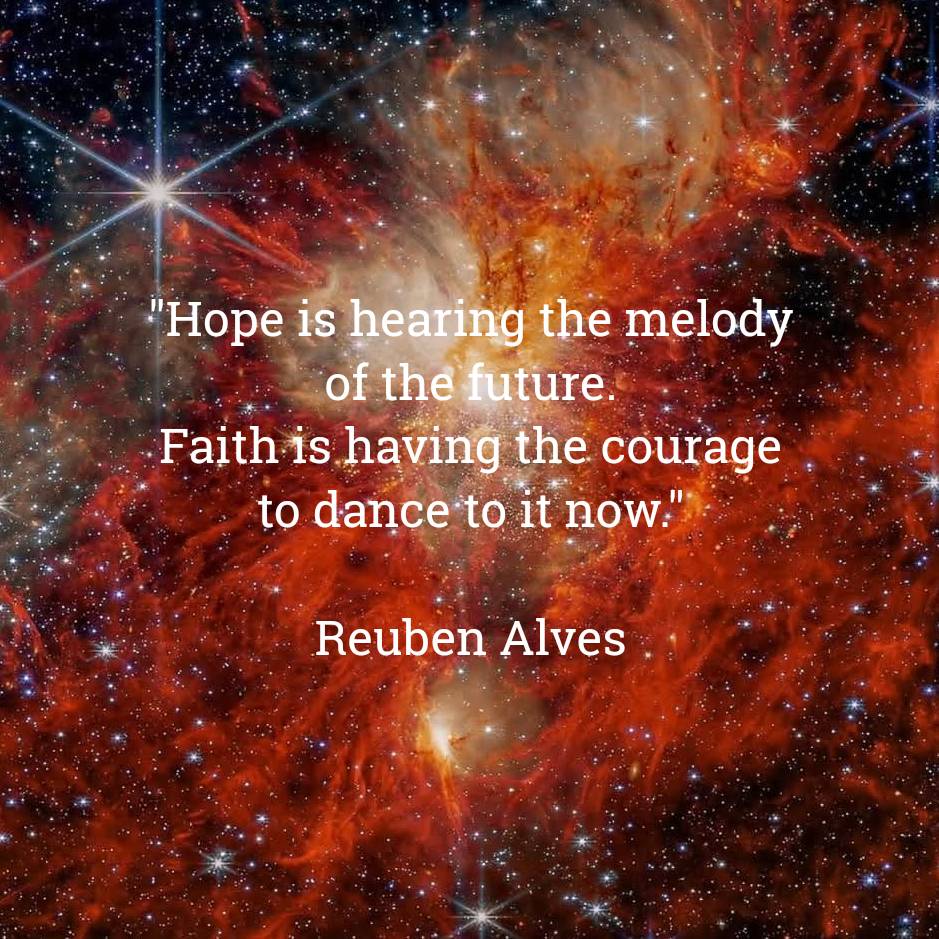
In that context, I read my daily Bible reading plan to today that included a quotation from Brazilian theologian, Reuben Alves, that I have included here. So, I turn now to hope, fueled by faith, and informed by love.


Continue reading “Faith, Hope, and Love in These Times”