Taking the Emotion out of Sin: A Study in the Substance of Death and Life

Let’s put aside the issue of morality, take the emotion out sin and see what we have left.
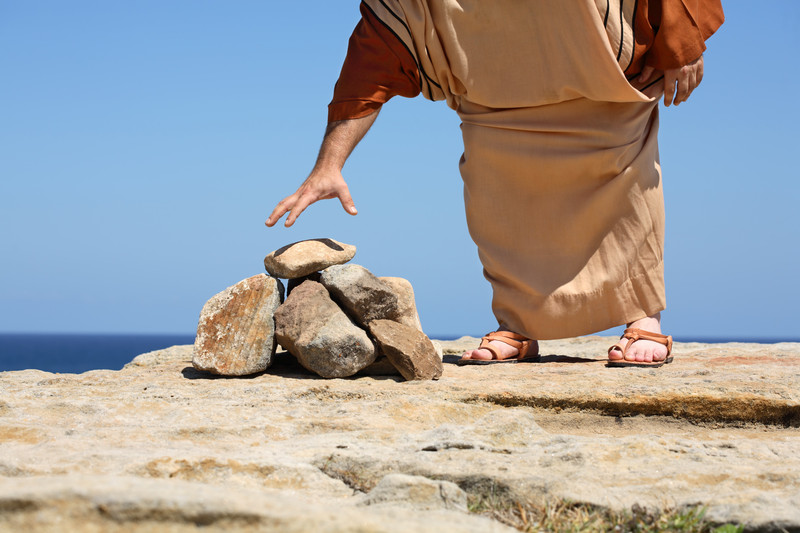
 (c) Can Stock Photo


“[T]he wages[1] of sin[2] is death, but the free gift of God is eternal life in Christ Jesus our Lord.” Romans 6:23.

We tend to view sin in moralistic terms, but I wonder sometimes if we might look at sin in non-moralistic terms. The adage, “we are what we eat”, is an apt description for sin. How we eat is a moral issue for some people, but most people (or many at least) don’t view eating that way.

We tend to view sin in moralistic terms, as in reaping what we sow. [3] What if we try to take the morality out of the discussion? What would we have left?

Although sin is a moral issue at heart, the emotion of morality in this modern, post-Christian age in the US may obscure how we view sin and the relationship between sin and death.

Men have tried to hijack morality and claim it as a product of their own making. If God exists, however, He is the author of morality. God, Himself, is the moral standard. I would say that, without God, there is no such thing as objective morality.

If God doesn’t exist, we create our own morality, and your morality might be different than my morality. The morality that is predominant in my community, may not be the morality to which your community subscribes. No one is ultimately right, and no one is ultimately wrong, except that those with the power and influence get to set the standard.

But that’s not what this piece is about. Let’s put aside the issue of morality and take the emotion out of the equation. Let’s take the emotion out of sin and see what is left.

Continue reading “Taking the Emotion out of Sin: A Study in the Substance of Death and Life” →

Evidence of the Resurrection

 (c) Can Stock Photo
(c) Can Stock Photo

The resurrection is the centerpiece of Christianity. If Jesus did not arise from the dead, everything is for naught. If He didn’t rise from the dead, he would be just a man. If he was just a man, he wasn’t even a wise man (like Ghandi or Khalil Gibran); he was a madman or a liar because no wise man is confused about his deity.

Most modern scholars accept, at a minimum, that the people who followed Jesus in the 1st Century believed that He arose from the dead and appeared to them in his body after his death. Paul wrote to the people of Corinth, recounting a list of people who had seen Jesus alive after His death on the cross, including more than five hundred (500), some of whom Paul said were still alive.

Think about that: about 35 years after Jesus died, most of more than five hundred people who claimed to see Jesus risen from the dead in his body were still alive.

This is not proof that Jesus arose from the dead, of course, but we can’t just write it off either! Continue reading “Evidence of the Resurrection” →

Seeking God: When God Does Not Answer

 (c) Can Stock Photo

(c) Can Stock Photo

Finding Jesus Part I

When we cry out to God and can’t hear his voice, and He doesn’t respond, and we don’t sense his presence, we tend to get discouraged. For someone who is doubting and has not ever felt God’s presence, the tempting conclusion is likely one of the following: 1) God does not exist; 2) God is not accessible; 3) God is fickle; or 4) we are not good enough (or some variation of the forgoing).

I have been there and know the feeling of angst that accompanies a desire to connect with a God who does not seem to want to connect with me.

In this piece, and the two segments that follow it, I am going to explore how to “find” Jesus. This is not some intellectual or superstitious exercise. This is no fanciful experiment. I am talking about a real, life changing, experiential encounter with God!

Continue reading “Seeking God: When God Does Not Answer” →

Seeking God: Getting to the End of Self

 (c) Can Stock Photo

(c) Can Stock Photo

Finding Jesus Part II

In Finding Jesus Part I (Seeking God: When God Does Not Answer), we explored the idea that God is near us at all times, but we cannot connect with Him because of us. We are the problem; we get in the way of “finding” God, and in order to “find God”, we must get out of the way (lose ourselves).

I will explore getting to the end of self where we can find God in this piece and follow it up with a look at Finding Jesus Part III (Seeking God: Different Paths and the conclusion: Finding Jesus Part IV (Seeking God: Finding Jesus)!

But first, I want to relate a conversation I had with my daughter. She told me that she has called out to God in the past, but he was not there. He didn’t respond, and she was discouraged.

I have been there too. I’ve called out to God at times in my past, and God didn’t respond. One time in particular, it was as if I was talking to the clouds, and my words were bouncing back at me.

I distinctly remember that time. I was perplexed, not knowing which direction to go. I had life choices ahead of me that were mutually exclusive. They were widely divergent paths, and I was torn. I was either going to go back to college for my senior year, or I was going to drop out.

Continue reading “Seeking God: Getting to the End of Self” →

Seeking God: Different Paths

 (c) Can Stock Photo

(c) Can Stock Photo

Finding Jesus Part III

In Finding Jesus Part I (Seeking God: When God Does Not Answer)), we explored the idea that God is near us at all times; that we do not actually “find” God; that we are the problem; that we get in the way of “finding” God; and in order to “find God”, we must get out of the way and do the unthinkable – lose ourselves [1].

In Finding Jesus Part II (Seeking God: Getting to the End of Self), we explored what it means to be in the way, to lose ourselves and get out of the way, with an anecdotal example from my own life.

But we need to explore that a bit further before getting to the conclusion: finding Jesus. And it may help to contrast what getting to the end of self (losing the self) means in the Christian sense compared to the Buddhist sense because finding the right path is important to getting where you want to go.

Continue reading “Seeking God: Different Paths” →