The Myth of Objectivity

 (c) Can Stock Photo

Thought-provoking articles are a source for many articles I write, and I often use them as a springboard for my own thoughts. An article by Trent Horn, Neil DeGrasse Tyson Shows Why Science Can’t Build a Utopia[1], is my springboard for this article.

Neil DeGrasse Tyson, of course, is an outspoken and popular agnostic ambassador of science. The Horn article was precipitated by Tyson’s tweet:


“Earth needs a virtual country: #Rationalia, with a one-line Constitution: All policy shall be based on the weight of evidence”[2] 


and Horn’s counter-tweet:


“@neiltyson ‘Rationalia’ is as useless as ‘Correctistan,’ or a country whose constitution says, ‘Always make the correct decisions.'”


To illustrate what Horn means by his counter-tweet, he used the example of a driverless car. Fatalities have already happened with them and will undoubtedly happen again. Knowing that fatalities are unavoidable, the question becomes: how should driverless cars be programmed when confronted with two options: 1) to run over pedestrians or 2) to run into an object that may destroy the car and kill the passengers?

How does Tyson’s “Rationalia” weigh the evidence to determine which is the best course?

Continue reading “The Myth of Objectivity” →

Equality in the Economy of God

nicholas-2nd-in-state


“Culture tells us two great lies about success: you can be whatever you want to be, and you can be the best in the world.”

This was a statement in a newsletter I received. It couldn’t be truer. Not that we want to hear that sort of thing. We want to be told we “can do it”! And, we like believing the lie.

The truth is that we can’t all be the best. We can’t be whatever we want to be.

Just being real here.

I don’t want to buy into the lies. I want the truth, and I think most people (many people anyway) really want the truth. We get tired of the lies. Give me something I can stand on. I don’t want a pipe dream. Continue reading “Equality in the Economy of God” →

The Jesus We Meet in the Gospels

 (c) Can Stock Photo
(c) Can Stock Photo

I didn’t want to read the NY Times article, What Religion Would Jesus Belong To, by Nicholas Kristof.[1] Just as I suspected, the article lacked a deep understanding of Christianity. It lumps Christianity together with other religions of the world in a pluralistic mush. I don’t know the depth of the author’s understanding of Christianity, but it didn’t show in the article (though he claims a conservative Christian background).

Still, the article makes a good point… and I shouldn’t be so reluctant to admit it.

American churches don’t reflect “the Jesus we meet in the Gospels”. Never mind that the author’s proof is another NY Times article complaining of the Christians of the Republican Party.[2] The author seems to equate Jesus with the current political and moral landscape, as if Jesus would condone it, as if the modern American church is the exact representation of Jesus. If the modern American church doesn’t accurately reflect the Jesus we meet in the Gospels, it isn’t a reflection on Jesus; it’s a reflection on the modern American church. Continue reading “The Jesus We Meet in the Gospels” →

Destined for Tribulations

canstockphoto22892406
(c) Can Stock Photo

“I, John, your brother and partner in the tribulation[1] and the kingdom and the patient endurance that are in Jesus, was on the island called Patmos on account of the word of God and the testimony of Jesus.”

This is how John begins relating the revelations he received that are preserved in the Book of Revelation, the last book of the New Testament. Sometimes we read over things quickly that other times will stick out. This verse sticks out today, perhaps, because we have a good friend who is fighting cancer. Today is also the 15th anniversary of 9/11.

I recently wrote about the charge from atheists that people have faith in God because of wishful thinking. Nothing could be more wishful. True faith is forged only in tribulation. Continue reading “Destined for Tribulations” →

Counter-Critiquing the Moral Argument for God

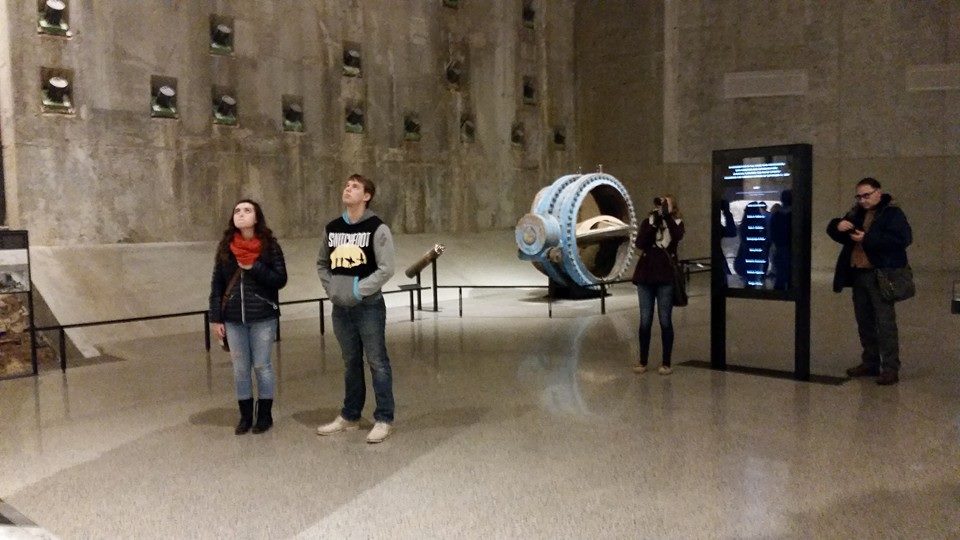
At the 9/11 Museum underneath the World Trade Center

The moral argument for God is one of the basic arguments for proving that God exists. In this piece I follow a critique Dr. William Lane Craig presents of a critique done by Richard Dawkins of the moral argument for God. Continue reading “Counter-Critiquing the Moral Argument for God” →