The Difference Is In What We Do


These were the words I read this morning when I opened my Bible app:

“So then, as we have opportunity, let us do good to everyone, and especially to those who are of the household of faith.” (Galatians 6:10 ESV)

As I think about this exhortation from Paul, I realize that our faith is meant to be manifested in doing good. It also occurs to me that, maybe, we have gotten the emphasis wrong.

I can understand how it happened. Common people didn’t have the Scripture to read for themselves. The church had gotten corrupted by power and wealth. Priests sold indulgences and turned faith into a religion of required observances and superstitious piety.

John Wycliffe and others made Scripture available to the common people, and Martin Luther and the people he inspired rediscovered the that salvation is received by faith. It’s a matter of grace, not of works, lest any man boast.

These things were inspired by the Holy Spirit at the time, but we always flirt with the danger of settling into religious ruts that prevent us from appreciating and considering the whole counsel of God. Western Protestantism has tended for centuries to accept the stuffy air of an academic, heady faith that gets too little exercise in the “good works, which God prepared beforehand, that we should walk in them”.[1]

This is the progression: We are “saved through faith”; this is not our own doing; “it is the gift of God, not a result of works, so that no one may boast”.[2] But we can’t stop there. We have to realize the truth of the very next statement: “For we are his workmanship, created in Christ Jesus for good works, which God prepared beforehand, that we should walk in them.”[3]

We are saved by faith, not by works, in order for us to do the good works God prepared for us to do.

We are saved by faith, not by works, in order for us to do the good works God prepared for us to do.

Paul’s words in Galatians and the entire thrust of Scripture suggest that the hallmark of Christian faith is the good that we do that flows out of the salvation we received by faith.

Continue reading “The Difference Is In What We Do”

To Us a Child Was Born

We have good reason to be expectant that God will do, and is doing, what He said He would do.


“The people who walked in darkness have seen a great light; those who dwelt in a land of deep darkness, on them has light shone…. For to us a child is born, to us a son is given; and the government shall be upon his shoulder, and his name shall be called Wonderful Counselor, Mighty God, Everlasting Father, Prince of Peace.” (Isaiah 9:2, 6 ESV)

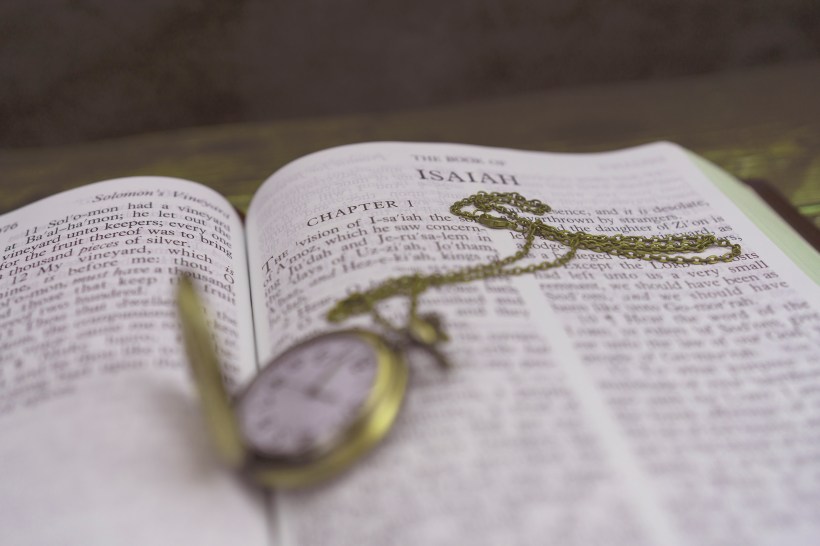
These words that are repeated often at Christmas time were spoken originally by Isaiah, the prophet, hundreds of years before Jesus. “For unto us a child is born….” These words are so ubiquitous in our western culture today that we may miss the significance of them.

At one time, people doubted the dating of Isaiah because it so accurately describes Jesus who was born around 4 BC. Isaiah lived purportedly in the 8th Century BC. Because Isaiah predates Jesus and the span of time from Isaiah to Jesus, an increasingly skeptical world that seriously doubted the predictive nature of those words begin to think that the Isaiah text was written after Jesus, perhaps in the 1st Century after his death.

People no longer doubt when Isaiah wrote those words, however, not since the discovery of the Dead Sea Scrolls. One of the most significant discoveries among the Dead Scrolls was the Isaiah Scroll. It has been dated hundreds of years before the birth of Christ, and it is nearly word for word the same as the more recent manuscripts of Isaiah that we had until that time.[1]

Isaiah contains, perhaps, the clearest and most amazing prophecies in the whole OT of the coming of Jesus.[2] For this reason, Isaiah is quoted every Christmas. Particularly the statements stating that the Messiah would come as a child.

At least one aspect of what Isaiah wrote gets lost in wonder of the predictions he spoke. We look back on them now with wonder and amazement that God inspired Isaiah to speak those words so long ago, but when Isaiah spoke them, no one listened. No one believed him.

Continue reading “To Us a Child Was Born”

Did the Golden Rule Result from the Evolutionary Process?

The truest expression of the Golden Rule is the expression in which there is no self-interest at all


I have a friend who tells me that the Golden Rule (do unto others as you would have them do unto you) is not unique to Christianity or to religion. He believes that the Golden Rule is a result of the evolutionary process and can be seen in nature. He claims that the Golden Rule doesn’t come from God or religion, but from the evolutionary process.

I don’t subscribe to that (obviously), but I haven’t really set out to test the hypothesis. I have done some thinking on the Golden Rule found in religion. I have compared the Golden Rule as it was expressed by Jesus to the expressions of a golden-like rule in other religious traditions.

I am not shocked or surprised to find expressions of an ethic like the Golden Rule in all (or nearly all) world religions. Truth is truth, right? Shouldn’t we expect to find truth and expressions of truth wherever we look?

I wonder, why we wouldn’t expect to find some expression of the Golden Rule in nature too? If the world was created by God, shouldn’t the world exhibit the character of God that is expressed in the Golden Rule?

Ok, does anyone really think that the world expresses God’s love as summarized in the Golden Rule?

I have heard many atheists say they don’t believe in God precisely because the world doesn’t exhibit God’s love. Christians, of course, find reasons for this reality expressed in the Scripture (the fall and sin). I don’t intend to address them here, but I think the point is a good one: that the demonstration of the Golden Rule is difficult to find in nature.

In the end, we can see something of the Golden Rule in nature, but the demonstration of it leaves something to be desired. It doesn’t explain why the Golden Rule exists. It doesn’t prove the evolutionary paradigm, and it doesn’t negate the existence of a creator God in whose nature and character the Golden Rule finds its source.

Continue reading “Did the Golden Rule Result from the Evolutionary Process?”

Thanksgiving Thoughts 2019


This week, while my college age children were home for Thanksgiving, I had a conversation with my 20-year old daughter.  Like the youth of every generation, she is keenly aware of the mistakes of the past, my generation, the Baby boomers, in particular.  I can’t argue with her on that.

Still, my daughter is growing up in a post-modern that is, perhaps, more critical of the past than any generation in recent history.

I remember growing up in the sixties and seventies and being keenly, as well, aware of the mistakes of my parents’ generation. There were demonstrations, riots, anthems of angry youth and more. No generation in recent history, perhaps, was as vocal about the mistakes of their elders than my generation. The Civil rights movement, the Equal Rights Amendment, anti-war demonstrations, the sexual revolution, burning the flag and burning bras: social upheaval was the everywhere in the public and private conscience of my generation.

It’s ironically fitting, I suppose, that my daughter feels the same way about that very generation that blazed the trail for her.

But things have progressed far beyond the protests of my generation. Her generation rejects not only tradition, as we did; they reject history. They doubt the traditional historical narratives are true. They doubt the validity of history itself.  Skepticism and protest may be the only thing that survives. Truth assertions are not to be trusted.

How can we know truth at all in a post-modern world? Even the truth they feel in their gut? If post-modernists are being honest, they can’t! The same doubts, skepticism and criticisms eventually turn inward. They can’t even be sure of the truth they think they know. Such is the angst of this generation.

Continue reading “Thanksgiving Thoughts 2019”

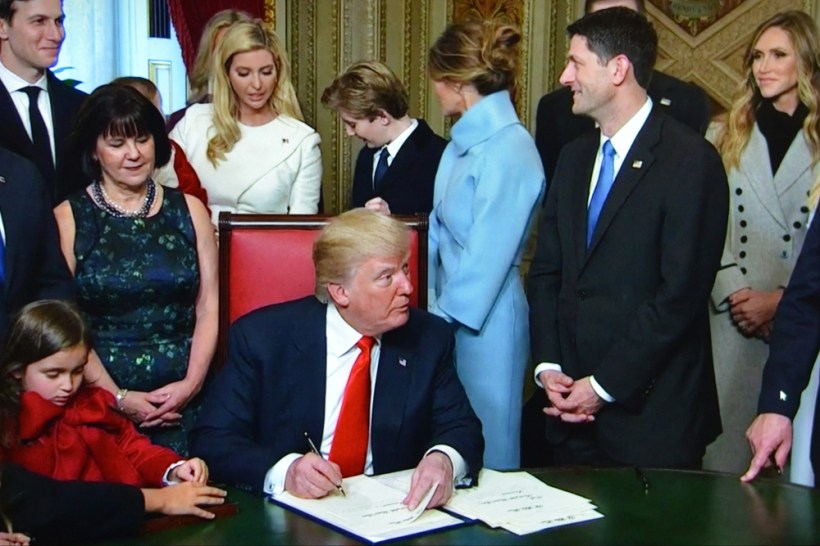
Is Donald Trump the King We Wanted?


Paul, speaking to the Christians in Rome, penned these words that echo still in 2019 in the minds of people who seek to do God’s will: “there is no authority except that which God has established. The authorities that exist have been established by God.” (Romans 13:1)

Lest we gloss over the historical context, Paul wrote these words from a Roman prison cell. He wrote them not knowing that he would never live free again. He would remain a prisoner until his public execution at the hand of those same Roman authorities established by God.

Not that Paul would have said anything different if he had known his fate. I don’t believe knowledge of his future would have changed anything he said. In the same letter to the Romans, Paul said, “If we live, we live for the Lord; and if we die, we die for the Lord. So, whether we live or die, we belong to the Lord.” (Romans 14:8)

I have heard many people recite Romans 13:1 in support of defending Donald Trump. Many of those same people would have bristled to consider the same verse during the Obama presidency.

The Scripture didn’t change. Our application of it changed.

Many people who have championed Trump for President, and Trump as President, have claimed that God wanted Trump to be President. Like Daniel in the Persian palace, they say Trump is God’s man in the White House.

I have been skeptical of that claim. Not that it couldn’t be true, but the Donald is no Daniel. The fruit of his life, his words, his demeanor, and his actions is not consistent with God’s character.

I admit that I had to be cautious in my skepticism as I read the story of a fireman, Mark Taylor, who prophesied in 2011 that Trump would be President. This was more than an entire term before Trump became president. Those prophetic words echoed in the back of my mind as the election results slowly revealed a Trump victory in 2016 to a nation of shocked newscasters and political pundits on live television.

(I note that the same man who claimed God told him Trump would be president, claimed he would defeat Obama in 2012. He was wrong about the timing. He has also claimed a number of things that have not occurred. “Taylor’s other prophecies have proven to be less than accurate. The Guardian reported that he said a ‘red tsunami’ would solidify Republicans’ hold on Congress, and that he predicted former President Barack Obama would be arrested for treason. Taylor also says Trump will release evidence of cures for cancer and Alzheimer’s disease.”)

Paula White, who is now an adviser to Trump in the White House, said after he was elected, “Trump has ‘been raised up by God’ and added, ‘It is God who raises up a king. It is God that sets one down. When you fight against the plan of God, you are fighting against the hand of God.’”

Of course, she would have been just as right if she were speaking of Barack Obama eights years earlier and four years earlier. I would be surprised, though, if she said the same thing 8 years ago or 4 years ago.

I wondered then, as I do now: does Trump’s victory mean that we (believers) won too? Did God give us what He wanted? Or did God give us what we wanted?

Continue reading “Is Donald Trump the King We Wanted?”