
Faith, Hope, and Love in These Times

These times are exciting and scary for people

Elon Musk: 100 million people with Neuralink implants in the future | Lex Fridman Podcast

My writing today comes from my quiet time when I read the Bible in the morning. I have been sensing the importance of hope in recent days (or weeks) in the light of the troubling times we live in. It’s easy, even as a Christian, to lose hope in these times. I do.

Just a week ago, I had a conversation with my 31-year old about a great leap in technology being pioneered by Microsoft that could increase technological advancement exponentially. (See Microsoft’s NEW Quantum Chip is Mind Blowing!) Glenn Beck speculates, “If they can put that one chip in your phone, it would make your phone as powerful as the best supercomputer with a server farm the size of the planet earth.”


Or conversation focused on his wife’s concern (and mine) that such a technological advancement may exceed our ability to do good with it. Imagine people having that power at their fingertips….

Six months ago, Elon Musk discussed the distinct possibility of fitting 100 million people with Neuralink implants in the future. This device implanted in the brain would allow “superhuman abilities”. It would replace cell phones. We would essentially have computers in our brains.


Musk somewhat presciently said, “The problem will be figuring out what we want….” A person who wants to cause harm could cause greater harm exponentially faster and exponentially more devastating than can be done now with our merely human brains, like going from muskets to a nuclear capabilities.

Lex Friedman commented, with maybe greater prescience, “I think it’s exciting and scary for people because … it changes the human experience in ways that are very hard to imagine.” Interestingly, Musk agreed, “We would be something different.”

This uncertainty suggests we should be cautious with technology that may fundamentally change the human brain. The specter of the availability to change the human brain to make us different in ways we can’t even predict raises similar ethical questions as the ability to clone humans.

Not only should we be circumspect and careful with these things; we need to be cautious about trusting such powerful technology to people with varying worldviews. Do we want a materialist driven people who believe there is no God, nor objective morality, nor any no purpose in life other than what we want it to be to be in control of such technology. What about an Islamic world? Or a Trump and Musk world that is driven by the almighty dollar?

Pick your suspect worldview. I wonder, “Can we handle it?” And, “Are we playing God?” And, “What unintended consequences might we trigger?”

As I write these things, I can hear another voice in my head nagging me to reconsider my cautionary approach. “Wouldn’t it be great to control your world with your mind?!” Imagine how a Neuralink might empower and improve the life of a quadriplegic. It could be used for so much good!

In reality, such technology is likely to be used both for good and to be abused. That is the pattern of humanity. Whether it might be used more for the good than abused is something no one can predict, though it may depend on how slowly, cautiously, and circumspectly we roll it out.

On that score, consider what Elon Musk is doing with the power Trump has given him in the federal government. He has wielded that power with glee like a chain saw massacre. He even boasted about it:

This is the same man who wants to put his technology in your brain.

I might be tempted to think that I am being overly cautious, but recent developments highlight the concerns. Elon Musk has been invited into the inner workings of our government by Donald Trump. He has been given unprecedented access to personal and private information of all people who live in the US. Together they have been freezing funds, firing people, and shutting down programs at an unprecedented rate.

I have likened what they are doing to a corporate Board of Directors for a hospital identifying inefficiencies and wasteful spending and taking a wrecking ball to the hospital with the patients, doctors, and nurses still in it. In weeks, they have have attempted to freeze the expenditure of billions of dollars already committed to operating programs in this country and around the world, and they are gutting and shutting down those programs.

The rashness and imprudence of doing what they are doing is almost unimaginable, and they are doing it because they have the power to do it. Right now, there is no check or balance in the way. They are moving faster than the other branches of government can respond.

We don’t know, yet, what the fallout will be. We are seeing only anecdotal results right now – jobs lost, summary deportations, 50 year contracts terminated with veteran agencies, etc. – in less than two months. Trump and Musk have enthusiastically wielded the power they now have with no apparent thought or care to the lives they have disrupted and the people they have hurt in the name of efficiency because they can.

We have a tendency to run further and faster with technology than our ethical bandwidth can keep up. The industrial revolution led to abuses like child labor and competition among nations that presaged the two great World Wars. Those technological advances made those wars more deadly than ever before – with tanks, guns, planes, toxins, and bombs (conventional and nuclear) – that were more devastating than the weaponry available in prior wars.

The kinds of technological advances Microsoft and Musk are exploring could lead to unimaginable abuses of power. That power will be exponentially greater than what we have now, and it could easily trigger the end of human civilization in the wrong hands.

The technology that fueled the World Wars is nothing like what we have now. The nuclear technology that ended WWII and advancements in technology that exist today could easily end human life on earth in the time it takes to push a button.
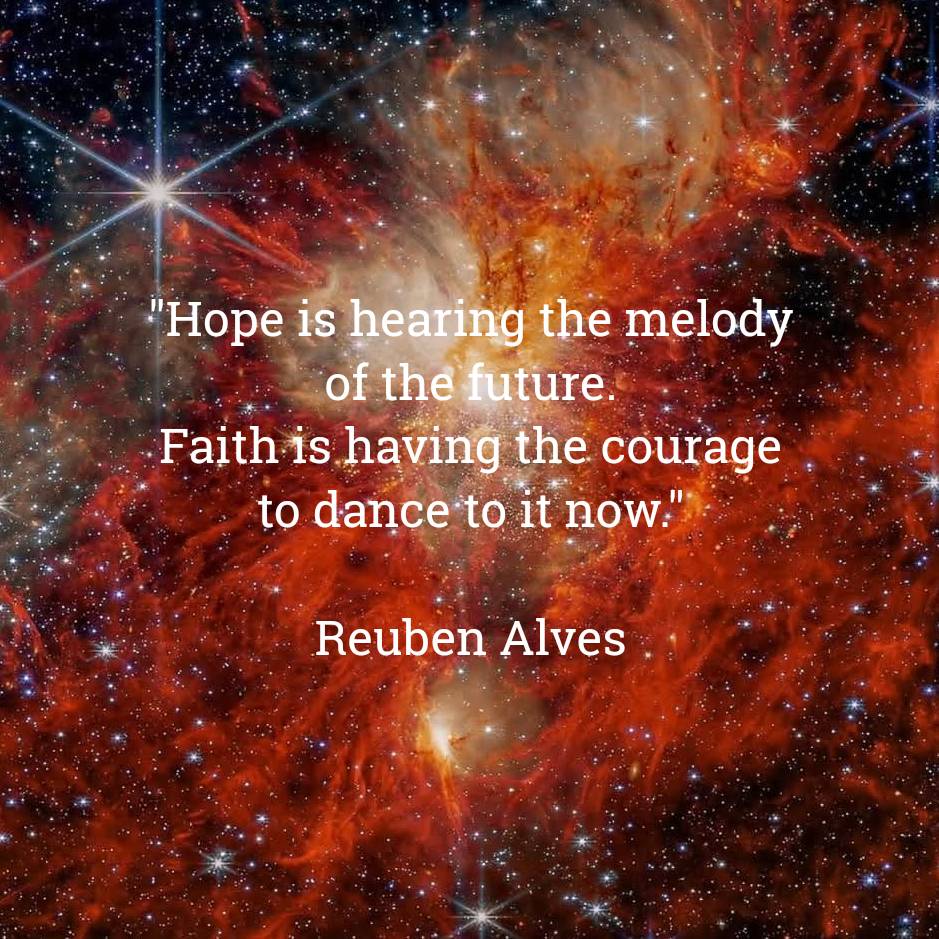
In that context, I read my daily Bible reading plan to today that included a quotation from Brazilian theologian, Reuben Alves, that I have included here. So, I turn now to hope, fueled by faith, and informed by love.


Continue reading “Faith, Hope, and Love in These Times”

East and West Meet at the Tower of Babel

I have been listening to the BEMA podcast. I highly recommend it. As defined on the website, “‘BEMA’ (or bimah) is a Hebrew word that refers to the elevated platform in the center of first-century synagogues where the people of God read the Text.”

The early Christians knew their Scripture. They built their lives around it. They devoted themselves to it, and to prayer, and the apostles reaching, and to fellowship and shared meals. (Acts 2:42) The bema in was where early Christians gathered in first century synagogues before they were persecuted and scattered.

The BEMA podcast attempts to approach Scripture the way easterners would have approached Scripture – the way the early Christians in the Middle East would have approached Scripture. The idea that Hebrew people were more “eastern” in their thinking was first pointed out to m by my Jewish professor in college over 40 years ago, so following up with that concept intrigues me.

Christianity quickly became westernized, but the origins of Christianity are eastern, growing out of the Hebrew culture and scriptures. For that reason, we would do well to gain some new perspective from a more eastern way of thinking. I encourage you to listen to the first couple of episodes of the podcast linked in the opening paragraph if you want an introduction to an “eastern” perspective of the Bible.

Reading the first 11 chapters of Genesis from an eastern, Hebraic perspective, opens up new insights. Not the least of which is the genre of literature these chapters represent. They are poetry. They are written in chiasms with intricate organization and emphasis that is found in the structure of the chiasms.

The Tower of Babel story is one of those chiastic passages in Genesis. The story actually begins in the Hebrew with the last verse of Chapter 10 (as it is organized in English Bibles), and it goes like this (ESV):

These are the clans of Noah’s sons, according to their lines of descent, within their nations. From these the nations spread out over the earth after the flood.

Now the whole world had one language and a common speech. As people moved eastward, they found a plain in Shinar and settled there.

They said to each other, ‘Come, let’s make bricks and bake them thoroughly.’ They used brick instead of stone, and tar for mortar. Then they said, “Come, let us build ourselves a city, with a tower that reaches to the heavens, so that we may make a name for ourselves; otherwise we will be scattered over the face of the whole earth.

But the Lord came down to see the city and the tower the people were building. The Lord said, ‘If as one people speaking the same language they have begun to do this, then nothing they plan to do will be impossible for them. Come, let us go down and confuse their language so they will not understand each other.’

So the Lord scattered them from there over all the earth, and they stopped building the city. That is why it was called Babel—because there the Lord confused the language of the whole world. From there the Lord scattered them over the face of the whole earth.

Hebrew has no vowels, only consonants. Rather, vowel signs are placed over the consonants to denote where breaths should be taken for anyone reading Hebrew out loud. 

The consonants in this chiasm are repetitive: N, B, L, H; then H, L, B, N in reverse. There is a front half and a back half to the structure. The middle of the chiasm is verse 11:4, which I have emphasized by bolding it.

The verse in the middle of the chiasm is where the emphasis lies: the peoples’ concern about being scattered over the face of the earth. They didn’t want to be scattered.

Why not? That’s the question we should be prompted to ask according to the emphasis we find built into the structure of that story.

I am not sure I can do any justice to the layers of meaning and the questions that arise in these verses in a short blog post. I can only scratch the surface, but here goes….

Continue reading “East and West Meet at the Tower of Babel”

Pausing the Reality Show

?????????????????????????????????????????????????????????????????????????????????????I stumbled upon on Seth Godin’s blog today. Reality is not a show. He blames what he calls the “punditocracy” for turning life into a game and issues into drama “with winners and losers, villains and heroes and most of all, black and white issues” for their own profit.

From politics to natural disasters and even things like poverty and technology, everything is presented or spun into an “us and against them” reality show, suggests Godin.

Polarization is big business. Rush Limbaugh, Hannity and others on both sides of the ideological divide are pundit business machines. Certainly the liberal gamesters have been a little slower to capitalize on the opportunities that black and white buffoonery provides, but they are coming around. It seems we are becoming more polarized as a society, if politics is any indicator. Has the aisle between the two political parties ever been wider?

At the same time, we do not seem to need much political urging or pontifical force to line up like solders on one side or the other on the issues of the day. The Treyvon Martin case is a prime example. The ink was not dry on the presses when people began to convict or exonerate George Zimmerman in a flood of pontification. Social media allows us to declare our stances almost instantaneously on any issue, national or local. Innocent until proven guilty lost this game, as it usually seems to do in these dramas. Letting the wheels of justice do their things does not seem to fit comfortably into our thought processes.

Android phones must be better than iPhones, or iPhones must be better than Android phones. We do not seem to tolerate uncertainty or inbetweens. Why is that?

Ironically, we hold up tolerance as the ideal to which polite and learned people aspire (or at least that is the standard that we demand of those who disagree with us).

I wonder if we have lost the ability to concentrate on anything long enough to reserve judgment.

I remember watching MTV when it was still Music Television and feeling perplexed by the rapidly changing images in every music video. I could not latch on to anything. It moved too fast. Those music videos of the ’90’s seemed to be a reflection of the way society was going at the time, and continues to go. I am not sure that is the way we want it. Or is that just the way “the media” wants to package it to us? Politicians give us “sound bites” and phrases. Social media allows us to communicate in snippets with Twitter as the extreme example. Email has replaced letters, and texting is preferred to email. Each evolution in technology is tending toward shorter, more truncated, communication.

I think these things are related to the polarization of our society. We are somewhat like lemmings in this reality show life (not that lemmings are anything like what we have been told). We do not want to dwell for long in between; we want to rush to our destination, decision, judgment, adulthood. Maybe that is a reaction to the speed at which information and life comes at us. Maybe it is because we have lost the ability to focus and to hold things in tension.

We act as if each of us is the captain of our own certainty, and we dare not lose grasp of it. In our lives today, every silence is filled with sound, every pause is a transition, every moment is filled with activity. We must latch onto judgment lest we be carried away and lost in the dizzy array of thoughts, images and information whizzing past us like the strobe light scenes of an MTV video.

In this tendency to gravitate quickly to the poles, we lose compassion, understanding and relation. We are drawn into the game and lose the nuance of real-life difficult decisions. In Seth Godin’s words, we “turn pathos into ratings” and make just about everyone “the other”. I am afraid in this process we are losing the sticky interconnectedness that binds us all together in this journey called life. Seth suggests that Facebook “likes” should be replaced with hugs – a little human relation to bridge our different perceptions and viewpoints.

In reality, we are all winners and losers, good guys and bad guys. People are complex. We are not easily reducible to a black/white images. We do ourselves, our neighbors and our world an injustice when we rush to conclusions and judgments. We need space in our existence. We need stillness in our lives. We need to let things percolate in the inbetweens.

A View from a Different Angle: Journalism, Law, Children & the Internet

Changes are occurring in the practice law like they are in the field of journalism and elsewhere as a result of the ubiquitous Internet that have application to the practice of law, other endeavors and to our children and future generations.

Thought


I just read an interview with an award winning photojournalist and journalism school professor who was laid off by the Chicago Sun-Times in the newspaper’s scramble to respond to the threat of Internet competition. The interview can be read at the Daily Dot. The situation and many of the statements made in the interview struck a chord with me that I will attempt to play out in a different direction below.

I am an attorney. Changes are occurring in the practice law like they are in the field of journalism and elsewhere as a result of the ubiquitous Internet. The layoff of all of the photographers at the Sun-Times exposes a deeper root growing out of the burgeoning success of the Internet that I want to explore. It has application to the practice of law, and it has application to our children and future generations. Continue reading “A View from a Different Angle: Journalism, Law, Children & the Internet”

It is Not so Hard to Imagine

I have been learning how to use HootSuite this weekend. The HootSuite technology allows a person to leverage one’s finite time in a way that one can communicate in almost real time with a vast number of people. It is a website for tracking and posting to an almost unlimited number of social media sites and groupings within sites at one time. In one stroke of the keyboard, a person can tweet, post on Facebook, Google+, LinkedIn, MySpace, Foursquare, WordPress, Mixi and within those social media sites on specific groups and pages, potentially reaching thousands and even hundreds of thousands of people simultaneously. At the same time a person can almost simultaneously follow and respond to dozens and even hundreds of other people posting things in the same social media sites and groups. It is pretty remarkable.

Technology brings to us what was only dreamed about a few years ago and what might never have been imagined just a couple of generations ago. As we become more self-sufficient than ever as beings, the tendency is to become less reliant on faith and God. One thing technology has not changed is the certainty of death. We are also still beings. This world is bigger than us, and we do not ultimately control our own fate…. but that is another topic for another day.

It occurred to me as I learned my way around HootSuite this weekend, that God’s ability to have an individual relationship with each and every person is not such a farfetched concept. If one finite person can simultaneously communicate with hundreds and thousands of people, it is not hard to imagine that God, who is infinite, can communicate with each one of us on an intimate, personal level.

It is written that God knows every hair on your head. (Luke 12:7) Even more than that, the Psalmist says that God knows your comings and goings and the very thoughts in your head! (Psalm 139) God knows when you get up and lie down. There is nowhere a person can go that God is not there and is not aware of what a person does. It really is not so hard to imagine that God can do that in light of the ability that we have at our fingertips. God knows you